Solving the mistletoe mystery
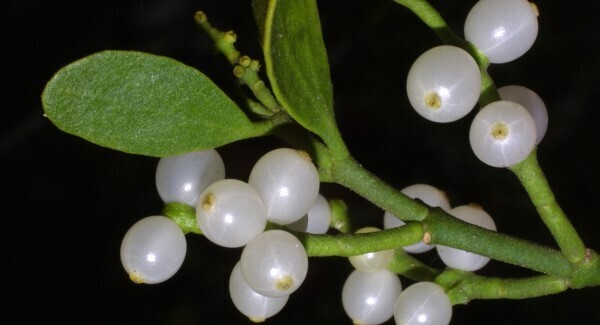
It does but it’s very rare and almost certainly not native. It has been recorded from about a dozen sites, but several of these are old gardens. In Victorian and Edwardian times trying to grow mistletoe, which is difficult but not impossible, was quite a popular pastime and the Irish records for the plant are probably the result of this and the seed used was probably imported from Britain, where it is native.
Mistletoe is a parasite and parasites are rare in the plant kingdom. One source states that plant parasites have only evolved nine times in the whole world. To be absolutely precise it’s a hemi-parasite — although it sucks water and nutrients from the host plant it’s not totally dependent on these and its own evergreen leaves do photosynthesise and provide part of its requirements.
The small yellow flowers are insect pollinated and develop into the familiar white berries, which are poisonous to humans but relished by birds. Mistle thrushes are fond of them and this seems to have given the bird its common English name (though they’re often called ‘jay-thrushes’ in Ireland).
The berries contain a seed which is coated in a very effective glue called viscin. Sometimes a bird will swallow the whole berry and excrete the seed, still coated in viscin. More often the bird attempts to remove the seed, which almost always ends up with it sticking to the outside of its beak. It then wipes its beak on a branch to get rid of it.
The seed sticks to the branch and the viscin hardens into a sort of cement. The seed then germinates and a perfectly normal young plant develops. But as the plant grows it produces a root-like structure called a haustorium which bores down through the bark of the host plant and infests its sap wood. Over 200 species of tree and shrub have been recorded as mistletoe hosts but they are all deciduous and among the commoner ones are apple, birch, lime and occasionally oak.
The mistletoe then proceeds, like a leech, to suck sap from its host. It can severely stunt or deform the host tree.
How this odd plant became associated with Christmas and with kissing is not entirely clear. The Christmas association is probably simply because it’s evergreen, like holly, ivy and Christmas trees. Evergreens have ancient pagan associations with the winter solstice.
The kissing is probably equally ancient and could have originated in either Celtic or Nordic mythology, where mistletoe is associated with fertility and fertility goddesses

CONNECT WITH US TODAY



Be the first to know the latest news and updates