State-approved projects - Build future by consensus with public
In too many instances citizens have been ill-served and sometimes cast aside as great forces tighten their grip on power and profit.
Immediately after independence, the Catholic Church assumed corporate power in a society trying to shake off the anti-democratic culture of colonisation. In subsequent decades Fianna Fáil’s popularity allowed that party behave more like a corporation than an accountable participant in a democracy. In the last two decades, the banks assumed new, unfettered power that elected governments could not curb — even if they wanted to.
Each of these organisations endured spectacular falls because they ignored a truth confirmed over centuries: power corrupts but absolute power corrupts absolutely. As these organisations renew themselves, surely we as a society should do the same and change how we view and deal with corporations. Surely, we should be more questioning, more cognisant that society’s interests and corporate interests are not always the same thing.
Each of those unimaginable falls had a profoundly negative impact on society and should make us far more questioning of any corporation that declares there is no real alternative to its proposals or that the national interest informs everything it does.
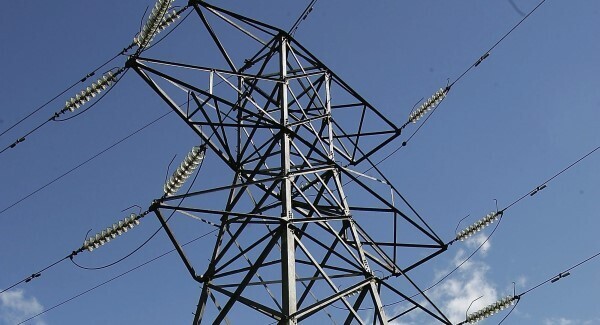
Eirgrid’s proposals to build thousands of giant pylons across the country should be seen in that light. So too should proposals to build up to 450 wind turbines across the midlands to generate electricity which the developers propose to export to England. Official plans for Europe’s largest salmon farm off the Aran Islands fall into that category too. This is especially pertinent as the ultimate beneficiaries of two of these projects may not be Irish, though we would certainly pay by far the greatest price if they proceed as is suggested.
Energy independence is one of the most pressing long-term issues facing this country. as is the great challenge to reduce, if not end, our dependence on carbon fuels. The creation of long-term, worthwhile jobs is another, but none of those arguments are so overriding that we should be bullied — especially not by a state-owned organisation — into accepting projects that desecrate our environment. Though he did not use vocabulary as strong as that when he addressed a Dáil committee yesterday, Eirgrid’s chairman designate John O’Connor acknowledged a reality facing thousands across the country when he admitted that “he would not like to live near an electricity pylon”.
Yes, we need to renew the country’s electricity delivery systems. Yes, we need to embrace and encourage the development of renewable energy projects and yes we need to find new ways of food production, but those needs are not the only ones facing us. We need to develop these projects in a way that can be welcomed by the communities that they will change forever and, most of all, we need to bring an end to the idea that these projects are so very important that they can be imposed on any community against their will. This is not to offer a veto on progress but rather to insist that the future is a project we must all embrace and build together.
CONNECT WITH US TODAY



Be the first to know the latest news and updates