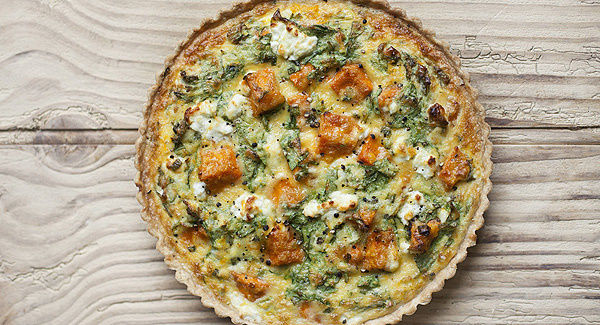
Darina's recipe of the week: Pumpkin, Goat Cheese and Kale Tart
I WAS totally shocked by an article by George Arbuthnott in the Sunday Times magazine recently on the human cost of our food.
He described an āinvisible army of modern day slaves, trafficked into Britain to work in the food factories and farms that supply our leading supermarkets. They live in squalor, are paid next to nothing and are often physically abusedā.
For a long time, Iāve been concerned about the relentless downward pressure on the price of many food items. The consequence has been to force down the price of the wrong foods. Living on the farm and being involved in the food business I know it simply canāt be done. Itās impossible to produce food that is nourishing and wholesome for the retail price thatās being charged for many items. The horsemeat scandal should have taught us that, but after the initial shock the message is soon forgotten. Someone has to be paying to supply us with the unrealistically cheap food we have now come to believe is our right.
In the 1980s we spent 27.7% of our income in real terms on food, nowadays its just 16.2%, so the reality is food has moved a long way down our list of priorities.
When the supermarket offers ābuy one, get one freeā most customers are unaware it is usually the farmers or food producer who is supplying the āfreeā one ā consequently they are getting half the money for their produce. When the retailers need a product they ask their suppliers to source it at a certain price and on it goes through an increasingly convoluted food chain which often involves migrant workers, who have been hoodwinked by the promise of generous pay and good working conditions.
The human traffickers and gangmasters who lure these vulnerable, uneducated people prefer to target those who donāt speak the language so they canāt communicate with fellow workers. They work in many areas of food production, meat packing and processing and the supermarket buyers sometimes do not realise exactly how the product is achieved at the price. But itās time to ask questions. Many large fruit and vegetable farmers are greatly dependent on migrant labour for harvesting, and there are many who treat their workers honourably and work with the gangmasters who do not engage in exploitation. But itās very much a live issue; BBC Radio 4ās Farming Today programme also looked at it recently.
Paul Broadbent chief executive of the Gangmasters Licencing Authority explained their modus operandi: āThey take the passport, mobile phone and any form of identification off the victims and set up a bank account into which all their earnings are paid, it may be the case that victims either donāt know what they are signing or the enforcer threatens and intimidates them into it. The controlling man then uses the account to apply for bank loans and benefits and racks up thousands of pounds. Every conceivable fraud and deception is committed and they rule with an iron rod. They force people to live in squalor and pile them high.ā
Animal welfare issues are regularly highlighted and rightly so but what about the human cost of our cheap food?
Kale is now in full season and several varieties are available in the farmers markets.
175g (6oz) shortcrust pastry
1 tbsp extra-virgin olive oil
450g (1lb) pumpkin or butternut squash
1 tsp fresh thyme leaves
150g (5oz) Ardsallagh goatās cheese (or another soft goatās cheese)
75g (3oz) spring onion, chopped
2 eggs and 3 egg yolks
200ml (7 fl oz) cream
1 tsp thyme leaves
25g (1oz) parmesan cheese, grated
50g (2oz) gruyĆØre cheese, grated
110g (4oz) kale ā raw and stripped of stalks
Salt and freshly ground black pepper
23cm (9in) diameter tart tin
Make the pastry, wrap well and rest in the fridge.
Preheat the oven to 200°C/400°F/Mark 6
Peel the pumpkin or squash and cut into 2.5cm (1in) chunks. Arrange on a roasting tin. Drizzle with extra virgin olive oil. Season with salt and sprinkle with thyme leaves. Roast for 30 minutes approximately or until tender, allow to cool.
Bring a large pot of water to the boil, add the kale, blanch for 2 minutes, drain and refresh under cold running water, drain. No need to blanch rocket.
Line the tart tin (see instructions) and ābake blindā for about 25 minutes. The base should be almost fully cooked. Remove the parchment paper and beans, brush the base with a little beaten egg white and replace in the oven for 3-4 minutes. This will seal the base and avoid the āsoggy bottomā effect.
Reduce the temperature to moderate 180°C/350°F/Mark 4
Heat the oil in a sautƩ pan, add the chopped spring onions to the pan, cover and sweat gently on a low heat for about 6 minutes or until almost soft.
Meanwhile, whisk the eggs in a medium-sized bowl; add the cream, cheeses, thyme leaves, cooled spring onion and kale or rocket. Mix well and add seasoning.
Taste or otherwise, heat a frying pan, cook a teaspoon of the mixture on a gentle heat for 2 or 3 minutes until it coagulates ā taste and if necessary correct the seasoning. Arrange chunks of roast pumpkin (peel removed) and chunks of goatās cheese over the base of the tart.
Pour the filling into the base of the tart. Return to the moderate oven for 30ā40 minutes or until the centre has just set. Serve warm with a freshly tossed green salad.
From 30 Years at Ballymaloe Cookery School, published by Kyle Books.
Fresh curry leaves are readily available nowadays. One can usually buy them from Asian shops or frozen if fresh are unavailable ā they have a distinct flavour but if they are unavailable you can leave them out.
1kg (2¼lb) pumpkin, peeled and cut into 2.5cm (1in) chunks
4 green chillies, finely sliced
25g (1oz) Bombay onions, finely sliced
2 garlic cloves, peeled and finely chopped
A sprig of fresh curry leaves
1 tsp ground fenugreek
1 tsp mustard powder
Pinch ground turmeric
110ml (4floz) coconut milk
Put all the ingredients in a medium saucepan and bring to the boil. Simmer until the pumpkin is cooked ā approx 10ā20 minutes, depending on type of pumpkin.
Serve with a selection of curries or on its own accompanied with rice.
This is the Persian version of a Spanish tortilla or Italian frittata ā weāve been enjoying it with the last of the summer courgettes.
Serves 6-8
2 tbsp (30ml) extra virgin olive oil
1 lb (450g) onions, chopped
3 cloves garlic, crushed
¼ tsp fresh ginger, finely grated
6 small courgettes, halved and cut thinly across
Sea salt and freshly ground pepper
8 organic eggs
1 tsp turmeric
3 tbsp flour
½ tsp bicarbonate of soda
10in (25.5cm) pan
Preheat the oven to 180 C/350 F/gas mark 4.
Heat the oil in a frying pan over a medium heat. Add the chopped onions, garlic and ginger. Cover and sweat for 6-8 minutes, add courgettes. Season with salt and freshly ground pepper. Stir and cook for 6-8 minutes.
Whisk the eggs, add the turmeric, flour and bicarbonate of soda. Add the cooked zucchini mixture. Pour into a greased gratin dish.
Bake for 25-30 minutes. When just set, serve sprinkled with parsley sprigs and sumac.
The National Organic Conference ā Addressing the Needs of the Market will be held on November 5-6, at the Bridge House Hotel, Tullamore, Co Offaly. Book online www.nots.ie or 071-9640688
You can travel to every part of Ireland and encounter an interesting, distinctive, local farmhouse cheese. Read some amazing stories about the people behind farmhouse cheese on their new website or visit one of the farms and experience firsthand the story of farmhouse cheese ā farm visits are free to attend but you must book your place online www.discoverfarmhousecheese.ie
If you have visitors staying and are racking your brains for something original, stylish and fun to do with them, contact Eveleen and Pamela Coyle and they will arrange a Fabulous Food Trail for you in Dublin or Cork city. Theyāll show you all that is best in contemporary Irish food, shops and cafĆ©s as you wander through the lesser known parts of each city, tasting as you go. www.fabfoodtrails.ie or info@fabfoodtrails.ie or by calling (01) 497 1245.