Egypt’s crisis deepens - Toppling towards a catastrophe
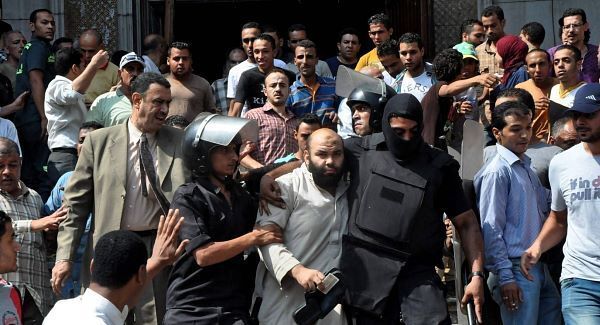
Thousands of lives might have been saved and Egyptian democracy, and democracy right around the Muslim world, might have been enhanced rather than denied. The tragedy is that every day of violence, every atrocity inflicted on the population, will harden attitudes and make the prospect of a tolerant administration involving the Muslim Brotherhood ever more remote.
The escalating pogroms against Egypt’s Coptic Christians also forewarn of an even bloodier future for the 15% of Egyptians who are Christian.
Had Morsi been less dogmatic, less triumphalist — as the Catholic Church was in the earliest days of this State — the Egyptian military would have been denied the excuse and the support that has motivated, at least partially, their brutal suppressions. Morsi’s inability to see beyond the ambitions of the Muslim Brotherhood is — sadly and undeniably — a primary reason behind the bloody chaos spreading across the region.
It is not an over-simplification, though, to suggest that modern, inclusive democracy and the more radical expressions of Islam seem incompatible and that some forces at play in Egypt would prefer to establish a caliphate that excludes any idea of pluralism or influences other than Islam. Frighteningly, the same can be said of Syria, Libya, Somalia, and other imploding states right across North Africa. This idea has currency, too, in many of the immigrant communities across Europe.
What is even more frightening is that there seems little or nothing anyone who wishes to see peace and the integrity of the ballot box restored in Egypt can do, practically or immediately. EU and American efforts, based on withholding multi-billion dollar supports, may have some influence but, as is always the case in these situations, the fear must be that the most vulnerable in Egypt will bear the brunt of those sanctions.
As we know in this country, revolutions to establish a popular democracy can never be an overnight success. Cultures, as well as administrations, attitudes as well as ambitions, need to be modified if popular uprisings are to achieve anything. For change to have any prospect of real success, one set of tyrannies cannot simply replace another. Victory can never be absolute if it is not to sow the seed of the next revolution, the one that will eventually topple the current’s revolutionaries.
Egypt’s crisis will be resolved. Until that happens, one of the few unanswerable questions is how many lives will be lost or ruined before that point is reached. Nor, it seems, does Egypt have a Mandela figure with the integrity or charisma needed to unite a polarised society. The dire prospect of former president Hosni Mubarak being released from jail within days will throw more fuel on an already blazing fire.
The importance of the coming days and weeks and the efforts to restore peace and a legitimate administration cannot be overstated. There’s is not much time left if real catastrophe is to be averted.
CONNECT WITH US TODAY



Be the first to know the latest news and updates