Alarm over mass species decline
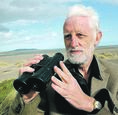
David Attenborough described the document as “a stark warning” and, according to lead author Mark Eaton, “the UK’s nature is in trouble. Overall, we are losing wildlife at an alarming rate”.
Most species have suffered significant declines over the last 50 years. Between 1%-2% have followed the wolf and great auk into extinction. Nor are problems confined to particular habitats, but spread across the board. Many salt-marsh areas have been lost to ‘development’. About 57% of freshwater species have declined.
Casualties include the salmon and the water-vole. The pearl mussel is facing extinction not just in Britain but globally. Ten per cent of aquatic plants are red listed. Those with unusual requirements have suffered most; “the specialists go to the wall while the generalists inherit the earth”, as UCD’s Tom Hayden once put it.
Meanwhile, hundreds of invaders have arrived. Due to the introduction of an American cousin in 1976, the native crayfish is in trouble. There are now five foreign crayfish species in Britain. The pool frog, found only at a location in East Anglia, was thought to be alien and allowed to go extinct in the 1990s. Scientists now believe that it was, in fact, a native.
We in Ireland have much to learn from this wildlife health-check; the problems we face are broadly similar to those of our larger neighbour. Irish offshore habitats, for example, closely resemble those of the Welsh and Scottish coasts. “Our knowledge of the state of our seas is poor,” the report admits, but it still manages to draw some important conclusions. Seabirds, it declares, have suffered significant declines over the last decade. There is increasing evidence that climate change is disrupting breeding in some species, particularly in Scotland. Kittywake numbers are down by 40% since 2000 and the harbour seal population has declined by 31% in Scottish waters.
Whales have been sighted off Ireland in greater numbers in recent years. Minke and fin whales are now relatively common and humpbacks are annual visitors. According to the report, 11 whale species regularly visit British waters. Researchers are uncertain as to how they are faring “although we know that, in some cases, declines have occurred”. But not all of the marine news is bad; fish stocks have increased, even though 75% of species are overfished in EU waters generally.
The habitat in which the greatest environmental changes have occurred is undoubtedly farmland. Of the 1,060 species monitored, 60% are declining, 34% of them “strongly”.
Fourteen per cent of all farmland flowering plants, 62 species, are now on the UK Red List. Birds and bats have benefited from conservation action but most species have failed to recover from the declines of recent decades. Butterfly numbers, the report says, fluctuate from year to year but there has been a 32% decline in overall populations during the past 21 years.
Irish hillsides have been massively overgrazed in recent decades, with a corresponding longterm decline in the quality of upland habitats. In Britain, 15 mountain and moorland species have disappeared completely, the greatest number for any habitat type. Of the species monitored, 65% have declined; the national Red List runs to 118, including 86 moss and liverwort species.
With changes in public attitudes and a more environmentally conscious public, an improvement in the fortunes of urban species might have been expected. However, the report paints a mixed picture. Air quality in cities has improved. In 1970, for example, only nine species of lichen were found within 16km of the centre of London. Now there are 72. Allotments, parks, gardens, cemeteries and ‘brown-fields’ are wildlife havens. Nonetheless, 59% of urban animal and plant species are declining. Invertebrates are faring particularly badly.
Pesticides, the removal of old walls and the neat and tidy mindset of many suburbanites are mainly to blame.