We finally have the chance to make our homes fit for purpose

OUR friends used to call our 1950s house the “unrivalled opportunity” — auctioneer-speak for a “kip”.

We finally have the chance to make our homes fit for purpose

A paper-thin extension, laughably called “the sun room”, had been added in the 1980s and all the heat in the house went out through its walls, windows and roof.

Not to mention the holes. You’d be sitting wrapped in a blanket enjoying the “sun” and all manner of wildlife would introduce itself.

We got sense. More to the point, we got money. An inheritance from my mother meant we could do a big retro-fit. We put energy efficiency before most other considerations and the house’s current BER is B1. It’s a red-brick house in a red-brick estate, so we couldn’t put on exterior insulation. But we high-fived when we found it was built of cavity blocks, because we could pump insulating material into them. Then we put another layer of insulation inside the exterior walls.

Wads of insulation were put into the roof, the period windows were replaced with high-performing double-glazed windows and all new windows are triple-glazed. The kitchen extension is built with special clay blocks which go by the name of “poroton”. They not only prevent heat loss, they release heat into the room when the temperature drops. If we run our wood-burning stove at night, the kitchen is warm in the morning.

The house gives us an incredible feeling of security. We know we’re not going to have huge energy bills thumping on the hall mat when we have three kids in college. But, like most Irish people, I love houses. I love to dream about where we might live if we were different people or where we might move when we retire.

And since Wednesday of last week my fantasising has an energy rating. On Jan 9, it became mandatory to include the BER on any property offered for sale on all advertising material including apps, websites and hoardings.

I was wandering through a property website at the weekend when I noticed the BER certificates on a few advertisements. That gorgeous house in the Dublin mountains is a G. Barely fit for human habitation. The period gem on Dublin Bay? We could buy it with 20 friends and have wrinkly skinny-dips at midnight. It’s another G. Pretty soon we’d have to cut up the doors and burn them in the grates.

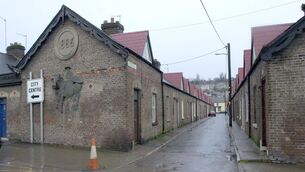
Realistically speaking, what we’ll want when we’re old is an inner-city cottage like this one described as needing “light refurbishment”. Another G. An “unrivalled opportunity”, alright. Who wants these fridges? Someone who has the money to refurbish them. And that money is going to come off the asking price. As is no surprise in Ireland, implementation of the new BER advertising rules only began in earnest when they were already in place. Myhome.ie reckons about 6.5% of their ads have BERs.

Daft has complained to the Department of the Environment that the regulations do not make “leeway” for all their “screens and devices”. And some of the estate agents are grumbling, notably Keith Lowe of Douglas Newman Good, who said he thought putting the BER on hoardings was “completely unnecessary”, particularly when colleagues in the UK and in France, governed by the same EU directive, didn’t have to do so.

But these changes are the law now, and though it may take some time, BERs will eventually appear on all property ads. And that’s when we’re going to see the homes of Ireland for the kennels they are. It is reckoned about a million Irish homes need to be insulated and sadly many of them were built when we should have known better. We built 647,000 houses between 1998 and 2007. Many of those homes may not pass Irish consumers’ new test: Location, location, energy rating.

Since 2007 our building regulations have been among the toughest in the world. But we had most of our houses built by then.

The commitment to include the BER on all advertising material was negotiated by the Green Party with Fianna Fáil in their renewed programme for Government in 2009. The campaign for the change was led by Jeff Colley, editor of the building magazine, Passive House Plus. He says some of his submission went into the Programme for Government “word for word”.

Since 2009, a purchaser has had a right to ask for a BER before buying. But as Colley says, by the time you’ve put in a bid you’ve already made up your mind. If you introduce the energy rating in the initial advertising it influences whether you buy or not.

You’re saying we need every sale we can get right now? Yes, but the energy-savvy customer will just move on to a house with a better rating. And the highly visible BERs should stimulate activity in the construction sector as purchasers factor the cost of retro-fitting into the sale price.

Colley sees banks eventually factoring energy costs into their lending practices. Most importantly, the advertising hoardings should make the wider public aware of energy efficiency. If the house next door has a “G” on the gate, it begs the question — is my house as bad? Not everyone has the money to do anything about it, of course. But the Government should be making retro-fitting as cheap for the home-owner as they possibly can. And instead grant aid for energy upgrades has collapsed: SEAI’s spend on retrofitting grants was €84.52m in 2010, €94.67m in 2011 but was just shy of €50m by late Nov 2012.

The Government has given sketchy details of a Pay as You Save scheme which will operate from 2014 and which requires investment from energy and finance providers, but this won’t create jobs right now, when we need them.

We have more than 100,000 construction workers signing on — over a quarter of the live register. And the Construction Energy Federation reckons a quarter of a million jobs have been lost in all, when you count the jobs downstream of construction.

Passive House Europe reckons an EU-wide spend of €400bn would generate €3trn in economic activity. Upgrading the energy rating of buildings is one of the most effective actions we can take in the war on climate change, and it also builds our economy. For this reason, the National Economic and Social Council said last year that it should be “the central focus” of our efforts to lower emissions. What’s not to like?

Labour and Fine Gael are tussling over putting targets in their Climate Change Bill but targets will do nothing to lower our carbon emissions without political will. And it is a sign that political will is lacking if we can’t be bothered to do the most practical thing we can do to help stop the planet overheating.

Our most eminent expert on climate change, John Sweeney, said on Morning Ireland this week that Planet Earth has eight years left to control our carbon emissions or we may face the terrifying prospect of runaway climate change.

We should make a war effort as a nation to make our homes fit for purpose and display our BERs with pride, not shame.

More in this section

Revoiced

Newsletter

Sign up to the best reads of the week from irishexaminer.com selected just for you.

Cookie Policy Privacy Policy Brand Safety FAQ Help Contact Us Terms and Conditions

© Examiner Echo Group Limited