We need to smoke out green weed

Something terrible is happening to the waters around the coast of Ireland.

We need to smoke out green weed

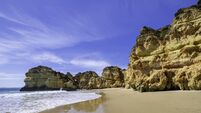
After the June Bank Holiday, Our Lady’s Strand in beautiful Inchydoney in west Cork, the beach where Fianna Fáil leaders love to be photographed (Our Leaders’ Strand, some locals call it) was inundated with green weed. While global warming may be partly responsible, many environmentalists hold that lack of infrastructure and (once again) effective regulation are to blame.

In summer, the weed is regularly bulldozed away to keep the golden sands clean for holidaymakers or (some locals say) in order that our taoiseachs and ministers posing for photo-shoots after sumptuous dinners at the Inchydoney Hotel should not slip and fall on their arses, thus providing a literal manifestation of the metaphorical situation into which they have plunged this lovely country over the last 10 years.

Good government should be like wise parents, keeping a tight grip on the money and teaching us children that times are not always good. In general, the ignoramus electorate knows as much about big-picture economics as kids about household budgets. If the parents hand out sweets, we eat them. Far from regulating the supply, those in charge left the jar open and urged us to enjoy. Now, not only the jobless and pensionless pay a price for that irresponsibility, but the environment too. We create the conditions in which the invasive weed thrives. It is all but absent where human settlement is absent. For lack of national investment and regulation, the shallow sea is fed with our phosphates. Wealth and demand for product has brought increased fertiliser onto the land while urban sewage treatment is often Third World. With a rich mixture of human, cattle or pig slurry, no wonder the sea lettuce grows.

In early spring, it is not unattractive. Emerald green in the sunlight, it covers vast areas of estuarine mudflats and sand banks, making them look like golf courses. Attached to rock, and even rooted in sand, it flourishes until dislodged by storms and set afloat; it can be seen from the cliffs.

When one crop is scoured from the sub-strata, fertiliser and photosynthesis nurtures another. Meanwhile, the floating weed-rafts are carried onto the beaches by the tide. Each tide leaves a fresh swathe piled upon the last. As the tides fall, the residues are deposited lower and lower down the beach. On the big, iconic Irish storm-beaches, our famous three or five mile-long strands, it forms a barrier between the high-tide sand, where holidaymakers picnic and relax, and the sea. A mound of weed must be crossed to reach the surf which is, itself, a soup of weed. At first green, it quickly turns brown. The mounds become dry and caked on top. Sealed beneath the thin skin, the weed begins to rot. The warmer the weather, the faster the decay. The bather entering the sea is forced to walk through an unbroken barrier of malodorous compost, often 10 yards wide and two feet deep and – beneath the deceptive skin – the consistency and colour of cow dung. Then, stained to the thighs, he finds himself wading through water dense with dead weed like floating toilet paper. Bathing in such conditions is not a pleasant experience. Yet, in summer 2009, they prevail upon many of our best beaches and, as these beaches are cleaned, a green tide begins to lap menacingly upon the rocks of even the remotest coves.

While shallow estuaries provide perfect growing conditions, deep-water coves are increasingly suffering from weed carried out to sea by the tides and then returned to shore. Weed moved off holiday beaches by local authority JCBs is often carried by currents down the coast to the detriment of pristine environments where, in the long term, it will gain footholds and colonise.

Long ago, injection of slurry into the ground rather than surface spreading should have been made compulsory in coastal or riverine areas, and the farmers subsidised or faced down. Modern sewage plants should have been installed in the boom years. However tight are finances, our waterways and seas must be protected.

The weed cannot be poisoned without poisoning the sea. It must be fed less and the prospect of harvesting it seriously investigated.

x

More in this section

Revoiced

Newsletter

Sign up to the best reads of the week from irishexaminer.com selected just for you.

Cookie Policy Privacy Policy Brand Safety FAQ Help Contact Us Terms and Conditions

© Examiner Echo Group Limited