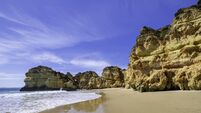
Exotic names reflect an exotic past
There are no snakes, but slim little lizards, with black-and-white, checkerboard backs are common. I’ve struck up a passing relationship with one that lives in the pitted rock outside the back door. I drip water onto a plant and it leans out, delicately balancing its back feet on the rock and its front feet on the leaf, as it sips this libation fallen from heaven via a plastic mug.
The weather is dry and warm, 27 degrees, and no rain for weeks. A tall young man told us he was a farmer and grower of cantaloupe melons, and he badly needed rain. We gave a youth a lift and he proudly showed us his ID as a member of the Jamaican Fire Service.
He often fights bush fires. Damien was his name and we shook hands on that joyous coincidence.
As I write this, at an outside table in the cool of the early morning, the first sun touches the garden and a red-billed streamertail hovers at a flower two yards from where I sit.
The birds of Jamaica are not only exotic, but bear exotic names. The snowy egret has bright, yellow feet like the little egret, recently become so common in Ireland, and so they call it “golden slippers”. The brown pelican is dubbed “old Joe”, and the green heron the “dentist bird”, because it picks the teeth of crocodiles lying on the banks of the Black River, 20 minutes from here. We are near the Great Morass, a wild area and national park of Jamaica.
Pon de Rock, our one-room house, is at the western end of Treasure Beach (the local names, Billy Bay, Button Beach, and so on are romantically reminiscent of Jamaica’s past as a haven for pirates preying on bullion ships on the Spanish Main) and little development has reached this far, yet.
Development is afoot, moving down the coast from Treasure Beach, which, we’re told, featured on the front page of the travel section of the New York Times last week. The Heave Ho Estate Agency is enthusiastically advertising sea-front land for sale.
What “development” there is, is mostly small concrete (as opposed to wooden-shack) houses in the 1960s, Spanish style. The owners are proud of the modernity, although goats are often an incongruous feature of front lawns.
There are some over-the-top, crenellated and multi-balconied residences, painted in pink or white and roofed with shining, new corrugated iron.
The patios and windows of better residences are caged-in with wrought iron. Crime is rife in Jamaica, but not in this rural area: perhaps the newly rich are cautious. The poor are everywhere.
The shacks of the poor can be seen along the back roads. We took one such road the other evening, along a large lake, looking for a place where we could access it via a jetty: we’d been warned to be on the alert for crocs. “Nature writer swallowed by croc in Jamaica: for last column, read here.”