Are frogs on their last legs?
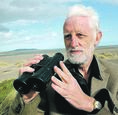
INTERVIEWED by the BBC’s John Humphreys, last week, broadcaster and naturalist, David Attenborough, claimed that half of the world’s frogs, toads, and newts may be extinct in 40 years.
We are accustomed to hearing of individual species in decline, or that families, such as the rhinos, are in dire straits, but now an entire class of 5,743 species is said to be in trouble. Frog population crashes and local extinction were first recorded in the 1980s. The situation has since deteriorated, with amphibian problems reported in many parts of the world.
According to a paper in the journal, Science, 122 amphibian species have become extinct in the last two decades and 427 are ‘critically endangered’. Our Irish frog and smooth newt seem to be holding their own, but the natterjack toad is suffering from habitat deterioration.
The causes of the worldwide decline are not understood. The usual suspects, habitat destruction, pesticide residues, and industrial pollutants are being investigated. There have also been suggestions that increased exposure to ultra-violet light may be the cause. UV can alter the DNA in animal cells, and frogs have very low levels of the enzymes needed to repair such damage. However, the amphibians’ unique method of breathing is more likely to be the crucial factor.
These ancestors of the reptiles, birds, and mammals (including ourselves) were the first back-boned creatures to venture onto land. They could not sever their ties with the water completely: amphibian skins are not water-proof and frogs, toads, and newts must lay their eggs in water. Tadpoles develop in the water, where they mature into legged creatures. Amphibians have to be able to breath both in and out of water. Here, the porous skin comes into its own. Amphibians can absorb oxygen and expel carbon dioxide through the skin, when in the water or on land. But there’s a price to be paid; other gases, besides oxygen, can freely enter the body. So can poisons and fungi. In an increasingly polluted world, an open-door skin policy becomes a liability.
One fungus is implicated in amphibian decline. Batrachochytrium dendrobatidis causes infections that spread in the skin, blocking the flow of oxygen and smothering the unfortunate victim. The death rate among infected animals is 100%.
The fungus was first identified nine years ago in Australia and in Panama. Since then, it has spread to North and South America and to Europe. But how could fungal infections have spread so widely and so quickly?
Nobody really knows, but it’s possible the use of frogs in medicine, or as laboratory animals, is to blame. During the last century, species such as the African clawed frog were used in pregnancy testing. A frog would be injected with substances from a patient’s urine. If the animal produced eggs within the next 24 hours, the pregnancy test was positive. Did frogs, transported around the world for use in procedures such as this, carry the lethal fungus with them? But skin infections are not the amphibians’ only problem. Their habitats are being destroyed everywhere as wetlands are drained and forests cleared. Global warming is aggravating the problem; with rising temperatures, marshes and ponds are drying out. Amphibians in Europe may have to move north to survive, but with the profusion of roads, walls, and concrete surfaces and the disappearance of wetlands, the way is blocked. European frogs may not be able to move house.
The amphibian catastrophe will have far-reaching effects on eco-systems and the other creatures that depend on them. Humans, too, may suffer: frogs, toads, and newts are insect eaters, which help to control the numbers of harmful flies in some parts of the world. Many reptiles, mammals, and birds depend on amphibians, or their tadpoles, for food. The collapse of amphibian populations will have far-reaching effects on them.
2008 was designated the Year of the Frog, in an attempt to highlight these problems. David Attenborough, who has leant his famous name to the cause, presented a five-part TV series, Life in Cold Blood, to coincide with the event. Zoos, including Dublin Zoo, have rowed in, establishing protected breeding colonies and running public awareness campaigns. Farmers: please don’t drain those little ponds and ditches on your land. Frogs and newts need them.