An observant eye, an incredible mind
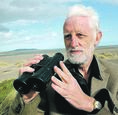
Richard Collins on the quintessential Renaissance man

An observant eye, an incredible mind

IT’S often said that we are only flesh and blood or skin and bone but, in fact, we consist mostly of water. No form of life is possible without water. Now, a famous treatise on the subject of this extraordinary liquid is on show at the Chester Beatty Library in Dublin.

The 72-page Codex Leicester was written 500 years ago by one of the most extraordinary individuals ever to have lived; Leonardo da Vinci. Written with the letters reversed and reading from right to left on the page, this dog’s breakfast of observations and off-the-wall speculations covers everything aquatic from the mechanics of falling drops to the future fate of the Mediterranean, which Leonardo believed once flowed into the Red Sea. At times he is highly speculative. He thought, for example, that rivers are the veins and arteries of the Earth, a living entity whose breathing is manifested in the tides. Then he comes down to earth, offering advice on the draining of marshes and the movement of water through conduits.

In Leonardo’s day, science was not a recognised discipline, nor was a distinction drawn between natural philosophy and the arts. Leonardo, the quintessential ‘Renaissance Man’, straddled both cultures. One of the greatest painters of all time; his Last Supper and Mona Lisa are icons of European culture. Another of his images became the symbol of enlightened humanism; his Vitruvian Man is a human figure with arms outstretched enclosed by a circle and a square, thus combining the two most basic geometrical forms.

Leonardo’s story has a rags-to-riches flavour. Born outside of wedlock, he had no surname; ‘Da Vinci’ means ‘from Vinci’, the town of his birth. Little is known of his mother; tradition has it that she was a barmaid. His father, Piero, was a notary, who drew up deeds and other legal documents. Although taken into his father’s household, Leonardo was denied a formal education. Only as an adult did he learn Latin, the language of academic discourse, and he described himself as an ‘omo sanza lettere’, an ‘unlettered’ person.

But the privations of his upbringing may have been the making of this great man. Not being indoctrinated in the received ideas of the past, his imagination remained unfettered and he retained the spark of originality which formal learning might have extinguished. More importantly, perhaps, he was not beholden to authority. In those days, for example, medical problems were addressed by perusing the writings of past luminaries rather than by clinical examination. Leonardo, however, preferred the detailed observation of natural phenomena and free speculation about their nature to mulling over ancient texts, no matter how revered their authors. He was ahead of his time; the primacy of empirical examination over appeals to authority would become a cornerstone of Enlightenment science.

Apprenticed to the Florentine artist Andrea del Verrocchio from about the age of 15, Leonardo prospered. In him, the worlds of the artist and natural philosopher merge. His illustrations of plants combine the scientist’s powers of precise observation with the artist’s skill in illustration. His pen and ink drawings of specimens are precise enough for a modern textbook.

Although Leonardo is credited with a host of inventions, the ideas which appear in his writings were not all his own. It is claimed, for example, that he invented the helicopter. However, a 15th Century French painting, and a stained glass panel, feature children playing with little rotors launched using strings wound around spools. Such toys may have been common in Leonardo’s day.

Perhaps Leonardo was too preoccupied with the immediately visual for his own good. With his scientific hat on, Leonard arrived, by reflection, at Newton’s First Law, reversing Aristotle’s doctrine that a body moves only by the agency of a force and will cease to move when the force is withdrawn. In the Codex Leicester, there is a diagram of a lever being held in suspension by falling water, an example of another of Newton’s laws; action and reaction are equal and opposite. What a pity that he did not develop these truly revolutionary ideas which were not to be adequately fleshed out and presented mathematically until Newton published his Principia 130 years after Leonardo’s death. Dissecting cadavers and exquisitely delineating the internal organs, Leonardo came within an ace of discovering the true nature of the circulation of the blood. With just a little more tenacity he might have anticipated William Harvey’s ground-breaking achievement over a century later.

Failing to finish what he had set out to do was a notorious Leonardo shortcoming. He was the patron saint of butterflies, flitting from one project to another and seldom completing anything. That Leonardo never had close relationships with women led Freud to speculate that he sublimated a repressed homosexuality into work. His paintings and projects were his children and he abandoned them, just as his own father, Freud thought, had abandoned him.

Admission to the Codex exhibition is free but tickets should be pre-booked on the web; www.cbl.ie.

x

More in this section

Revoiced

Newsletter

Sign up to the best reads of the week from irishexaminer.com selected just for you.

Cookie Policy Privacy Policy Brand Safety FAQ Help Contact Us Terms and Conditions

© Examiner Echo Group Limited