Culture of death-denial is a flagrant abuse of the rights of individuals

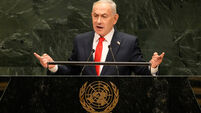
THE key to any man’s essence is the recurring phrase they use throughout life to spell out their central preoccupations. The phrase that surfaced again and again throughout the late Pope’s reign was ‘culture of death’.

Culture of death-denial is a flagrant abuse of the rights of individuals

In common with Mother Theresa, who in his last days he reportedly wished to sanctify, John Paul used the term to convey a disregard for human life exemplified, as both saw it, by world-wide use of contraception and abortion.

Not coincidentally, in the days after the Pope’s retreat for the last time from the balcony in St Peter’s square, one of his most influential officers used the term in reference to the Terry Schiavo controversy: pulling her feeding tube, he suggested, was part of the contemporary culture of death.

Pius XII, though his was the reign in which the Nazis exterminated six million people in the death camps and Stalin as many as 30 million through starvation, slave labour and execution, never talked of a culture of death, perhaps because national socialism and communism were atheist by nature and so nothing they did seemed to have anything to do with Catholicism.

Abortion and contraception, however, sit squarely within Catholicism. The overwhelming majority of Catholics in the western World, at some point in their sexually active years, use artificial contraception. The overwhelming majority of the women travelling to England from this country for abortions are Catholic by birth and upbringing.

John Paul II, despite the fact that he has been described, these last three days, as “a man of unequalled power and influence throughout the world,” was not able to change that. The pontiff had demonstrably no impact on this area of human behaviour which so profoundly grieved him.

His successor might usefully address a smaller issue on which he undoubtedly could have an impact: papal privacy when a pontiff is dying. Karol Wojtyla died a particularly modern death. A death where his medical carers became internationally-recognised faces and voices, gravely sharing details of his case with world media, and, in the process, undermining the principles of patient confidentiality which protect the dignity of every man, woman and child.

We had no need to know much of what we learned about Pope John Paul II’s symptoms or treatments. More to the point, we had no right to know it.

No public good is served by discussion of the advantages and disadvantages of inserting a catheter into a pontiff’s urinary tract. Nothing is more calculated to rob a man of dignity than the images inevitably evoked, together with the descriptions of the infections.

Public revelation of medical detail about the Pope may have been done as an attempt to indicate Church humility or to underline the humanity of the man, but it did neither. The man was reduced to a commonality with all of the sick, that’s true, but a commonality where the human serves as little more than the battleground between anti-biotics on the one hand and bacteria on the other.

The really sad thing is that, because the last appearance of the man himself at the window was so dramatic, he contributed to the essentially undignified coverage of his death. One newspaper after another chronicled his efforts to speak and his failure to deliver anything other than - as they described it - “a rasp.”

By the time the Vatican belatedly retreated to a position where they began to talk about the man’s life moving serenely to its close, it was too late. The tone was already set. Coverage turned into a pre- death post-mortem, to such an extent that a priest on one of the myriad RTÉ programmes devoted to the pontiff got ratty when a theologian talked about the dying man’s limitations. That was for later, the priest said. Surely we could stay positive until John Paul’s dead? Well, no, realistically, we couldn’t.

At that point, media had already gone through all the archival stuff about his bravery, his vision, his humility, his strength, his writing, his acting, his athleticism. The broadcasters and writers were already semi-permanently parked in St Peter’s Square.

Mass media is a big animal that requires constant, not occasional, feeding and, if you summon it in great hordes, you can’t tell it not to be hungry. The problem, oddly, is we live in the opposite of the times defined by the late Pope. We do NOT live in a culture of death. We live in a culture of death-denial. Every death is an affront, an assault on our conviction of personal power.

We portray ourselves as victimised by killer addictions like alcohol and tobacco. If obesity is killing us, we’ve been victimised by fast food merchants. Because death isn’t natural to us, any more. We have erased it from our consciousness. We talk of ‘untimely’ death when anybody short of their 80s dies. We are traumatised by the suicides of others, particularly of the young. When it comes to illness, (particularly cancer, as Sontag noted) we talk, ludicrously, of fighting it. Doctors who fail to prevent death at all costs we see as incompetent or negligent.

The Victorians, on the other hand, had a genuine culture of death. The grim reaper was ever present. Death was a familiar. Most people died at home, surrounded by those who loved them - as the art of the time records.

Twenty-first century art rarely records 21st century dying, because that dying is so often a hi-tech nightmare. A reversal has taken place in attitudes to death.

Thirty years ago, the medical profession was often eager to intervene to prolong the life of someone terminally ill, but met with opposition from relatives. Today, according to recent studies, the medical profession’s recommendations that grievously ill patients, particularly those of advanced years, should be made comfortable but not subjected to further intervention, frequently meet with impassioned opposition from relatives, who want ‘everything possible’ done.

Some medics believe this is a self-serving stance directly related to how involved those relatives have been in the patient’s care. Adult children of an older person who have not brought that older person into their home, who have not done hands-on minding of their father, mother or aged aunt, want to believe they truly cared for the patient by forcing doctors to take action, long after that action can do other than discomfit the patient.

The end result is that more money is spent on the last three months of life than is spent in the totality of someone’s existence up to that point.

In all of this culture of death-denial, the hospice movement is a shining exception, pointing to the possibility of peaceful death, surrounded by people devoted to one’s humanity, rather than one’s simple survival. A genuine culture of death would be worth developing.

x

More in this section

Revoiced

Newsletter

Sign up to the best reads of the week from irishexaminer.com selected just for you.

Cookie Policy Privacy Policy Brand Safety FAQ Help Contact Us Terms and Conditions

© Examiner Echo Group Limited