Gareth O'Callaghan: AI can never replace the journalist as a witness to human suffering
AI can’t mimic the integrity of the human experience and the pursuit of its truth
Gareth O'Callaghan: AI can never replace the journalist as a witness to human suffering

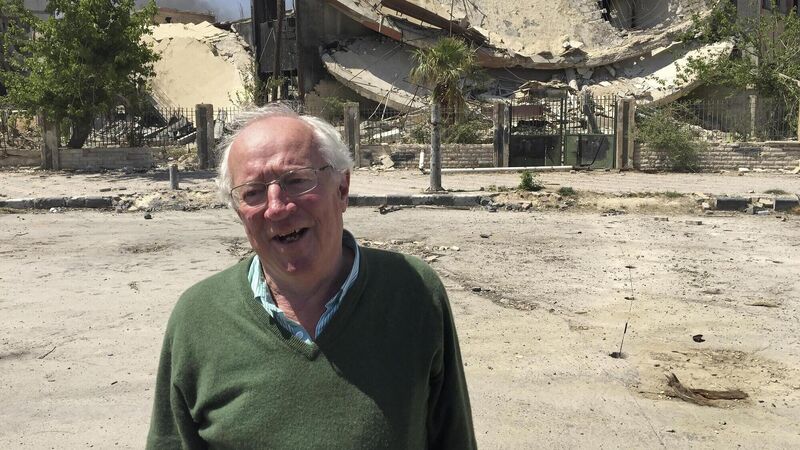
Robert Fisk stands in front of a damaged building in the Damascus suburb of Douma, during a tour by Syria's Information Ministry to the town days after it was captured from rebels by Syrian government forces in 2018. File picture: Bassem Mroue/AP

Robert Fisk, the legendary war correspondent, once said that it’s a journalist’s job to be a witness to history. “War,” he wrote in The Great War for Civilisation: The Conquest of the Middle East, “represents a total failure of the human spirit”.

I was reminded of this recently —not so much the quote as the book —when I spent an afternoon with a group of media students. The conversation centred on whether the future of AI could endanger the integrity of traditional journalism.

I asked the group why they had chosen journalism. I was particularly struck when one of them told me that his parents had bought him a copy of Fisk’s book as a birthday gift. Stephen had always had an interest in war and conflict, and after reading about Fisk’s experiences in the Middle East he decided he wanted to be a reporter.

It reminded me how writing from a place of integrity is more about taking personal risks, if you’re to be genuinely serious about your subject. As Fisk said, it’s a journalist’s job to be a witness to history.

It’s a strange career choice in some ways — nobody becomes a journalist to be popular.

One of the highlights for me of the long hot summer of 1976 was a trip to the cinema to see All the President’s Men, about the Watergate scandal that brought down the presidency of Richard Nixon. It starred Robert Redford and Dustin Hoffman as journalists Bob Woodward and Carl Bernstein as they investigated the scandal for The Washington Post.

What has lived on for me was how two young reporters working for one of the most respected titles in history put their lives at risk to uncover what eventually became a constitutional crisis.

In journalism, there’s always an unease about getting the story first while getting the story right. Woodward and Bernstein’s work was a testament to a reporter’s confidence in gut instinct. As a 15-year-old who knew nothing about duplicity, the film opened my eyes to how vital traditional journalism is, without which human rights abuses would destroy society.

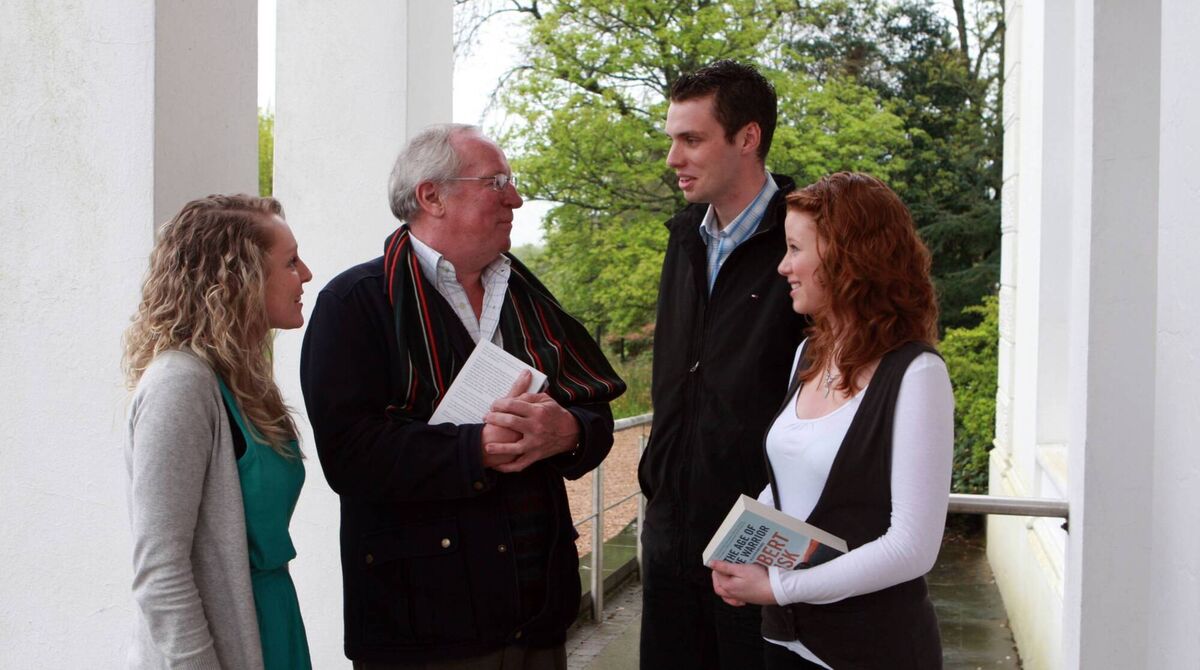
Robert Fisk speaking to UL journalism students in 2009. File picture: University of Limerick

Taking risks to witness history 

In 2003, I saw firsthand what Fisk called the total failure of the human spirit when I visited Cambodia. In the company of two other journalists, I was there to observe the work of non-governmental organisations who were trying to rehabilitate an entire population that had never recovered from the atrocities of the Cambodian-Vietnamese War which had ended in 1989 with the toppling of the Khmer Rouge.

Humanity told its own story. In the broken minds of these gentle people, the war was still raging. Many of them would never heal, while many of their young families had fallen prey to addiction; and to another evil, namely child sex trafficking.

I never knew what real risk-taking was until I woke on my first morning in Phnom Penh. If you have watched the movie The Killing Fields, you’ll be familiar with the taxi journey New York Times reporter Sydney Schanberg, played by Sam Waterston, and his interpreter Dith Pran, played by Haing S Ngor, take from the airport into the heart of the capital.

We were met in the small reception of our hotel on the banks of the Mekong by Dorry our interpreter, a former engineer with years of medical experience who had quit his career to work with the NGOs who were trying to provide funds and food and treatment for those who were still haunted by Pol Pot’s regime.

All I knew was that we were being taken to a large compound somewhere in the maze of backstreets around Phnom Penn, a safe house where women and young children are rehabilitated after being removed from dysfunctional families, and after armed raids on the hundreds of brothels around Phnom Penn’s red light district.

Two jeeps with blacked-out windows sat on the pavement outside. We were told by Dorry to make sure our seatbelts were tightly fastened. I sat in the front seat.

Rithy our driver placed a Kalashnikov rifle across my legs as I fastened my belt.

“You mind…for me,” he said. I felt the weight of the rifle. They were taking no chances, whatever they were guarding us from.

Just as fast as it had started, the journey ended outside a huge cast iron gate. On either side were high walls with coils of razor-sharp wire running along the entire perimeter. If this was a rehabilitation orphanage for young children, then who were its owners trying to keep out?

The electric gate slowly slid back. Two men in black khakis, each of them holding a gun, directed us into the vast compound pointing at a beautiful pagoda-style building.

Moments later I was standing in an orphanage-safe house where children and mothers who have suffered the worst violence and trauma imaginable came to heal, to learn to live gentler lives and to stay as long as they wanted. Some stayed for years as their damaged minds couldn’t imagine anywhere else beyond the locked gates which kept them safe from their past.

That day, I met a woman who had spent most of her life (and would continue to do so until a car accident cruelly took her in 2012) saving children and women, and bringing them to Future Light Orphanage to restore their souls and find a place they could finally call home. Her name was Nuon Phaly. Her life is worth reading about, her experiences at the hands of the Khmer Rouge and her survival being an exception to the human spirit’s total failure.

The energy in this place with its almost sacred peace felt invitingly cool and uplifting.

I was asked not to record conversations. There would be time for questions, but only to be addressed to Nuon. She entered the room with two small children, a girl of eight, and her five-year-old brother. The tiny boy sat close to his sister.

They were being “rested” having been rescued from a city brothel during an armed police operation some months before.

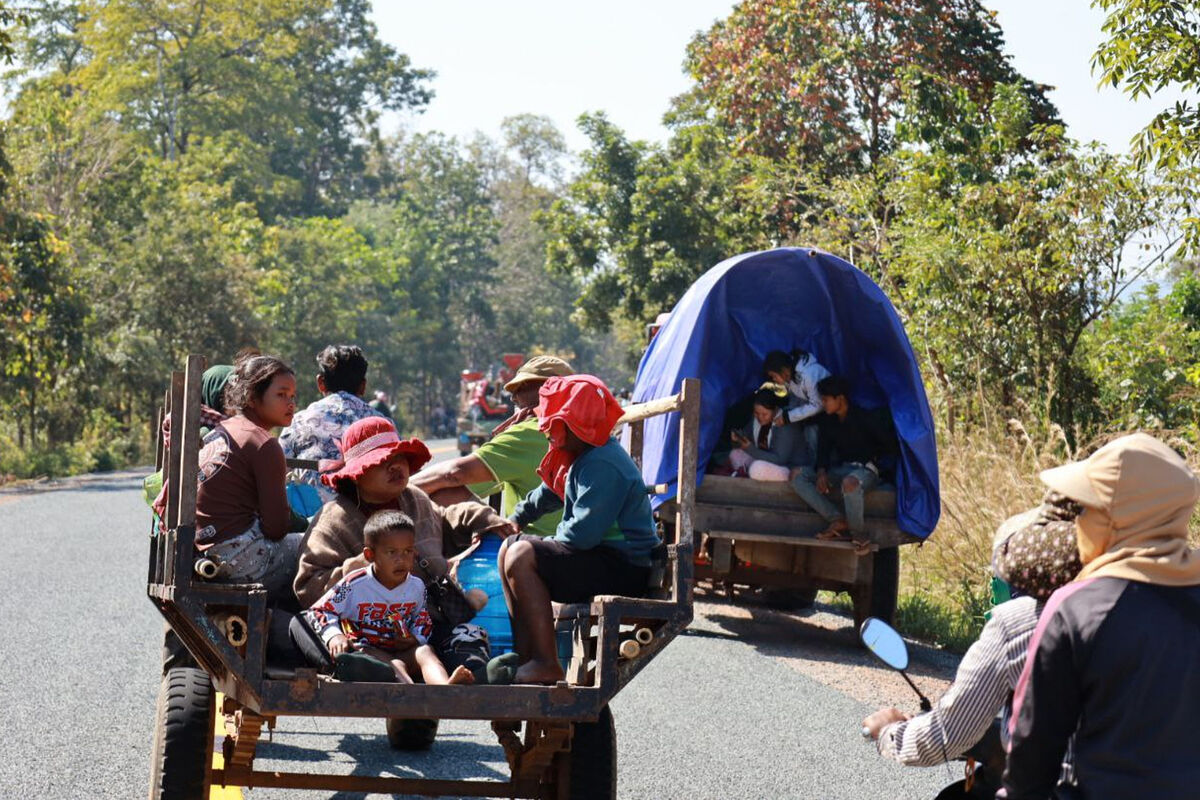
Cambodian villagers, transported by motor cart and tractor, flee from their home in Preah Vihear province, in December last year. File picture: Agence Kampuchea Press

Their parents were alcoholics. They had given their son and daughter to an uncle in exchange for money. In order to recoup his debt, the uncle had “rented” them to a brothel. They had been raped by sex tourists, she told us.

Nuon pulled them into her with a motherly hug. Their eyes were spiritless, almost dead. But they were alive, and their story needed to be told. Otherwise how would the world know what happens here?

When I look around these days, I see a lot of suffering. It’s a journalist’s job to tell that story, and the reasons behind it. Without compassion, journalism fails. AI can’t mimic the integrity of the human experience and the pursuit of its truth, just like it can’t relive the emotional experience of war.

Was my life at risk in Cambodia? Probably. Its government has never been fond of journalists.

Intimidating and silencing the media continues. Journalists Pheap Phara and Phon Sopheap are currently appealing 14-year prison sentences after being convicted of treason for reporting on the Cambodia-Thailand border conflict last December.

I still often think of Dorry and Rithy, and how Rithy saved me from being bitten by a venomous Malayan Krait one morning, thanks to his perfect aim. But maybe there was more at stake than I was aware of.

I told that story to Robert Fisk in 2010, shortly after I interviewed him.

“Believe me, the snake was less of a threat than what your friends were really protecting you from,” he said. I’ve never forgotten his words.

x

More in this section

Revoiced

Newsletter

Sign up to the best reads of the week from irishexaminer.com selected just for you.

Cookie Policy Privacy Policy Brand Safety FAQ Help Contact Us Terms and Conditions

© Examiner Echo Group Limited