Terry Prone: FAI needs a river run right through it to make it fit for purpose
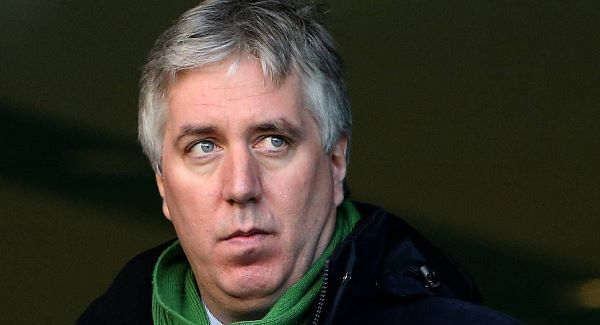
In literary terms, this is a thriller,not a whodunnit. We know whodunnit; John Delaney dunnit. The issue is who let him do it and why, writes Terry Prone

Terry Prone: FAI needs a river run right through it to make it fit for purpose

In literary terms, this is a thriller,not a whodunnit. We know whodunnit; John Delaney dunnit. The issue is who let him do it and why, writes Terry Prone

Say that again about the Football Association of Ireland (FAI), would you? Just go back to the bit where they’re €55m in the hole but, despite that, arrange to pay John Delaney close to half a million to prevent them having to pay him €3m. That bit. The bit after him lending them €100,000. The bit before the auditors deciding the accounts for last year and the year before last might need a bit of delousing.

And, while you’re at it, don’t ask the obvious question. The obvious but wrong question. The one that goes: “Should the FAI do a re-brand, change their logo and their name, in order to solve their problems?”

It’s the wrong question on so many fronts, starting with the reality that names matter much less, in branding terms, than you might think. You could change the name of the FAI to Futball Ireland tomorrow, get a good computer artist to devise a striking image and it wouldn’t make any difference whatever, other than costing more money than it seems the FAI has now or is going to have in the foreseeable future — remember, the title runs right across their awful HQ building so every bit of signage would have to be changed.

This is about reality, not image. It’s about cleaning out the Augean stables of the finances of the FAI. The guy in Greek mythology who had to take care of those stables, which hadn’t been cleaned in 30 years, took the easy option and diverted a river through them. Same thing with the FAI. A river needs to run through it before we start talking about the superficialities of a new logo or name.

In literary terms, what’s happened is a thriller. But not a whodunnit. We know whodunnit; John Delaney dunnit. The issue is who let him do it and why.

Now, I have seen Delaney in action, up close, in two different areas. One was the examination of the Olympic Council of Ireland, which, up to that point, was the worst sporting disaster Ireland had seen.

At the two meetings I was at that Delaney was also at, he supported the determination to clean the organisation out and install proper governance. Whole-heartedly supported it. With fine argumentation. Ask me to put that together with what we now know was going on in the FAI, and I can’t.

The other time I met Delaney was in FAI headquarters. On his home territory, what I saw was a man in total, overt, if jocular control, surrounded by elderly football lovers who had no control over him. Some were board members who, because of loyalty to the CEO and/or fear of him, were never going to arrive at a meeting and say: “Lads, I am uncomfortable about this subhead on page 97 of the accounts.”

Last week, they were acknowledged to have been guilty, according to Donal Conway, president-about-to-retire-early of the FAI, of “sins of omission” rather than “sins of commission”.

However, if you encourage someone to take a little stroll in the back garden on an un-starry night without a torch and fail to tell them about the proximity of the cliff-edge, that might be a sin of omission. You kind of, sort of let it happen.

Now, the theologians present might be best placed to decide if the sinner who does it by omission is better or worse than the sinner who does it directly, but Conway is right. The sins of the board were not actively committed for their own gain. The question as to why the board may be guilty of sins of omission happened is answered in his own statement.

“I’ve invested a significant amount of time in Irish football,” he said on Friday. This is undoubtedly true, with him committing time and energy to the underage game long before he arrived on the board. No doubt many of his present and former colleagues on the board could make similar claims.


But here’s the rub. Where the FAI is standing, right now, it doesn’t matter, any more than John Delaney’s constant boasts — on that day in FAI HQ — of being the champion of underage football in Ireland matter.

Of even more relevance is that this is precisely why most of the men involved should never have been board members. For several decades, board membership was gifted as a token of gratitude for long and loyal service. This ensured that board membership was given to good men (mostly men) who, while utterly committed to the organisation’s best interests, were notable for not having any of the talents, skills, or expertise required by their new role. Put a big charismatic secretive bullying CEO in charge and everybody’s in for a bumpy ride.

Or perhaps a smooth ride before the organisation crashes into a wall.

That’s the first problem; people becoming board members because they had given good voluntary service and deserved a bit of public regard with free tickets to matches thrown in. OK, Delaney’s social displays may have given a couple of them the bends, but big personalities come with their downsides and it behoves a board to look on the bright side, does it not?

That’s the second problem, right there. No, a board shouldn’t look on the bright side. They should always play devil’s advocate, in order to test the claims being made, for the shareholders and — in the case of the FAI — for the other stakeholders, who include Government and staff.

The FAI board doesn’t need to be heavy on football experts or the long-serving faithful. It needs to be heavy on specialist expertise, including corporate governance, finance, strategic planning, and sponsorship. It’s never a good thing to have a situation where the CEO is bringing home the sponsorships and no expert is looking at the contracts implicit therein.

Similarly, it’s never a good thing for the CEO to be the only one owning the relationships with major stakeholders as Delaney did.

The combination of putting the wrong people on the board and expecting the wrong things of them is pivotal to how the FAI got to where it is, now. It’s also crucial to any rebranding.

An approach like that of the Olympic Council of Ireland is required: Clean-out, radical. New board. New management team. New understanding that the organisation is not a fiefdom. A CEO with experience running an organisation with an international reach — not necessarily someone with a soccer track record, nor someone who yearns to be high profile. Just someone who can speed up the clean-up.

Then, and only then, will the organisation be able to say to government and potential sponsors: “We’re squeaky clean and can prove it.” And that’s when a re-brand may be apposite.

In literary terms, this is a thriller,not a whodunnit. We know whodunnit; John Delaney dunnit. The issue is who let him do it and why.


More in this section

Revoiced

Newsletter

Sign up to the best reads of the week from irishexaminer.com selected just for you.

Cookie Policy Privacy Policy Brand Safety FAQ Help Contact Us Terms and Conditions

© Examiner Echo Group Limited