Cervical cancer report shows some consultants live up to old caricatures
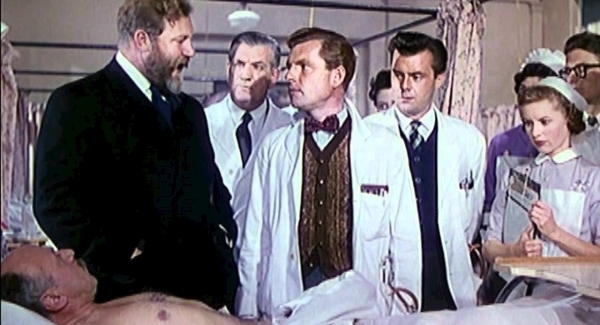
Listen, that British-made film is so old, even I was a toddler when it first came out.
I never actually saw it until it appeared on TV, decades after initial release in 1954. But a little clip of it is easily accessible on the internet.
Just click on Whatâs the Bleeding Time? and up will pop a tiny old black and white film clip.
Itâs less than three minutes long, but so crisply written, acted and edited that it manages, within such a short period of time, to nail several of the problems identified by the Scally Report. Sixty-five years ago.
Hereâs what happens in the opening minutes of the film.
A big old car draws up at the main entrance of a big hospital, and a gloved barrel of a man with a pointy beard â chief surgeon Sir Lancelot Spratt, played by Scottish actor, James Robertson Justice â bounces out of it and greets a subservient line up of white-coated young doctors awaiting him on the steps.
âGood morning, gentlemen,â he crisply tells them, ignoring the one female in shot. (Thereâs your first hint, right there: women do not count in the world of the senior medical consultant.)
Then he blasts down a corridor, throwing his walking stick and gloves at a minion in a precursor to Meryl Streepâs overcoat-tossing in The Devil Wears Prada asking a subordinate, as he goes, about patients Sir Lancelot operated on the day before.
Arriving at the bedside of a patient, he promptly orders him stripped (by a non religious sister) and examined by individual registrars, barking old saws at them while they make mistakes, âA good surgeon must have the eye of an eagle, the courage of a lion, and the hand of a lady,â he announces.
Thereâs the second hint.
Nobody says âWeâve heard that one before, Sir, and itâs damn all use to our learning.â
As is pretty damn clear from the hamfisted way one of the young doctors sets out to examine the terrified patient in the bed.
Now, Sir Lancelot, give him his due, does stop the hamfisted young doctor from bruising the patient, but manages to insult the patient at the same time, calling him âmy good manâ telling him he wonât understand the medical terms being used and instructing him not to bother his little head trying.
Third hint.
Two and a half minutes into the clip, the viewer is doubt-free: the character driving the scene may be a great surgeon, but he is, at the same time, a contemptuous bully with no interest in listening, no capacity to look at a patient as an individual.
In addition, the bearded surgeon is seriously in love with the sound of his own voice.
He is long overdue for re-training or a clip over the ear, the latter ideally provided using a two by four.
What set me on the search for this old film clip was mesmerised disbelief over just one conversation in Dr Gabriel Scallyâs Scoping Inquiry into the CervicalCheck Screening programme, published last week.
Although to call this a conversation would be stretching it. It was strictly one way.
A monologue delivered to the family of a dead patient by a clinician who clearly is of the old, Sir Lancelot Spratt school, used to being yessired, nossirred, three-bags-full sirred.
Used to being master of all he surveys.
Used to getting reverence just this side of terror, from student doctors.
Used to ignoring women, patronising patients and making a lot of money.

You could just see James Robertson Justice in the role of the guy in Scallyâs report.
It would have been so easy for him to play a medic who talked about the dead womanâs smoking habit and how this would have reduced her chances of surviving cervical cancer.
And, just as Sir Lancelot talked â for his own enjoyment â about old sayings to the effect that a great surgeon required âthe hand of a lady,â his modern equivalent, according to the family who told Scally about it, talked for his own enjoyment about nuns never getting cervical cancer.
At least, we assume it was for his own enjoyment, given that, as a piece of information, it was of no value to his patient, even when she was alive, or to the wider issue.
We know cervical cancer is an STD.
The bit of anecdote about the nuns is a Ripleyâs Believe it Or Not randomer, significant only, in this instance, as an indicator of how little individual attention the surgeon was devoting to the dead patient and her grieving family.
Even if we assume that the consultant in this particular instance is close to retirement, his Sir Lancelot performance shouldnât have happened.
At least in theory, no matter what his age, he should be undergoing skills upgrade. Heâs obliged to do so.
The problem is the definition of what constitutes training and what constitutes skills development.
That definition is somewhat loose. It includes attendance at conferences, training courses and seminars.
Note that phrase âattendance at.â The medic must be physically present.

Thatâs grand, if all you want to do is share information, which in itself is a worthwhile activity. But it does not constitute training.
If you donât take the Sir Lancelots of this world, young or old, and put them through a training programme which requires them to respond in front of a camera to a particular exigency, have their performance ruthlessly assessed by an experienced trainer who can help the trainee work out what he should be saying and what he should not be saying.
The training would then require the trainee to go through the exercise again and prove that they have learned and changed.
No points should be earned without that proof.
Without that proof, the âtrainingâ should be categorised as entertainment or time-serving.
If it doesnât deliver provable, measurable, repeatable behaviour change, then it isnât training.
Those training, developing and ensuring medics maintain the highest performance standards throughout their career need to address the so-called âsoft skillsâ like communication with as much rigor as is deployed when hard skills like surgery are in question.
The issue is not the Medical Council striking off a handful of consultants for either not telling their patients about the CervicalCheck audit, or for telling them and their relatives the facts with all the caring subtlety of an oncoming truck.
The issue is that none of the clinicians should have been allowed to reach the point where they either chose not to tell their patients the bad news to which they were entitled.
Or told them the bad news in a dismissive and paternalistic way.
Or told relatives of the dead the bad news dismissively.
Sir Lancelot Spratt was a caricature of a surgeon from 60 years ago. None of that caricature should ring true, today.
But some of it, sadly, does.