The price of free speech: Keogh judgment will dampen frankness
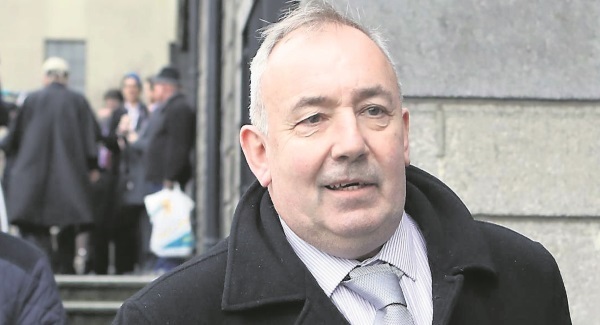
Stepping back further from the line, as distinct from being careful not to step over will be a factor in public conversation, writes Gerard Howlin.

The price of free speech: Keogh judgment will dampen frankness

COMMENT is not as cheap as it was. That’s the lesson from Sinn Féin activist Nicky Kehoe’s case against RTÉ, which speared former Labour TD Joe Costello for being 65% responsible for a libel which the High Court upheld.

The remarks were made on Saturday with Claire Byrne in October 2015. It then awarded the sum of €10,000 to Kehoe, which as Costello was deemed 65% responsible, yields only €3,500 from RTÉ. That’s likely all that Kehoe has coming to him as Costello was not being sued by Kehoe. The bigger issues are the costs and consequences.


In parallel this week there was a breaking out from an overheated political ether into public conversation of the shenanigans of the strategic communications unit in Government. Again, it’s about costs and consequences.

The row is about how Ireland 2040, what in olden days was called a national development plan, was reproduced in trompe l’oeil advertorial, without being clearly labelled as such. Then there was the use of extras in these tableaux — players who didn’t realise and hadn’t been told the title of the production they were being cast in. They thought they were acting in an independent production. In fact, they were on somebody’s float in a parade.

The respective rows underlying both those episodes have a separate genesis. They will likely, however, have a common consequence. One aside at the start is that it is offered as a defence that nothing is done now to promote Ireland 2040 that wasn’t done before for the previous national development plan.

Well, there is one small tactical difference, aside from any issues of principle. The previous national development plan was promoted as assiduously in UK-based titles circuiting here, as among native Irish ones. I don’t want to tell granny how to suck eggs, but if you are in the business of being brazen, you should go easy on the snobbery. There is a great melding of media, as platforms multiply. But ultimately there is only one watering hole, and that’s advertising.

Before they considered their ethics, more thought might have been given to the wisdom of picking fights with people who buy ink by the barrel. In 2018 that includes not only mainstream media, it extends to social media. The latter is an inexhaustible pouring of molten lava on the credibility of the former, while itself weaponising the worst excesses of fake news.

To understand what is at stake, as distinct from the political row, you have to trace back a dotted line from the strategic communications unit established by the Government to Creative Ireland, set up by the last.

Behind Creative Ireland there can still be traced a very faint but important bureaucratic trail to Culture Ireland. The theme is simple. It is how Government, increasingly circumscribed by obligations of transparency, which doesn’t always lead to the most innovative outcomes and in any event is irksome, seeks to create new means of executive action. It’s the tension between political fiat and apolitical process.

It’s Neolithic cave painting now, but between the general election of 2011 and the Cabinet reshuffle of 2014 there was a sweeping attempt to abolish the autonomy of the national cultural institutions.

It failed ignominiously in the face of backlash, but it left one single small residue. The administration of Culture Ireland was slyly side-lined without advertising or competition to officials in the Department of Arts.

There was a promise of process to replace the previously external incumbent, but no. That plum was added to the departmental fruit basket. The arm’s length principle separating not just ministers but their departments from decision-making on specific arts projects was diminished. Creative Ireland, when it came shortly afterwards, was not groundbreaking, because the ground had already been broken. Only a single sod had been turned, but that’s enough.

Creative Ireland is the template and forerunner of the strategic communications unit. The former is an organisation that was and is board-free. It’s hard to speak of its governance and accountability since it is essentially a political project to surmount existing bodies set up under statute. It responded to political impatience and delivered handsomely on political ambition in 2016. It’s a policy free zone, in that you will search in vain either for its antecedents, its proceedings, or its procedures. The strategic communications unit is the compliment this Government has paid to its success.

But if Creative Ireland was originally project-based and time-bound, the strategic communications unit is systemic. It hasn’t so much circumvented an arms-length principle as slipped its hand into the civil service glove. How can you now tell one from the other? Well, you can’t and that is its intended genius. The bigger issue is whether longer-term damage is being done to the civil service, as distinct from shorter-term criticism of some newspapers.

And this brings me back to the Keogh case. There is no end of controversy about who is selected to comment on mainstream media, especially by other commentators on social media. You would be naive to think that apparently pugilistic talkers don’t pull their punches on air. They do it for friends, and for interests and that’s just ordinary everyday baggage. Then there is a class bias. The articulate are usually pushy, sometimes conniving and occasionally entitled. There is an overlay of gender bias. Sensitive men, especially when on air together in numbers, can be the object of gender-based abuse about “manels” and “mansplaining”. It’s all imperfect at best. But sometimes clarity and wisdom punches through the articulation of talk.

The Keogh judgment, if as is likely, makes commentators on air a readier mark in expensive libel cases, will dampen frankness. Stepping back further from the line, as distinct from being careful not to step over will be a factor in public conversation going forward. It’s all about a series of sensitive readjustments on the scales, just as the fundamentals of weights and measure in terms of news values are being challenged fundamentally. Public commentary, the civil service and media are in degrees less believable as a consequence. That is a real problem.

Too few paid attention when something as apparently insignificant as cultural institutions and Culture Ireland were threatened. But the cultural issue is central to this insidiousness. If the State can, through its political arm, decide what is shown, seen and promoted artistically, the rest is easy prey. Say what you like about any motorway, it lacks the moral authority of art. We all enjoy the political craic of one pulling a fast one on the other, and truthfully we are not that perturbed. It’s an art form and a spectator sport. But the truth? Where can we now find the truth? Nobody least of all the civil service or so-called public commentary has a monopoly on it.

But sometimes you felt you could find it there. Now it may be found a little less often.

x

More in this section

Revoiced

Newsletter

Sign up to the best reads of the week from irishexaminer.com selected just for you.

Cookie Policy Privacy Policy Brand Safety FAQ Help Contact Us Terms and Conditions

© Examiner Echo Group Limited