Lessons of Ophelia - Time to heed global warning
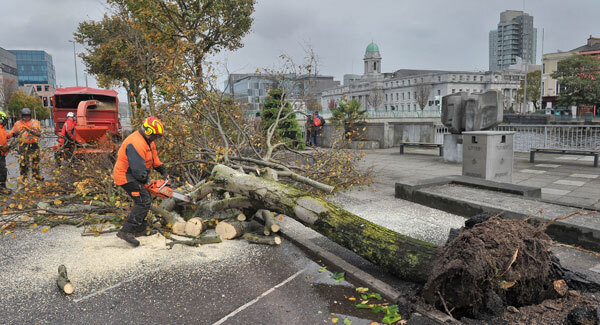
If Storm Ophelia proves anything it is that once-in-a-lifetime extreme weathers events are no longer that.

Lessons of Ophelia - Time to heed global warning

They are becoming commonplace. Global warming is also global warning — expect more hurricanes, flash floods and even drought from now on.

While it is still a challenge to attribute any one storm to climate change, scientists are getting closer to doing so.

In 2004 British researchers ushered in a new era of climate science by using computer modelling to establish a statistical link between global warming and a heatwave in central

Europe the previous year that claimed the lives of more than 30,000 people.

Computer simulations have improved since then and it is now accepted that global warming has doubled the risk of extreme weather.

In that event, Storm Ophelia should act as a wake-up call to us all in Ireland and ensure we are prepared to expect the unexpected.

OPW Minister Kevin ‘Boxer’ Moran has defended the Government’s handling of the threat posed by the storm, saying that the authorities did not over-react in shutting schools and many state services as well as advising people to stay at home.

“Three lives were lost and it could have been more. There are an awful lot of people alive today because of what we did,” he said.

It is hard to argue with that, considering that wildfires in Portugal, reportedly fanned by Storm Ophelia, claimed the lives of 35 people last weekend.

This was just four months after a summer blaze claimed 64 lives in one night, with

authorities apparently ill-prepared for either event, despite a history of summer forest fires.

Indeed, it should spur the Government into putting on a permanent footing the national emergency co-ordination group.

It operates from the National Emergency Co-Ordination Centre in Dublin where ministers and/or senior civil servants convene to co-ordinate national responses to a major emergency.

While the group has done sterling work over the past few days, it is by its nature, reactive rather than proactive.

Given that we can expect more storms like Ophelia, consideration should be given to broadening its scope to allow it to meet regularly in order to develop national policy on extreme weather events.

We could learn a lot from the Japanese in how to deal with the worst that nature can throw at us.

This volcanically active country is regularly hit with typhoons and earthquakes, but it still manages to keep going even when disaster strikes.

That is mostly down to education. Japanese children begin training for natural disasters as soon as they go to school.

It may take weeks to assess the scale of the damage caused by the storm but it is already being estimated at up to €1bn, making it the most costly natural disaster in our history.

While advising people to stay at home during Storm Ophelia was considered the prudent thing to do, it cost millions in lost production as the country was brought to a standstill.

More in this section

Revoiced

Newsletter

Sign up to the best reads of the week from irishexaminer.com selected just for you.

Cookie Policy Privacy Policy Brand Safety FAQ Help Contact Us Terms and Conditions

© Examiner Echo Group Limited