Dirty work at the boundary - Time to close this tainted chapter
‘If Christopher Columbus had an advisory committee, he would probably still be at the dock.’ US Supreme Court justice, Arthur Goldberg

Dirty work at the boundary - Time to close this tainted chapter

Committees are indispensable, if tedious, cogs in the machinery of democracy.

But, as our special report today on the Cork City versus Cork County boundary struggle reveals in forensic detail, they can take an exceedingly long time to produce nothing whatsoever other than — at considerable cost — rejected reports, and email trails that, on paper, would stretch from one end of the county to the other and back.

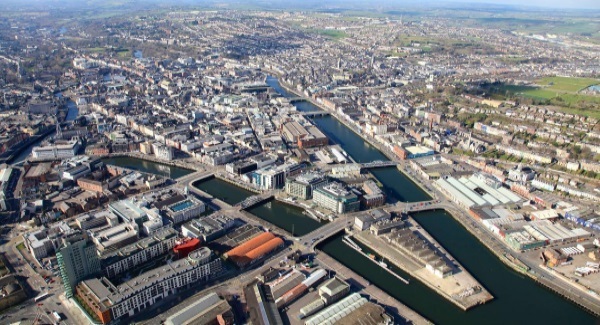
The papers highlight the conduct of the Cork Local Government Review (CLGR), set up (and that could be the operative phrase) in 2015 by Dublin to settle the long-running argument about Cork’s administrative boundaries, the options being a merger of the city and county councils, or an extension of the city’s boundaries.

The former “super-county” choice would, it was argued, improve regional planning for the benefit of all and cut administration costs, while a much bigger city — significantly larger in land area, population, and income — would be fit for 21st century purpose as the country’s second city.

Not an easy call, but with great minds focused sharply on what would be best, in the long-run, for people in the city and the rural county, not the mission impossible it turned out to be.

The conduct of that review — followed, a year later, by a second study, led by an independent planner brought in from Scotland, followed, in turn, by legal challenges — is a miserable tale of spin, closed minds, behind-the-scenes pushes and shoves, under-the-counter input from central government, power-plays, apparent attempts to load the dice and to disparage the arguments tabled by academics opposed to the super-county route, and larger-than-life egos.

The leader of the CLGR — chartered accountant and businessman, Alf Smiddy — does not emerge from the narrative we publish today smelling of roses.

He begins by saying citizens would be at the heart of the review, and assuring Dublin that his committee would be “professional at all times in its deliberations, and will objectively consider and review everything, in arriving at its well-considered conclusion and recommendation”.

Later, however, we hear him wanting to “blow apart” the case set out by the two CLGR members who opposed the majority vote for a city-county merger, and suggesting stage-managing the launch of the report to generate “a bit of theatre”.

We are sure he didn’t have a farce in mind, but he and some of his colleagues in this doomed project have contributed to a dismal and expensive process that will not amuse people in the city and county who have families, homes, and businesses to run, and lives to plan.

The environment ministry, we now see, was favouring the merger agenda from the outset. But the need is for the city-county merger camp to accept that it has run out of road, and for the people’s representatives on both authorities to put legal challenges and egos aside, enlarge the city’s boundaries and limit the hit the county will take in lost rates income.

x

More in this section

Revoiced

Newsletter

Sign up to the best reads of the week from irishexaminer.com selected just for you.

Cookie Policy Privacy Policy Brand Safety FAQ Help Contact Us Terms and Conditions

© Examiner Echo Group Limited