Brexit proposals: Irish solution to a British problem
What is also unprecedented is the view expressed by UK prime minister Theresa May in an article in The Irish News in which she tells Northern nationalists that it is their
“permanent birthright” to hold Irish citizenship.
In the article, Ms May says Brexit was not a vote “to end the special ties between the UK and Ireland or to undermine the unique arrangements between Ireland and Northern Ireland which have underpinned the peace process.”
The reality, however, is that the decision to leave the EU does exactly that which means that it will take imagination, vision and political courage to ensure that this does not happen. In that context, it is not satisfactory that in the
absence of a devolved government, the people of the North have to rely on others to make their case on Brexit.
In fairness to both the British and Irish governments, that is what they are trying to do. They share the same aspirations for a border free island, the maintenance of the Common Travel Area, the rights of UK and Irish citizens, and the 1998 Good Friday Agreement.
While the document is high on aspiration and low on
inspiration, it is welcome in finally clarifying the British
government’s position on the border. After a year of vagueness and confusion, we finally have some detail of what the
island of Ireland could look like in a post-Brexit world.
Most importantly, it also signifies that Ms May is now fully engaged in exploring solutions to prevent physical customs posts along the border.
It is likely that some of the proposals relating to the North will gain a sympathetic ear in Brussels. However, the UK’s
insistence on leaving the customs union indicates that its broader suggestion of no customs checks at all UK-EU borders will be firmly rejected. There is no prospect that EU negotiators will agree to customs-free borders while allowing the UK to strike trade deals with other countries.
On Twitter, Guy Verhofstadt, the European Parliament’s negotiator, described the idea of invisible borders as a “fantasy” while Michel Barnier tweeted that customs could not be
discussed until the Irish border, citizens’ rights, and the UK’s separation payment had been settled.
It is now down to the Irish government to give a detailed
response to the British proposals ahead of the European Council meeting in October where EU leaders will assess how much progress has been made in Brexit negotiations.
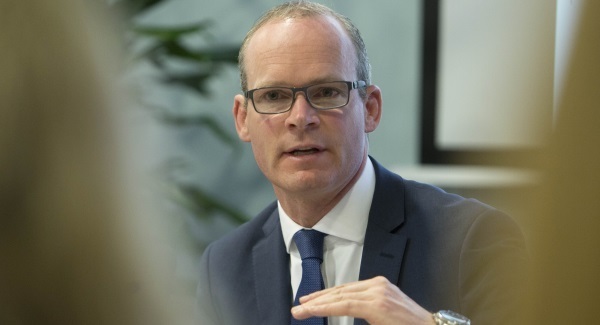
Simon Coveney’s much repeated mantra that technology alone will not solve the border issue is all very well but, now that we have greater clarity from London, we must make
detailed proposals of our own. We might even be able to
propose an Irish solution to a British problem.
That would, indeed, be unprecedented.
CONNECT WITH US TODAY



Be the first to know the latest news and updates