Citizens’ Assembly reports: No wriggle room left on abortion
Others see education or a commitment to changing behaviours to limit climate change as priorities.
Others want to make access to opportunity universal.
Others insist on integrity in public affairs.
Others admire the ideological flexibility that encourages delusion.
Others try to ensure minorities are embraced and protected.
Others, like, say, Kazakhstan where bride kidnapping is tolerated, indulge barbaric practices.
One criteria not always considered though it may overshadow everything else attempted in a society, is how a society transitions from the past to today; how it copes with the ever-shifting sands of what a society regards as ethical, acceptable or barely tolerable.
How a society copes with huge cultural, political, or belief-system power shifts always was and still is defining.
There are many examples of this but in today’s world, few show what can go wrong as dramatically as Iran’s collapse after Shah Mohammad Reza was deposed by Islamic revolutionaries in 1979.
Though an appalling autocrat he was replaced by a regime that helped lay the foundations for today’s war-ravaged Middle East. Iran’s switch from corrupt monarchy to bigoted, radical theocracy was not a successful transition from one world to another, from one time to another.
Ireland struggles with that process too. We have yet to find how we might move from what was more or less a Catholic theocracy towards a progressive, tolerant, humane, inclusive, and celebratory society.
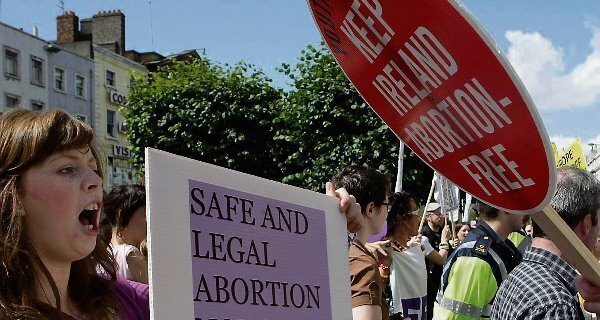
The weekend vote by the Citizens’ Assembly to encourage our parliament to finally deal with the deeply divisive issue of abortion is the latest manifestation of that struggle. So too is the incomprehension that the State should involve the Sisters of Charity in an as yet unbuilt national maternity hospital; so too is the tolerance of church stonewalling around national school patronage.
The establishment of a litany of trusts to ensure the continued primacy of Catholic ethos in schools or hospitals long after the clerics who established these institutions are gone is another. The reluctance of government after government to confront these practices was understandable but is becoming increasingly unacceptable — as is the impression that our main parties tacitly support rearguard actions opposing the separation of church and state.
How else might the dodge known as the Citizens’ Assembly be seen? This weekend it offered a predictable opinion as well as delivering its main, unstated, objective. The powerless talking shop kept the issue in cold storage and, in Taoiseach Enda Kenny’s case, turned a very difficult situation, into an it’s-not-my-problem legacy issue.
The assembly indulged in a pretend process properly the duty of the Oireachtas. By kicking the inevitable down the inevitable our politicians encouraged the cynicism undermining what is left of the faith in our democracy.
Just as they did with water charges they did not have faith in the majority of this imperfect Republic’s citizens to see the wood from the trees, to, in the end, do the right thing. Until they, or their successors, do we will languish in the foggy no-man’s land between then and now.
CONNECT WITH US TODAY



Be the first to know the latest news and updates