No child in care of State should be without an advocate — ever
Outrage isn’t enough. Enquiries, accountability, punishment — those things aren’t enough. Even finding a way to make amends isn’t enough.
Don’t get me wrong.
These things have to happen. We’re told in some of the weekend’s papers, by good and trusted journalists, that at least one the people who overturned the decision to remove Grace from a place of abuse, and allowed her to remain in terrible danger for 11 years, is still in a position of trust in the public service.
How is it possible that the authorities can bleat about accountability and let that happen?
How is it possible that the Taoiseach can declare in the Dáil that what happened to Grace and others was a disgrace to our country, without rooting out from the system anyone who was complicit in it?
And of course what happened in the Dáil last week, the remarks by the Taoiseach and others, only happened because reports were published last week that should have been published years ago.
We’re indebted to RTÉ’s This Week programme for the revelation that the HSE made no contact with the Gardaí, about whether or not the Conall Devine report should be published, until three years after it was written.
The new Head of Operations for the HSE’s Disability Service told RTÉ he couldn’t understand the reasons for the delay. Surely though, it’s clear to everyone that someone, at some level in the HSE, went to enormous lengths to prevent that report being published. The cover-up began the moment someone realised what a terrible thing had been done.
We’ve had three reports into what happened to Grace. One of them, the Devine report, was strong and clear, and took five years to get into the public domain.
One of them was anodyne, with page after page describing the process of enquiry and a couple of pages of bland recommendations. No accountability there.
And then there’s a third report, by a lawyer called Conor Dignam. It’s essentially an enquiry into the first two, together with suggestions for the terms of reference of a full commission of enquiry. The commission will become the fourth report.
The Dignam report raises all sorts of troubling questions, about the inadequacies, especially of the second report and about the way these reports were commissioned. And he recommends specifically that the terms of reference of the commission should include an enquiry into whether or not there was a cover-up.
I believe we know the answer to that question. In the way whistle-blowers were treated and in the decision to recruit someone who had only just left the service of the HSE to conduct one of the reports, there is no doubt in my mind that someone didn’t want the whole truth to come out.
As someone who has always believed in the public service, and will tend to come to its defence when it’s attacked, I find that deeply shocking. The thought that anyone could allow terrible, unspeakable things to happen to children and young women, and then try to hide their own mistakes behind bland generalities and formulaic apologies, is a betrayal of everything public service is supposed to be about.
Justice cannot be done to Grace, and to other children whose names are seldom mentioned but whose lives were also terribly damaged, unless we know who, and why. If people in the public service or in politics were complicit in any way with what happened, they must be identified and prosecuted.
If they weren’t complicit, but just negligent or careless or lazy or stupid, they must be rooted out of the public service.
The whistleblowers in this case were the only ones who cared, and that care went well beyond trying to shout stop. Those who threatened and bullied them must also be identified and rooted out.
And then, while we were trying to come to terms with the enormity of what happened in Grace’s story, we learned about Tuam. Another shameful and shaming example of the collusion between Church and State. Another illustration of the damage that hidebound attitudes, controlled and led by an ethos to which we were in thrall, can do.
We’re told by Government Ministers that consideration will be given to extend the remit of the commission of enquiry in Tuam to cover other mother and baby homes.
But the terms of reference of that commission have already been set out, and they include examining a wide range of institutions — 14 mother and baby homes have been named. At least we can be sure, because Judge Yvonne Murphy is in charge of that investigation, that there will be no cover-up on her watch.
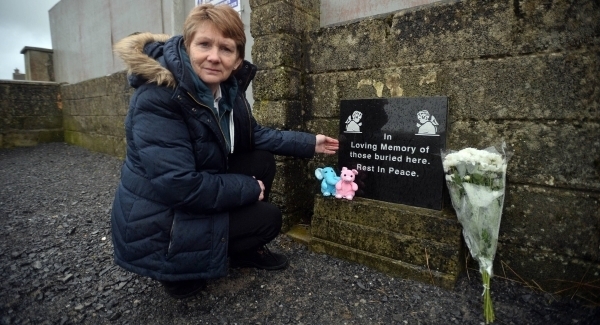
Thanks to the research carried out by Catherine Corless — surely no stronger candidate will emerge for Irish person of the year — there is a list of the babies who died in Tuam. The first name she has recorded is that of Patrick Derrane, who died there in 1925, aged five months.
The last name on the list — and she lists 796 children — is Mary Carty, who died there in 1960, when I was a happy-go-lucky, well fed and well protected 10-year-old. Mary Carty was five months of age.
What happened to those babies, and what happened to their mothers, leaves no room for claptrap. There must be no wringing of hands, no hollow apologies, no protestations that Ireland has changed, no resolutions that we must never let this happen again.
That sort of guff might have been all right when we thought these things had happened long before our time. But it doesn’t wash any more.
Grace; the babies of Tuam (and certainly other places); the children in their tens of thousands sent to industrial schools; they all have one thing in common.
Whether they were sent to the “care” of the state by the courts, or through some local coercion, or even because their parents thought it was the best that could be done — whatever the circumstances, not one of them, ever, had anyone to speak for them before they were sent away.
Not one of them had anyone to watch over them, and speak up for them, while they were in the State’s care.
These were the children without rights. No right of representation, no right to have a guardian, no right to be heard, or to have their opinions weighed in the balance.
And as long as we think that’s ok, it will continue to happen. There are thousands of children in the care system now, hundreds of children in direct provision, thousands of vulnerable adults in disability services.
None of them have an automatic right to have their own advocate or representative. Many do, of course, because families fight for them. But none have it as a guarantee.
We can fix that, by changing laws and by ensuring that no-one will ever again be deprived of a voice while they’re in the care of the state.
Until we do, we can’t guarantee that there won’t be more things to apologise for in the future. In fact, we can be pretty certain that we too will have to hang our heads in shame again some day.
Grace; the babies of Tuam; the children, in their thousands, sent to industrial schools. Not one of them had anyone to watch over them