What happens to children when the State cannot provide a safe place?
'Scrutinise Tusla, absolutely, and expect improvements where they are needed, but Government must also be held accountable for whether it has provided the investment, infrastructure and long-term political commitment necessary for Tusla to actually fulfil its responsibilities to children.'
Day after day, in children’s courts across the country, stories of abuse, sexual violence, criminal exploitation and addiction are heard.
Children, as young as infants are taken into care, sometimes with orders in place for the entirety of their childhood.
The latest raft of reports from childcare proceedings across the country, by the Child Law Project, make grim reading.
They include:
- A young boy for whom an interim care order was extended. The court had heard Tusla had assessed the family home, which had no fridge, freezer, stove, or boiler and the washing machine was broken. Several windows were broken and there were numerous floorboards missing. In addition, the back garden was littered with significant refuse. The mother claimed the appliance had only just broken and she was waiting on the council to deal with the boiler. The mother had attended three access visits with her son between court dates, however, one of the access visits was suspended because she was 45 minutes late.
- A boy who was in care since early 2025 had his interim care order extended while he was missing from his placement, with concerns his life was at risk. The father’s barrister said he believed his son was involved with a criminal gang. The barrister said the father had received information suggesting criminal activity was planned for the following day and “something serious” could happen to the boy. A social worker in the case outlined that the boy had previously absconded from care and was later caught joyriding contra-flow on a motorway in a stolen car. He had been charged in relation to that incident.
- A case involving the care of a teenage boy heard evidence he had been exposed to domestic violence, neglect, and physical harm while in the care of his mother and her husband. This included an incident where he had a knife held to his throat.
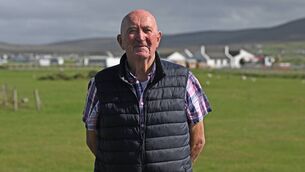
While Tusla, the Child and Family Agency, is the main player in Ireland’s care system, care leaver and social worker Thomas O’Driscoll strongly believes the buck does not stop with the agency.
Read More
“Tusla absolutely needs to be scrutinised and held accountable where things are not good enough. There are serious issues that require attention, including the experiences of separated children, the consistency and adequacy of aftercare, and the increasing role of private provision within the care system. But I think we make a mistake if the analysis stops at Tusla," he said.
“Many of the pressures we are now seeing sit within a much broader structural context: years of insufficient investment in care infrastructure, workforce pressures, placement shortages and weaknesses across housing, mental health, disability and family support services.
"These are ultimately shaped by Government policy, investment decisions and long-term planning.
"For me, accountability has to travel upwards as well as downwards. Scrutinise Tusla, absolutely, and expect improvements where they are needed, but Government must also be held accountable for whether it has provided the investment, infrastructure and long-term political commitment necessary for Tusla to actually fulfil its responsibilities to children.”
Mr O'Driscoll said children did not experience systemic ‘capacity pressures’, ‘placement shortages’ or policy language.
"They experience instability, relationships ending, uncertainty about where they will live and, in some cases, a State struggling to provide the consistency and security it has undertaken to provide. That is the part I think we cannot lose sight of.”
Tusla’s chief executive, Kate Duggan, said the Child Law Project highlighted the complex and often difficult circumstances under which care orders are required for children and young people.
“The challenges we as an agency face in balancing the capacity of provision with the demand for services are also documented, specifically appropriate placements. This imbalance is driven by issues relating primarily to the complexity of the challenges faced by children and young people coming into care, staffing demands, and the challenges acquiring suitable properties.”
She said the agency had made significant progress in how emergency placements were made for children and young people, as well as inspected and governed.
“For children and young people, this brings stronger safeguards and provides clarity about the emergency placement, for them, their advocates and the courts.
"We will integrate the insights and learnings from this volume of case reports in line with our ongoing reform programme to ensure the best possible outcomes for the children and families we work with.”
The agency described the volume of cases published as “a significant contribution that we will use to further improve our policies and services for the benefit of the children, young people and families we work with in line with our programme of reform, which sees the agency operating under a new local integrated service delivery model, moving from 17 areas to 30 networks”.
“Local teams are now more integrated, bringing together early support, child safety, and children in care professionals, so children and families get the right help based on their needs.”

CONNECT WITH US TODAY



Be the first to know the latest news and updates