Ukrainians being moved out of Citywest: ‘We need a place to survive, that’s it’
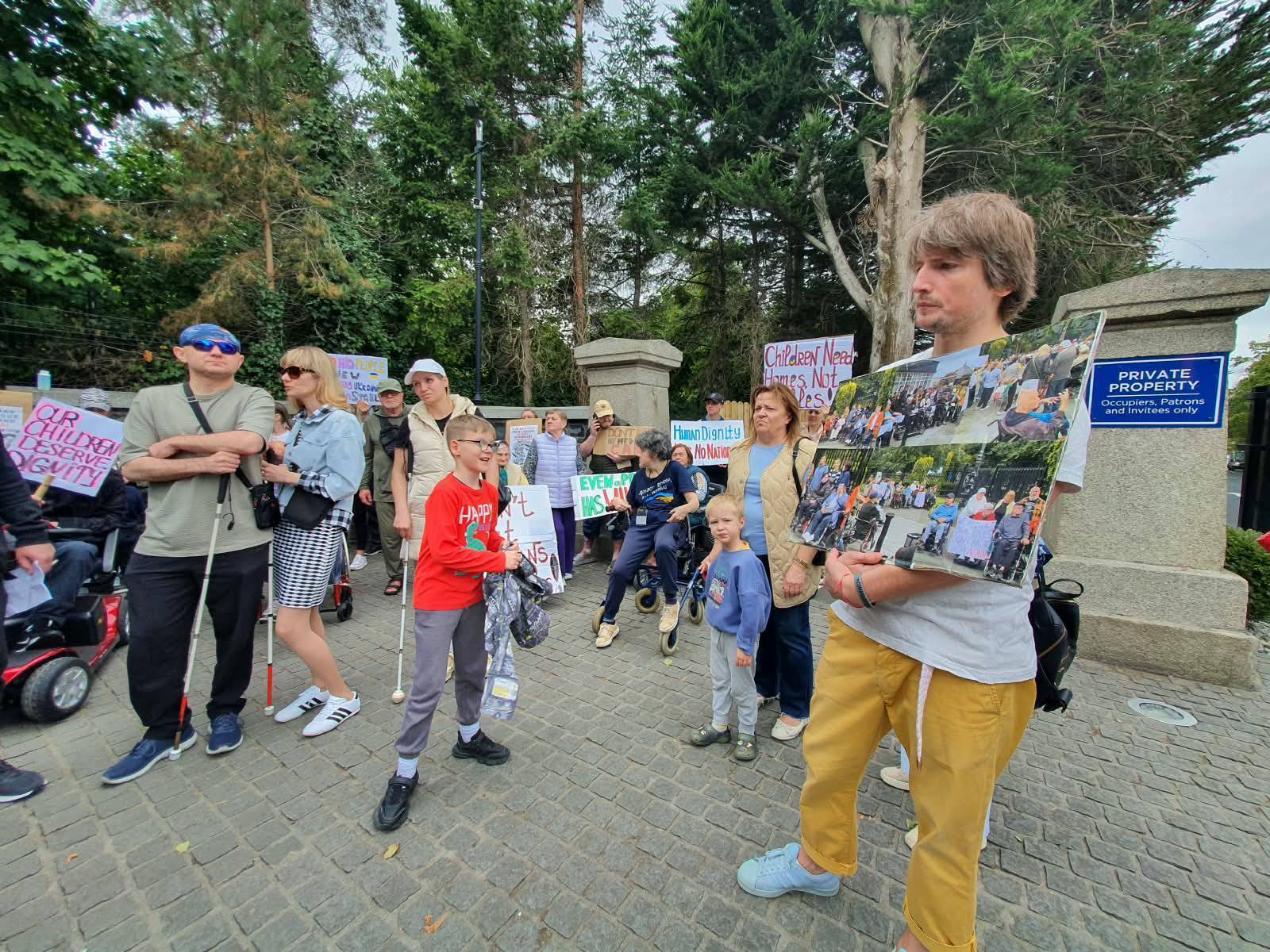
A protest at Citywest Hotel in July. More than 300 Ukrainians, dozens of whom have disabilities and complicated needs, are being moved out of the Dublin hotel they have called home. Picture: Gráinne Ní Aodha
In the Citywest Hotel last Thursday, a group of Ukrainians gather around a small table to share their stories of how they came to Ireland, what they left behind, and their fears for the future.
More than 300 Ukrainians are being moved out of the Citywest complex in West Dublin, dozens of whom have disabilities and complicated needs.
Some use wheelchairs or mobility scooters, some use wheeled walking frames, others have had a cancer diagnosis or multi-faceted healthcare needs.
Emotions run high as they prepare to leave Citywest, and an 80-year-old woman is hugged by two young women as she becomes upset at the thought of leaving.
Another woman, 63, scrolls through her emails to show how, since she was told she was being moved, she has repeatedly outlined her circumstances to the Department of Justice and other groups.
A man says that he works full time and has been trying to find accommodation in Dublin but many places are unaffordable, particularly because he needs the accommodation to be wheelchair-accessible.
Another man, Arthur, 43, uses a mobility scooter and talks in a soft voice about his medical history, before adding: “It’s terrible. Can I add, I hate Putin.”
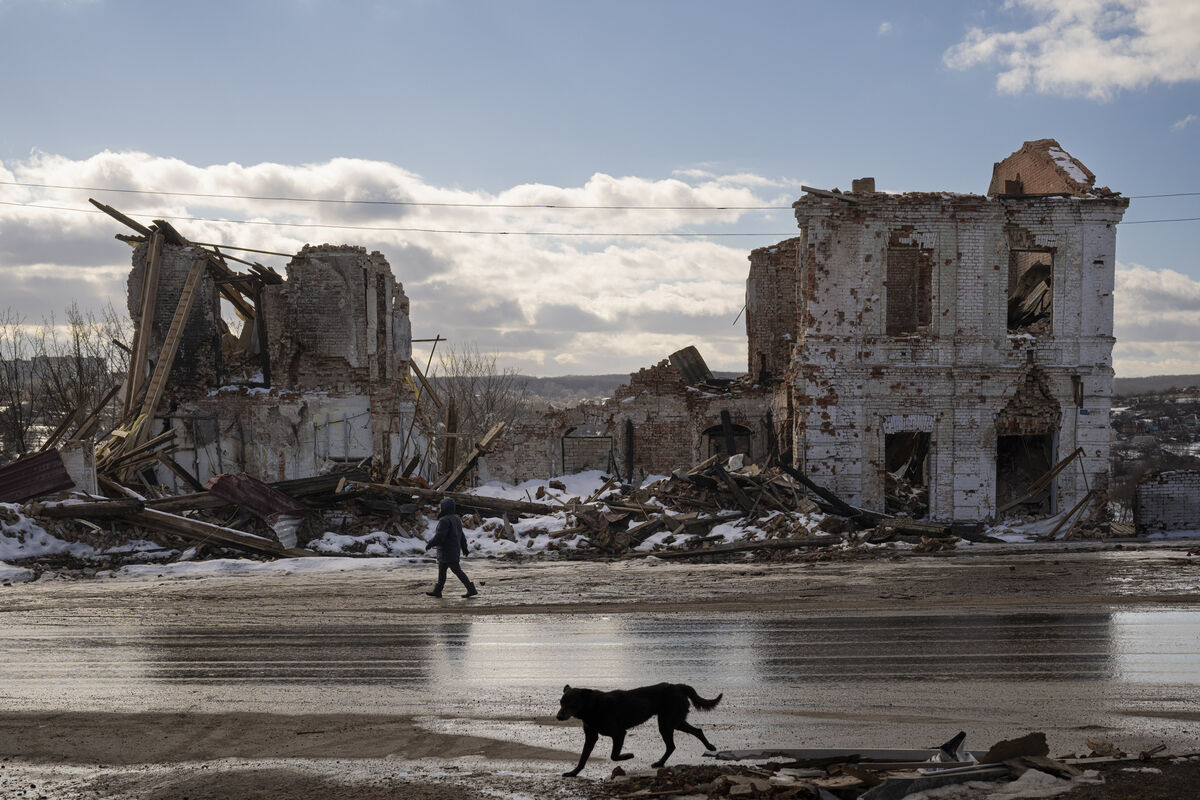
Viktoria Danylevska, 39, and her mother Olha left Ukraine in 2022 after a barrage of rockets targeted her mother’s home city of Chudniv, where a military complex is based.
“We had more than 10 air-raid alarms a day, so my mum was mentally exhausted, and one week we woke up and she said ‘I just can’t stand it’.”
Viktoria, who was living in Kyiv, left with just a small backpack, documents, and the clothes on her back.
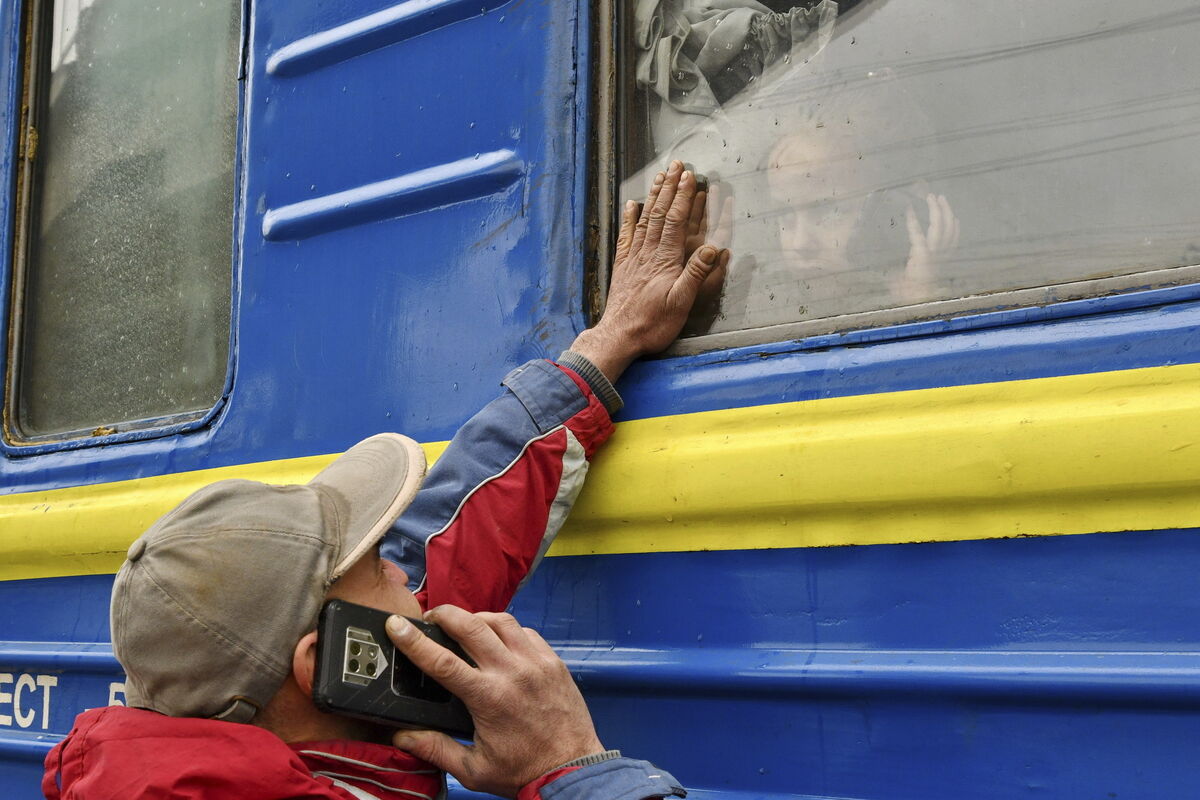
They first went to Poland, then to Italy, where it was suggested to them by an Italian family that they go to Ireland.
Read More
“They say ‘I heard that Ukrainians are treated very well in Ireland, during one day you will get your temporary protection and permission to stay in Europe’. And so we decided to come to Ireland.
“Everything was unplanned. You don’t plan what to do. You just need a safe place to survive, that’s it. To be in a calm, comfortable place and not thinking that the next day, you will have a rocket attack.”
Her mother began developing heart problems while in Italy, and has a disability after a surgery to remove 12 lymph nodes from her hand.
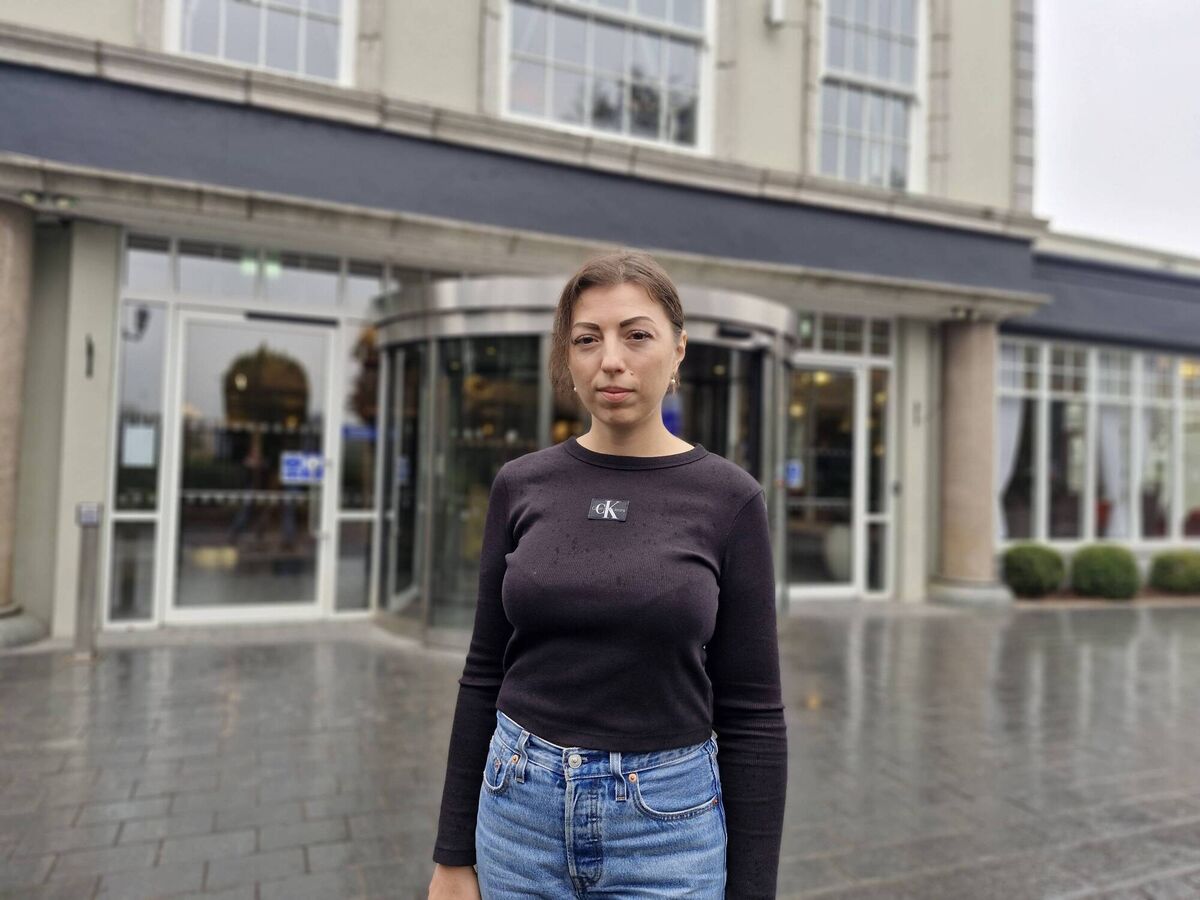
Viktoria said that, in 2023, nine months after they arrived in Ireland, she was diagnosed with cancer, which she believes was worsened by stress.
She and her mother were among more than 100 people who were moved from Citywest on Thursday to a disused equestrian centre outside Dublin.
Moving the Ukrainians from Citywest is part of a government decision to phase out the State’s reliance on private accommodation for housing asylum seekers and instead use more state-owned facilities.
As part of the phase-out, there was to be an exception for those who were very vulnerable or who face barriers to independence, who would need to self-declare and provide evidence of their accommodation needs.
For those in Citywest, where Ukrainians with the most complex needs have been staying, they said they were not given enough time to apply for new accommodation.
They were notified in late June — some through an unaddressed letter slipped under the doors of their rooms — to send in their applications with supporting documentation by July 17.
Concerns have been raised about the narrow window to apply given to people who are blind, who have mental health needs, and who are not fluent in English.
It has also been claimed that simple errors made in some applications, or mix-ups over whether they were received by the Department of Justice, meant that some people were dismissed from the system and later applications or follow-ups would not be reconsidered.
This includes a 44-year-old man who uses a wheelchair and suffers from chronic pain, as well as his mother who cares for him, who are at risk of homelessness, as they said the department told them it had not received their application.
For those who have been offered alternative accommodation, they said it is so far outside Dublin that it will make critical hospital appointments, special education services, and work more difficult to attend.
They had received no responses to queries on their accommodation needs, such as space for wheelchairs, their own bedrooms for people undergoing chemotherapy, or enough public transport options for those who need to attend work or appointments in Dublin.
Viktoria said her doctor has recommended that she is isolated during her chemotherapy treatment while her immune system is vulnerable. But she is concerned about a lack of privacy and the poor ventilation of windowless rooms.
A man who uses a wheelchair said only one wheelchair-user is allowed on per bus, and that the nearest bus route only comes once an hour.
“So we have the problem, who first? Who will use the bus and who will stay at the bus stop waiting for the next? It’s a terrible problem for me.”
Halyna Nikiforova, 80, becomes emotional as she thinks of the home she left behind. The former neurosurgery nurse from the Kharkiv region said she was one of the lucky ones who escaped before her city of Kupyansk was destroyed.
Asked if it was difficult to leave her home, she said: “It was very hard and it’s harder to see that nothing exists anymore.
“I don’t have a home, my home is this hotel and now I need to leave another home and move to a stables.
“I am very worried. I can’t sleep at night. My body is tired. I want to sleep but I can’t.”
She said she was thankful for the staff at Citywest, for the medical staff at the facility, and to the Irish Government for the support since she came to Ireland in 2022. She said: “We are the same, we are human” and said that considering her condition and that of other people was about humanity.
“I wish you all the best: Be healthy, live in peace. Never survive the war in your country, never survive such an experience as a Ukrainian,” she said through tears before walking away on a wheeled walking frame.
Tetiana Kuzmanchuk, 63 and from Luhansk, shows a stream of emails she has sent pleading her case.
She has cancer since arriving in Ireland and has received multiple rounds of chemotherapy over the past four and a half years.
As a side effect, she now has osteoporosis and has started physiotherapy at St James’ Hospital, which involves three to four appointments each week.
If she stops attending the appointments, it will affect her ability to move and she may eventually need a wheelchair, she said.
She said she was stressed, cannot eat, and is on anti-anxiety medication.
“This moment is like crossing out four years of cancer treatment,” she said through an interpreter.
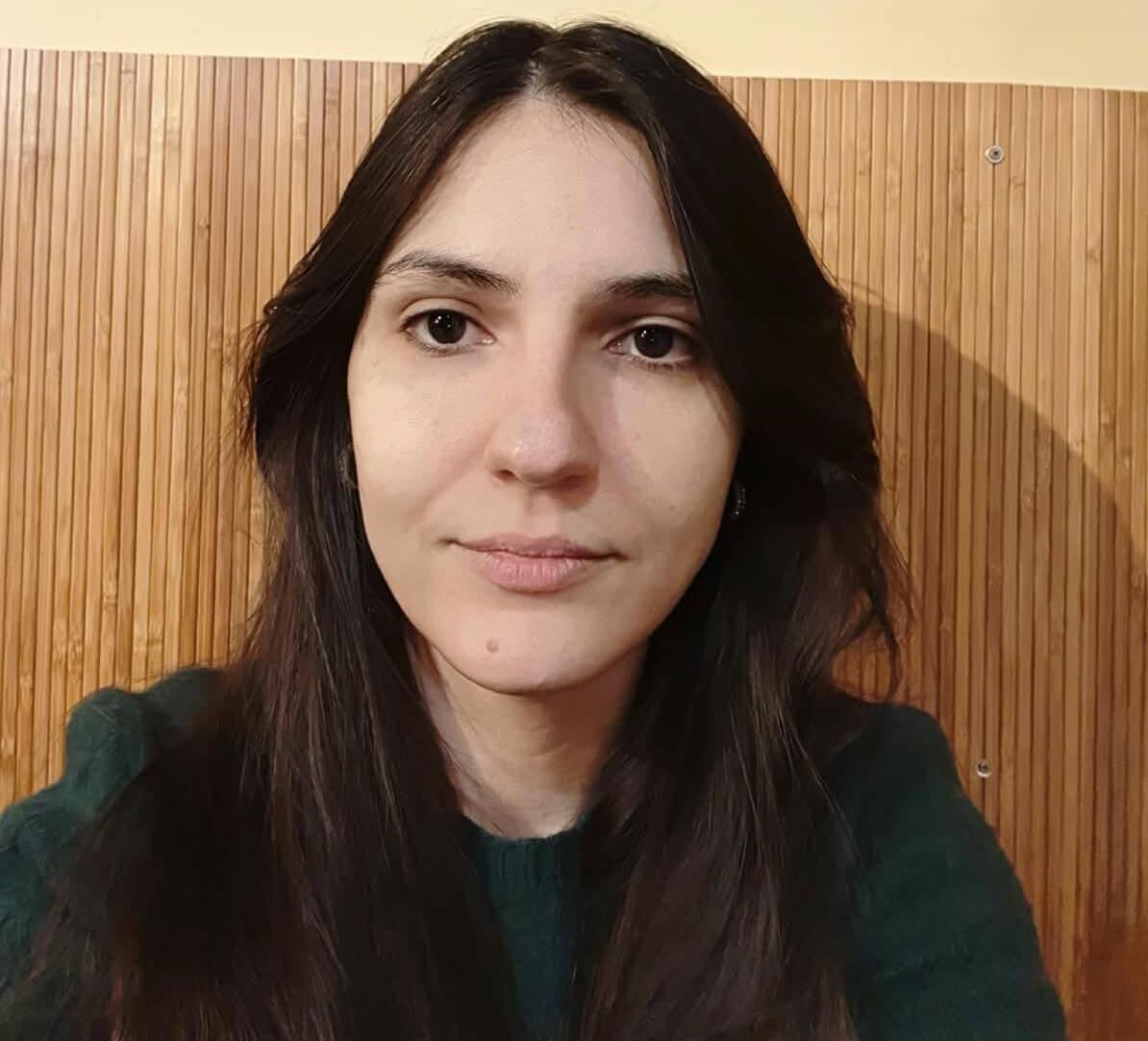
In a room upstairs in Citywest, Valeriia Pakhomova and volunteers from the Phibsboro for All group help Ukrainians fill in forms with an intention to appeal the decision to move them, minutes before their bus arrives.
Valeriia is helping others to plead their case ahead of packing her own things and worrying about her own future.
“I have no clue how we will survive there,” she says.
Ann Moroney from Phibsboro for All said that the Government’s response seemed “extremely harsh” and the people she had met had very complicated needs and the accommodation seemed “very unsuitable”. She said:
“All of the people I’ve spoken to so far, their conditions are extremely complex. There are a number of fully blind people, there are people in wheelchairs, there’s one man with a very serious mental health condition who is being cared for by his mother.
“Our Taoiseach made an offer to Ukrainian people fleeing war in 2022 and to treat people who have come here and are afraid to go back — I presume — to a war-torn country where war continues, and to treat people so extraordinarily insensitively seems hard to understand.”
The Department of Justice said in relation to withdrawing State accommodation: “Ongoing supports for people with personal circumstances leading to difficulties sourcing independent accommodation may be provided in particular cases.
“People were asked to self-declare their need for continued accommodation. An application process for ongoing accommodation opened on June 30 and ran until July 17 for residents of Citywest Hotel.
“Residents in Citywest were provided with three months advance notice of these accommodation changes, with a significant range of information and in-reach supports provided to assist in the application process.”
It said that where an applicant was assessed as continuing to require state-contracted accommodation, an offer of accommodation will issue “having regard to operational capacity and, where relevant, any identified vulnerabilities or accommodation requirements”.
“There is no guarantee continued accommodation will be in the same area in which a person currently lives. Every effort will be made to continue to accommodate those with established HSE care plans to remain in the relevant Community Health Organisation area for continuity of care.”

CONNECT WITH US TODAY



Be the first to know the latest news and updates