'Why is there a difference between Tuam and Bessborough?'
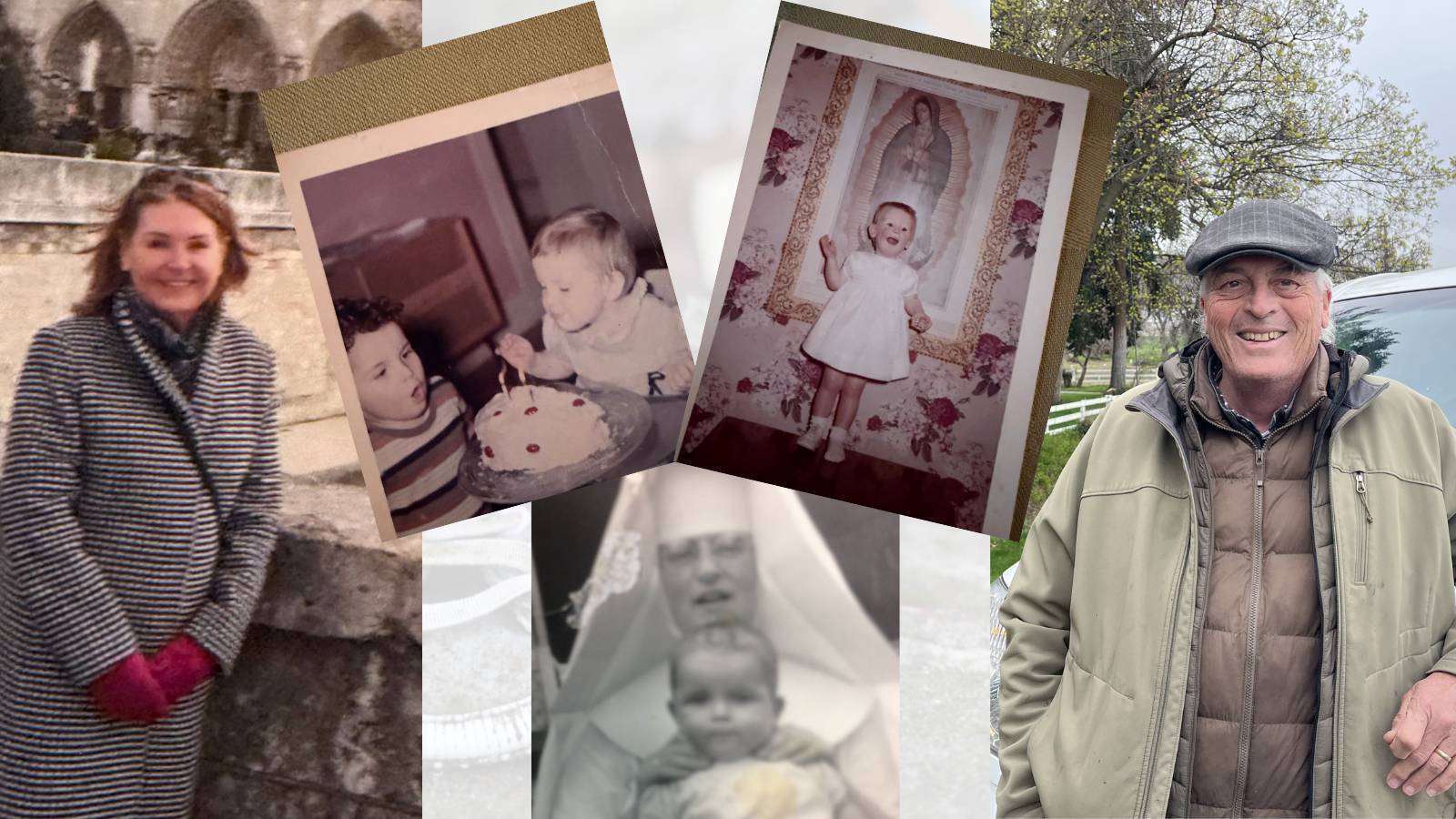
A brother and sister adopted to the US were both born in Bessborough. Mike and Angela knew they were adopted, and both have visited the former mother and baby home in recent years. Some details are still unaccounted for
'Why is there a difference between Tuam and Bessborough?'

Angela Collins, left, and Michael McKeirnan, who were adopted from Bessborough to the US. 

For Michael McKeirnan and Angela Collins, who both live in Washington State, the news Cork City Council has granted planning permission for 140 apartments to be built on the grounds of Bessborough mother and baby home might come from far away, but it’s a story that strikes close to the bone.

Michael, known as Mike, lives in the town of Walla Walla, while his sister Angela lives in Seattle. Both were born in Bessborough mother and baby home and adopted to the same Irish-American family in the early 1960s.

For Mike, who visited the Bessborough grounds on a recent trip to Ireland, his main fear about the decision is the council’s planning conditions will turn out to have “no teeth". 

Conditions placed by Cork City Council on the permission granted to Estuary View Enterprises specify the developers must employ a forensic archaeologist at excavations on the site, and cease works and notify gardaí if any human remains are found.

Mike says he believes that before any development takes place, an independent third party should conduct a forensic analysis of the site, like that under way at Tuam in Co Galway, and the holy order should foot the bill.

“Why is there a difference between Tuam and Bessborough, when there could be more remains in Bessborough than there are in Tuam?” he says.

There needs to be a third party doing the excavation at Bessborough. Someone needs to oversee it. I don’t think the council should say, ‘Here’s your permit, go, and tell us if you find something.’ 

“There needs to be respect. The site needs to be dug up, and it’s the nuns’ responsibility. They should pay for it.” 

The State’s Commission of Investigation into Mother and Baby Homes uncovered death records for 923 babies born in Bessborough in the 76 years in which the Sisters of the Sacred Hearts of Jesus and Mary ran the home, but burial places for only 64 of the children have been confirmed.

Backed by the Irish Council for Civil Liberties, campaigners believe the Bessborough site contains the unmarked graves of infants. They have called for a full excavation of the site akin to the one under way in the former St Mary’s Mother and Baby home in Tuam.

Burial records for 796 babies and toddlers were uncovered for Tuam mother and baby home by historian Catherine Corless in 2014. A State-backed team of forensic experts working at the site have discovered the remains of 69 children so far, with their work set to continue until 2027. 

The Bon Secours Sisters, who ran the Tuam home from 1925 until 1961, have contributed €2.5m to the cost of the forensic work.

Both Mike and his sister Angela feel strongly that if Bessborough does become apartments, there still needs to be a publicly accessible memorial so survivors like themselves, and families left without the closure of knowing where dead infants were buried, can still visit.

“I don’t have a problem with apartments being there, but it needs to be fully investigated first,” Mike says. “And there needs to be a graveyard and chapel, to tie back to what that ground was, and what it represents for people.” 

The missing year 

Michael McKeirnan with Sister Cyril, a family friend who accompanied him on his flight to New York to his adoptive family

Like so many people born into Bessborough, Mike is still seeking answers. But he’s not seeking his birth parents: He’s seeking the mysterious strangers who cared for him in his first year of life.

He was born in Bessborough on January 7, 1959, and was flown to New York on St Patrick’s Day 1960, to be adopted by an Irish family in Washington State.

He had always presumed he remained in the mother and baby home up until his departure for the US.

But when he went looking for his records in 2024, he discovered a year of his life was unaccounted for.

He had applied for the mother and baby home redress scheme, but was rejected because a note on his file revealed he had been discharged from Bessborough at one month old. 

The terms of the redress scheme have come under fire from some survivors for excluding any children who spent less than six months in a mother and baby home.

“Records show I was discharged from Bessborough by the reverend mother on February 8, 1959, at 31 days old, to St Joseph’s Industrial School, Ballinasloe, escorted by a sister from Bessborough,” he says.

“This is the point at which I disappear for a year. I go off-radar.” 

Who took care of him and where he was for the next year of his life is a mystery he is keen to solve. He has no memories of that missing year, but says photos show a healthy, well-cared-for baby.

“Did someone hold me and cuddle me, and help me grow up to be the person I am today?” he says. 

They definitely fed me well. I don’t think I would have looked like that if I had stayed in Bessborough.

"So I have to give some gratitude to someone who took care of me for a year, and the time between one month and one year is not an easy time to take care of a human being.” 

Mike believes there may be someone in the West of Ireland who still holds the key that can help him unlock his past.

No records

St Joseph’s in Ballinasloe was a reformatory school for girls run by the Sisters of Mercy. It also cared for boys under the age of seven. But there were no records from St Joseph’s in the file Mike received from the State. He believes he may have been brought there to be collected by foster carers somewhere in the Galway area.

“Someone would know something,” he says. “Someone might remember a lady down the road who used to take in a lot of foster children, or maybe it might be someone whose parents fostered children.”

 A tantalising clue was uncovered by Mike when he approached the Sisters of Mercy directly for information.

Although he had been told all his information was with the State, a representative of the Sisters of Mercy, Ballinasloe, sent him a postcard that shows him as a baby alongside other baby boys, with a note on the back that read: "If anyone contacts you about adoption, contact Sr Sarto, Sacred Heart Convent, Cork." 

He says: “It was like a postcard, which makes me think I was already tagged to be taken to the States for a family."

Smoke and mirrors 

For Mike, the process of trying to discover what happened to him has been a frustrating one, and he says he has not been helped by the State or the holy orders.

“It’s smoke and mirrors with the nuns,” he says. “One of them told me on the phone one day, 'Oh we have impeccable records.' And I said, 'Then where was I for a year?' And everything went silent. So it was impeccable, but secretive.” 

There was no stigma or secrecy about being adopted for Mike, Angela, and their other sibling while growing up.

Their adoptive mother, Kathleen Esther Murray, was originally from Nash’s Boreen in Cork City.

She had been sent to live with a childless aunt in Walla Walla, Washington State, and she met and married Joseph McKeirnan, born to Irish parents in nearby Pomeroy.

“She knew about babies being adopted from Bessborough, and so she went back to get us.” 

Mrs McKeirnan died in 2003 and her husband Joseph died in 2013. While they left records on their children’s adoptions, these files don’t fill in the gaps. 

Michael McKeirnan aged around 10 months. This photo was in his adoptive parents’ file accompanying a letter from Bessborough, but Michael’s whereabouts when the photo was taken is unknown.

Mike’s file contained a letter from Bessborough and a photograph taken when he was about 10 months old, a period during which his whereabouts remain unknown.

For now, Mike is left only with questions. Who took care of him after he was moved to Galway? Were they paid?

Did Mike’s parents make contributions to his upkeep before he was sent to the US?

“I wish I could go through my dad’s cheque book and see what he sent them,” Mike says. 

“I’m sure there was money back and forth. Once I was tagged for adoption, did my parents pay the bill or send a couple of hundred dollars a month for upkeep, to take care of the kid until they could pick him up? 

I think there’s a good possibility the nuns might do that — select babies and then have the future adoptive parents pay for their care.

“The sisters need to come clean. I am pushing at the nuns: 'You tell me where I was for a year, if you kept such impeccable records. What the heck happened?' A whole year — where was I?” 

Angela’s story 

Mike and Angela: Angela is blowing out the birthday candles. It is her second birthday and the photo was taken at her adoptive home in Washington State.

Mike’s sister Angela Collins visited Bessborough with her husband and daughter when she holidayed in Ireland in 2024.

“I wasn’t planning on it, and then I thought, what the heck, we’re in Cork,” she says. 

“Being there, it just felt so surreal, that my early childhood was there.

“It’s like it happened to someone else; like I’m more of an observer.” 

Angela was born in Bessborough on February 9, 1960. She was kept in the home for 18 months before being sent to the US for adoption in August 1961: A younger sister for Mike and their eldest sibling.

She knows her birth mother was in Bessborough all the time she was there, and in fact didn’t leave until September 1961, after Angela was taken to the US. But like her brother, Angela grew up knowing she was adopted and had no desire to contact her birth parents.

Over the years, as she’s watched a series of revelations about mother and baby homes make news headlines, she has come to regard herself as “one of the lucky ones".

“It didn’t surprise me that there had been that number of deaths at Bessborough down through the years, and there probably are a lot of remains there,” she says.

'I felt experimented on'

Angela made a shocking discovery when she received records from the State in 2024, having successfully applied for the redress scheme.

She had been one of the infants used in GlaxoSmithKline’s vaccine trials at Bessborough.

There was a handful, including myself, that after the second round of injections experienced a lot of nausea and vomiting, and I was one of those infants.

“It was disturbing to learn that. I felt like I was experimented on.” 

Growing up, Angela says Bessborough and the nuns occupied a benign space in the origin story she and her siblings were told about their adoptions. 

“I remember seeing pictures of us at Bessborough when we were little, and it looked like a really warm environment,” she says. 

“Then you read that it wasn’t. But people have had different experiences.

“It must have been very tough for the birth mothers. But I feel that the stories that emerge are only the worst of the worst. Success stories, or nice stories like my siblings and I are not out there.” 

Adopting their own families 

A postscript to Mike and Angela’s story is that both of them have become adoptive parents themselves.

Mike has been married to his wife Lisa for 41 years and they have adopted seven children, all from China, and now ranging in age from 22 to 31.

Angela moved to Seattle in the 1980s, married, and now has two adopted children, aged 23 and 28.

For Angela, ensuring there are no secrets is key to helping adopted children grow up feeling secure and at ease with their origins. Bessborough’s veil of shame and secrecy doesn’t need to be passed on.

“The experiences of different people can be so different, but I think a person can have a really healthy outlook about adoption,” she says.

“My parents had a really good approach. I never remember not knowing; it was very natural. It was never an issue, with extended family either. 

"My husband and I tried to mirror that with our kids. 

“Our kids know they can get any information they want, but neither of them have chosen to do that yet. They might change over time. But if they need to go looking, they can.”

More in this section

Lunchtime News

Newsletter

Get a lunch briefing straight to your inbox at noon daily. Also be the first to know with our occasional Breaking News emails.

Cookie Policy Privacy Policy Brand Safety FAQ Help Contact Us Terms and Conditions

© Examiner Echo Group Limited