ieExplains: How will the new Government saving scheme work?
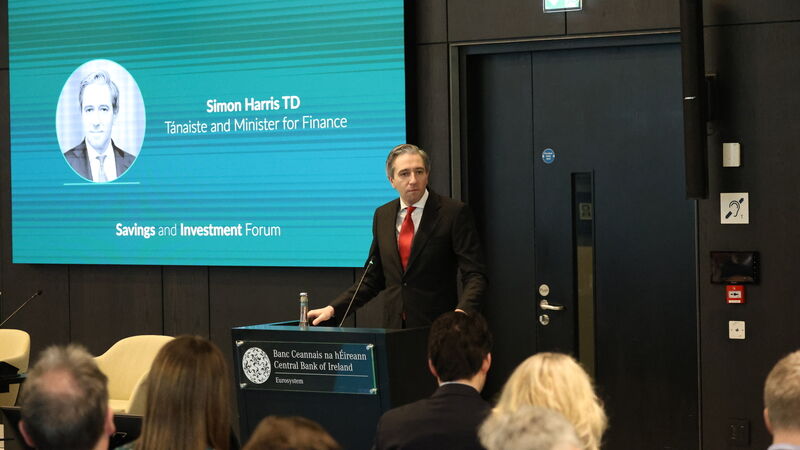
Finance minister Simon Harris at the unveiling of the Government's new savings and investment scheme on Tuesday. Picture: Stephen Collins/Collins
Finance minister Simon Harris held the first annual Savings and Investment Forum earlier this week to seek opinions from stakeholders on his plans for a new personal investment account.
But what is he seeking to do, and, more importantly, will it work?
As finance minister, Mr Harris has said he is concerned about the €170bn sitting on deposit in Irish bank accounts.
He says this could be earning people money, but people do not know how to invest.
Mr Harris is seeking to introduce a new personal investment account which will allow people to save money and receive interest back on their investment.
Read More
While many of us have accounts with a credit union or a financial institution for our savings accounts, the amount of interest you get paid on your money is minimal.
There are lots of accounts you can open with Ireland’s three pillar banks, but the returns differ greatly and can range between 0.01% and 3%.
The Government is arguing that while investing can yield greater returns, many people do not even know where to start, or are afraid of the risks.
These accounts will still be offered by financial institutions, which sources said have expressed interest in the proposals.
However, the difference between the Government-backed accounts and the traditional savings accounts is that a different tax regime would be applied.
People can still do their banking in the same way through their existing banks or credit unions, if they sign up to the new scheme, and it will not be directly administered by the Department of Finance.
According to Simon Harris, the main attraction of the account is that it will make investing easier.
Many believe investing is only for people with large amounts of money. However, the Tánaiste says this is for people who are also seeking to invest small amounts more regularly.
There will also be tax benefits. Currently, there is a range of different taxes chargeable on profits earned from investment.
Under this new plan, a flat rate tax will apply to balances that surpass a certain threshold. It is envisaged this will be the only tax applied to the investment account.
Criticism of the plan has included suggestions it will help the rich get richer.
Due to the proposed changes in the tax structures, those with more money will be tempted to invest more to reduce their tax bill.
Economists, including Barra Roantree of Trinity College Dublin, argued this could cost the State billions of euros as it will not be taking in this tax.
The plan is to help middle Ireland and the “squeezed middle” invest more and get a better return on their savings.
However, with the cost of living rising, people may not have the money to put in the accounts once they launch.
Despite the plan being widely talked about now, it is set to be formally unveiled on budget day on October 6, with the accounts expected to roll out next year.
CONNECT WITH US TODAY



Be the first to know the latest news and updates