Mick Clifford: A Cork IRA informer's death, the Garda investigation, and the new questions raised
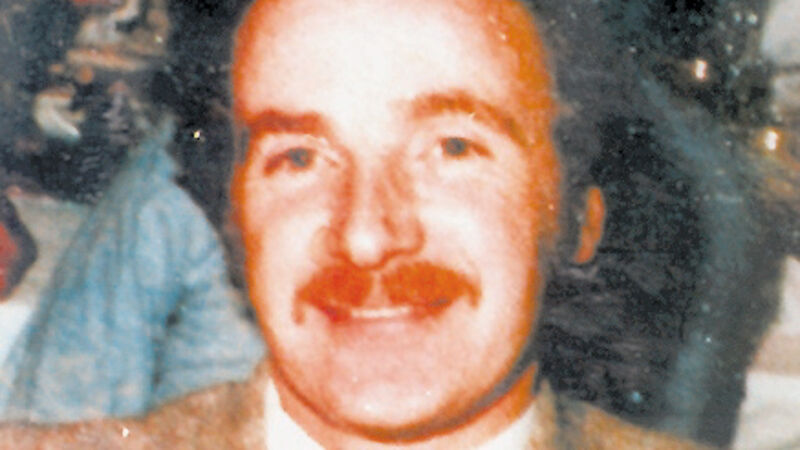
In 1985 John Corcoran, a Garda informer within the ranks of the Cork IRA, was abducted and brutally executed by the IRA. No one has ever been charged with his murder
The Garda alert was sent out from MacCurtain Street station in Cork City a few days after John Corcoran didn’t come home.
With each passing hour, JP O’Sullivan was growing increasingly concerned about the fate of John Corcoran, who was a father of eight children. Both men were engaged in dangerous activity in which lives were on the line.
O’Sullivan was a detective in the garda special branch. He had, as was his duty, recruited Corcoran to inform on the Provisional IRA. He was Corcoran’s handler.
Corcoran was an intelligence officer in the IRA. His role as an informer didn’t come about through greed or a high minded conclusion that the Provos should be defeated, but the mundane kind of human instinct and fear that saw so many informers recruited through the troubles in the North.
Read More
Both garda handler and informer were also, it would emerge later, pawns in a game being played by the gardaí and the upper echelons of the Provos. There is sufficient circumstantial evidence to posit that in all likelihood Corcoran’s life was sacrificed in order to protect that of a more valuable informer.
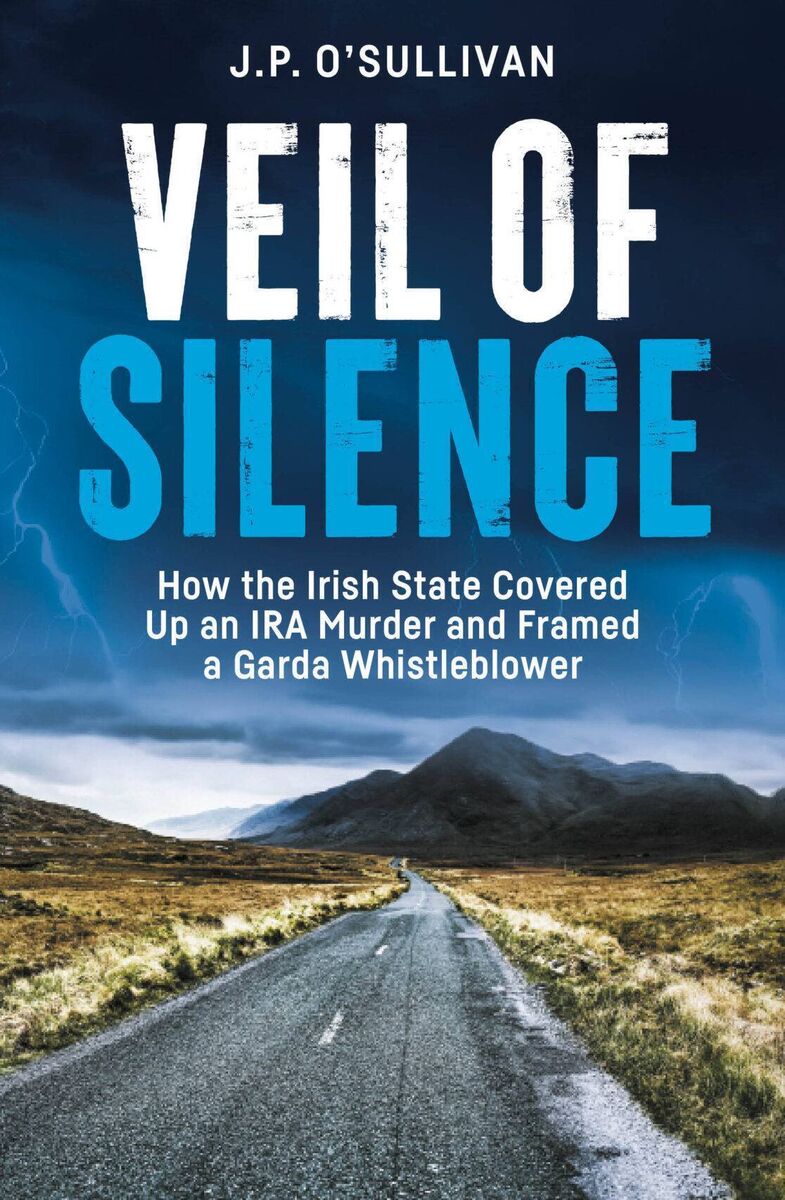
Now, over 40 years after the violent death of John Corcoran, his handler has written a memoir. gives a detailed account of the events leading up to and following the disappearance and murder of John Corcoran.
In 1975, Corcoran was arrested by O’Sullivan and his colleagues under Section 30 of the Offences Against The State Act. This was a broad law that allowed the gardaí wide latitude in effecting arrests. It was much criticised by human rights bodies and lawyers.
They had a friendly chat with Corcoran, who was working in the city as a warehouse manager. “He told us enough to confirm our suspicion that he was gathering intelligence for the IRA but emphasised that he was doing so to support ‘the struggle’ in the North; he did not approve of armed action in the South,” O’Sullivan writes.
They left on relatively friendly terms. Another approach was required to get the target to turn informer.
The Special Branch lads intercepted Corcoran in his car one evening on his way home from work.
They drove to a quiet location and told him he was going to be charged with IRA membership. That would mean prison time of at least a year.
“We let that sink in before we discussed the possible implications for him in a more sympathetic way,” O’Sullivan writes.
“I told him he had a choice. He could talk to us about the IRA in the context of their activities in the north of Ireland. On that basis we would not arrest him.
That was the point of no going back for the IRA recruit. He entered the dark and dangerous no-man’s land occupied by those who were passing on information about the Provos.
He had been manipulated by the agents of the state. They were acting in the best interests of the state, and, by extension, the public, but they were also engaging their informer in action that could see him killed.
While they made plain their threat of bringing him before the courts to be dispatched to prison, it’s highly unlikely that at the same time they set out in plain terms that if he was discovered he would be tortured and shot.
The informer would and should have known that anyway, but the guards had their own priorities and believed that the Provos represented a threat to Irish democracy.
Corcoran began passing on information. This he did for the best part of 10 years. Much of it was lightweight, but more did assist the guards.
One of the big nuggets came in September 1981, when he told O’Sullivan that the Provos were planning an armed robbery in Cork City on October 6.
Three possible post offices on the southside were targeted and going to be hit soon after children’s allowance money was to be delivered. Togher post office, the guards concluded, was the most likely to be hit first. The gardai were in place.
“The waiting Special Branch detectives had the element of surprise and it was all over very quickly. The raiders threw down their guns and surrendered,” O’Sullivan writes. “The shout on the radio was ‘we have three, it’s all over’.
“We had set the trap and they walked into it. In fact, the Provos hadn’t done their homework very well, because they started their raid on the post office before the ‘mickey money’ — garda lingo for children’s allowance — had been delivered.”
By that stage, O’Sullivan had encountered difficulties with superiors in the force. Officially he was no longer Corcoran’s handler, but he writes that the informer was still passing on nuggets of information to him.
His difficulties were resolved in 1984. Later that year O’Sullivan came to believe that Corcoran could be in danger of discovery.
“By September 1984 I had presented the men at the very top of the Garda Síochána with not one, but two opportunities to stand down John Corcoran as an informant. Moreover after the September report they had a clear obligation to save John’s life by doing so.”
At that time, Corcoran wasn’t the only informer on Provo activity in the Cork-Kerry area. Sean O’Callaghan was a native of Tralee.
He had joined the IRA in the early 1970s and would later claim that he was a high ranking commander in the North within a few years. Then he grew disillusioned and left, resettling in London.
In 1979, he contacted Special Branch in Tralee and offered to work as an informer. He would later claim that he was acting out of principle, that he had come to be disgusted at Provo violence.
In time, many would conclude that O’Callaghan was something of a fantasist and he would also go on to give completely different versions of what would later occur, particularly in relation to Corcoran.
He was, however, an intelligent man and by the mid 1980s was one of the gardaí’s best informers in the southern jurisdiction. Questions have been raised over the years as to whether he was also working for MI5 but that has never been confirmed.
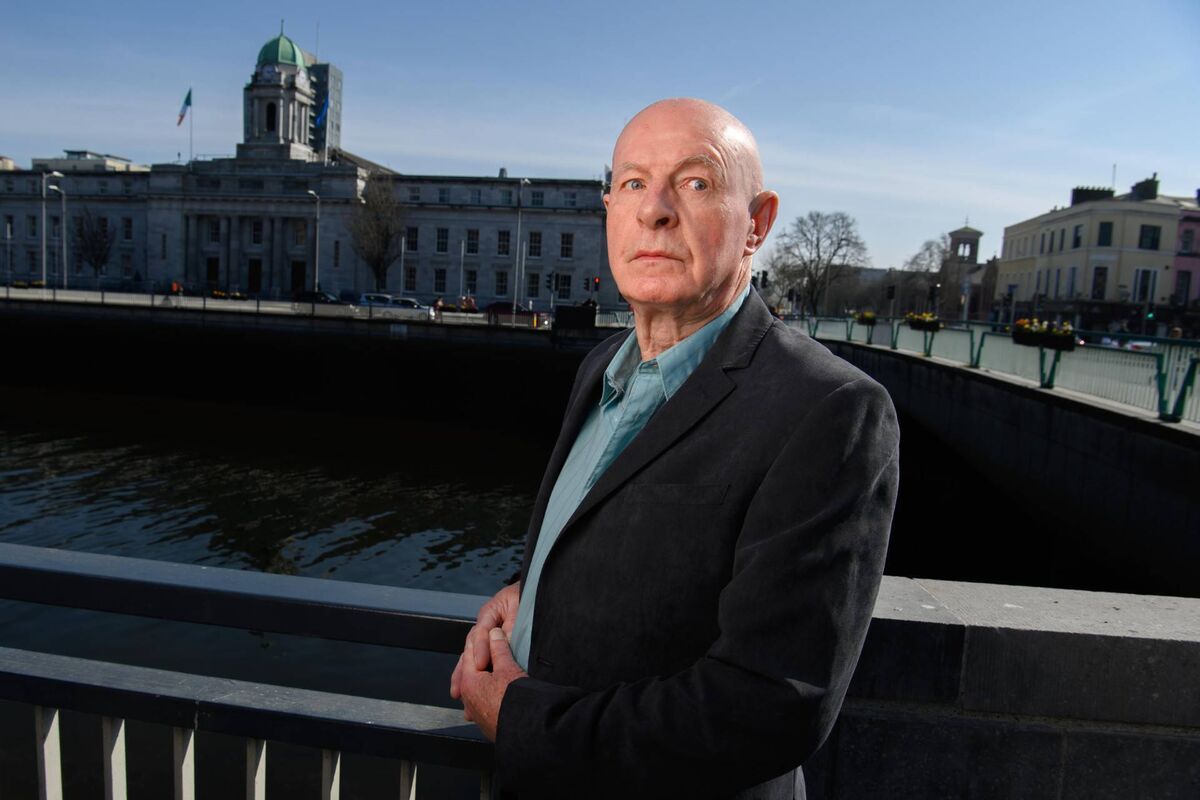
By 1985, John Corcoran was in regular contact with O’Sullivan about ongoing activities in the Provos.
“On Tuesday 19 March 1985, I telephoned John at work. He told me ‘there was a move on later’. I understood that to mean a trip to Kerry. That meant the possibility of meeting certain people, including O’Callaghan. That was the last time I spoke to him."
Two days later, Corcoran’s wife Eileen reported him missing. O’Sullivan maintains there was no great effort to locate him, despite his own growing concerns.
“It is impossible to predict what might have happened if a task force has been assembled to take immediate action in Cork and Kerry.
"For one thing, I was aware of the people he was likely to meet in Kerry. While a positive outcome wasn’t guaranteed, at least the attempt would have been made, but instead, there was nothing.”
The following day Eileen Corcoran contacted the then to make a public appeal for him.
Then, on the morning of March 23 at 10am, a phone call was made to the Pro-Cathedral in Dublin. The priest who answered was told that “John Corcoran is dead, ‘executed’ by the IRA for being an informer”. The location of his body was provided.
O’Sullivan writes: “John’s body was discovered by a garda search party at Kilnaglory, five miles from Cork City.”
On one level, this was the IRA simply doing what it did, shooting dead anybody they suspected of being an informer. However, it was to emerge later that O’Callaghan may well have been complicit.
On three separate occasions he would tell journalists that he had pulled the trigger. He related that Corcoran had been brought to a location in north Kerry, questioned for a few days and then shot.
The first such revelation was to Ger Colleran, a well known journalist who went on to edit a national newspaper. At the time he was working for . In November 1988, just before O’Callaghan walked into a police station in the UK to confess to his activities, he phoned Colleran.
He told the journalist he had been involved in six murders and gave a graphic account of how John Corcoran died in a remote location in Kerry.
He said the pair of them were sitting in a field for three or four hours before the killing.
“He didn’t try to get away. He was not arguing. He was not blindfolded. He knelt down on the ground and I shot. I said an act of contrition before I shot him…he turned his back. He was shot in the back of the head. He said, ‘go easy’.”
O’Sullivan writes that he remembered Corcoran using the same phrase at an earlier stage of their association. O’Callaghan would later recant this version and claim that he was not present at the gruesome event. In fact, he would claim that he alerted his handler in An Garda Síochána that Corcoran’s life was in danger.
After giving himself up he spent a number of years in prison and went on to become something of a cause célèbre among the British media and elements of the British establishment as a form of a hero who had been awakened to the wickedness of Provo violence.
While he was in prison in 1988, a file was sent to the DPP with a view to prosecuting him for Corcoran’s murder. Yet when O’Callaghan was released in 1996, nothing was done on the case. No charges, no prosecution.
O’Callaghan wrote a memoir in which he portrayed himself in heroic terms. In 2017, he died by drowning in a swimming pool in Jamaica.
O’Callaghan’s role in John Corcoran’s murder has never been definitively established, but JP O’Sullivan’s memoir points to copious evidence that he was at least present for the shooting, if not the man who pulled the trigger.
Of more significance is how the gardaí investigated the murder. JP O’Sullivan returned to work “in a state of considerable shock and distress” two days after Corcoran’s body was found.
The murder squad, as they were known, was dispatched from Dublin to Cork to investigate. However, there appeared to have been little interest in what ordinarily would have been the first stage of any such probe — interviewing the dead man’s handler in the force.
In the days that followed, O’Sullivan submitted a detailed report on the months leading up to the murder in which he referenced a senior Provo figure whom Corcoran had been due to meet. Yet he was not contacted by investigators.
“I had been puzzled by the lack of contact from senior officers in the days following John Corcoran’s disappearance, but I was bewildered by what happened next.
"I was completely isolated…As John’s handler, I was better positioned than anyone to provide some answers to these basic questions. Instead, silence prevailed.”
Nobody was ever charged with the murder of John Corcoran. That is not unusual on one level. There was a low conviction rate for most crimes committed by the IRA unless suspects were actually caught in the act.
But JP O’Sullivan’s memory, allied with journalistic work done at various points, and the failure of any real attempt to prosecute O’Callaghan, suggests that this was a murder that the gardaí simply didn’t want to solve.
In O’Sullivan recalls an investigation into Corcoran’s demise by magazine in 1997, written by Vincent Browne and Ursula Halligan.
The piece quoted “a garda with intimate knowledge of the John Corcoran affair" who stated: “It is well known within the gardaí that someone had been sacrificed for the greater good."
Were the gardaí forewarned that this man’s life was in mortal peril yet they failed to act on it? Was a decision taken to turn a blind eye to the murder on the basis that the other informer, O’Callaghan, might have been complicit?
Equally, was such a decision taken, from the very top, that any investigation might expose O’Callaghan as an informer whose usefulness was too valuable?
The nature of these things is that short of a smoking gun in the files of An Garda Síocána the full picture will never be known. Yet the bulk of evidence suggests that John Corcoran did not, in life or death, receive the kind of protection or justice to which all citizens are entitled.
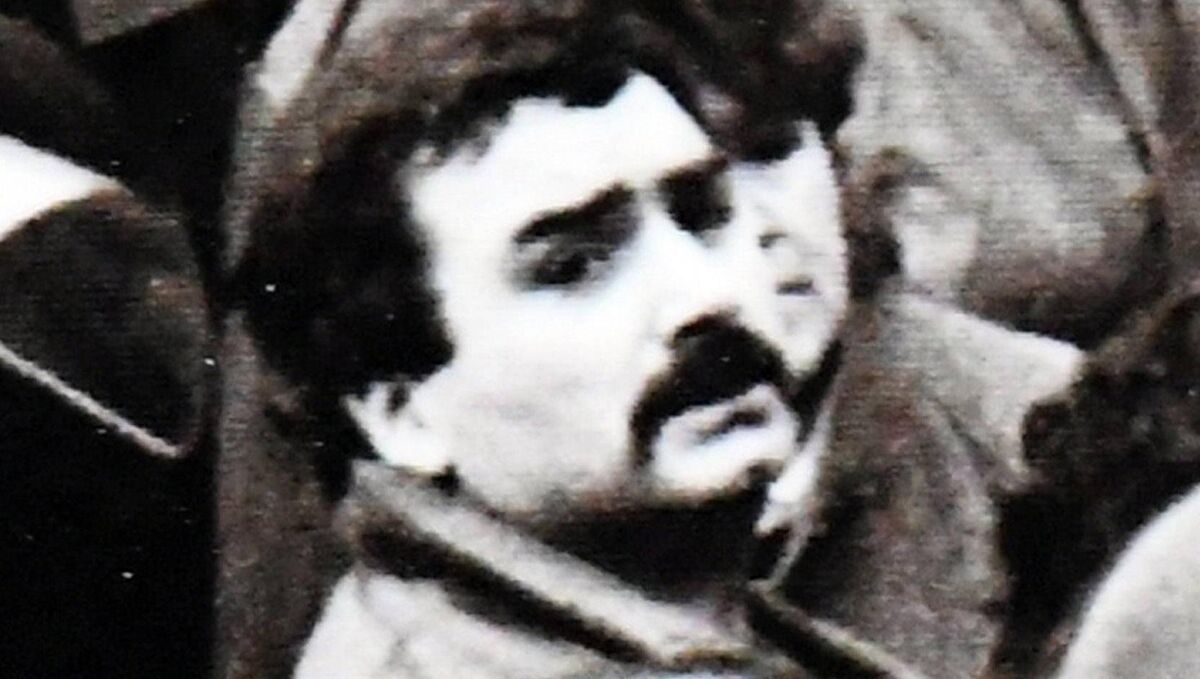
In recent years, the activities of Freddie Scappaticci in the north has uncovered how other informers' lives were probably sacrificed to protect him, the most valuable tout the British had in the Provos.
Scappaticci actually murdered some of those informers himself in his role as the IRA’s torturer and killer of informants. The fate of John Corcoran has a similar ring to it.
Corcoran most likely joined the Provos from a belief in achieving a united Ireland through violence. His death left a widow and eight children.
By the time of his murder the hierarchy in the IRA already knew that the basis for which they had recruited him and hundreds of others, the basis for which thousands died, was a lie that could never be achieved. Those left behind are entitled to ask what it was all about.
- by JP O’Sullivan is published by Merrion Press


CONNECT WITH US TODAY



Be the first to know the latest news and updates