Cork special school closure leaves parents worried as students prepare to return next week
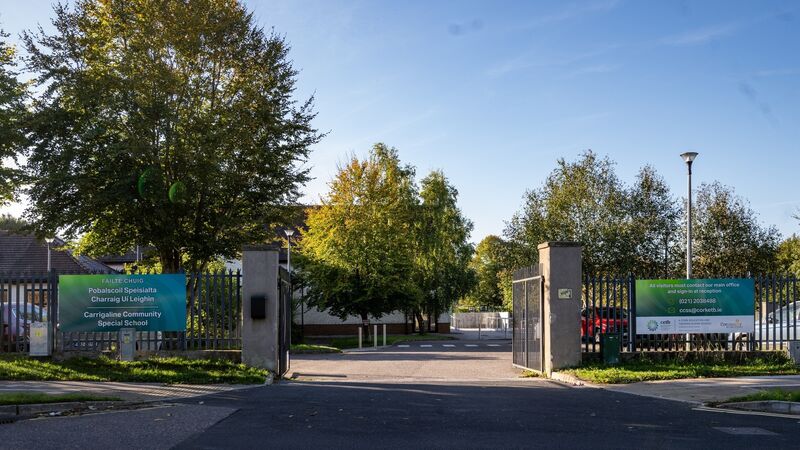
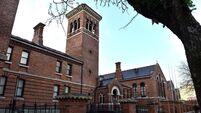
Carrigaline Community Special School is for students with autism and a mild or moderate general learning disability between the ages of four and 18. Picture: Chani Anderson
Lorraine Long, from Passage West, doesn't know yet if she will be able to send her child back to school on Monday.
The school closed abruptly more than a week ago, with little information sent to parents.
Her daughter, Tara Rose, attends Carrigaline Community Special School (CCSS), which is set to reopen next week following the full closure for all its 48 students at the end of February.
It followed an incident in which several staff members were injured.
The special school, established in the Taoiseach’s constituency five years ago in response to an acute shortage of school places, is for students with autism and a mild or moderate general learning disability between the ages of four and 18.
“It's been a very, very tough week for all involved, but moreover for the children," Lorraine said.
"The lack of communication from day to day, knowing whether the school was going to be open or closed. I know in this house it caused a huge amount of anxiety which leads to severe dysregulation, and it takes so long to come down from that height of dysregulation.
“There was no point closing the school for a week to open it on Monday with nothing really different. Those kids who have been off school for a week will be dysregulated, I know my daughter will be.
"I will have to gauge her on Monday to see is she able for the day. Will I have to do a soft opening for the week for her, and ease her in gently, or will I be expecting a phone call Monday to say she’s not in a good place, will I come collect her?
“The week off did not do these children any good. If anything, it did them harm.”
The patron of CCSS, Cork Education and Training Board (ETB) told parents the closure was necessary to “work through” a number of issues.
However after meeting with Cork ETB this week, parents who spoke to the say they remain concerned about the school's reopening, and what supports are in place to protect students and staff.
“The closure didn’t do the school’s reputation any good. It certainly didn’t do our children any good and that has a knock-on effect for families and parents,” Lorraine said.
“It takes a long, long time for a child to come back from dysregulation. Dysregulation is part of having a dual diagnosis of autism and an intellectual disability. Dysregulation is part of my daughter’s life, and will always be part of her life at various degrees.”
Pressure from parents opened the school in 2021, she added.
“It was parent pressure on the Government to say ‘we have nowhere for our children, you have to open a school'. Yes, we have the building, yes we have the staff, but the staff do not have the supports.
“Don’t get me wrong, the staff that deal with Tara on a daily basis, they are incredible at what they do. I cannot praise them enough, but they are obviously not getting the support.
"To shut down their workplace like that, it's as if to say to them ‘ye aren’t handling it, ye are doing something wrong’. No, they are not, they need more support and they will tell you they need more support.
"We have been banging on for the last five years: We need more support. We need a full time behavioural therapist in there.”
Many of the students are travelling from across Cork to get to school every day via bus, she added.
Some can be travelling for up to an hour and a half. "It's like starting off with a bottle of Coke in the morning," she said. "That bottle is fine. Get on the bus and you might be stuck in traffic, it's like shaking the bottle of Coke once.
"A child might be dysregulated, then goes into school and something small might happen. It's just the little shakes of that bottle that ends up in it exploding. That’s how dysregulation happens. It's the little, incremental things that build up until that’s it, and you get that flash moment."
Last year, the highlighted the concerns of several parents at the school, and about an “alarming” pattern of suspensions.
Their concerns included high staff turnover, which was leading to class closures and a lack of continuity for students who require routine and structure.
They also raised concerns about students having little to no direct access to the therapies and services they need to access an education.
These issues, combined, created an environment that caused high levels of anxiety and dysregulation among the school’s students, resulting in students becoming distressed or “lashing out”.
But parents warned that rather than address the core issues leading to the dysregulation, instead the approach was “punitive”, resulting in the “out of control” suspension rate.
Between 2021 and 2024, the school issued 17 suspensions. It issued one further suspension in October. While suspensions have stopped at the school, the core issues remain.
Niamh O'Grady was one of the parents who spoke to the last year.
This week, she said: “The things that are going right for other special schools, so that things do not lead to school closures, are what the Cork ETB needs to learn and put in place for our school.
"We need a major intervention from the Department of Education to make that happen, in order to support staff and children.”
In its letter to parents this week, Cork ETB said: "In recent months, the school has experienced a significant increase in injuries to staff which have occurred where children have become dysregulated.
"We absolutely understand that these behaviours are outside the control of the children. However, the resultant injuries have had a significant impact on the health and wellbeing of staff resulting in the requirement for a high level of staff injury leave in the school."
In 2021, Carrigaline Community Special School was opened under the patronage of Cork ETB. It was the first special school the patron opened in Cork. It has gone on to open three more special schools in the years that followed.
It has been the only patron to open new special schools in Cork over the last five years, with each school sanctioned by the Department of Education and opened quickly to provide places for students.
As it is an educational patron, its students have not had direct access to respite services, unlike those with a traditional disability service provider.
Cork ETB also does not have direct access to therapists such as speech and language therapists, occupational therapists, and psychologists.
In 2024, the school was included as one of several in Cork to pilot “enhanced in-school therapy supports”.
The therapists on the pilot scheme come from a local children’s disability network team (CDNT), which is funded by the HSE.
They provide 15 hours per week of speech and language therapy, along with occupational therapy.
In a best-case scenario, this allows each therapist an average of 20 minutes a week to work with each of the school’s students.
A behavioural therapist also provides advice to the school, but does not work directly with students.
From Whitechurch, Jill Looney's son Ben attends the school.
The Department of Education this week said the National Educational Psychological Service (NEPS) would provide advice to the school, she said.
“We’ve already been through a NEPS assessment. That only involved a meeting with the NEPS psychologist. She interviewed us, she interviewed staff and she observed my son. We got a report at the end of it that highlighted his issues, which we all knew already.
"There’s no in-house support there and that’s what the kids need. They need a multi-disciplinary team in there to support the needs. These are kids with complex needs, kids with dual diagnosis. To me, having all his issues written down in a report isn’t much support.”
Her son has autism, ADHD, and a severe intellectual disability.
"As long as there are no supports in the school, there are going to be behaviours where kids lash out, because of dysregulation. To me, you have to start at the beginning, get the supports in. If the child is calmer, there will be less injuries to staff.”
Because the school was opened so quickly, it opened in a former gaelscoil.
"It was never a retrofit for the kids' needs, its not purpose built. There are six or eight classrooms, and they are all full. There is one sensory room, between 48 children. If a child is upset, there is no room to take them to a quiet area. Its not big enough," Jill said.
“The support that goes in there is about 20 minutes for each student, which is nothing, and really it's only an advisory role. There’s nobody working with them hands on, and that’s what the kids need. There needs to be support there [for staff so] that if you have an issue with a child, or a child has a behavioral issue today, that it can be looked at straight away, not in a month’s time.
“People make referrals if they have issues, and they have to wait to be seen. At that stage, there’s a different behaviour cropping up. At the end of the day, if there were more supports there for the teachers, it would make life for the kids in school much more doable."
She is also worried about the return next week. "You have 48 kids coming back on Monday who have been out of routine for six days, and there is nothing else in place. I’d say it will be chaos but I imagine no one will get a phone call to come collect their child because there will be uproar.”
Children with behavioural problems and complex needs ‘lash out’ due to frustration and not being able to communicate, she added. “But that is happening in other special schools as well. No other special school closes a whole school for a week and keeps 48 kids at home for an incident.”
A spokesperson for Cork ETB said it is "committed to ensuring a safe, positive learning environment for all students and staff in the school".
"Carrigaline Community Special School has ongoing engagement with the NCSE and CAMHS-ID, with this engagement intensifying over the past week. We remain in ongoing communication with the Department of Education and Youth regarding resourcing, staff training, and supports."
The Department of Education has sanctioned an additional teacher and two additional SNAs for the school until the end of the current school year.
"Cork ETB has commenced the process of recruiting these individuals," they added.
"National shortages of qualified teachers continue to present challenges, particularly for special schools that must compete with mainstream primary schools for substitute teachers and SNAs.
"Cork ETB is open to any support that will benefit Carrigaline Community Special School. A behavioural therapist is already working with staff, and any further supports would need to be aligned with the existing provision in the school."
A spokesperson for the Department of Education said it and the National Council for Special Education (NCSE) are in "continuing engagement with Cork ETB".
"This builds on close engagement over recent months on a range of measures to support Carrigaline Community Special School.
"The Department, NCSE and Cork ETB continue to engage with the school on what additional supports may be necessary to support the school."
They added: "An advisory team from the NCSE has been in the school this week to provide a bespoke whole of school training and guidance to all staff on supporting students and managing behaviours of concern.
"This team, in collaboration with the National Educational Psychological Service (NEPS), the Inspectorate and the in-school therapy team, will continue to engage with and support all staff, on an ongoing basis, to provide training and support."


CONNECT WITH US TODAY



Be the first to know the latest news and updates