Irish eyes in Minnesota hoping to smile for Patrick's Day after ICE unrest

From left: Sean and Judy Clerkin, from the Minneapolis St Patrick's Day Parade; Ruairí Barnwell, Ireland Network Minnesota; and Peter Kenefick, from the St Paul St Patrick's Day Parade.
Minneapolis and St Paul are metropolitan areas a stone’s throw from each other. You can drive from one city centre to the other in less than half an hour, traffic permitting.
It would be like having Dublin and Cork separated by just a river and a few bridges.
Entering March, temperatures are finally getting above freezing on a consistent basis, bringing an end to a winter that was bitter in more ways than one as these areas again found themselves making unwelcome headlines around the world.
The killing of George Floyd by police in Minneapolis in 2020 triggered unrest that was broadcast online and fuelled global Black Lives Matter protests.
Last August, two children were killed and dozens injured after a shooting during an all-school mass in a church just north of Minneapolis, marking another grim vista for mass shootings in the US.
Operation Metro Surge began in the city in December 2025, when the Trump administration deployed thousands of federal agents, including Immigration and Customs Enforcement (ICE), as part of a sweeping immigration crackdown that locals denounced as a “reign of terror”.
Mother of three Renee Good was killed after being shot three times by an ICE agent during the unrest, while 37-year-old Alex Pretti was shot dead by local police during a protest after the death of Ms Good.
During a general strike in January, the witnessed tens of thousands of people braving freezing cold temperatures of -25C to take to the streets to protest.
This month, there will be large-scale gatherings for an altogether better reason — and with more than a tint of green to proceedings.
There has always been a friendly rivalry between the St Patrick’s Day parades in Minneapolis and St Paul, but this year the organisers of both are counting on them to mark a step-change after the departure of ICE.
Where thousands were gathering in fury and despair on the streets a few weeks ago, now they’ll be gathering to celebrate and hopefully enjoy themselves.
“Minneapolis has had one blow after another, between covid, George Floyd, the church shootings, and the ICE occupation,” said Ruairí Barnwell, a Tullamore native and one of the founders of Ireland Network Minnesota.
“There is a strong focus is on getting families and the younger generation engaged, who may have felt unsafe going downtown up to now. But it will definitely be family friendly, and it's not lost on people that this will be the first time the streets will be full of celebrations instead of protests and vigils caused by the ICE occupation.”
Last week, Mr Barnwell chaired a discussion on the upcoming parades at the Celtic Junction Arts Centre, located, conveniently, between Minneapolis and St Paul, and run by Natalie Nugent O’Shea and her husband Cormac.
Sean and Judy Clerkin represented the Minneapolis parade, while Peter Kenefick was there for St Paul. They began by swapping stories of how the parades began in the 1960s.
“All these fellows got together and decided, ‘hey Minneapolis should have a parade’ and that’s how it got started,” says Judy. “It was one float of ‘the sons and daughters of Ireland’ which was a group that had started as well.
“And when they finished, the police said ‘have you got a permit? No? If you want to do this every year, you have to get one’.”
They were joined by Colm Black, deputy fire chief at the Minneapolis Fire Department, who was hailed as one of the first responders at the Annunciation mass shooting last August.
Pupils and staff from Annunciation Catholic School will help lead the parade in Minneapolis as it makes its way through downtown.
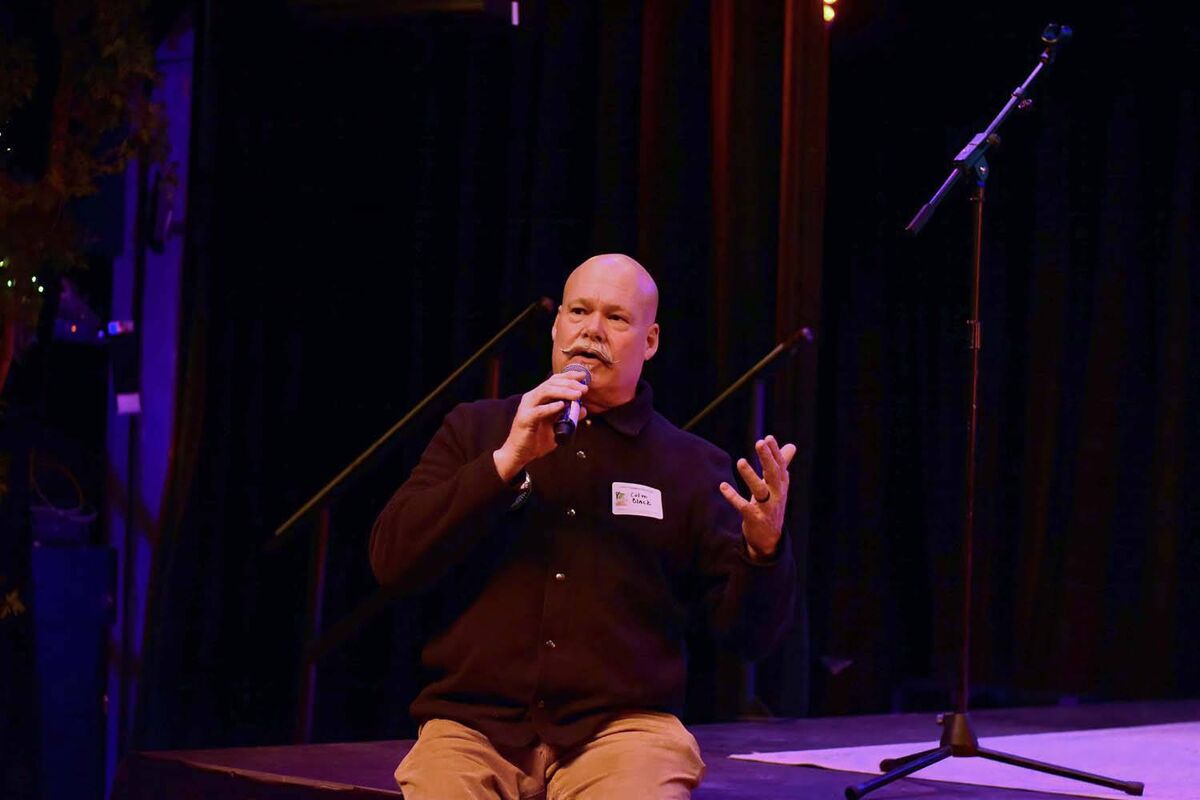
Mr Black said the city needed celebrations like this after all that has happened.
“I was always going to be there, my friends and family had always being there,” he said. “But seeing the economic hits the city of Minneapolis has taken and the impact, I made a conscious decision talking to Judy to do something here.”
He described how local bars, unions, the police force, public works all got involved — “basically every entity in the city” — on board as they planned ahead.
"It's to show the people of Minneapolis that Minneapolis is a vibrant, great city, and to try to bring people back,” Mr Black said. “We’re just trying. We’re throwing all the ‘you know what’ at the wall to see what we can get to stick.
“But the whole goal with this is to bring more families into Minneapolis. I know at night people are nervous about coming into the city. I read the paper. I work for the fire department. I know exactly what’s going on. But I want to bring some wholesomeness to it.
“And really what I'm asking you to do is just come down, enjoy yourself. Spend a nickel at a pub, go into a place that's supporting the day, and we'll be there to support you guys in St Paul as well.”
The repercussions of the ICE operation will be felt across Minneapolis, St Paul and the wider area for years to come.
Two Americans citizens were gunned down by federal agents in the streets. There have been no charges brought against those responsible. There likely never will be.
The Trump administration said in early February that 4,000 arrests were made during the operation. White House spokesperson Karoline Leavitt called them “4,000 dangerous criminal aliens”. Reports on the ground indicate many of those arrested — some now suing for wrongful arrest — had no criminal records at all.
Among those detained were US citizens, Native Americans, and people with pending asylum cases — including children such as five-year-old Liam Ramos. Restaurant workers, hotel staff, airport employees, and retail workers were also caught up in the sweep.
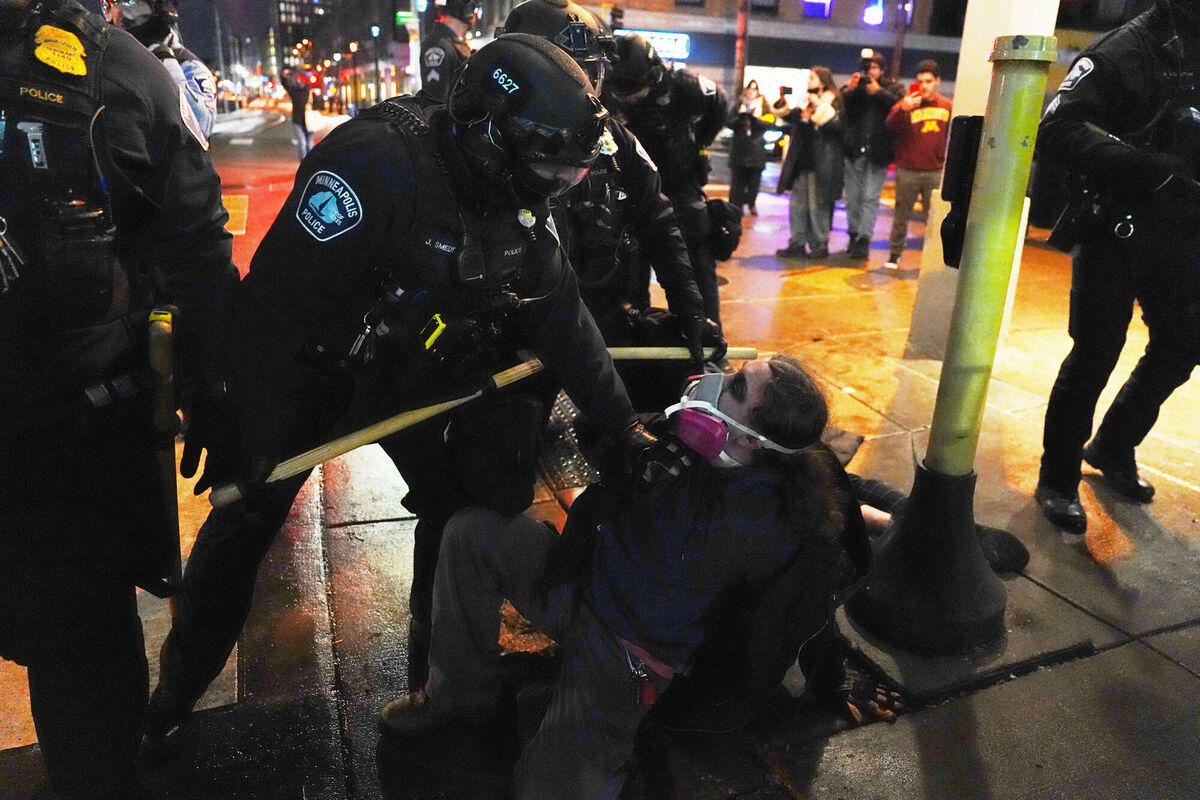
Many were transferred out of state, making it more difficult for their lawyers to represent them. Although the ICE operation in the state has ended, many will not be returning home to Minnesota. Liam Ramos and his father are among the lucky few who have made it back.
Writing in , experts from the University of Albany have said there are long-lasting negative effects for those children put in detention centres, even if they are eventually released.
“As trauma researchers have long known, our bodies keep score over a lifetime,” they wrote. “The question facing policymakers is not whether these enforcement tactics will cause lasting harm — our research suggests they would — but what human costs we, as a nation, are willing to bear.”
While the number of incidents involving ICE have greatly reduced, their activity has continued.
City officials have painted a bleak picture of the fallout. They put losses at $203.1m (€172m) up to the end of January. That includes $47m in lost wages from people too afraid to leave their homes and go to work, $81m in lost revenue for restaurants and small businesses, and $4.7m in hotel cancellations extending into the summer. In addition, $15m was required for rent‑assistance supports due to lost income, while $2.4m per week was spent on food assistance.
“The harm from Operation Metro Surge will last in our community for years, if not decades or a generation,” states the economic report.
As city mayor Jacob Frey remarked in unveiling the figures, “Was it worth it?”
Another sting in the tail from the ICE climbdown came from Donald Trump’s State of the Union address this week, where he signalled JD Vance would be the point man for a new “war on fraud”.
It was little surprise when the vice president himself announced Minnesota would be first in the crosshairs. Up to $250m in Medicaid (low-cost healthcare) funding will be halted.
Linking the moves to the alleged fraud scandal involving members of the Somali community — which had also served as the pretext for the initial ICE operation — officials set their stall out again this week.
Mr Vance has called Renee Good’s killing a “tragedy of her own making”, and reposted a claim from deputy White House chief of staff Stephen Miller that Alex Pretti was an “assassin” who “tried to murder federal agents”.
He made it clear he hoped residents of the state would blame Democrat leaders for the withheld funding.
He also made a direct link back to immigration enforcement that had been so vehemently resisted by so many in Minnesota.
“What I would say to the people of Minnesota is: we want to do right by you; we think you deserve better public services; we think you deserve to have the benefits that you’re actually entitled to,” said Mr Vance.
“And we encourage everybody in Minnesota, whatever their political affiliation, to work on the state government a little bit, because if we had some better cooperation we could have common sense immigration enforcement. We could also have less money going to fraudsters.”
Governor Tim Walz, who was Kamala Harris’ running mate in her failed presidential bid in 2024, said what Mr Vance and the Trump administration are doing has “nothing to do with fraud”.
The ICE operation may be over but, like the snow on the ground in Minneapolis, its lasting impacts will take time to thaw.
Mr Barnwell emphasised the Irish community would be doing all it could to put a more positive spin on the place this St Patrick’s Day.
“The main thing I would say personally is that Minnesota, the land of 10,000 lakes, is a beautiful place, and both Minneapolis and St Paul, which sit on the banks of the Mississippi River, are amazing cities to live in,” he said.
“They have unfairly been broadcast around the world for the wrong reasons over the past few weeks. This St Patrick’s Day offers a great opportunity for positivity and a little silliness to break the heavy mood the city has experienced so far this year, and to head into the spring showcasing the best of Minnesota to the world.”


CONNECT WITH US TODAY



Be the first to know the latest news and updates