SNA cuts: Why Irish schools say special education support is being undermined
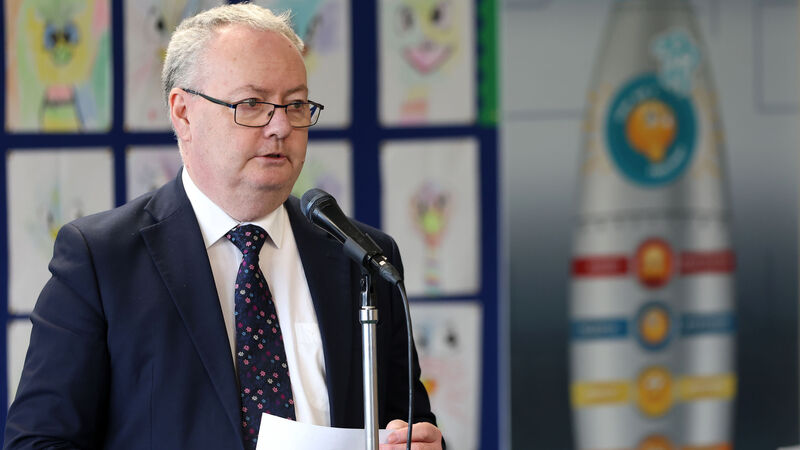
Michael Moynihan, minister of state at the Department of Education and Youth. The department has refused to clarify how many schools are expected to gain SNA posts for this coming September. Picture: Jim Coughlan
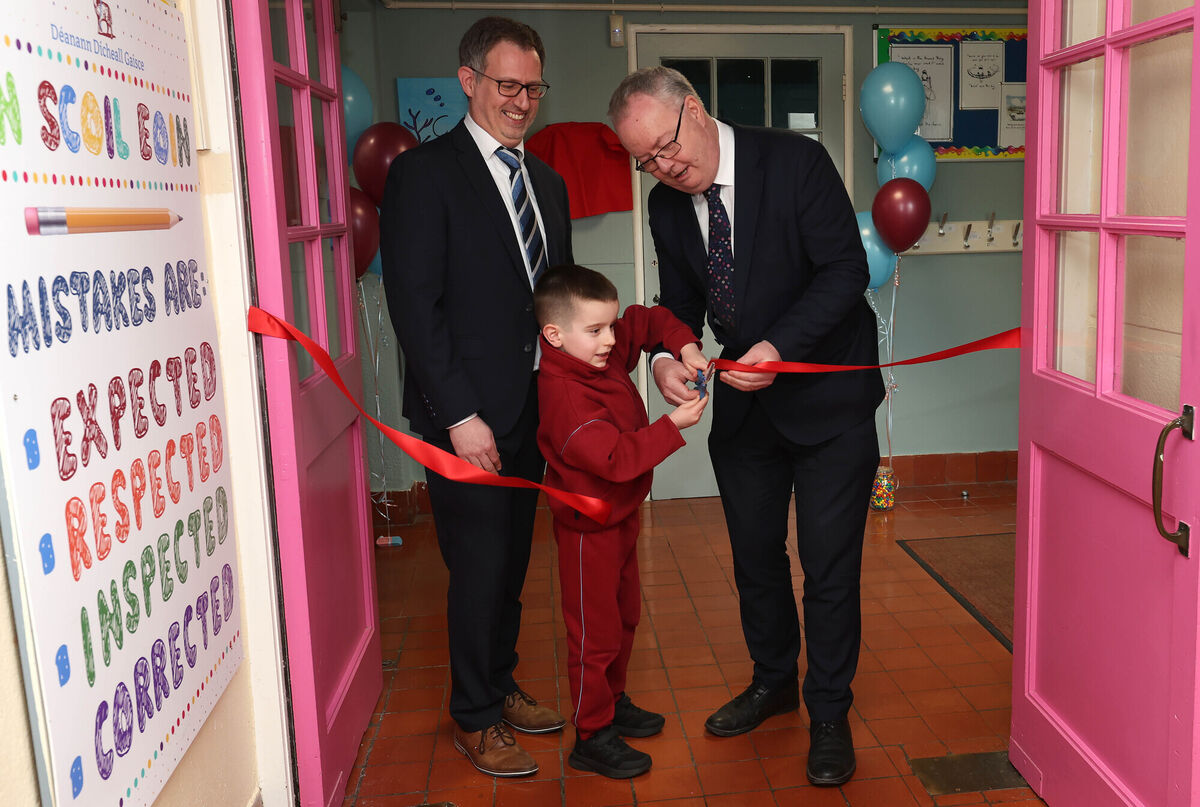
Earlier this week, the attended the opening of a new sensory space at Scoil Eoin, a primary school for boys in the Cork suburb of Ballincollig.
The invitation was received and accepted far in advance of the storm that erupted as schools across the country learnt of cuts to their special needs assistant (SNA) posts from next September.
Scoil Eoin is full of life and colour, with photos and students' artwork adorning its corridors.
As the event got under way, sounds of laughter and singing could be heard from nearby classrooms.
To those gathered, school principal William Casey described the students as the rhythm of the school, “its energy, its heart, its soul”.
“When children feel safe, understood, and supported, they are free to grow, learn, and flourish.”
The school is a perfect example of building a foundation on inclusion, not just “accommodating” a wide range of additional needs but making sure all its students are given every opportunity.
Like many schools across the country, it is doing so of its own initiative.
The sensory space was funded through fundraising by its parents’ association, who recognised the need for a safe, calm environment for the students who require it.
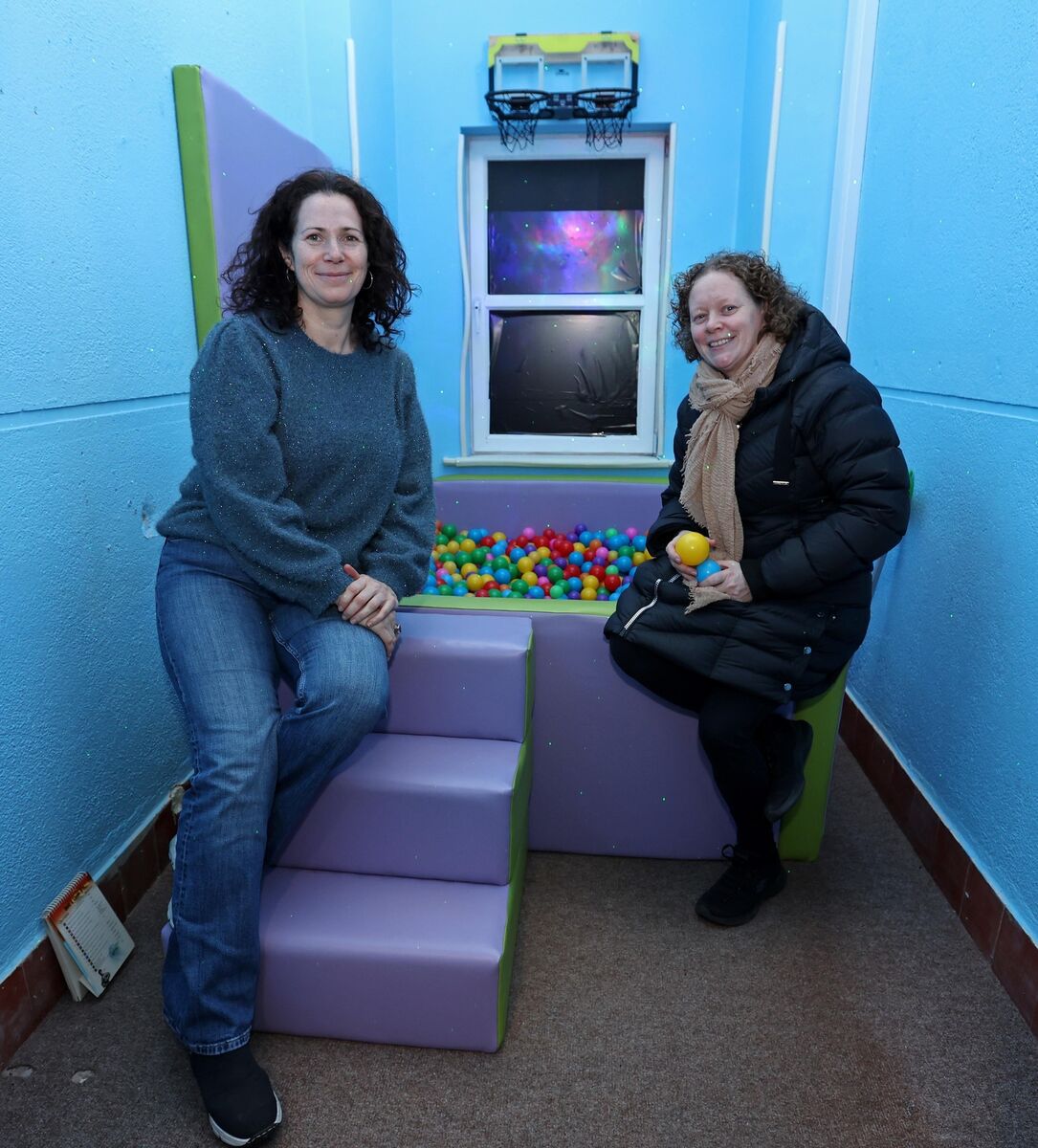
Many autistic students attend Scoil Eoin, some of whom need more support than the resources available to a mainstream school.
But despite its best efforts, it cannot open three autism classes sanctioned now almost five years ago as it remains waiting for sign-off on the necessary works.
Scoil Eoin is also a perfect example of the barriers and systematic challenges faced by many schools when it comes to achieving inclusion with the current resources available to support special education.
From September, the number of SNAs working across the school system is expected to rise to the highest on record.
Why then did so many schools receive news from the National Council for Special Education (NCSE) of severe reductions in their numbers for 2026/27?
The majority of students who have special educational needs attend mainstream schools, with the Department of Education estimating this figure to stand at 240,000 students, or approximately 25% of the student body.
The department says this is possible “through the provision of resources such as special education teachers and SNAs”.
More than 1,700 new SNA posts are expected to be added next year, a point both ministers and the department has been quick to stress.
But most of these posts will be required for the 4,000 additional special education places needed to meet demand.
The department plans to expand special school places, and open 400 special classes, where staffing is set at two SNAs per class.
In mainstream schools, SNAs are not allocated to individual children, according to the department, but are a resource “for the whole school" deployed according to the overall care needs of its students.
The news of cuts comes at a time when many parents report being advised by their local special education needs organisers (SENOs), or by the NCSE, to “give mainstream a go” due to a lack of specialised school places.
Jesslyn Henry has worked as an SNA for 15 years in Ballymun, Dublin.
Currently on career break, she is a Dublin City councillor for the Social Democrats.
“Because there are not enough special classes or special school places, SENOs are telling parents ‘ah sure, go into mainstream, you’ll have SNA support, and see how it goes and if a place comes up in an autism class, you’ll get the place because you’re in the school already’,” she explained.
However, if a school opens an autism class, and takes in the max number of six students, that class is full until they leave.
Often, this is when they have completed their education in the school.
“There might be a case where a child does so well, they are moved to mainstream and a place will open up, but that doesn’t happen often.”
The day-to-day role of an SNA depends on the school, and on its needs, she added.
“For us, we had wheelchair users, so there were primary care needs. We also had diabetic students, and students with epilepsy so we could have students having seizures.
“We also had students who are neurodivergent, which involved things like sensory regulation breaks, and helping to keep them on task.”
SNAs might also work on helping to “simplify” the curriculum to help students access it, and act as a communication bridge between students and teachers.
Helping with communication is also “huge” and as well as helping students to deal with anxiety and fears.
Officially, ‘primary care needs’ are recognised as the role of the SNA, but it is a far wider remit than recognised.
“Toileting, feeding, and medical needs are recognised," Ms Herny said.
“They are the primary care needs. Anything to do with regulation, anything to do with communication, even behaviours that challenge, they aren’t listed under SNA contracts at the moment.
"But they are very much seen as part of the role. Every SNA in the country would participate in those tasks.”
Ultimately, any proposed cuts are a safety issue, she added.
“Regulation is a huge thing for these children, the safety of these children is paramount. Schools are going to be struggling, it's a major crisis waiting to happen.”
One teacher, who asked to remain anonymous, spoke to the about her experience balancing the regulation needs of her primary school classroom without extra resources.
“I’m the example of what happens without SNA support,” she said.
In her slightly larger-than-average class, more than half of her students have additional needs, mainly autism or ADHD.
However, none meet the threshold for SNA support as there are children with higher levels of need in her school.
To get through the school day, she must use an "insane amount of differentiation, constantly, every day”.
Differentiation means a combination of different teaching approaches, levels, and assessments to deliver the curriculum across a range of different abilities.
“A lot of lessons also have to stop due to emotional regulation issues. Almost every lesson is disrupted,” she said.
"It's really difficult, it's so frustrating to not be able to support everyone on my own.”
But having an SNA in her classroom would help some way towards minimising this.
The reviews of SNA allocations also sparked a political storm.
Earlier this week, Taoiseach Michael Martin told the Dáil “the mistake made here is that there hasn't been a comprehensive review for quite a number of years".
However, the Department of Education later told the that the “NCSE have always undertaken SNA reviews each year”.
According to the department, the NCSE undertook 1,400 reviews during the last school year compared to approximately 1,000 taken so far this year.
It refused to say how many posts were lost during the 1,400 reviews in 2024/25.
The Department of Education has also refused to clarify how many schools are expected to gain posts for this coming September.
According to the Irish National Teachers Organisation, delays implementing a redeployment process for SNAs meant that surplus staff were retained in some schools, while others did not receive their full entitlement.
“The failure to resolve these structural issues before issuing revised allocations has compounded confusion and undermined confidence in the system.”
A spokesperson for the department previously told the that SNA allocations can change for different reasons, including changes in student numbers, changes in individual care needs, or students moving from primary to post‑primary school.
Samantha O'Flanagan is an SNA at Stapolin Educate Together National School in Dublin.
Like Scoil Eoin, the school is also trying its best to open special classes for September but it is unable to do so despite significant local demand.
It has no capacity within its existing building, and it cannot get sign off on building works to increase its capacity.
"The department has said that SNA allocations can change due to student numbers or care needs changing," Ms O'Flanagan said.
"While this might be the case in a small number of situations, the reality is that SNA allocations are still being based on a circular that focuses on us being hired entirely based on primary care needs. Once hired the circular states, we can also assist with secondary care needs."
She added: "The difficulty is that SNAs are allocated based on a narrow definition of care, but once in place we are supporting a much broader range of needs.
"When reviews happen, posts are being cut because there may be fewer primary care needs on paper, yet the children in those classrooms still rely heavily on SNA support to access education.
"We support children to regulate, to communicate, to stay in school safely, and to meaningfully access their education every day."
The department’s response doesn’t acknowledge this gap between policy and reality, she added.
"That omission is deeply concerning for schools and families who are already feeling the effects of these cuts.
The role of the SNA needs to be properly recognised and widened to reflect what is actually happening in our schools.
The NCSE Relate document stresses the importance of relationships, the Department is constantly talking about the drive towards inclusive education — cutting SNAs in a complete contradiction to all this."
CONNECT WITH US TODAY



Be the first to know the latest news and updates