The Regency Hotel attack at 10: Inside the moment Irish gangland entered a new era
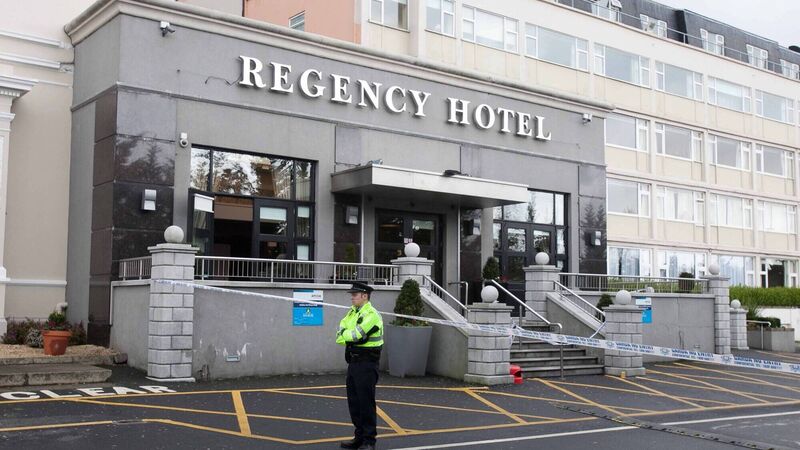
Gardaí cordon off the scene after the fatal shooting of David Byrne, aged 34, from Raleigh Square, Crumlin at the Regency Hotel, Dublin, on February 5, 2016. File Picture: Gareth Chaney/Collins
It was Ireland’s " moment", when imitation elite gardaí, armed with assault rifles, were about to enter a packed hotel.
That military-style attack on the Regency Hotel, on Dublin’s northside, on February 5, 2016, signalled a new era for gangland in Ireland.
On its 10th anniversary, the nature of that watershed event, and its impact, is still being examined and assessed.
The intense Kinahan-Hutch feud brought with it features not seen before in Ireland, except maybe on television, with hit teams hired that included seasoned killers from abroad.
Read More
The feud also introduced much of the country to an Irish crime gang — the Kinahan cartel — with a level of crude wealth and global criminal connections never seen before.
It sparked garda investigations that crossed Europe, the Middle East, and the Americas, with notable landmarks including a US multi-million bounty for the cartel’s leaders, the dramatic arrest of the Hutch gang leader in Spain, and the first extradition from the United Arab Emirates of a senior Kinahan lieutenant.
At home, multiple garda murder investigations were combined with separate garda operations — involving huge resources — to prevent assassinations and bring conspirators to justice, often utilising innovative gangland-related laws.
Amid the litany of successful convictions, including the removal of hit teams from the streets, there were conspicuous failures, not least the collapse of the Patrick Hutch trial following the death by suicide of the lead garda investigator into the Regency Hotel attack, Detective Superintendent Colm Fox.
That was followed by the botched prosecution of Gerry ‘The Monk’ Hutch, who then proceeded to humiliate the State by running for general election in his home turf — and almost getting in.
It began with an internal feud in the Kinahan cartel, and ignited with the shooting dead of Gary Hutch by the Kinahan cartel in Spain in September 2015.
The armed robber and drug dealer was the son of Patsy Hutch, the Monk’s brother. He was a senior figure within the Kinahan cartel, and he was largely based in Spain with Daniel Kinahan and company. Another senior member of the Hutch network, James ‘Mago' Gately was also active in the Kinahan gang.
After the murder of Gary Hutch, the quoted experienced garda sources as warning of retaliation, saying that his associates — meaning the Hutch criminal network — had good connections on the island of Ireland and abroad.
“They [the Kinahan cartel] have bitten off more that they can chew,” one source said.
They predicted that a boxing fight in November could be a flashpoint as cartel bosses would be attending. As it turns out, there was a Hutch gangland attack at the Red Cow Hotel, and cartel figure Liam Roe was lucky to escape when the gunman’s firearm jammed.
The following month, Kinahan hitmen tried — and failed — to assassinate The Monk in Lanzarote, his home from home.
“Gerry thought he would be next, and that’s probably why the Regency happened,” a garda [Garda one] familiar with the investigation told the for this article.
Another senior detective [Garda two] had a different take: “Don’t forget this was also about The Monk’s ego. It’s also about his recklessness, his stupid bravado.”
The TV and radio reports were telling people the killers were dressed as gardaí. Eyewitnesses thought the Kalashnikov-wielding men, dressed in Swat-type clothes and helmets, were gardaí responding to the shots fired in the hall.
"'Gardaí are after shooting two people at the hotel,'" another garda [Garda three] familiar with the investigation said, recounting what gardaí were being told immediately after the incident.
“But you had to get there and find out first hand from eyewitnesses. It was just mad, mad as a movie.”
Garda three said it was manic that afternoon and into the evening, adding: “The next two to three hours were bedlam. The enormity of it had not registered yet because we had to do the basics of the investigation.”
Garda one said: “Everyone was high on emotion, but I remember seeing it on CCTV at the station. I saw that image of the two people standing purposefully with Kalashnikovs, organised, calm, waiting to walk in [to the hotel].
“And when you saw that, you knew things would never be the same. The old gangland was gone. This was the middle of the day in a busy hotel, guys with Kalashnikovs. The organisation, skill, and audacity of it was nothing like we’d seen before.”
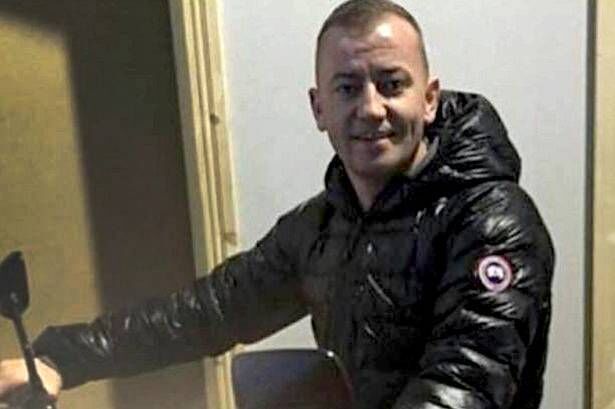
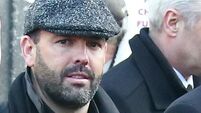
Three Swat-like gunmen were part of a murder team comprising of a gunman in drag — "wiggy" some gardaí dubbed him — and "flat cap", who didn’t even try to conceal his face.
These two were supposed to go in the back entrance of the hall where the boxing weigh-in was taking place and the top layers of the Kinahan cartel were present: Daniel Kinahan — the main target — along with David, Liam Byrne, and Sean McGovern.
“That place is like a warren, and they couldn’t find the back entrance,” Garda two said.
“They had to ask for direction, and a staff member put them in one of the main entrances at the side. So, instead of firing their shots into the air at the back and forcing everyone out the main entrance to the reception [where the AK47 gunmen were], they came in a side entrance. That allowed Daniel, and his bodyguard, to go out a back exit.”
The three gunmen did not open fire randomly as people came out of the Regency. They were looking out for their targets. Garda one said: “If one of them pinched their trigger, it could fire 600 rounds a minute and it would have been a massacre.”
David Byrne was shot repeatedly at the foyer, including after he lay prone, with shots coming from all three weapons. Two others were injured, including Sean McGovern.
“I know someone lost their life but, at first, there was something theatrical about it,” said Ashling Golden, the head of the justice team at the Solas youth project.
Ms Golden was a youth worker at the Swan Youth Service in 2016, which was based in Dublin’s north inner city.
“It was the gear they were wearing, dressed as guards, and the weapons, and then you had the guy with the wig looking like a woman holding a gun in his hand. It was like our moment.”
The manic cocaine-fuelled bloodshed in the 1983 gangster film, starring Al Pacino, is an apt comparison for what lay ahead.
Some garda sources at the time called it a "spectacular" — borrowing the term used to described the outrageous IRA spectacular bombings.
In February 2017, then garda commissioner Nóirín O’Sullivan commented on this description before agreeing that the Regency attack was a “spectacular” — but added that it was still murder.
There was criticism from many quarters, including internally within An Garda Síochána, as to why there was no garda presence, either a passing patrol car or a surveillance team, at the Regency Hotel. To this day, there are differing, and defensive, views on this.
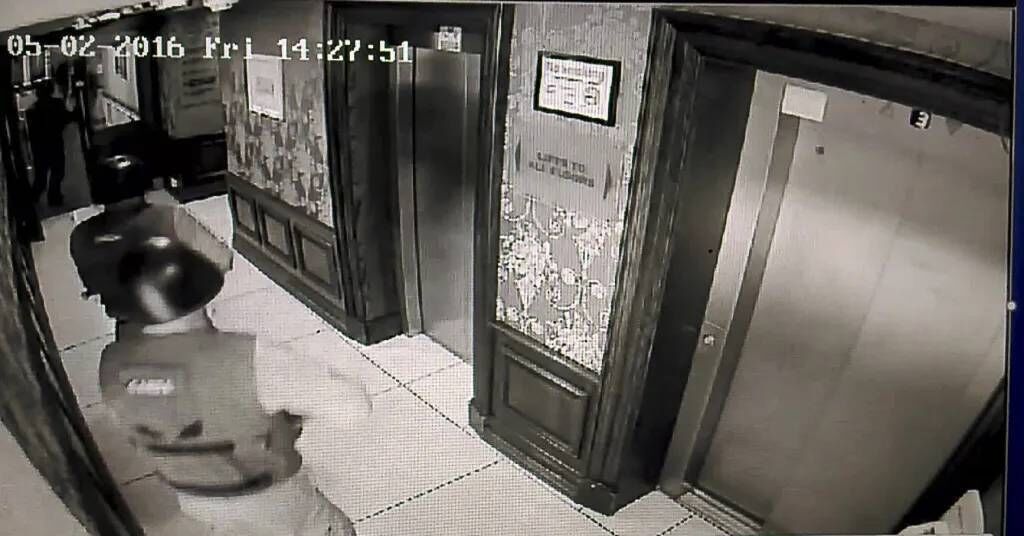
What was immediately on the minds of gardaí was where the hit team was now, could it strike again, when would the retaliation happen, and where.
“We needed to find these guys [the hit men],” Garda one said.
“You had to solve the murder. So you needed to get people out on the ground. You had to assess the greatest risk next. In the north inner city, you have six main roads — so you needed bodies, you needed armed checkpoints.”
This was at a time when garda numbers were low and detectives no longer had their Uzi-submachine guns. There was no armed response unit in Dublin — one was announced after the Regency Hotel incident, but didn’t become operational until December — and the force had to rely on the national emergency response unit. Gardaí braced themselves.
“We knew this was going to get worse, but it was so much worse,” Garda one said.
This immediately became clear with the murder of Gerry Hutch’s brother, Eddie, at his doorstep in the middle of the north inner city just days after the Regency Hotel attack.
“The speed and sheer balls of it — a Hutch family member, at this own home — set us on a course of no return,” said a retired officer [Garda four] with extensive experience of gangland.
“This was a criminal civil war, albeit one-sided.”
Garda one said: “I knew him [Eddie] well, and I can still see the video of it. It was one of these real quick hits, and they were gone. It was an incredible risk on their part, with garda cars all around that area.”
In the next three months, the Kinahan cartel shot dead another four people — one in Meath and the rest in a small patch of Dublin's north inner city. Noel Duggan was a career criminal targeted because he was a friend of The Monk. Martin O’Rourke, a completely innocent man, was gunned down in a shambolic attack on a Hutch target.
Gareth Hutch and Michael Barr, a dissident republican who was suspected of sourcing weapons for the Hutches, were shot dead in more planned attacks that were sloppy in different ways and left evidence.
“The Kinahans were dishing out death like there was no tomorrow,” Garda four said.
“The people they succeeding in killing — and don’t forget there were other attempted assassinations — were a mixture of friends of Gerry [Hutch] or any member of the Hutch family [Gareth was The Monk’s nephew] and it didn’t matter if civilians were killed.”
By the close of 2016, the murder count stood at 11 — eight in Dublin, two in Spain — including Gary Hutch. The other death in Spain was another completely innocent man, Trevor O’Neill, who was on holiday with his partner. They were walking with their three young children when a gunman shot Mr O’Neill in the back, mistaking him for a Hutch family member.
By the end of January 2018, the murder toll was 18. All but two of which were carried out by the Kinahan cartel. Four members of the Hutch family group were dead. The intensity of the feud murders was unprecedented.
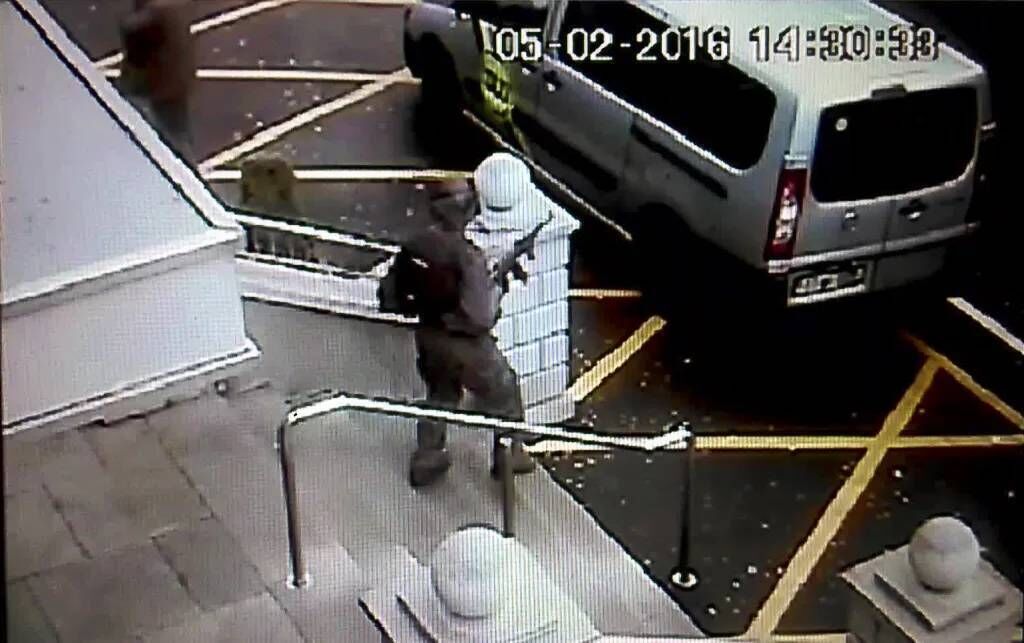
Two previous feuds with a high number of deaths, in Limerick and Crumlin-Drimnagh, both lasted around a decade. The Limerick feud claimed 12 lives. The Crumlin-Drimnagh feud claimed up to 16 lives, including three on the fringes of the feud. In those feuds, the murders were usually — though not always — in retaliation for a killing by the other side.
While the Hutch gang can’t escape blame, the Kinahan-Hutch feud was primarily one-sided.
“It was a feud on steroids, but it was really an extermination campaign,” Garda one said.
"There was no limit to the money they were throwing around, but there was no rhyme or reason to this.”
In addition to the intensity of the violence, another first was the hiring of murder squads — including hitmen from within Ireland, Britain, Spain, and Estonia — and quite elaborate planning and logistics.
In all, there have been estimates that up to 10 hit teams were in operation by the Kinahan cartel.
In addition to the professional hitmen were an assortment of rough-and-ready guns-for-hire. They comprised of drug users, including those in debt, and small-time and non-violent petty criminals willing or coerced into shootings which were often reckless and chaotic.
Garda one said: “You had people with guns that you wouldn’t ask to buy you milk in the shop. This didn’t mean they weren’t any less dangerous, because they could end up killing anyone.”
While working-class communities have long suffered the brunt of the drugs trade and associated gang violence, the terrorising of a particular community was another key feature of the Kinahan-Hutch feud.
And what twisted the knife for locals in the north-east inner city was that people living in the area, some of whom grew up with the Hutch families or who dipped in and out of Hutch crimes, were siding with the Kinahan cartel or the Byrne organised crime group. This was through a combination of the money being offered, opportunism, or being forced.
In April 2016, the Community Policing Forum's Marie Metcalfe told the : “The situation before the shootings kicked off was the community was drowning. Now, we have the feud on top of the drugs.”
She said people were scared to go to the shops because of dealing on their doorsteps, but now “they could be shot on their way”.
Anna Quigley, of Citywide Drugs Crisis Campaign, commented on media reports that there was a list of people “lined up to be killed” on top of three people already shot dead in the locality.
“A lot of those would be in the area. What other community has ever had to live with that?”
Ashling Golden worked in the Swan Youth Service at the top of Sheriff S at that time. She said: “We were embedded in the local community.
"There was an awful lot of fear and violence then. People were scared and ready to react if there was a bang.
“It was very quiet, you had young fellas looking over their shoulders and very careful what they said. There was a feeling in the community that anything could happen at any moment. It was a very volatile place for children growing up.”
She said that, as the murders in the area clocked up, it was becoming “pretty clear the Hutches were losing”. She said some people distanced themselves from the Hutches, and said: “There’d be talk, ‘oh such and such is working for the Byrnes now’. There was a feeling of hopelessness.”
Last December, another organisation working with disadvantaged children in the north inner city told the Oireachtas drugs committee that some young people were left “traumatised” by what they had seen during the feud.
Dwayne Horace, of the Diamond Project, said these youths were exploited by local gangs and groomed into criminality.
In 2017, Ms Golden moved from Swan Youth Service and took up a position in Solas Youth Project, which was on the other side of the city, in the heartland of the Byrne organised crime group — the Kinahan arm in Ireland.
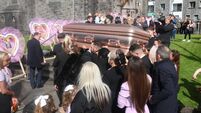
David Byrne’s mother, Sadie Roe, came from the south-west inner city, and it was where David Byrne’s funeral Mass was held. Key Kinahan lieutenants such as Liam Brannigan, Freddie Thompson, and a host of middle-level and street bosses lived in the area.
Solas also stretched into the Drimnagh and South Crumlin areas, where the bulk of the lieutenants and bosses lived.
“It was very different when I moved over,” Ms Golden said.
"They were enthusiastic into the drugs trade, making so much money. In the north inner city, the heads were down and people were pulling out. Here the young people were confident. They had the status of working for one of the biggest drug gangs in Europe.
"There was a wealth among [those aged] 19-20 years I had not seen before — wads of cash, cars, clothes, and even trips to Dubai [where the Kinahan bosses had moved to].”
She said that even with the prosecutions of Kinahan figures and hitmen in the courts, there was no impact on the ground.
She said: “Gardaí were making so much progress against the Kinahans but, on the street, money was flush.”
Ms Golden said the young people could see the wealth that the top bosses had.
“These vulnerable young people were enticed by that. How do you compete with that wealth and that status?”
She said that 10 years on — and even with the Kinahans and Byrnes out of Ireland — the situation is not better, adding: “Gardaí have got people in prison, but it hasn’t done anything about the impact of the drugs trade on communities. I would say it’s worse.
“It’s more public, there’s more money and the trade is bigger now.”
At the time of the Regency Hotel attack, garda numbers were near the lowest they have been in modern decades at around 12,700.
Only six years previously, the strength was 14,500. However, thanks to the bank bailout and a moratorium on garda recruits and social workers, and sharp cuts to community drug and youth projects, the communities most affected by drugs were hardest hit.
After the Regency Hotel attack, the Garda Representative Association (GRA) said the scale of gangland violence was a “direct result” of the swinging cuts. The GRA estimated that the force needed to be 15,700-16,700 strong.
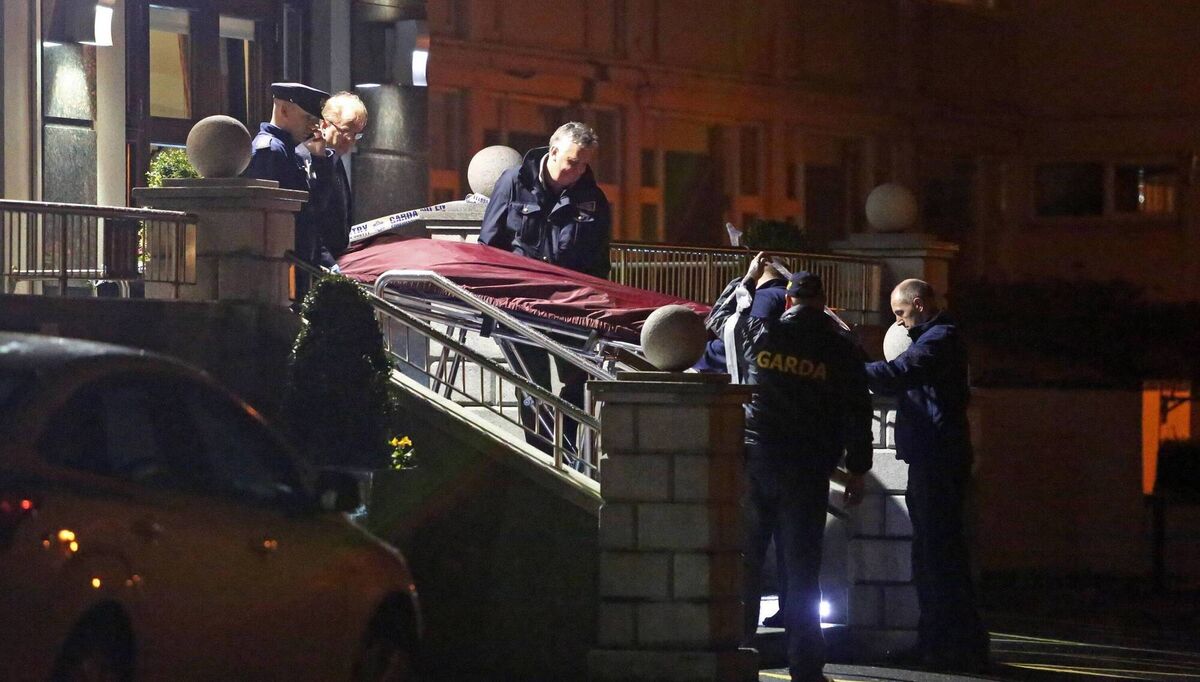
However, gardaí had to get on with the job of investigating the murders and targeting the gangs.
Garda two said officers were under enormous pressure from the get-go, and saw senior officers coming out of a meeting the morning after the shooting with Garda HQ “pale in the face”.
The investigation into the Regency killers was colossal. Garda two said that usually a murder investigation has one “bookman” — the person who gives out all the jobs, collects all the information, and knows the A-Z of the entire case.
The Regency Hotel attack had three bookmen, such was the scale of it. There were 40 books in the book of evidence. By May 2016, just three months after the Regency Hotel attack, gardaí had charged Patrick Hutch, the Monk’s nephew, with murder. He was allegedly the gunman in drag.
That prosecution collapsed — the DPP entered a nolle prosequi — in February 2019 after the senior investigating officer, Detective Superintendent Colm Fox, took his life with his firearm in Ballymun Garda Station.
Though nobody knows for sure, the pressure of the investigation took its toll. Det Supt Fox felt he was under constant demands from the Hutch’s defence for discovery documents. There was also the possibility he would face intensive scrutiny in the witness box over the process used to identify Patrick Hutch as the drag killer.
“It was just horrendous, particularly for Colm and his family, but people should remember the psychological impact it had on gardaí who found him,” Garda two said.
Garda three said: “There was another victim of the Regency Hotel attack — Colm Fox.”
Despite this, the garda murder investigations and threat to life operations by the Drugs and Organised Crime Bureau — along with the resulting charges of conspiracy and the offences of directing, participating, and aiding a criminal organisation — clocked up an enormous number of successful prosecutions.
There were 20 threat to life operations in 2016 and 26 in 2017, followed by 13 in 2018 and 19 in 2019 — meaning a large number of people were kept alive.
It is estimated that more than 90 people were jailed for offences linked to the feud, the vast majority Kinahan associates.
Several of the garda sources stressed the worry during these years that young gardaí would be killed in either responding to murders or taking part in threat to life operations.
All of the sources stressed the importance of taking out so many assassination teams, jailing the relatively small number of experienced hitmen, and taking them out of circulation.
“There’s only a small number who have the bottle, the madness, and the where-with-all to shoot somebody,” Garda one said. “If you get enough of them out, there’s a vacuum.”
Meanwhile, outside Ireland, a pincer movement was putting the Kinahan bosses in Britain, Spain, and Dubai under serious pressure.
Gardaí and Spanish police also caught up on The Monk and, in April 2021, he was arrested and extradited back to Ireland.
He was charged with the murder of David Byrne and being one of the three gunmen armed with AK47s. That case collapsed as judges said they could not trust the evidence of state witness Jonathan Dowdall. The audio evidence of The Monk alone was not enough to secure the murder conviction.
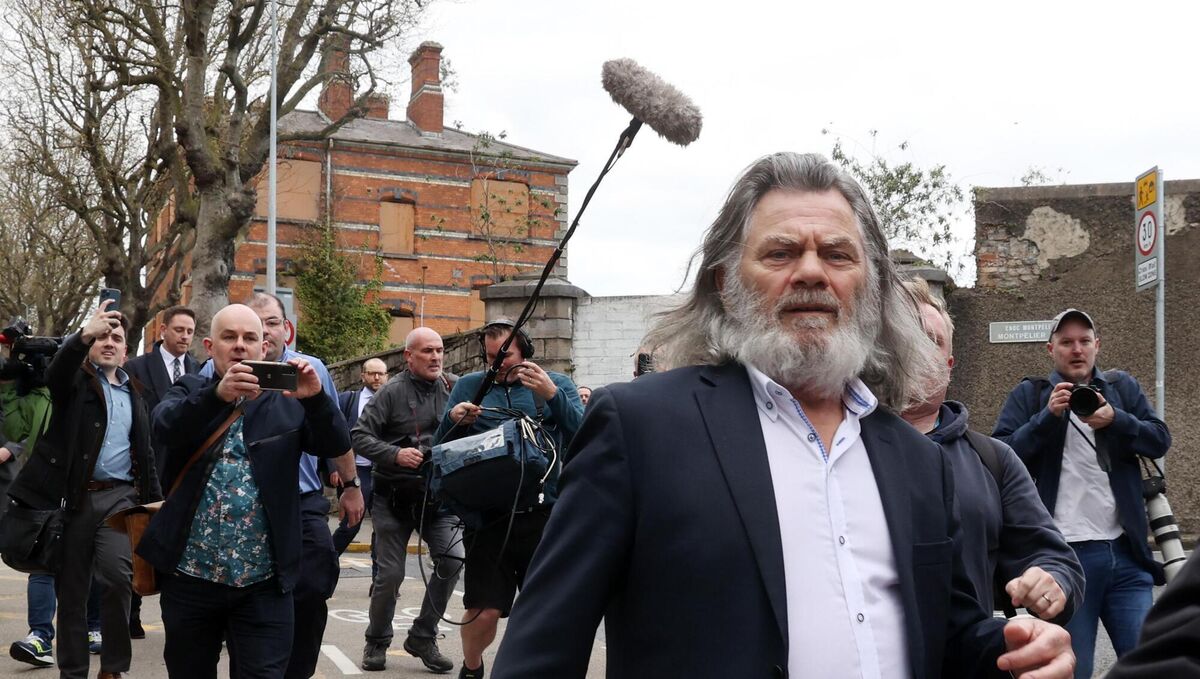
The court said it was satisfied that Gerry Hutch had “control over” the three AK47s used in the Regency Hotel attack and was “in possession” of them by March 7 “at least”.
The court was also satisfied that members of the Hutch family, acting as an organised crime group, were responsible for the murder of David Byrne, and that there is a possible inference that The Monk gave the go-ahead for the Regency Hotel attack.
All of which begs the question, admittedly in hindsight, as to why the DPP did not bring charges of possession of the firearms or of conspiracy to murder, or of participating in, or directing, a criminal organisation.
In March 2022 came the biggest conviction against the cartel when Thomas ‘Bomber’ Kavanagh, originally from Drimnagh but based in Birmingham, was jailed for 21 years for industrial levels of cocaine importation. Outside of Dubai, he was the main man in the cartel.
On foot of high-level contacts led by late assistant commissioner John O’Driscoll, the US government entered the international assault on the Kinahan cartel and, in April 2022, announced a combined $15m bounty for information leading to the apprehension of Christy Kinahan Sr, Christy Kinahan Jr, and Daniel Kinahan, as well as financial and travel restrictions.
Mr O’Driscoll pledged gardaí would not stop until the entire Kinahan pyramid was dismantled.
In December 2023, Liam Byrne was extradited to Britain. He was jailed for five years on weapons charged in October 2024. He was released early in January 2025, but this was granted under a crime prevention order restricting his movements.
Also, in October 2024, came the dramatic development that Sean McGovern had been arrested in Dubai. The following May, he was extradited back to Ireland. He was then charged in relation to the Kinahan murder of Noel Kirwan in December 2016 and for directing an organised crime group.
The Monk is also facing possible Spanish charges for money laundering. Last month, it was reported that Spanish authorities could still bring charges of money laundering against Christy Kinahan Sr.
The big one gardaí are waiting on is the DPP’s decision on files from the Drugs and Organised Crime Bureau against Daniel Kinahan, seeking charges for directing a criminal organisation and the murder of Eddie Hutch.
While there seemed to be hope they might get the nod before the 10th anniversary, there has not yet been a green light. Given the complexities of the case, insiders are still optimistic.
“Better to get a considered decision rather than a rushed flawed decision,” one source said.
“We’re hopeful the long wait is worth it.”


CONNECT WITH US TODAY



Be the first to know the latest news and updates