'She asked for help': Laura Liston inquest highlights gaps in homebirth maternity care

Laura Liston, 36, died in June 2022 after giving birth to a baby boy at her home near Croom, Limerick, under the HSE homebirth service.
"Strong", "courageous", and "always helping people" were some terms used to describe Laura Liston during the inquest into her death after giving birth at home in Limerick.
The HSE’s National Women and Infants Health Programme (NWIHP) has now pledged “the review of the tragic case” will “inform the development” of clinical guidelines in maternity care.
The harrowing day in the coroner’s court for her grieving husband, parents and all who loved her came three and half years after she died in June 2022, hours after giving birth to their son.
How did the situation go so wrong that by the time ambulance paramedics arrived that night, one recalled of Ms Liston: “She looked at me and twice said: ‘help me’.”
Another, a paramedic of 30 years standing, said: “The lady’s colour was frightening, as in I got a fright as soon as I looked.”
This is understood to be the first maternal death in homebirth services and it is expected to focus attention on improvements for women who opt for this type of delivery.
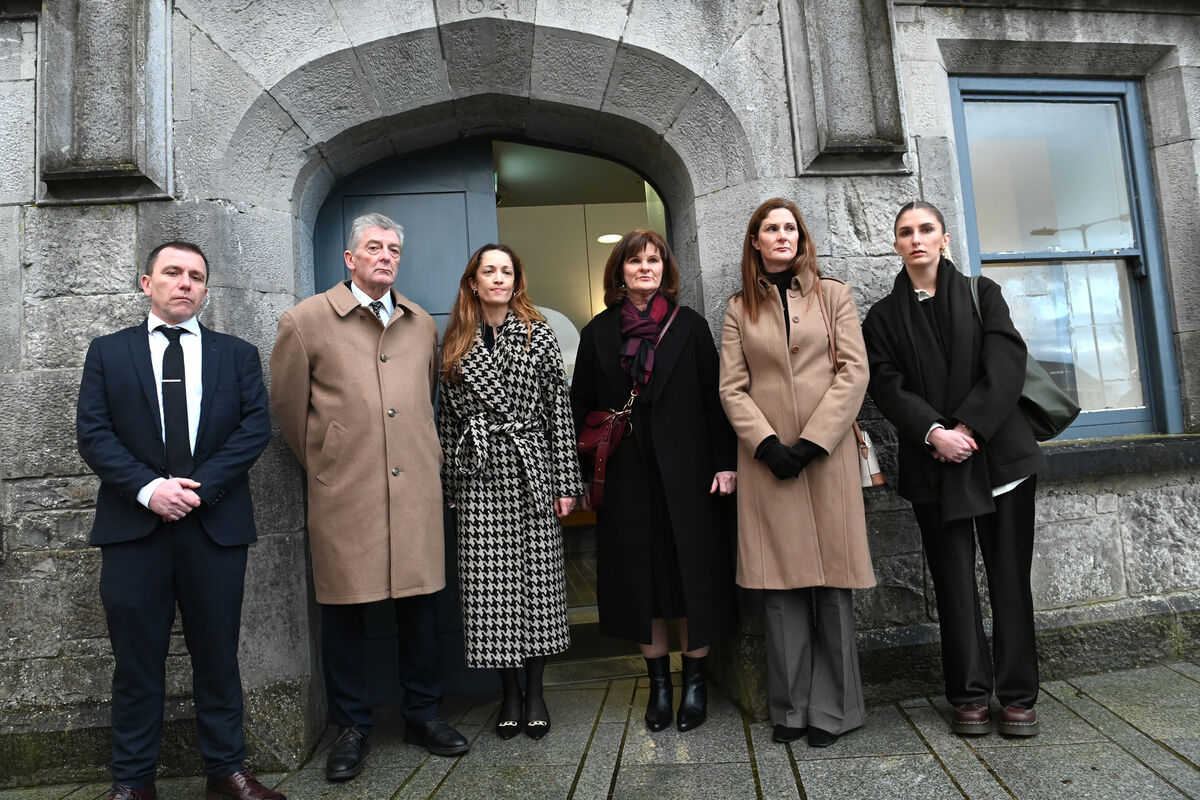
“She will not be forgotten,” coroner John McNamara pledged to the Liston and Mannion families in delivering a verdict of medical misadventure last Wednesday.
The choice Laura and her husband Fergal Mannion made for homebirth, after she became pregnant following IVF treatment in Spain, puts them in a growing minority among new parents.
The HSE homebirth service registered 432 women that year, the national perinatal epidemiology centre in Cork said. A private service was also available then (since closed), and the National Maternity Hospital offers a separate public service.
“She was so excited to be a mother, that was all she wanted,” Mr Mannion recalled.
She attended Limerick maternity hospital from November 2021.
Ms Liston first met Sandra Healy, who would be the lead midwife in her care, in February 2022. Homebirth midwives are self-employed and under contract to the HSE.
During the inquest, Damien Hickey SC raised questions for the family about whether a full risk assessment was done at that appointment or earlier.
The couple were living in a large mobile home on Ms Liston’s grandmother’s land, while they built a home of their own.
This was assessed by Ms Healy for space and access. A blue birthing pool was in place intended for labour only, not birth, as per HSE guidelines.
So by the morning of June 4 when Ms Liston’s labour signs began, all seemed ready. Ms Healy was in regular phone contact during the day and with her at home for about two hours after 11am.
The HSE requires two midwives be present for the birth. However, when it became clear the nominated second was not available — she was working in a hospital that night — Ms Healy began calling around.
The three midwives she tried in Galway, Clare and Tipperary were also unavailable.
She contacted Sinéad Murphy, a midwife in Killarney about 90 minutes away, who agreed to come.
Typically, a second midwife is for the birth only and arrives late in proceedings. In this case, Ms Murphy arrived about 30 minutes before Ms Liston gave birth.
A homebirth can only go ahead with two midwives, otherwise the woman must transfer to a maternity hospital.
On Thursday, NWIHP said midwives in these cases “cannot claim or be reimbursed for care provided outside of an 80 mile round-trip maximum”.
It said it was not practical to obligate midwives to be available for each individual birth, but they do require all guidelines are followed.
An audit carried out in 2024 found just 23 self-employed community midwives in the service. Concerns have been raised before about this low number.
Some midwives, speaking confidentially this week, said the job brings many “joyous” and “beautiful” rewards, but acknowledged it was not for everyone.
“If you are practicing as a homebirth midwife, you have to be at 150% all the time,” one said.
Ms Liston gave birth at 10.58pm to a healthy baby boy.
She was still in the pool, with Ms Healy saying her labour progressed to the point where it was unsafe to leave.
However, Mr Mannion said: “If she had been told to leave the pool, she would have done.”
She remained in the water for 22 minutes, holding her son. When she stood up, he described how she fainted and dropped their son into the water.
She vomited soon after, and was described as pale and weak when she had been moved to the sofa.
She was in “serious pain” trying to deliver the placenta, her husband said. At about 11.35pm, she was given syntocinon, a synthetic form of oxytocin, to help with this.
“At one point, she asked me why was no one coming to help,” he recalled.
The syntocinon did not work, and Ms Healy called an ambulance at 12:09am.
Ms Healy agreed under questioning with the family's senior counsel Damien Higgins in hindsight she should have called for help earlier.
She agreed the light was dim, although she seemed unsure if it was candles or low lighting, saying she used a torch during examinations.
There was discussion too about blood loss, with discrepancies between different notes highlighted by Mr Higgins.
Under a HSE transfer policy, clients sign a form with the midwife agreeing to a transfer to hospital if necessary. The local maternity hospital and ambulance service are put on stand-by always.
Midwives explained this week that if a transfer is needed, it is not always in a crisis but reasons for emergency calls are laid out in their agreement with the HSE.
It was 12.37am when two ambulances arrived with two paramedics in each. Three entered the mobile home, while one manouvered and reversed an ambulance in.
Shane Houlihan described seeing “deep red” water in the pool, while Andrew Connaughton focused on his immediate fears for her condition.
One ambulance took Ms Liston towards University Hospital Limerick, while her husband and baby travelled to the maternity hospital.
However, within two minutes, Ms Liston had a heart attack which they “fought hard” to treat, stopped on the road. Mr Mannion’s ambulance passed them.
She suffered a second heart attack entering the UHL ambulance bay at 1:15am. Despite the best efforts of emergency and maternity hospital staff who had driven there to help, she died at 2.15am.
Her husband remains traumatised by not being there, saying: “I wish I could have been by her side.”
Much of his statement was read into the court by family solicitor Scarlett Griffin O’ Sullivan, with evidence given he has hardly worked since and was diagnosed with PTSD.
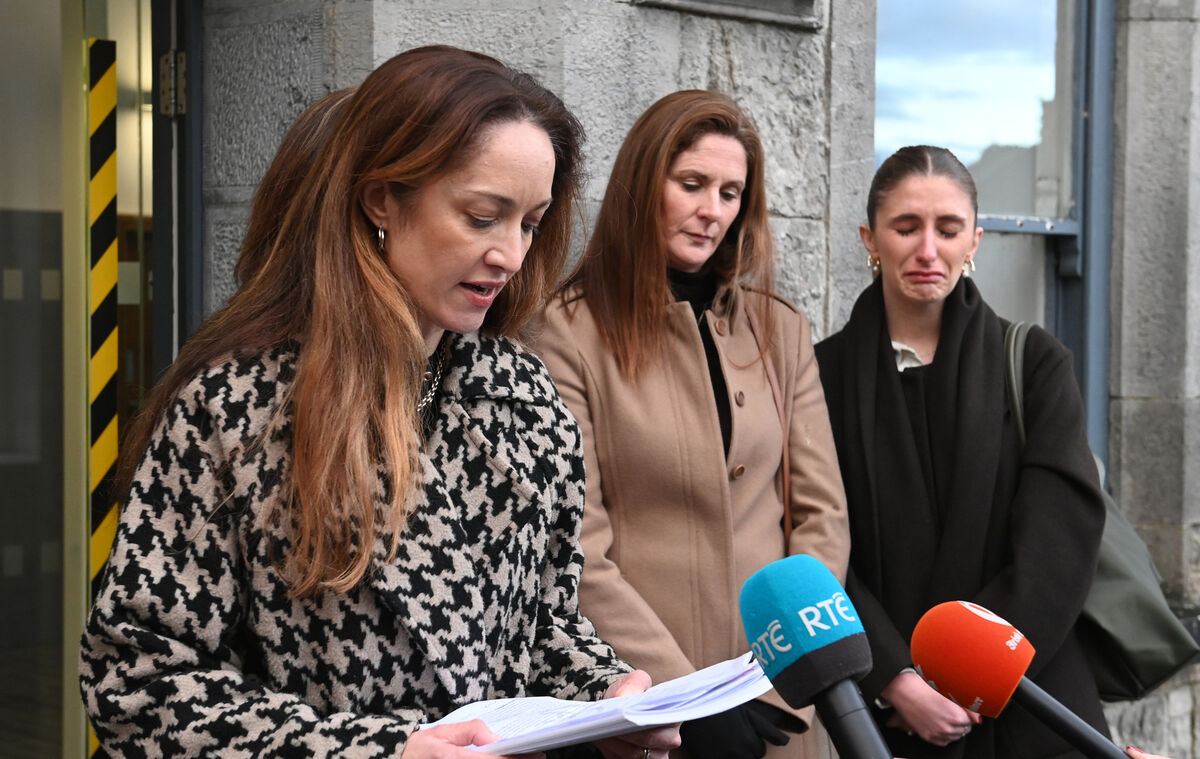
In a statement after the inquest, the families said: “This case is not about being pro- or anti-homebirth, this case has been about finding out the truth about what happened to Laura on that fateful night.”
They called for “basic clinical standards and guidelines in maternity care” to be followed, saying this was lacking in this case.
The HSE apologised for failings in her care. It said: “We are truly sorry for the part these failings played in such a devastating outcome. You trusted that Laura would be safe and cared for at one of the most important moments of your lives, and that trust was broken.”
On Friday HSE Mid West restated “deepest apologies to the family of the late Laura Liston for the failings in her care”.
It said an external systems analysis review, completed last summer, looked at “national policy alignment, clinical governance, resourcing, recruitment, education, and training”.
This is not public but was shared with the family. Coroner John McNamara said this fed into his conclusions.
“HSE Mid West and University Maternity Hospital Limerick are not in a position to safely reinstate a home birth service,” it said.
It said that will need "establishment of a sustainable model with adequate numbers of appropriately trained and experienced midwives, clear clinical governance arrangements, and alignment with national policy and best practice”.
A definitive timeline cannot be estimated now.
Reflecting on the impact of the tragedy, one midwife hoped women would not move away from homebirths and called for all guidelines to be followed minutely.
She spoke of how Ms Liston has travelled in a sense to every birth with the small community since that day.
“You can have beautiful births in hospitals too absolutely but that joy from the grandparents coming in, the other children to come in, to have your own bed, there is something wonderful about it,” she said.
Others are worried the tragedy will not lead to reform but rather a curtailing of the service, pointing out women’s interest in homebirth will not go away.
Reacting to the inquest findings, maternity advocate Krysia Lynch recalled how people in the birth community were “shocked and saddened” in the summer of 2022 when Ms Liston died.
“Maternal death is thankfully a rare event in Ireland, but always leaves lessons in its wake. It is vital that the real lessons are learnt here and that this incredibly sad event is not used as a stick to beat an individual or a particular type of birth choice,” she said.
“Women deserve a safe maternity service in which they and their families can place their trust both at home and in hospital and in in-between spaces such as birth centres.”
She added: “They need services where they are at the centre of their care and this means listening to women.”
She expressed her sympathies, and called for transparency around the recommendations.
A number of HSE obstetricians from Limerick and elsewhere attended the inquest.
HSE NWIHP said the eligibility criteria for home births was under review and due to be published before the end of March.
“All women who book into a maternity unit and wish to apply for a homebirth, are triaged and assessed for suitability by a consultant obstetrician,” it said.
A homebirth midwife’s first meeting with the woman includes also assessment of eligibility criteria.
Even though these midwives are self-employed, they report to a designated midwifery officer in each region, and this person reports to the director of midwifery in the local maternity hospital.
The same guidelines around care for bleeding after a birth apply in a homebirth as in hospitals, a spokeswoman said.


CONNECT WITH US TODAY



Be the first to know the latest news and updates