Mick Clifford: Nostalgia softens the edges — but 1986 was a hard, cheerless year
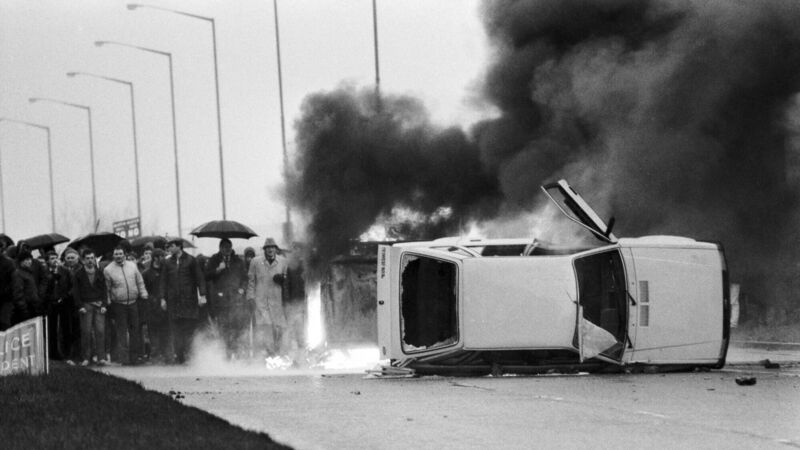
A police vehicle overturned and set alight by a Loyalist mob near Belfast on Saturday, January 4, 1986 — one of a string of protests against the Anglo-Irish Agreement. Violence continued unabated in the North, with 61 people losing their lives. Picture: Bryn Colton/Getty
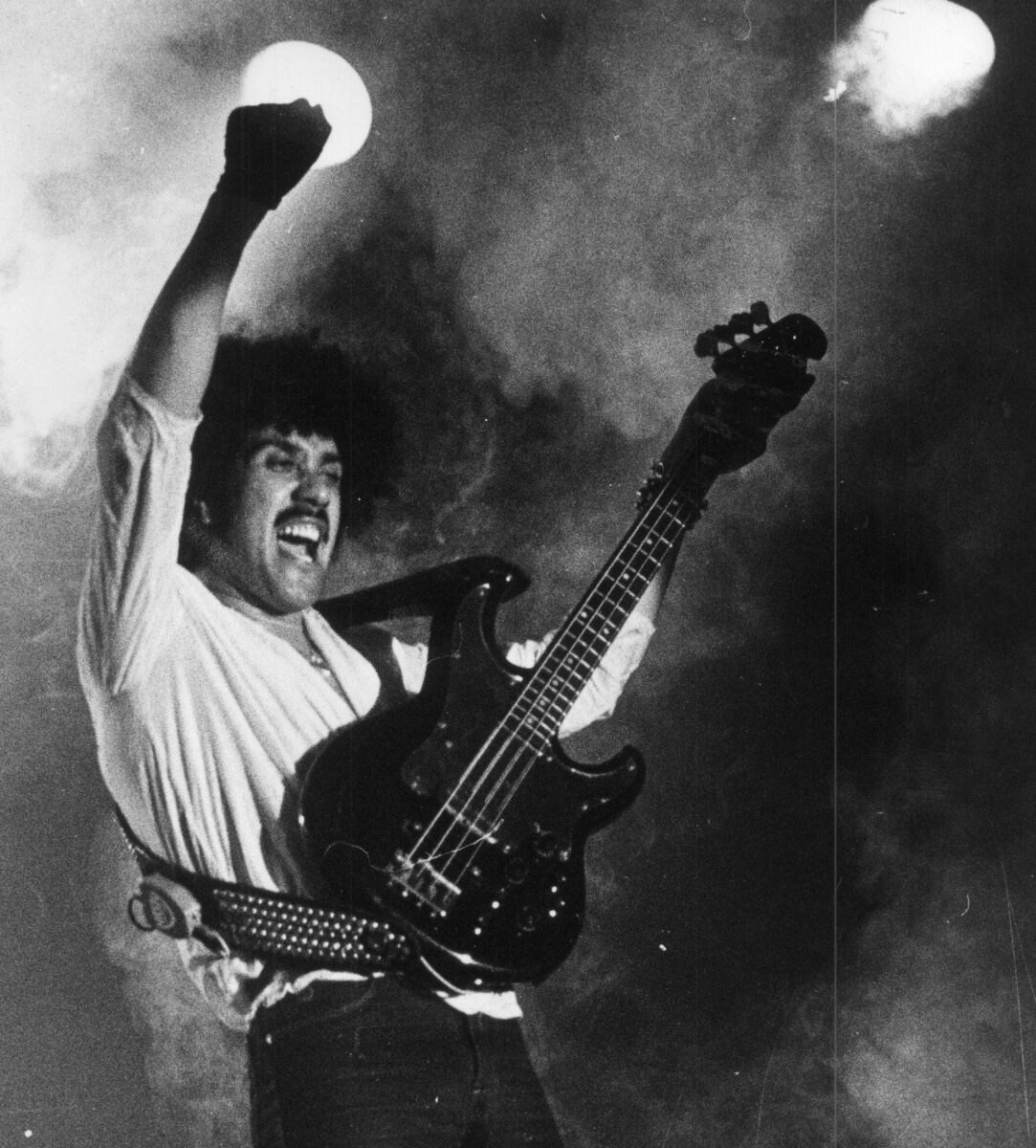
The year began with the passing of an Irish icon. On January 4, 1986, Phil Lynott died in London.
His death came a few days after he collapsed into a coma brought on by drug abuse. He was 36.
He was one of the first Irish rock stars, and he loved the life — at least on a superficial level.
But through it all, the fame, the money, the past that sometimes wouldn’t leave him alone, he was never able to live comfortably with himself.
HISTORY HUB
If you are interested in this article then no doubt you will enjoy exploring the various history collections and content in our history hub. Check it out HERE and happy reading
They brought him home to Crumlin for his funeral.
“He was a Dubliner in a way we never were,” Bono said in one tribute.
“He was a rock star from when he got up in the morning, all the way through the day,” Bob Geldof added.
Philo’s leavetaking cast an inky cloud over the dawn of a new year. Things didn’t get much brighter.
In 1986, the country was in rag order. The procession of the young towards the exit, on boats and planes across the Irish Sea and the Atlantic, continued apace. Up to 30,000 annually were leaving a State that was becoming a textbook for failure.
The Late Late Show hosted a debate in January on what Gay Byrne described as a “banjaxed” country.
Among the contributors was a fresh-faced senator by the name of Michael D Higgins.
“The idea that we are educating people for emigration, we have to turn that around,” he said.
“We have to ask what is the cause of unemployment, what is the extent of it, and how useful have our approaches been to solving unemployment.”
There were many such questions throughout the year, but there were precious few answers.
On February 11, a man arrived who was to be an unlikely harbinger of better times to come. Jack Charlton was appointed manager of the Irish soccer team.
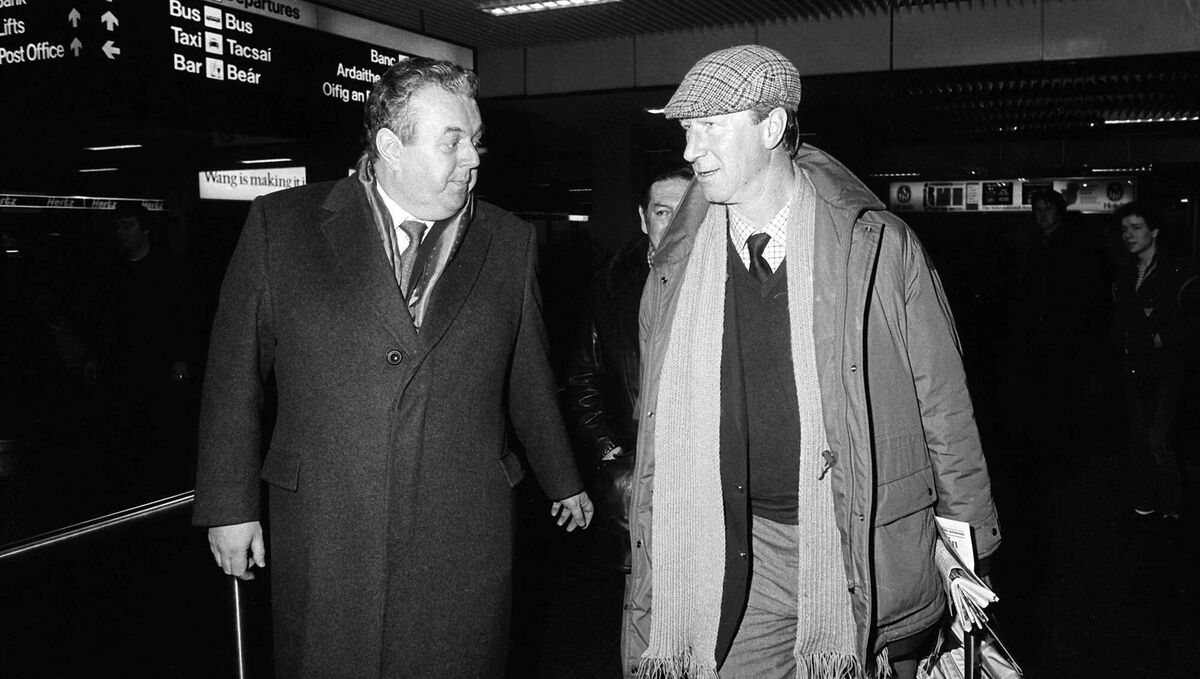
Gay Byrne announced the news, again on .
“I’ve just been given a piece of paper here which says that Jack Charlton has been appointed manager of Ireland … whatever that means.”
So said a lot of people.
The messiah came wrapped in a gruff and lanky Geordie body. Any predictions that, within four years, he would have administered a shot of love into Irish football and a shot of confidence into the nation would have been laughed out of town back in early 1986.
There was, throughout this year, a sense of trying to shake off the old and move tentatively towards what was to follow. But instead of making tracks, it was as if the country was stuck in a groove.
This was reflected in the 1986 divorce referendum. On June 26, the country went to the polls to decide on whether to remove the constitutional ban on divorce.
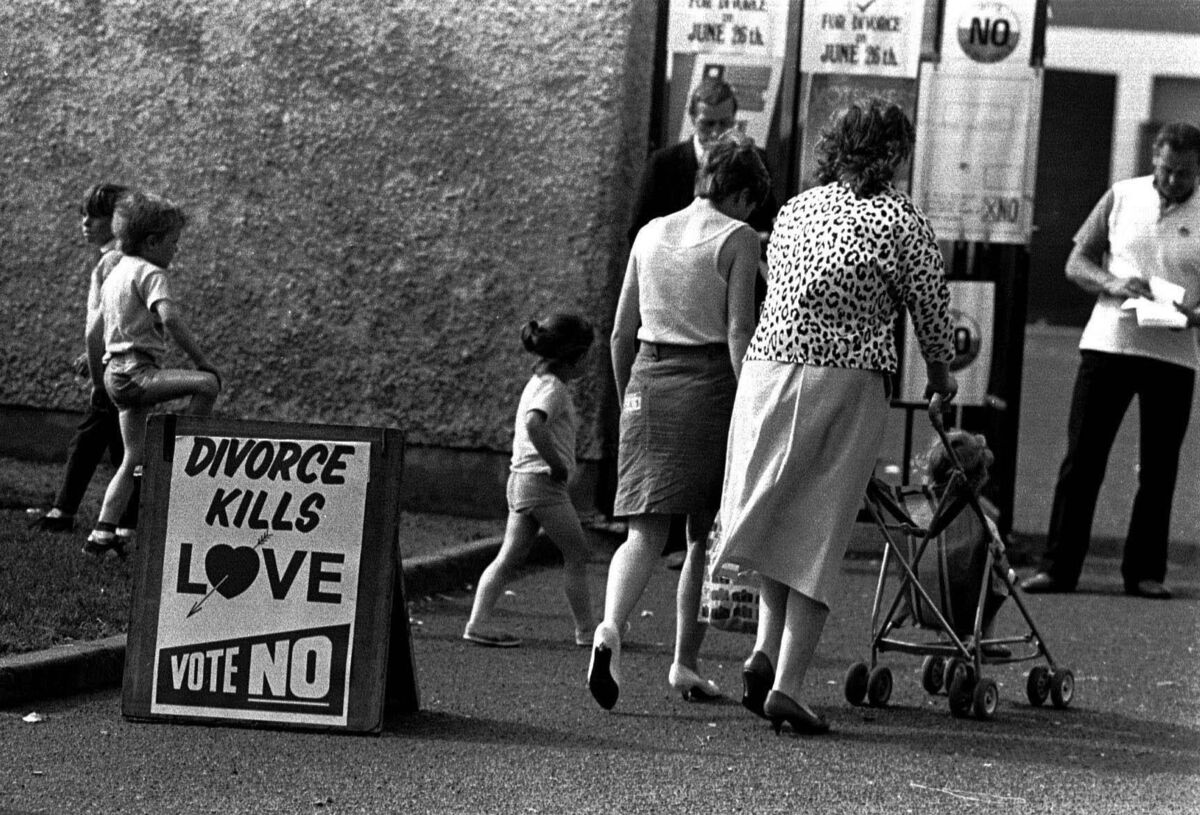
It was pitched as an entirely natural staging post for where the country was headed. The Catholic Church’s power was not what it had been. Despite the attempt to use the pope’s visit in 1979 to inject power and reach, it didn’t work out that way.
The country continued to make tentative steps towards Western values, even though economically the State was approaching basket-case status.
The idea that a law would continue to exist largely based on the Church’s teachings on sex was beginning to look warped.
Yet there was no getting out of the old groove, not for now at any rate.
Two quotes summed up the referendum.
Archbishop of Dublin Kevin McNamara told Magill magazine: “Christ has established marriage as a lifelong institution, and no one can alter that.”
Lifelong conservative campaigner and Fine Gael TD Alice Glenn had this to say on the impending poll:
The referendum was rejected by nearly two to one, 63.5% to 36.5%. For some, the result landed with a sense of despair.
A similar sentiment permeated the Troubles in the North. The year began as it meant to go on. On New Year’s Day, two RUC officers were killed in Armagh when a remote-controlled bomb exploded in a litter bin while they were on foot patrol. The Provos let it be known there would be no let-up.
They would continue to kill, maim, and spread terror until everybody finally surrendered and conceded their 32-county socialist republic.
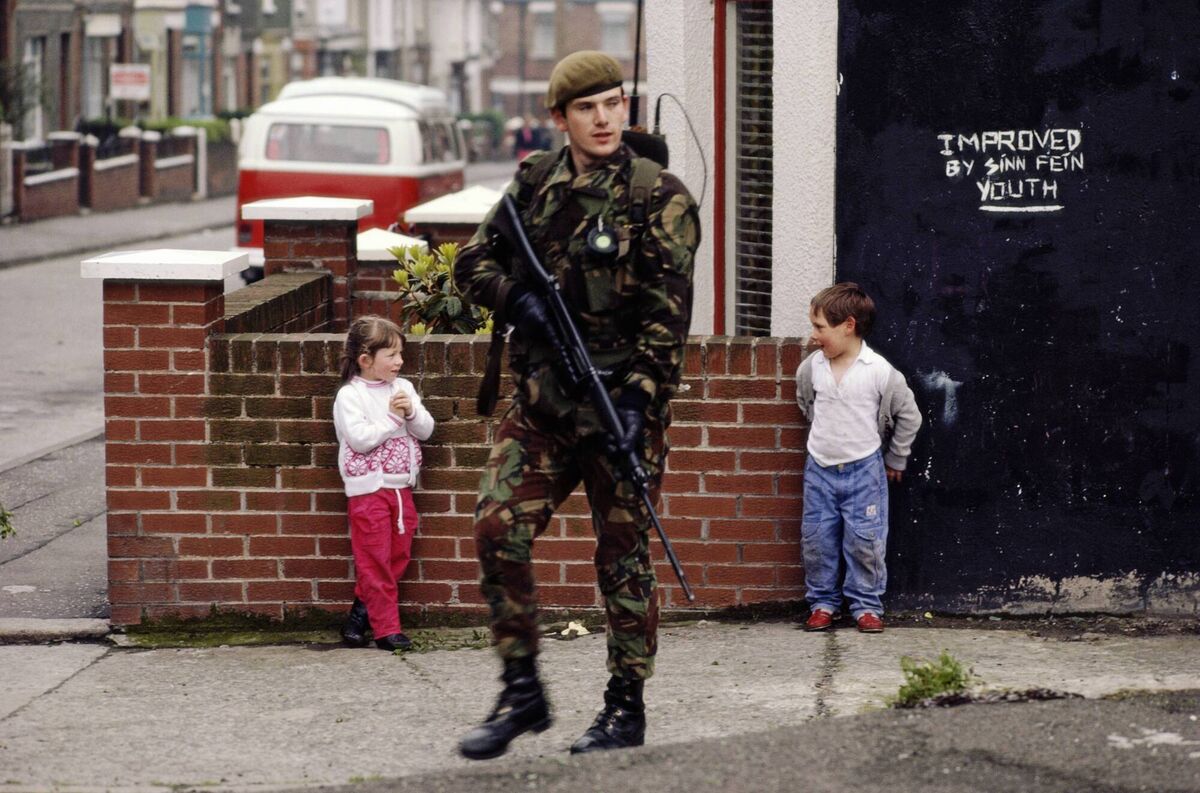
On the other side of the divide, the intransigence of the unionists was writ large. Opposition to the Anglo-Irish Agreement, signed the previous year, was ramped up.
The agreement contained a voice for the Republic in the North and other bits and bobs. However, as far as unionists were concerned, this was all a concession to the Provos, paving the road to a united Ireland sometime in the distant future.
On March 3, they had a “day of action” dressed as a protest against infringement on their birthright.
In reality, it was an attempt to strike a blow in the name of the hegemony they had enjoyed since the formation of the statelet.
While many Protestants supported the strike and stayed at home, there was also a high degree of intimidation from loyalist elements and widespread disruption ensued.
The remainder of the year was stuck in a bloody groove.
Some 61 people lost their lives in the violence that year as there appeared to be no way out of the impasse, fear, and loathing preventing anything new or different taking its place.
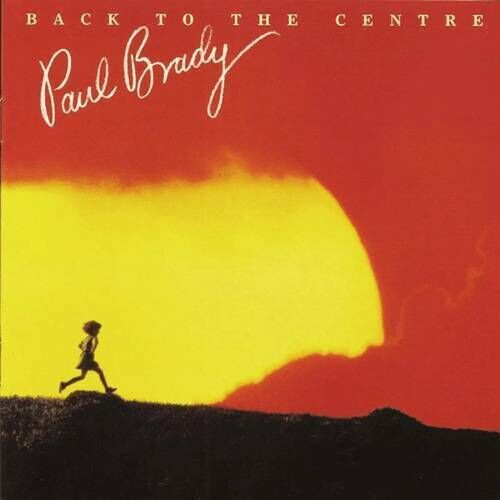
“Still trying to reach the future through the past,” Paul Brady sang in The Island, released in 1986.
“Still trying to carve tomorrow from a tombstone.”
Abroad, 1986 was defined by two disasters.
In January, the space shuttle Challenger broke apart 73 seconds after being launched in Florida.
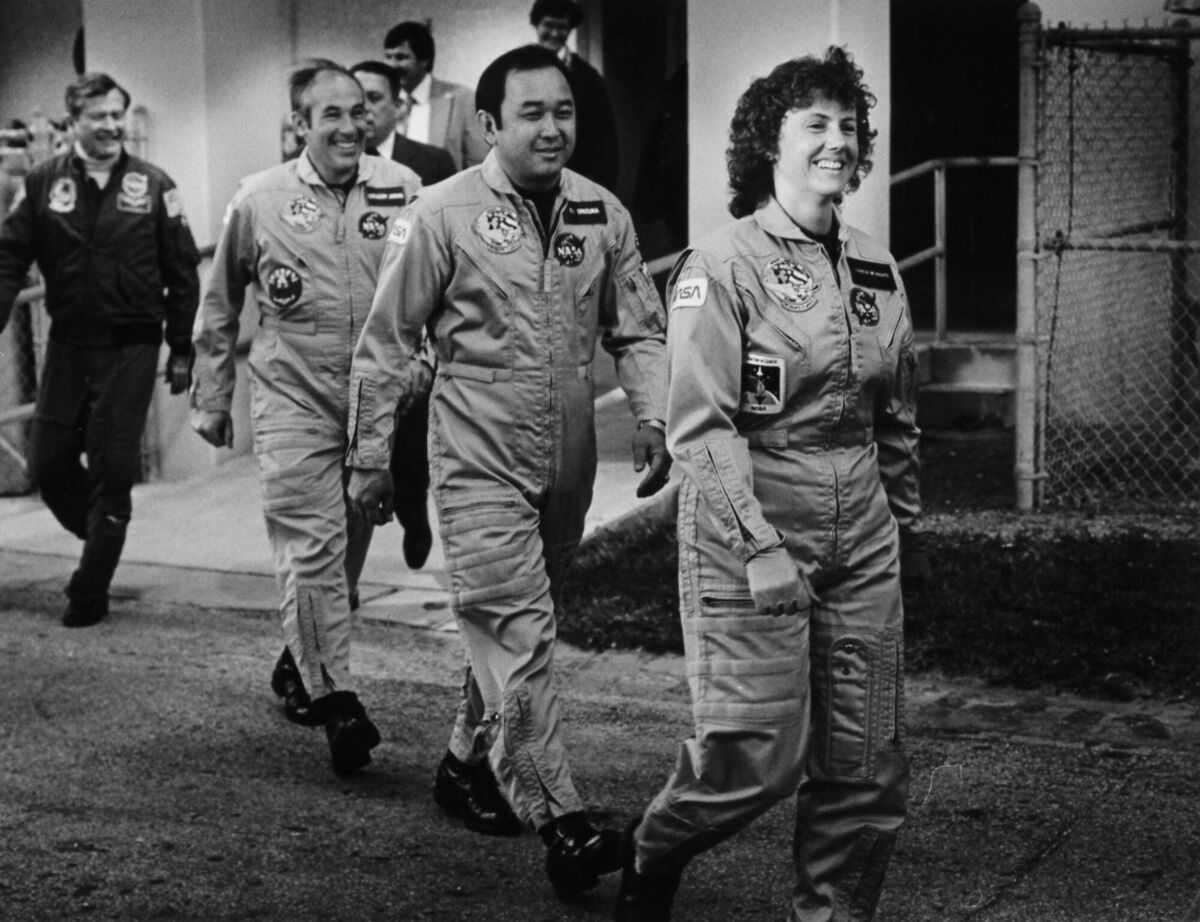
America and beyond looked at the implosion with disbelief and fear.
The advances of science had up until that point suggested that no frontier was now off limits. America, hale and hearty and led by sunny Ronald Reagan, would be at the heart of all new ventures.
Beyond the tragedy, the implosion was a jolt to the national psyche.
Within three months, a catastrophe of a different order and with far-reaching effects occurred in a little-known area in Ukraine called Chernobyl. A nuclear reactor exploded, releasing huge radiation, which would reach right across the continent to its western extremities.
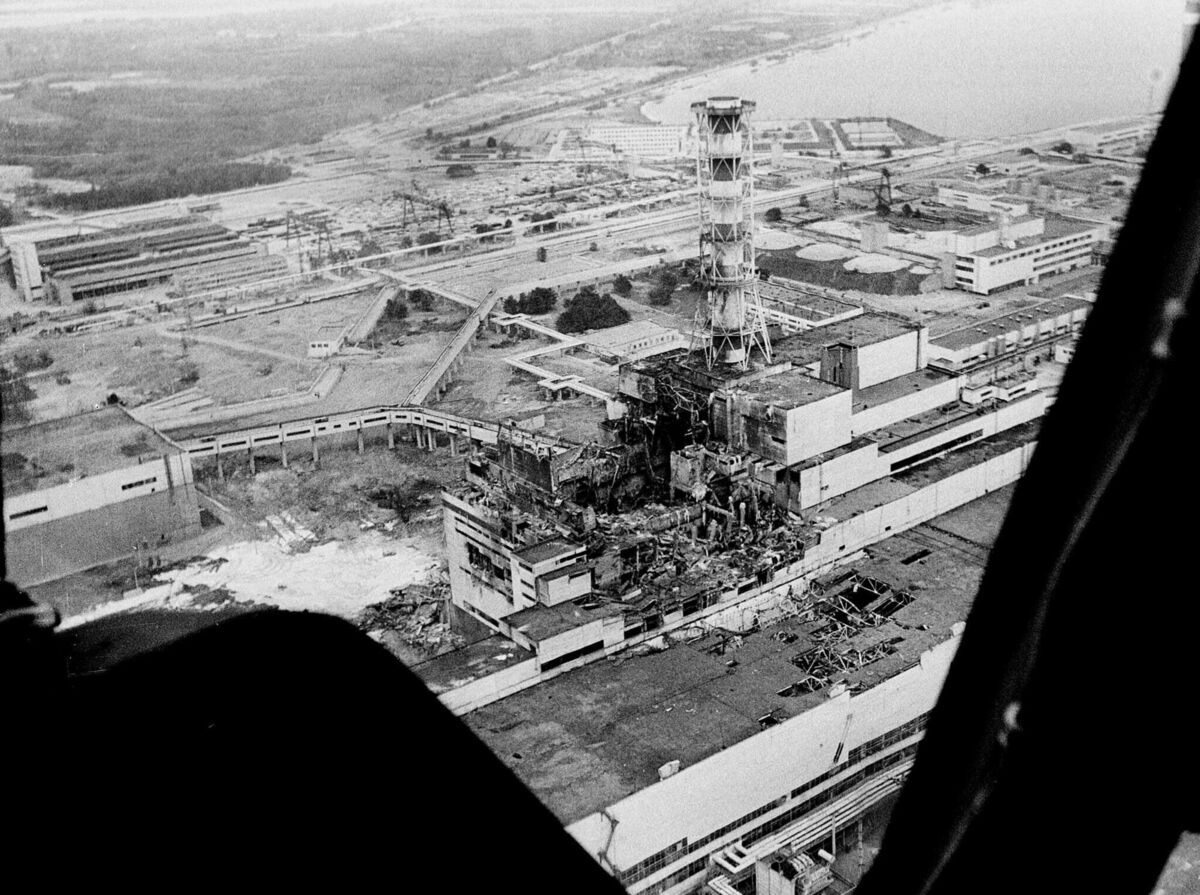
It would also reach down through the generations of people who were anywhere in the vicinity of its poison.
That such an accident could occur was another signal about the dangers of taking science to its limits without safeguards. More than that, though, the fact that it occurred behind what was the Iron Curtain, in the Soviet Union, spoke plenty about that entity’s capacity to continue with an authoritarian regime in which the safety of ordinary people was irrelevant when compared to preserving an ideology that was beginning to look worn.
The year was possibly the darkest before a dawn to come for the people of the Soviet Union.
The same might be said about how it was felt at home. Of course, when at the darkest point, you don’t know that the dawn is pending.
It wasn’t a time of good cheer and fun for most of the people. But still, the hard edges can be taken off the year when it is bathed in the soft glow of nostalgia.
Read More


CONNECT WITH US TODAY



Be the first to know the latest news and updates