Phil Lynott 40 years on: how Thin Lizzy’s frontman became Ireland’s first true rock star
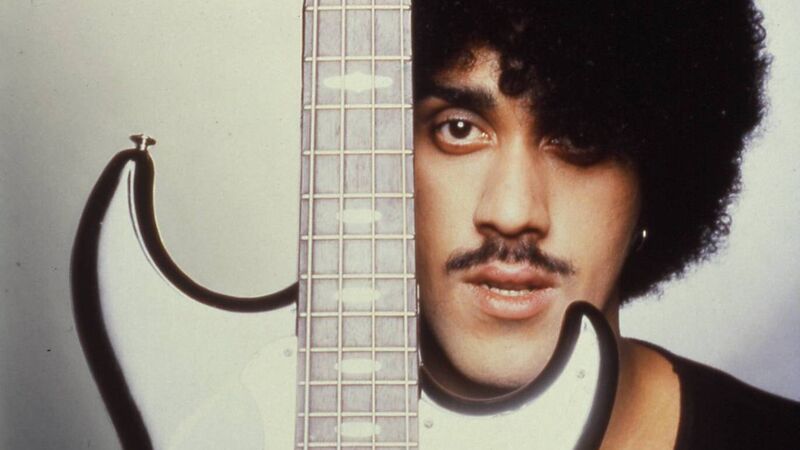
As a new Irish Examiner series revisits 1986, friends reflect on Phil Lynott’s brilliance, vulnerability and enduring cultural legacy
Phil Lynott 40 years on: how Thin Lizzy’s frontman became Ireland’s first true rock star

Former Thin Lizzy frontman Phil Lynott died at the shockingly young age of 36 40 years ago this weekend. File picture


When news broke on January 4, 1986, that Thin Lizzy singer Phil Lynott had died at the age of 36, many of his friends struggled to process what they were hearing.

The charismatic vagabond behind The Boys Are Back in Town, Don’t Believe A Word, and Jailbreak had always been Mr Indestructible — a natural-born rock star who flourished in the fast lane.

That he would quietly pass away, still a relatively young man, shocked them to the core.

“When I heard Phil Lynott had died, I could not believe it,” his bandmate Scott Gorham told me once.

HISTORY HUB

If you are interested in this article then no doubt you will enjoy exploring the various history collections and content in our history hub. Check it out HERE and happy reading

This is the first article in a new Irish Examiner series looking back at 1986. It continues on Monday in print, ePaper, and online

“I mean, this was Phil LYNOTT. He was THE guy. He’d had hepatitis and come through with flying colours. I found he had a heart attack and was in a really bad way. Then he died. And I was thinking … man, what the hell is just happening?”

Lynott had been a heavy drug user for years but, following the break-up of Thin Lizzy in 1983 and his divorce from his wife Caroline Crowther in 1984, his habit had spiralled. 

Phil Lynott in action at Cork City Hall on his final concert tour with Thin Lizzy on April 5, 1983. Picture: Irish Examiner Archive/Eddie O'Hare

Having binged on heroin over Christmas 1985, he collapsed while opening presents with his daughter. He would never fully recover.

To die young is the rock star curse. 

In Lynott’s case, years of drug and alcohol abuse were exacerbated by his inability to adjust to life after Thin Lizzy and the failure of his new band, Grand Slam.

He was also hurt at not being invited to play at Live Aid in 1985.

Fame had come naturally. Living without the spotlight was harder. 

Isolated in his home in Richmond, London, he fell into addiction.

“He embraced [stardom],” music writer Graeme Thomson told the Irish Examiner when he published his authorised biography of Lynott, Cowboy Song, in 2016.

“Whether that was entirely healthy, I don’t know. It became his rationale for existing, really.

“When that inevitably started to decline — and most bands go through peaks and troughs — I don’t think he had anything else.

“He had two kids and a wife. But I’m not sure he had the foundations to replace his fame with something else. It may have been a factor in the way it all ended.”

 Phil Lynott was front and centre of the cover of Thin Lizzy's 'Live and Dangerous' album. 
Phil Lynott was front and centre of the cover of Thin Lizzy's 'Live and Dangerous' album. 

Lynott wasn’t the first Irish musician to become internationally famous. Van Morrison and Rory Gallagher preceded him.

However, he was almost certainly Ireland’s first rock star — a larger-than-life figure who lived with the pedal firmly to the floor, and whose mythology has grown more potent in the decades since his death.

But if he was a star, he was also a contradiction — too sensitive, perhaps, for the inevitable ups and downs of a life lived at breakneck speed.

On stage, he affected the part of a hard-partying rocker. Yet, as a musician, he was thoughtful and often melancholic. 

You can hear it in the lyrics to Sarah — his 1979 ode to his infant daughter — which plumbs emotional depths rare for the sort of bad boy headbanger who wouldn’t be caught dead without their leather trousers and denim jacket.

“There was something in his writing that nagged at me. You had a real poetic sensibility, which seemed at odds with how he presented himself,” is how Thomson characterised that dichotomy.

“That was the starting point. He seemed an interesting guy with whom to spend time.”

Lynott started Thin Lizzy in 1969, having met future bandmates Eric Dixon and Eric Bell at the Countdown Club on Wolfe Tone St in Dublin city centre. They had an early breakthrough in 1972 with their rakish take on trad song Whiskey in the Jar.

Lynott was nonetheless haunted by the suspicion that Thin Lizzy could have been bigger. 

He had his heart set on conquering America, and he seemed to have achieved just that when their devil-may-care anthem The Boys Are Back in Town charted in the US in 1976.

But just as success was within their grasp, they were waylaid by a series of unfortunate events.

 Phil Lynott's mother Philomena Lynott is surrounded by press photographers at the unveiling of the repaired statue of the Thin Lizzy frontman on Harry St off Grafton St, Dublin in 2013. Picture: Julien Behal/PA
Phil Lynott's mother Philomena Lynott is surrounded by press photographers at the unveiling of the repaired statue of the Thin Lizzy frontman on Harry St off Grafton St, Dublin in 2013. Picture: Julien Behal/PA

First, Lynott contracted hepatitis — forcing the band to postpone a US tour. The following year, guitarist Brian Robertson got into a brawl in London and suffered a broken hand. The tour was off again.

They finally did make it to America in 1978 — only for guitarist Gary Moore to quit halfway through the tour. 

They were developing a reputation as a band that could not be relied upon.

“All these incidents did not impress our American record company and our promoters,” Thin Lizzy drummer Brian Downey told reporters in 2020.

They backed off big time. Our career was cut short in a couple of weeks. 

"Gary leaving the band halfway through a tour was the death knell for Thin Lizzy in America.

“We were still hugely popular in the UK and Europe, but the last semblance of trying to make it in America was blown out of the window.”

Lynott was born in the English Midlands in 1949, where his mother Philomena worked as a nurse. His father, Cecil Parris, was from British Guiana, but was not present in his son’s life.

In 1957, his mother sent him back to Crumlin to be raised by her grandparents. He grew up proud to be a Dubliner.

While he was the only black kid in his school, he experienced little racism.

“Obviously, the colour he was, he stood out like a sore thumb,” Lynott’s uncle Timothy says in Mark Putterford’s biography,  Phil Lynott: The Rocker.

“Colour wasn’t a big issue in those days ... he was a very popular kid.”

Phil Lynott performing with Thin Lizzy at Cork City Hall on February 23, 1982. Less than four years later, The Rocker was dead. Picture: Irish Examiner Archive/Eddie O'Hare

Lynott’s Irishness was central to his identity. He had, in particular, an abiding passion for Celtic mythology. Thin Lizzy’s Black Rose references Cú Chulainn, while the video for Old Town was inspired by James Joyce and Brendan Behan.

“Philip was deeply embedded in the cultural scene, with the poets and the folkies and the artists — the entire bohemian milieu around that time. He was quite into that, and you can hear it in his writing,” Thomson told me.

It’s amazing to consider how many incarnations of a musician he could have been. There were so many options. 

"At the end, I think Thin Lizzy became quite a narrow avenue for his creativity. He was a gifted man, a keen reader, and writer.”

Touring the globe with Thin Lizzy, Lynott always saw himself as representing Ireland, according to Scott Gorham.

“Phil was so proud of being Irish,” he said.

“No matter where he went in the world, if we were talking to a journalist and they got something wrong about Ireland, he’d give the guy a history lesson.”

Lynott’s death in January 1986 made headlines around the world.

Yet, it was only in the intervening decades that his importance to rock’n’roll and to Ireland has been properly acknowledged.

Among those who have championed him are Metallica, the heavy metal band that covered Whiskey in the Jar.

“Phil Lynott was never afraid to write from the heart, even if it was a little corny,” Metallica’s James Hetfield said in 2009.

“Thin Lizzy inspired a lot of Metallica’s guitar harmonies.”

His contribution to the cultural life of the capital was officially recognised in 2005, when Paul Daly’s bronze statue of the singer was unveiled outside Bruxelles, one of his old haunts. 

It has since become a beloved part of the city’s landscape — and is a pilgrimage site for fans and musicians. 

Speaking in 2015, Philomena said her son would have been both flattered and baffled at how celebrated he was.

“He would love it, he’d be amazed,” Philomena said. “He would be delighted about the statue ... and wonder 'how the heck did I manage that'.”

x

More in this section

Lunchtime News

Newsletter

Keep up with stories of the day with our lunchtime news wrap and important breaking news alerts.

Cookie Policy Privacy Policy Brand Safety FAQ Help Contact Us Terms and Conditions

© Examiner Echo Group Limited