Lizzie le Blond, the pioneering Alpinist, rises again
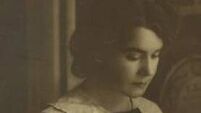
A self-portrait of Lizzie Le Blond, restored by Sophie Chaffaut. The pioneering Irish mountaineer is hardly remembered except by historians and the keeper of her exceptional collection of photos at the Safari Museum in Kansas.
We might call it a dramatic mountain rescue. French film director Sophie Chaffaut has retraced the footsteps of pioneering Irish mountaineer Lizzie Le Blond and in doing so, reintroduced the life and work of this exceptional woman to an international audience.
It is inspiring and moving in equal measure to see how vividly , Chaffautâs new documentary, reanimates the achievements of a norm-breaking Alpinist, photographer, and filmmaker born in Wicklow in 1860.
Inspiring because, by any measure, Lizzieâs accomplishments were extraordinary and even more so given her aristocratic familyâs attempt to put a swift end to her outrageous activities.
(As she put it herself in rather un-PC fashion: âMy mother faced the music on my behalf when my grand-aunt, Lady Bentinck, sent out a frantic SOS. âStop her climbing mountains! She is scandalising all London and looks like a Red Indianâ for I was usually copper-coloured when I returned to England after a series of ascents.â)Â
It is also moving because it is very poignant to witness the care and attention a woman in the present has taken to retrieve a high-achieving woman from the past.
HISTORY HUB
If you are interested in this article then no doubt you will enjoy exploring the various history collections and content in our history hub. Check it out HERE and happy reading
If Lizzie is known a little in her own country, she is hardly remembered outside it except by historians and the keeper of her exceptional collection of photos at the Safari Museum in Kansas where she is hailed as one of the worldâs first female filmmakers.
That is about to change thanks to Sophie Chaffaut, director and videographer, who says she has told Lizzieâs story to redress a form of neglect.
The French woman was immediately captivated by Lizzie when she accidently came across her while researching another, until recently, overlooked woman, pioneering French film director Alice Guy-Blaché.

Chaffaut soon discovered that Lizzie Le Blond, born Elizabeth Hawkins-Whitshed of Killincarrick House, Greystones, Co Wicklow, had ratcheted up a number of impressive firsts too.
She offers this succinct outline as she speaks to the in a Paris cafĂ© on the day after the release of her documentary: âLizzie was a pioneer of female mountaineering, but also a forgotten photographer and filmmaker.
âIn 1907, she founded the Ladiesâ Alpine Club in London to give women free access to the high mountains, which were then largely reserved for men. She made around 20 first ascents, often in winter conditions, and documented her expeditions in photographs.
âIn 1898, she made a series of films on winter sports, becoming one of the first female filmmakers, spotted at the time by [British film director] Cecil Hepworth.Â
"During the First World War, she enlisted as a nurse and was awarded the Legion of Honour [Franceâs highest honour] for her work.âÂ
She also wrote several books â on mountaineering, photography, travel, even Italian garden design â and an evocative memoir which traces her unlikely journey from privileged young girl to Alpine adventurer.
Chaffaut would have had ample material in telling that story, starting perhaps on the beautiful winter morning in 1881 when Lizzie was walking along the base of Mont Blanc and, on a whim, decided with her fellow walkers to trek two-thirds of the way up the highest mountain in the Alps.
Dodging in and out of crevasses, Lizzie and her group arrived at Grand Mulets hut at 3,051m utterly exhilarated:Â
âOur boots were pulp, our stockings wet sponges, our skirts sodden, but somehow we were rigged out in dry clothing, which included enormous felt slippers that dropped off at every step as we clambered to the top of the rocky pinnacles behind the hut to watch the sunset.Â
"By that time we were altogether reckless, and did not hesitate to ask: âWhy not go to the top of Mont Blanc tomorrow?ââÂ
It was actually summer before she went to the top of that mountain, but she did so twice. And thus began a mountaineering career made all the more unlikely given she had initially gone to the Alps to restore the weak lungs that had troubled her since childhood.
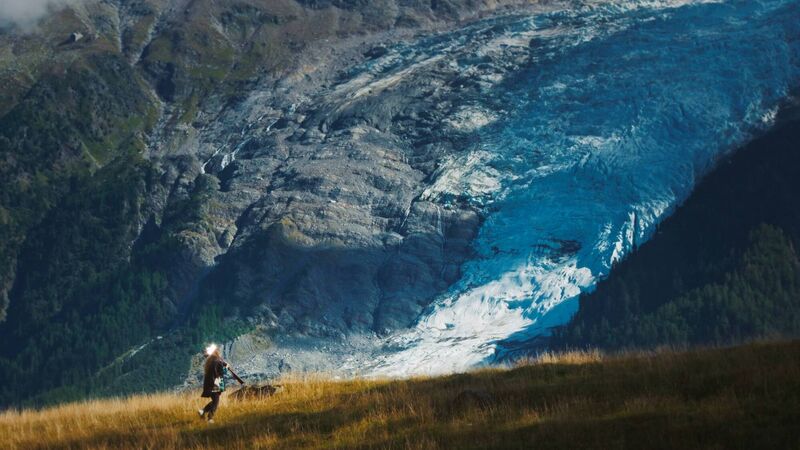
The arc of her journey would have been riveting in itself but Chaffaut decided to put on her own hiking boots to experience, first-hand, the thrill and terror that Lizzie felt so many decades before her.

âI wanted to move away from the classic tale of the feat,â she says, explaining why she set out to climb the 4,135m Burnaby Point in the Swiss Alps, which is named after Lizzie.Â
She became Elizabeth Burnaby when she married celebrated adventurer and best-selling author, Captain Fred Burnaby at the age of 18.
The coupleâs only son, Harry Arthur, was born in 1880 and shortly after that, the couple were living apart.Â
Burnaby was killed in battle in Sudan in 1885.Â
Lizzie married a second time, to mathematician John Frederic Main, but was widowed again when he died in 1892.
Her third marriage in 1900, to Aubrey Le Blond, lasted until her death more than 30 years later and gave her the surname most associated with her now.
All of that is mentioned in the documentary but not in any great detail because the director was determined to focus on the woman herself, rather than the people around her.
Choosing to climb Burnaby Point was a choice, too, because it is not the mountainâs actual summit which is 20m above it. The symbolism of that
â womenâs struggle then and now to reach the top â runs through .
âItâs a hybrid film, part investigation, part homage, and part personal quest â a sensitive and embodied way of filming the mountain while also questioning the place of women in history,â she says.
Chaffautâs own personal quest was that of a hiker pushing herself to venture into the far more challenging world of Alpinism.
Her ascent, touching and humorous, is done with the aid of guides and 21st-century technology.Â
It offers a stark contrast to the challenges faced by Lizzie who, when she first started to climb in 1881, had never actually put on her own shoes and wasnât even entirely sure which boot went on which foot.Â
She later said she owed a supreme debt of gratitude to the mountains for freeing her from âthe shackles of conventionalityâ:
âIt did not occur to me,â she wrote, âthat I could do without a maid, and it was not till one of the species had incessant hysteria whenever I returned late from an expedition, and another had eloped with a courier, that I gained my independence.âÂ

There were many hair-raising moments and close calls too, such as the time she was yanked back from the abyss when a snow bridge collapsed under her.
Her account of climbing Monte Disgrazia, on the Italian-Swiss border, in a storm in February 1896 gives a vivid account of her determination to keep going in all weathers:
âWe now paused a moment to pull ourselves together for the final struggle. Hats were tied down, goggles discarded, the rope somewhat shortened; and grasping our axes and taking a deep breath, we stepped round the corner and ⊠into the full force of the shrieking hurricane âŠâÂ
She made it to the top on that occasion, and on many others too. What is remarkable is that she managed to bring her camera, a heavy, cumbersome affair, along too.Â
Thereâs a shot of Chaffaut with a replica which underlines her achievement.
Lizzie, herself, described just how difficult it was: âIt was trying work setting up a camera with half-frozen hands, hiding oneâs head under a focusing cloth which kept blowing away and adjusting innumerable screws in a temperature well below freezing-point.
She mastered her art, though, and developed her own photographs: âThe Chamonix photographer gave me hints, and his advice as to developing was âdevelop till the plate is as black as a mortal sin!ââÂ
While her series of short films on tobogganing, skating and bobsleigh racing and other winter sports have been lost, eight albums of her photographs have been preserved and digitised by the Safari Musuem in Kansas.
When they turned up at a bookshop in the stateâs capital, Topeka, in 2013, the museumâs curator Jacquelyn Borgeson Zimmer was asked to evaluate them.
âIt was love at first sight,â she said.
But she couldnât evaluate them because she thought they were of such historical significance that they should be donated to a museum â
hers â and so she had a conflict of interest.
In the end, happily, the collection was donated to the museum and since then more than 20 researchers have visited from all over Europe to see them.
Chaffaut has gone a step further. She has restored some 60 images, manually removing dust and spots, adjusting the contrast, restoring the original black and white, then using AI to upscale them.

âThe documentary incorporates 36 restored photographs [including several portraits]. This work in no way sought to transform Lizzieâs photographs. The aim was to restore their readability, without ever betraying the authorâs intention or aesthetic,â she says.
Back on the mountains, the dangers soon personally impinged on Lizzie. When one of her guides was killed in an accident, she couldnât face the Alps any more. She travelled to Norway to venture into territory that was not only unexplored but unmapped.
It was, she wrote, âa climberâs playground well worth exploringâ.
She made 19 new ascents with her two guides and was captivated by the remoteness and perpetual daylight in a region so little known.Â
She took more photographs too, developing them in an improvised dark room in a tent covered with a mackintosh sheet.
Later, she travelled much further afield. In 1912, with her husband Aubrey, she toured China, Korea and Japan, returning via Russia, where she described Moscow and St Petersburg in the last days of Tsarist power.
At the Winter Palace in St Petersburg, this comment on the emperorâs plain bedroom is a lovely example of her wry wit: âOn his writing-table was a common ash-tray and writing accessories that would have been dear at half a crown.âÂ
When war broke out in 1914, she did all she could to help the war effort, at first working as a nurse in a French Red Cross hospital and, from 1916, as director of the fundraising section of the British ambulance committee.Â
She showed her photographs to troops too and later raised funds to help rebuild the destroyed cathedral at Reims, which earned her the Legion of Honour.
She was deeply marked by the war and the destruction she had personally witnessed.Â
After a trip to Ypres in France, she wrote: âNot a single human being was visible at Ypres ⊠On the stricken field⊠fragments of cloth, scraps of metal, ghastly remains, the nature of which one hardly dared to guess at, were pressed and rolled into what seemed a solid mass of congealed mud.âÂ
When she returned to England, she became honorary secretary of the Anglo-French Luncheon Club and worked to improve relations between England and France.Â
She also made frequent trips to see her son in California â he preferred the climate there â and said sheâd happily settle in Hollywood if she had to move to the US.
Those later years are outside the scope of the documentary. Its Alpine focus was deliberate as its director was attempting âto restore Lizzie to the place she deserves, at the intersection of three histories: That of the mountains, photography, and cinemaâ.
She succeeds in doing that so admirably you have to hope Chaffaut will consider making a part two.
is free to access for six months on YouTube: âŻhttps://www.youtube.com/watch?v=nIyVPp6R1Pk