Mick Clifford: Get ready for... Trump 2.0
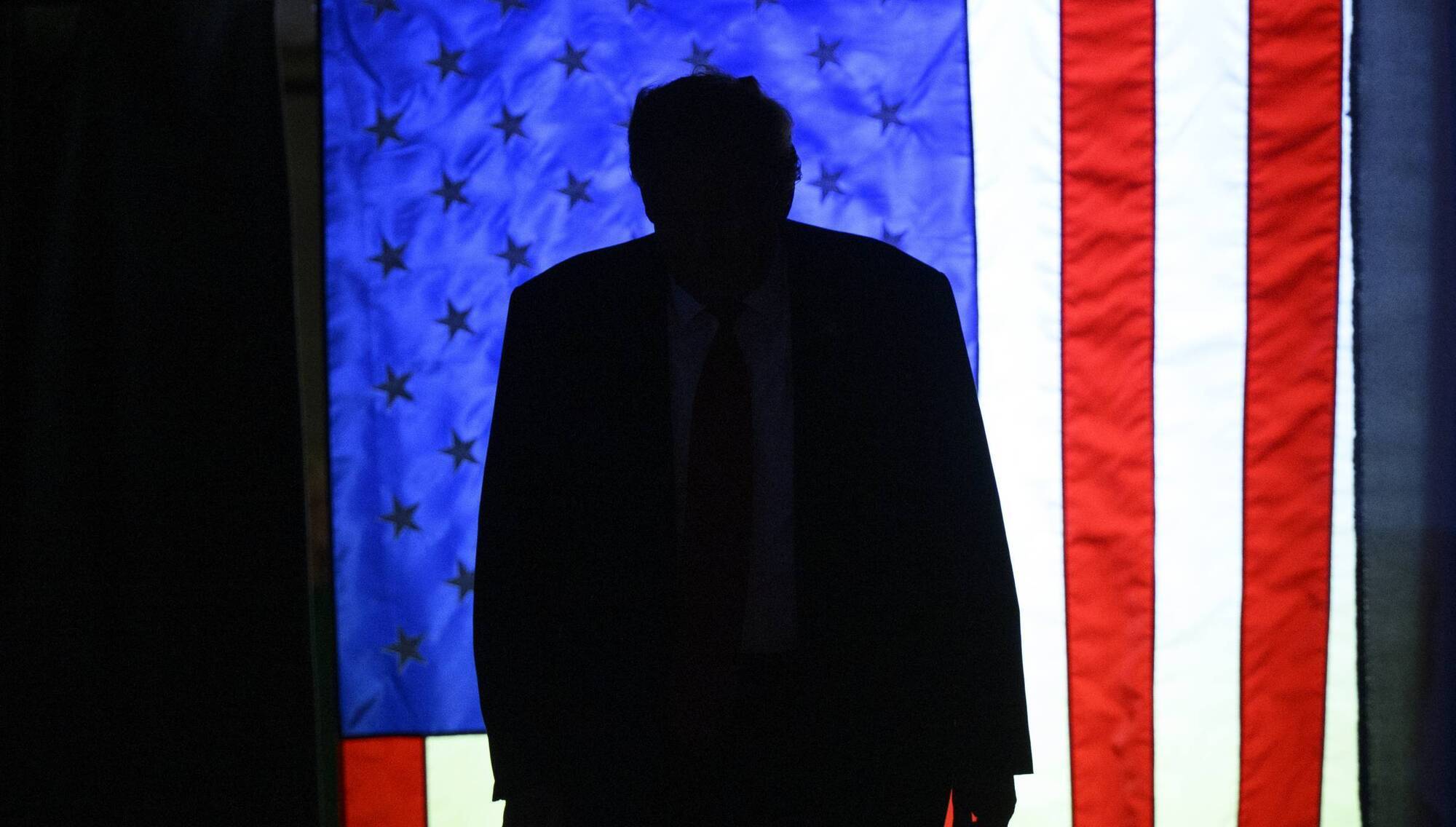
Trump’s presidency this time around is likely to be far more consequential than his first shot at the job. Mick Clifford looks at what may be in store for the US and the world
Mick Clifford: Get ready for... Trump 2.0

Donald Trump, on Monday, will be inaugurated as president of the US for the second time. Picture: Jeff Swensen/Getty

On January 7, Donald Trump held a news conference in his Mar-a-Lago complex in Florida. It was his first major engagement with the media since his historic election victory last November.

The wide-ranging address provides hints about not just how he will govern but what exactly his priorities might be and whether he has any idea what he is talking about.

He was asked about aspects of climate change. He started into wind energy, a process that is accepted across the globe as a vital tool in producing clean energy. For some reason, the president-elect refers to “windmills” which evokes images from the Netherlands about a century ago.

“You can talk about windmills, they are littered all over our country, like dropping garbage in a field,” he told the conference.

“We are going to have a policy of no windmills built. It’s crazy. See what happened in Massachusetts? Two whales were washed ashore. The windmills are driving the whales crazy.”

Then he switched his ire to those who promote water conservation.

“These people are crazy, there’s something wrong with them. They want to go back to when you buy a faucet and no water comes out. It’s called rain. It comes down from Heaven. They want to do… no water comes out of the shower. It goes drip, drip, drip, drip, so what happens? You’re in the shower 10 times.”

Earlier this week on a call to a national TV station, he explained that the administration in California was incompetent in tackling the horrific wildfires that have caused devastation. He spoke of interactions he had with heads of government from Finland and Austria, in which they told him of how they tackle the threat of forest fires.

“We used to have to give so much money mostly to California for the fires,” said Trump.

“They [the Austrians and Finns] don’t have forest fires. They rake the leaves twice every year and they have it nice spick and span.”

California is traumatised, including with the loss of life, and the president-elect concludes they should have raked the leaves more and there wouldn’t be a problem. During his last presidency when his competency was questioned, Trump described himself as “a very stable genius”.

Donald Trump will be inaugurated as president of the US for the second time on Monday. His election in November represented one of the greatest political comebacks in modern times.

A report released on Tuesday posited that had he not won the election, which gave him immunity from prosecution, he would have been convicted of offences related to what became an attempted coup d’etat on January 6, 2021.

At a sentencing hearing last week he was officially deemed a felon, having been convicted in a ‘hush money’ case in which he paid off a stripper for her silence during the 2016 election. By his actions, his victories, his ability to outrun the justice system, his capacity to detect prevailing currents in the undergrowth of the electorate, he has transformed American politics.

But how will he govern?

There is consensus that his presidency this time around will be far more consequential than his first shot at the job. There are fewer constraints on his impulses. For instance, the separation of powers, in which the judiciary is entirely independent of government, has been softened.

Last time around he was in the fortunate position of appointing three judges to the all-powerful Supreme Court but his real influence is on how some judges in the court regard him and their respective roles.

For instance, 10 days ago, just ahead of Trump filing an action to the court to prevent a sentencing hearing, Judge Samuel Alito took a personal call from him. Both men claim the case wasn’t discussed but even the interaction, on the premise of a job reference for a junior clerk, is alarming.

Probably of far more consequence is the criteria Trump has employed for selecting the senior people for his administration. 

During his first presidency he largely opted for experienced Republican Party operatives, people who knew their way around Washington and the structures of government. These included John Bolton and John Kelly, both of whom subsequently characterised Trump as a dangerous buffoon. 

Frequently, such figures were referenced as “the adults in the room”. In that respect, the incoming administration resembles a kindergarten.

Pete Hegseth, chosen by Donald Trump to be defence secretary, at his confirmation hearing in Washington on January 14. Picture: Alex Brandon/AP

This week, Trump’s choice for secretary for defence Pete Hegseth was put through a confirmation hearing in the senate. Hegseth has no qualifications to run a massive part of the US government. His only qualifying characteristic is that he is loyal to Trump.

Hegseth served in the national guard, the US’s equivalent of the FCA. He presented a weekend programme on Fox News, the station which Trump instinctively tunes into. He has also settled a case in which he was accused of sexual assault.

There has been a number of credible allegations about work colleagues’ concern at the level of his drinking. He has promised that he will stay off the drink while he serves in government. Hegseth, who is certainly not the craziest of Trump’s appointments, would hardly qualify as an adult in the room.

“Donald Trump operates on impulse and what he considers most worthwhile to himself and to his agenda,” says University of Notre Dame emeritus professor of American studies Bob Schmuhl, who has written a series of books on the American presidency.

“Coherence is rarely identifiable in what he says or does. The world can expect squalls and tempest during a stormy future.”

Domestically, Trump has to tread a little carefully with his base. He promised his MAGA movement that he would bring down inflation, impose tariffs on foreign goods, retard globalisation, and return their lives to some imaginary greatness.

Elon Musk with Donald Trump during a campaign rally. Picture: Jim Watson/AFP via Getty

That agenda will be in conflict with the priorities of the “Tech Bros” who have attached themselves to him, most notably the bewildering Elon Musk. Their priority, like Trump’s personally, will be for tax cuts for the wealthy, open borders to expand their businesses, and holding down labour costs. Already, the divide has broken out in public with Steve Bannon, Trump’s former chief of staff, hitting out at Musk as “evil”.

Schmuhl reckons Trump will follow a well used playbook when it comes to the US economy.

“Donald Trump and the Republican members of congress will do whatever they can to reduce taxes, corporate or otherwise,” he says.

“They seem to do so at the beginning of every Republican administration. This one will be no different”.

We can also expect some movement on deporting illegal immigrants. He will proceed with caution on this policy goal as to deport too many will have a negative impact on the economy, particularly for the wealthy interests who require cheap labour.

On the international front, he has already made his presence felt. At the Mar-a-Lago news conference he said that if the Israeli hostages were not released by inauguration day, “all hell will break out in the Middle East. And it won’t be good for Hamas. Frankly, it won’t be good for anybody”.

This week a ceasefire was agreed between Israel and Hamas. There is consensus that it came about due to Trump’s threats and the presence of his Middle East envoy in the region.

On the face of it, the belief might be that the threats prompted Hamas to act, but observers have pointed out that Israeli premier Benjamin Netanyahu is an ally of Trump’s and was willing to act to give his pal a win and then wait until the dust settles.

Trump is a major supporter of Israel and is unlikely to force Netanyahu into anything he doesn’t want in the long run. On such personal priorities of these men rely the lives of the dispossessed and bereaved Palestinians. Still, Trump is entitled to credit for at least temporarily stopping the slaughter in Gaza.

Donald Trump with Israeli prime minister Benjamin Netanyahu in 2017. Trump is a major supporter of Israel.	Picture: Kobi Gideon/GPO via Getty
Donald Trump with Israeli prime minister Benjamin Netanyahu in 2017. Trump is a major supporter of Israel. Picture: Kobi Gideon/GPO via Getty

Threats have also been a favoured tool of the incoming president’s coveting of the Panama Canal and Greenland. He says that he won’t rule out military force to acquire these territories but in all likelilhood it is threats rather than action that will further his aims. 

Issuing threats from a position of strength to cut a better deal was a hallmark of his mixed success in business.

“Trump is a transactional business figure and president,” says Schmuhl.

“He makes decisions largely based on what he or the US might gain from what he perceives as ‘a deal’ that’s of interest to him. Making threats are second nature to him, whether he will follow through is the great unknown.”

Impact on Ireland

So what will the Trump doctrine mean for this country? A staple of his rambling election promises was the imposition of tariffs in an effort to bring manufacturing jobs back to the US. Ireland would be particularly vulnerable to any such tariffs due to the high level of US companies that have invested in this country.

Around 11% of the workforce are employed by US-owned companies. In 2023, the US accounted for over €54bn in Irish exports, which would be severely impacted if a tariff was applied.

Dublin City University politics professor Gary Murphy says that the first thing to note about Trump’s plans is that foremost to his mind will be his own personal interests.

“The main problem a Trump presidency holds for Ireland lies in its sheer unpredictability,” he says.

“After winning in 2016, Trump made noises about repatriating American profits from multinationals, much as he is now, and nothing came of it.

“This is not to say it won’t happen this time but Trump probably doesn’t want to spark an immediate trade war with the EU or anyone else given the colossal damage it could do to American trade and jobs, leading to a collapse in his own popularity.”

Of late, there has been much comment in the public square here that Trump will not follow through on the threat of tariffs. Economist Jim Power cautions against such complacency.

“I hear people saying that there will be nothing to worry about here in the long term but I think that is naive,” he says.

“A presidential term of four years can change things fundamentally and we can’t take it for granted that after that he will be replaced by a moderate Democrat or Republican. The way things are going it could be somebody worse.”

Threat to free trade

Power believes that we need to factor into planning the real possibility that there will be a threat to free trade and that the US will attempt to repatriate overseas investment and intellectual property.

“There is also the prospect of a cut in the US corporate tax rate and given our massive dependence we need to plan strongly for this,” he says.

“The diplomatic channels are going to be vital. We have damaged relations with the Trump administration, and diplomacy is going to be vital.”

He sees the pending Trump rule as an opportunity to finally get right the major infrastructure deficit in the country.

“We need to really stop talking about it and address it in a strategic way, invest in energy, water, education, public services. These are issues that have to be addressed with some urgency. It becomes a lot easier for US companies to reduce their investment in this country if we have the kind of infrastructure that there currently is here.”

There may be early indications of how Trump will regard this little piece of real estate on the edge of the Atlantic where he owns a golf course. St Patrick’s Day is less than two months away and is always a major focus of the soft power that Ireland wields in the US.

If the Trump instinct for chaos kicks off straight away he may decide that the Irish are not entitled to the welcome they have traditionally received on the national holiday. 

That would be a big blow to relations, but Gary Murphy believes it is unlikely that he will come out with all guns blazing in this respect.

“The emphasis on trade that [Simon] Harris as new minister for foreign affairs will apparently have suggests the incoming government knows it has some significant work to do with the new US administration and I expect we will see a major effort on the Irish side to ensure that the St Patrick’s Day visit goes ahead as normal.”

One way or the other, the months ahead are going to be a white knuckle ride as America and the wider world get to know how exactly Trump intends to govern this time around. For one so unpredictable, so susceptible to flattery and the latest idea he sees on TV, it is highly unlikely that the road ahead will be straight, the fare relaxing.

In fact, the only advice that anybody can really provide at this stage of the Trump presidency comes from another famous American, Bob Dylan: “Hang onto me baby, and let’s hope that the roof stays on.”

x

More in this section

Lunchtime News

Newsletter

Keep up with stories of the day with our lunchtime news wrap and important breaking news alerts.

Cookie Policy Privacy Policy Brand Safety FAQ Help Contact Us Terms and Conditions

© Examiner Echo Group Limited