'We are at a critical time' if we want to save Ireland's natural world, says expert
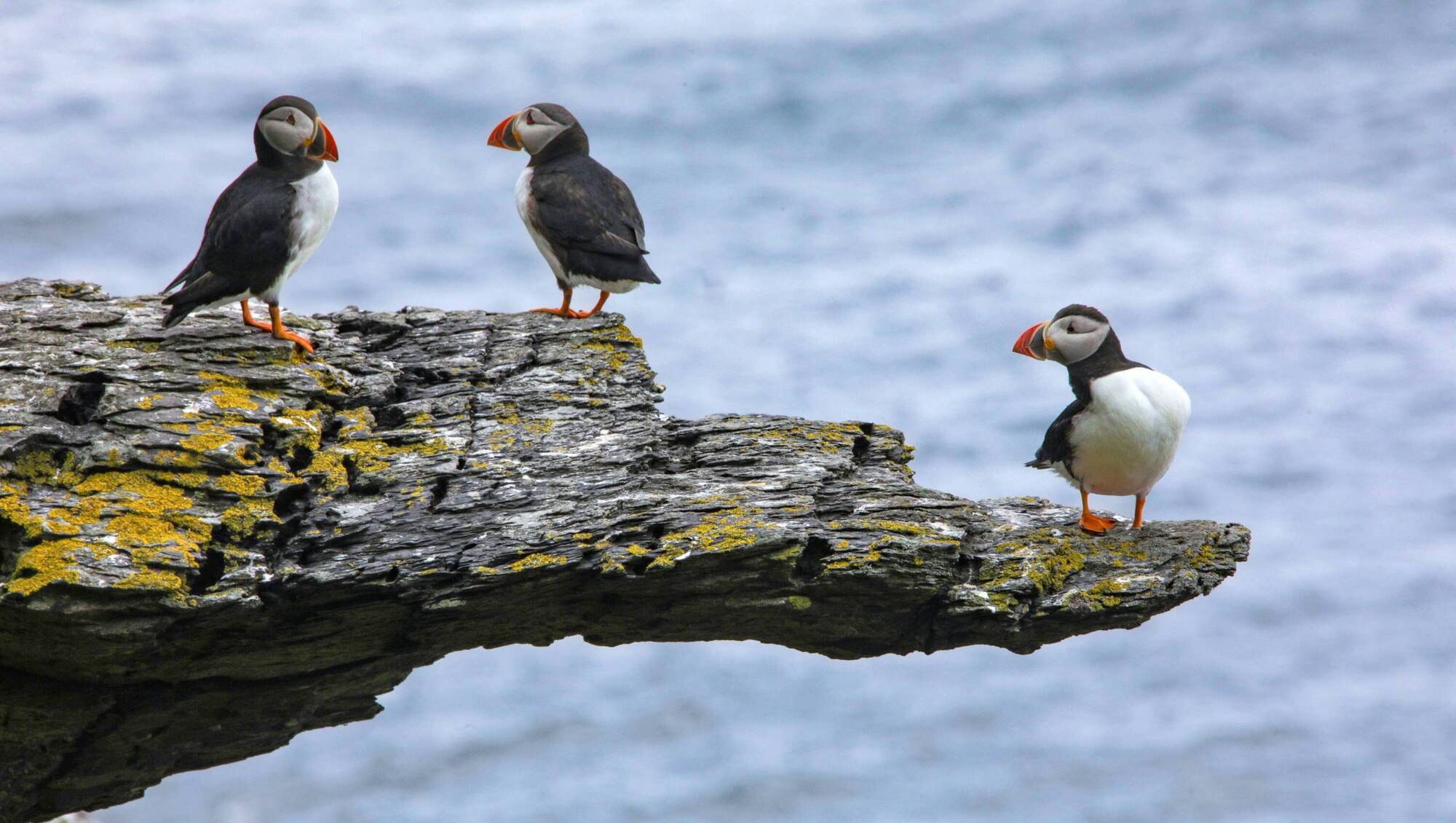
Atlantic puffins on the Skelligs: The British Trust for Ornithology predicts 90% of puffins will be lost to Ireland and the UK by 2050. Picture: Valerie O’Sullivan
There are a lot of uncertainties about how climate change will impact on Ireland’s flora and fauna, but according to an expert, the threat to their status quo “is very real”.
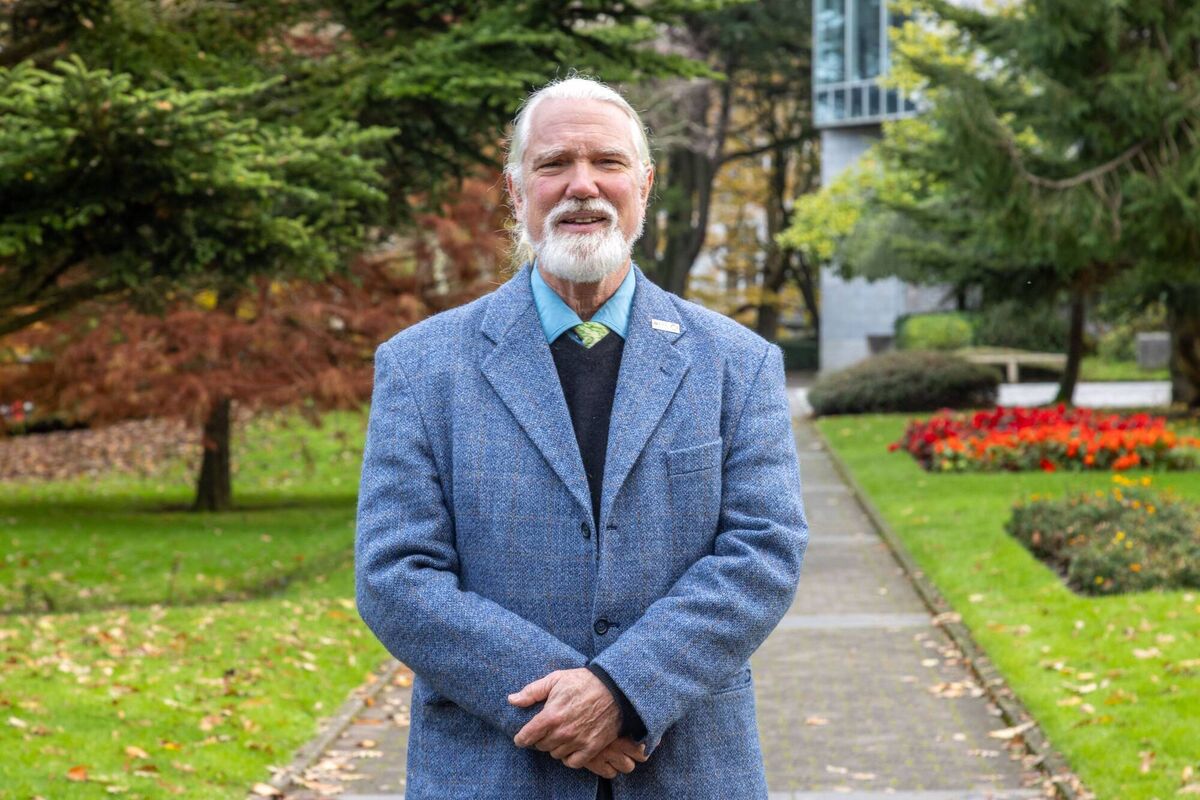
Ecologist John Barimo, manager of Sustainable Development Solutions Network Ireland, said there was a complex web of processes that shape order and maintain natural ecosystems then we actually know about.
“Having said that, there are trends that have been identified by researchers. When I was an undergraduate student over 30 years ago, I learned that carbon dioxide in the atmosphere was rising; most all of the world's glaciers were retreating or melting as evidence of a warming planet; and that the ranges of distribution for many species had begun a poleward migration.
"And over 20 years ago, an Oxford University study spoke of the unpredictable nature of climate change in relation to species and natural habitats in Britain and Ireland,” he said.
So, he asks, what does all this mean for us in Ireland?
Dr Barimo said to get a full perspective, we need to step back into time and try to think in terms of millions and even billions of years ago.
“We also know from studying isotopes in ice cores that we are now experiencing an extremely rapid change in carbon dioxide and temperature since the industrial revolution some 150 years ago compared with the geological record.
"And when changes occur so rapidly, within just a few generations for many species, natural evolutionary processes of adaptation or natural selection are essentially short-circuited,” he said.
Natural genetic variation is also a means of resilience for any given species, but so much natural diversity has been lost in Ireland due to land use practices, overfishing, and so on.
"To this day, species continue to move away from warmer waters and land and continuing this poleward range shifts. Such mass movements will cause different communities of species to encounter each other for the first time and the outcomes will be unpredictable, there will likely be some winners and some losers.
“You can also learn much from the study of introduced species. Where I come from in Florida, people have released their pet Burmese pythons and Indo-Pacific lionfish into the wild where they have thrived.
"The pythons have disrupted the Everglades ecosystem with severe impacts on bird and small mammal populations, while lionfish have decimated juvenile coral reef species,” he said.
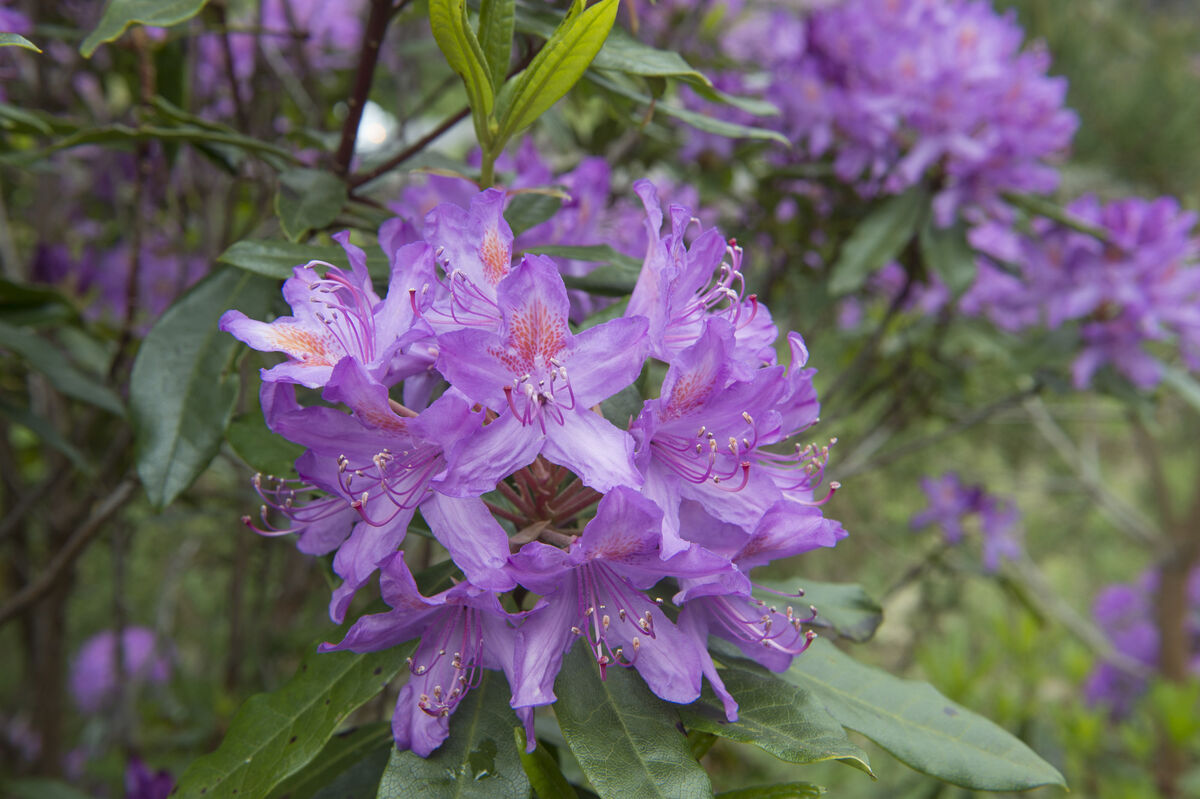
He said the same is happening with rhododendrons in Ireland, especially in Killarney National Park, where they are outcompeting many native species and we are offering little habitat value to native fauna.
Invasive species generally lack predators or competitors which would keep their population size in check. As a result, they can quickly become a dominant species, often with no benefit to the existing ecological community.
But some of these invasive species fail to establish themselves and outcomes of such introductions can be difficult to predict in advance.
“I think it's safe to say that we're likely moving toward a time of increased instability in many ways. I personally never liked terms like global warming or climate change because I foresaw climate instability.
It’s very sad but events such as the flooding in Midleton this past year may start to occur more often, and we need to be prepared for this, especially if living in low-lying areas,” Dr Barimo said.
Dr Barimo poses the question: what specifically can we expect in Ireland given this background information?
“There is anecdotal information that Atlantic puffins nesting in the Skellig Islands are changing, although I have not seen empirical data yet. Any changes may be driven by temperature stress, habitat disruption, or changes in food ability as puffins feed primarily on sand eels.
"This also brings to mind that specialist feeders such as puffins may also be more susceptible to environmental impacts then a generalist feeder such as an omnivore,” he said.
The British Trust for Ornithology predicts 90% of puffins will be lost to Ireland and the UK by 2050.
“What we don't know is will they find new feeding habitats and breeding grounds, or will they eventually perish as a species, at least locally or regionally. The same trend is expected in other seabirds, but why should we care?
"Seabirds are often used by scientists as indicator species of ocean ecosystem health since we simply don't have the capacity to monitor the life cycles and species interactions of all organisms in the ocean.
"Again, I think it's safe to say that we can expect change but the outcome is still a big unknown and something of an experiment with our own life support system,” he said.
Dr Barimo said something most people do not realise is that forests migrate in response to climate variations, but at much slower timescale. These are longer time scales compared to what we are currently experiencing. The migration occurs as seeds are dispersed by wind or animals from the parent tree.
Under current climatic conditions, seeds will likely have a better chance of sprouting and surviving if they are dispersed in a cooler poleward direction. But the changes are happening much more quickly for our native fauna to adapt.
“Unfortunately, human interventions may be necessary to save such forests for future generations and perhaps costing more than the phase-out of fossil fuels,” he added.
As for Irish fisheries, Dr Barimo said we can likely expect more tropical and subtropical waters fish to move into our waters and traditional catches such as cod, hake, mackerel, etc will likely move northward, while some may move toward deeper waters.
“But again we don't know how interspecies interactions will shape any new emerging ecological community or whether we can still expect the upwelling of nutrient-rich water into coastal areas which nourishes the planktons which serve as the base of the food web.
"Also, an unknown is what will be the fate of species such as the Atlantic salmon which have high fidelity to their natal stream which evidence suggests they can detect their spawning grounds by smell,” he said.
Dr Barimo said all of these issues lead us to the point of what can we do as individuals or members of groups, and what are our own values around these issues.
“Is this important enough for us to hold our elected government officials to full accountability and to live up to the promises made in the Paris Agreement or the 2030 Agenda which includes the Sustainable Development Goals or any other agreements that emerge from Cops?
"We are at a critical time where words must be converted to actions and we can no longer pass the problems along to future generations,” he said.
“For example, with the upcoming European parliamentary elections, a good question to a candidate may be what about the EU subsidies for fossil fuel industries which amount to €300m annually?
And why can't those funds instead be used to subsidise a just transition to renewable energy and ecosystem restorations?”


CLIMATE & SUSTAINABILITY HUB
CONNECT WITH US TODAY



Be the first to know the latest news and updates