Care crisis: ‘I’ve spent 10 years living in an institution — I deserve my own home’
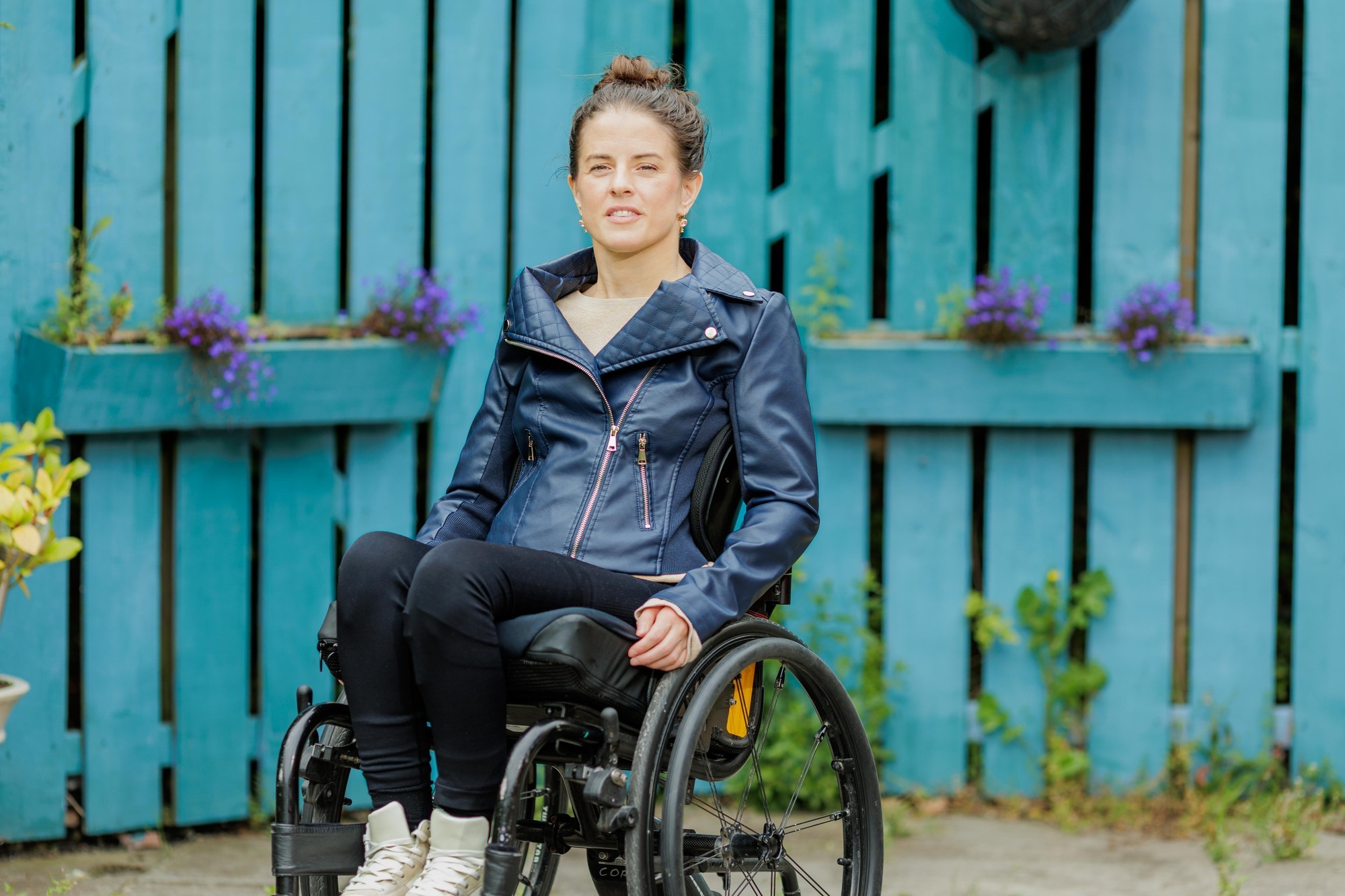
Geraldine Lavelle, one of the many Irish people whose lives are limited by Section 39 underfunding, tells Sorcha Crowley about her hope that she will soon begin living a more normal life
Care crisis: ‘I’ve spent 10 years living in an institution — I deserve my own home’

Geraldine Lavelle came agonisingly close to independence in May only to learn days before a planned move into her own home that she would not get the necessary assistance to move due to ‘acute staff shortages’ — an instance of Section 39 underfunding.  Picture: James Connolly

Geraldine Lavelle is less than six weeks away from living what she hopes will be a “gloriously ordinary life” back home in her native Castlebar.

The disability rights campaigner, author, and artist should be over the moon with the latest HSE promise of enough home care support to allow her a “life-changing” move into a specially-adapted bungalow by mid-November.

A collision with a lorry while out cycling on October 31, 2013, left 37-year-old Lavelle paralysed from the chest down. She will require 56 hours a week of support from HSE-funded care staff in order to live independently in the community — hours she has been promised time and again but which have never yet materialised. 

“I think all the goodness, all the excitement, is being literally shook out of me with this constant up and down and getting excited and then being deflated and getting excited again,” she says.
"And so I’m just waiting to see something concrete before I get excited this time." 

This article is part of the Care crisis series about the funding of voluntary and community care organisations published online here from Sunday, October 8 and in the 'Irish Examiner' from October 9

If granted, her home care support package will mean she can finally move out of the residential care setting she’s been living in in Sligo town for the past nine and a half exhausting years she has spent fighting for the right to live in her own home.

Ms Lavelle came agonisingly close to independence on May 10 when she signed a tenancy agreement with Mayo County Council and got the keys to her new home, just 10 minutes away from her family. A removal truck was booked for July.

Having been partially paralysed in a road accident, Geraldine Lavelle has lived in the Cheshire home in Sligo for nearly a decade. 	Picture: James Connolly
Having been partially paralysed in a road accident, Geraldine Lavelle has lived in the Cheshire home in Sligo for nearly a decade.  Picture: James Connolly

But the week before, on a Friday evening at 4.45pm, an email bomb dropped — the Irish Wheelchair Association was not in a position to provide her with enough hours to move due to “acute staff shortages and a lack of high calibre staff”.

Her new life “just disintegrated overnight, like into dust”. Like thousands of people living with disabilities around the country, Ms Lavelle is hoping the homecare support package now offered by a different agency will be adequately funded in Budget 2024.

Speaking in the Dáil a year ago — after Sinn Féin president Mary Lou McDonald raised Ms Lavelle’s case — then taoiseach Micheál Martin agreed “the principle of facilitating independent living is accepted”.

“Resources have been allocated on an annual and incremental basis.”

Members of the opposition and disability rights campaigners argue the resources allocated are not enough.

The Home Care Coalition of 23 leading disability advocates has called for €1.05bn funding to the Home Support Service in tomorrow’s budget to address ongoing home care staff shortages. They claim Government spending on home care packages comes far too low on the list of priorities on public spending.

The many financial figures tossed about each budget day translate into a reality of freezer dinners every day for Ms Lavelle. The 35 hours per week of care support she currently receives in the Cheshire Homes residential and respite facility is just enough to get her up in the morning and back to bed in the evening but if she needs to rest during the day, there is no help. She must put a pillow on the kitchen table and sleep in her wheelchair.

Moving back to Castlebar would give her extra support to live independently, closer to her family and friends, give her more privacy and the “mental stability of not living in an institution where there is just a constant flow of people and noise and other residents shouting in the hallways”.

“I live along the main road. The traffic, the noise, people just constantly looking into your front door and they can see your bed, feeling like animal in a cage,” she said. Having the personal space that comes with her own home would also meet one of the requirements of applying for an assistance dog, something she was refused in 2017 because she lived in a residential setting. 

“I’ll even be able to have my own cat, that’d be great,” she adds. Having enough support to live in their own home gives Ms Lavelle and anyone with a disability the chance to “feel more like a human being". 

“I’ll be able to live an independent, less structured life. I can have family and friends stay over and won’t have a curfew or trying to get up or trying to go to bed,” she says.

“You know, it’s just going to be unbelievable. It’s going to be life changing.”

Geraldine Lavelle kayaking on Lough Lannagh with Jarlath McHale. 'We can live happy, independent lives and contribute to society. With the right supports, people can go back to work.' File picture 

Funding is only one part of the issue. Ms Lavelle believes the lack of empathy and accountability among HSE staff revealed when they suddenly found 56 hours for her overnight last May, on foot of her own media campaign, is dehumanising.

“Overnight, the money was found for the 56 hours. Who really has the final word in people’s lives? Who? Why do these people get to make decisions on a whim?

“They’re not here every day eating a freezer dinner or trying to survive basically day to day,” she asks.

She is often left waiting “months” to get replies from HSE staff to organise meetings, people who she says “just don’t even feel they have to answer for it”.

“You contact one person and you could be waiting a week for a response. You’re almost looked upon as dirt, like you’re not even human.”

Her message for Finance Minister Michael McGrath?

“Just don’t forget at the end of the day we are human beings who just want to progress and move on with our lives. We can live happy, independent lives and contribute to society. With the right supports, people can go back to work. People can live in their own homes. I don’t know how it’s acceptable that we just forget about people and they’re just left and forgotten by services.”

Ms Lavelle will mark the 10th anniversary of her accident in Sligo this Halloween, a difficult day for her every year. She was only meant to be living in the Cheshire Home accommodation for three months after she was moved there straight from hospital.

 'I have to keep going because if I don’t keep shouting or keep fighting, nothing’s going to change.' Geraldine Lavelle was featured in the series 'Survivors'. Picture: RTÉ
'I have to keep going because if I don’t keep shouting or keep fighting, nothing’s going to change.' Geraldine Lavelle was featured in the series 'Survivors'. Picture: RTÉ

“I could have literally been forgotten in a room. I said no, I’m still here. I’m going to make a difference to myself and others and just get out there.”

She believes her situation mirrors a bigger picture of how this country treats people with a disability.

“Unfortunately, that can touch anyone at any stage of their life. It’s important we tackle this ongoing issue,” she adds.

How does she keep going with her campaign in the face of bureaucratic indifference? “I have to keep going because if I don’t keep shouting or keep fighting, nothing’s going to change. I’ve done 10 years of living in an institution and I’m 37 years old. At this stage of my life, I deserve my own home.

“People who go into prison, they come out and they’re rehabilitated whereas I had an accident and, yes, I became disabled. Why should my life end and be moved into a small little residential room?” she argues.

“I’ve knocked on every door. I’m not asking for anything out of the ordinary. I’m just asking to live a normal life in my own home, in a community where I grew up, where my friends and family are living.

“If I don’t keep shouting… Imagine the amount of people that are out there who don’t have a voice. We’re just forgotten in the system.”

Between now and November, she lives in hope.


x

More in this section

Lunchtime News

Newsletter

Keep up with stories of the day with our lunchtime news wrap and important breaking news alerts.

Cookie Policy Privacy Policy Brand Safety FAQ Help Contact Us Terms and Conditions

© Examiner Echo Group Limited