Dying for a 'base' tan — sunbeds continue to cost lives despite restrictions
Almost ten years after Ireland introduced legislation forbidding sunbed use for those under the age of 18, experts call for a complete ban, writes Mairéad Sheehy
Dying for a 'base' tan — sunbeds continue to cost lives despite restrictions

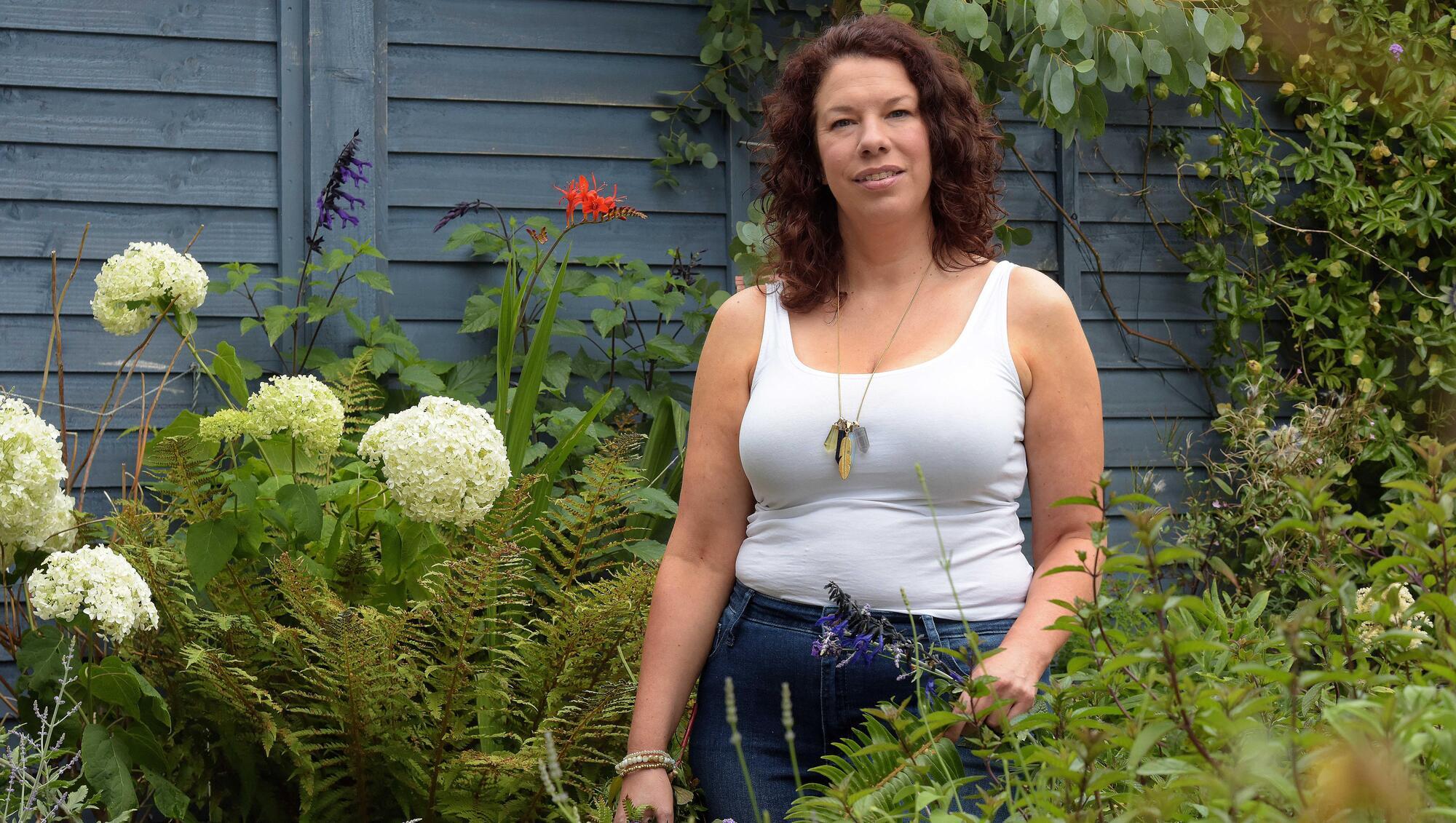
Gill Costello, a former sunbed user who now has terminal cancer. 'We need to change that narrative and tell people it’s okay to be pale.' Picture: Moya Nolan

"I knew sunbeds weren't recommended and could be dangerous, but I never thought about skin cancer and how it could affect me later in life.” 

Gill Costello, from Ballybrack, Dublin has discovered in the most tragic way the very real risks posed by "sun-worshipping" and sunbed use, after the 43-year-old was diagnosed with terminal cancer.


Ms Costello was an infrequent sunbed user during her college years, occasionally opting to use beds when approaching a big holiday or event.

After a friend spotted a mole on her back in 2016, she got it checked out and had it removed for precautionary reasons. The mole turned out to be melanoma.

According to the Marie Keating Foundation, non-melanoma skin cancer is the most common cancer in Ireland, with melanoma being the fourth most common. Recent figures suggest there are over 11,736 non-melanoma skin cancers and over 1,156 melanomas diagnosed each year. 

When costing as little as 80 cents per minute in some places, it's hard to wean young tan lovers away from the tempting offers, with sunbeds being marketed as a cheap, no-fuss way to build a healthy glow.

The Irish Cancer Society has said that getting burnt just once every two years triples the risk of developing melanoma.

Ireland still has the highest mortality rate in Europe for melanoma with, on average, 159 people dying from this disease annually.

Ms Costello's Stage 1 melanoma was curable, but she had to attend periodical follow-up appointments, as per standard practice.

In Summer 2021, she was told she had one final follow-up appointment to attend before she would be given the all-clear. Fast-forward to November 2021 and her life was plunged into darkness when she ended up in A&E after fainting two days in a row. She underwent tests and it was discovered that she had a bleeding tumour, measuring 7cm long in her stomach, and melanoma in six different parts of her body.

Within five years, Ms Costello’s cancer had transformed into stage 4 advanced melanoma, spreading across her lungs, liver, breast, pelvic bone, peritoneum and stomach.

"I wouldn't say sunbeds are 100% of what caused me to get cancer, but they certainly have contributed,” Ms Costello said.

 Gill Costello: 'I wouldn't say sunbeds are 100% of what caused me to get cancer, but they certainly have contributed.' Picture: Moya Nolan
Gill Costello: 'I wouldn't say sunbeds are 100% of what caused me to get cancer, but they certainly have contributed.' Picture: Moya Nolan

She wants to see a change in the public’s perception of sunbed use and says there is still much work to be done in Ireland to reshape our attitudes to tanning.

“I think as a nation we all want to be tanned but we need to change that narrative and tell people it’s okay to be pale,” she added.

“We just need to change that whole mindset of younger people.”

However, when costing as little as 80 cents per minute in some places, it's hard to wean young tan lovers away from the tempting offers, with sunbeds being marketed as a cheap, no-fuss way to build a healthy glow.

With many offering the option to pay as you go or purchase a top-up card, the sunbed industry is battling hard to lure in younger customers.

Cancer Prevention Manager at the Irish Cancer Society, Kevin O’Hagan said it has been tracking sunbed use since 2003.

“At that time, sunbed use was at 9%, this had fallen to 3% in 2019,” Mr O’Hagan said.

Kevin O'Hagan of the Irish Cancer Society.

“The Public Health Sunbed Act was introduced in 2014 and since that time there has been a reduction in the number of sunbed operators.

"It was estimated that there were around 900 sunbed operations prior to the legislation and this fell to 569 in 2016.” 

While there is a recorded fall in official facilities, those that remain are accompanied by unregulated operators, run by people with little or no training, with no limits on use. 

One fair-skinned Limerick woman, who didn't wish to be named, told the Irish Examiner how she had used a bed recently to get a 'base' before going on holidays. 

She went on the sunbed for ten minutes, having previously only used the beds for less than five minutes at a time. The result was third-degree burns on her back.

Professor Anne-Marie Tobin, Consultant Dermatologist at Tallaght University Hospital says there is an evident rise in sunbed use amongst patients presenting themselves with melanoma in recent years.

 Professor Anne-Marie Tobin, Consultant Dermatologist at Tallaght University Hospital. Picture: Moya Nolan
Professor Anne-Marie Tobin, Consultant Dermatologist at Tallaght University Hospital. Picture: Moya Nolan

Ms Tobin’s advice to those thinking of using sunbeds is simple: “Don’t do it."

Ms Tobin says the Irish complexion, predominantly fair-skinned, presents an even higher risk of suffering immense damage from sunbeds as it is prone to burning in the sun and to “a high number of moles”.

“Definitely people who have lots of moles should not use sunbeds because they're compounding their risk”, she adds.

On the lack of regulation around sunbeds, Ms Tobin cites a study in Scotland that showed nine out of 10 sunbeds there were emitting unsafe levels of radiation.

“If you walk into somewhere where they're going to give you a medical treatment and they're using a machine, you know that the machine has been standardised, it's been validated, it does exactly what it says.

"No one knows what the [sunbeds] machines deliver and over the years the bulbs have become a lot more powerful, you don't know whether the machine that you’re getting onto is safe,” she added.

The Irish complexion, predominantly fair-skinned, is at an even higher risk of suffering immense damage from sunbeds as it is prone to burning in the sun.

Cork influencer Julie Haynes is all too aware of the dangers associated with turning to sunbed use.

Ten years ago, the mother-of-two jumped on the sunbed bandwagon ahead of her holiday to Mexico, with the overused expression of “getting a base” tan in mind.

However, after just three sessions, Julie noticed an unusual mole which she subsequently had removed.

“Only after three beds this was the damage it had caused; luckily my tests came back clear but I promised myself never to go near them again”, a rule she has stuck to over a decade later.

The Carrigaline native admits although she longs for the “flawless tan” observed on other sunbed users, she will not be tempted to try a sunbed again.

Julie Haynes: 'I would urge anyone thinking of doing the beds to just go buy a bottle of fake tan, it’s the safest way.' Picture: Denis Minihane

“I would urge anyone thinking of doing the beds to just go buy a bottle of fake tan, it’s the safest way,” Ms Haynes said.

According to the National Library of Medicine, Brazil imposed a general ban on sunbeds back in 2009, becoming the first country ever to do so, followed by Australia in 2016.

Many countries have taken steps to partially restrict sunbed use, with countries such as Canada, France, Ireland, and the US introducing controls to restrict sunbed operators from highlighting non-cosmetic health benefits, according to the World Health Organisation. Italy has banned sunbed use for fair-skinned and pregnant individuals.

Almost ten years after Ireland introduced legislation forbidding sunbed use for those under the age of 18, Prof Tobin is calling for the country to take further action, backing a complete ban.

She points out that sunbeds are classified as a carcinogen, in the same category as cigarette smoke.

These views are echoed by Mr O’Hagan.

“In July 2009, the International Agency for Research on Cancer (IARC), placed sunbeds in the highest cancer risk category and rated sunbeds to be as carcinogenic as tobacco and plutonium.

“Young people are particularly at risk — there is a 75% increase in the risk of coetaneous melanoma when people began tanning regularly before the age of 30 years. Even one sunbed session can increase your risk of developing squamous cell skin cancer by 67% and basal cell skin cancer by 29%."

He points out that people with fairer skin types have double the risk of "getting melanoma, the most serious form of skin cancer”.

“If you are thinking of using a sunbed, we would really encourage you to please, think again. Sunbed use increases your risk of skin cancer, whatever your age, sex, and skin type. There are some people who are at an even greater risk than others,” he said.

This includes you if:

  • You have fair or freckled skin;
  • Your skin always burns and never tans or burns before it tans;
  • You have a lot of moles;
  • You have had skin cancer or a family member has had skin cancer;
  • You use cosmetics or take medications that make your skin more sensitive to UV rays.

  If you have questions or concerns about cancer, contact the Irish Cancer Society Support Line on Freephone 1 800 200 700 or email supportline@irishcancer.ie

More in this section

Lunchtime News

Newsletter

Get a lunch briefing straight to your inbox at noon daily. Also be the first to know with our occasional Breaking News emails.

Cookie Policy Privacy Policy Brand Safety FAQ Help Contact Us Terms and Conditions

© Examiner Echo Group Limited