Mick Clifford: Torture of Hooded Men shows what happens when a state loses its moral compass
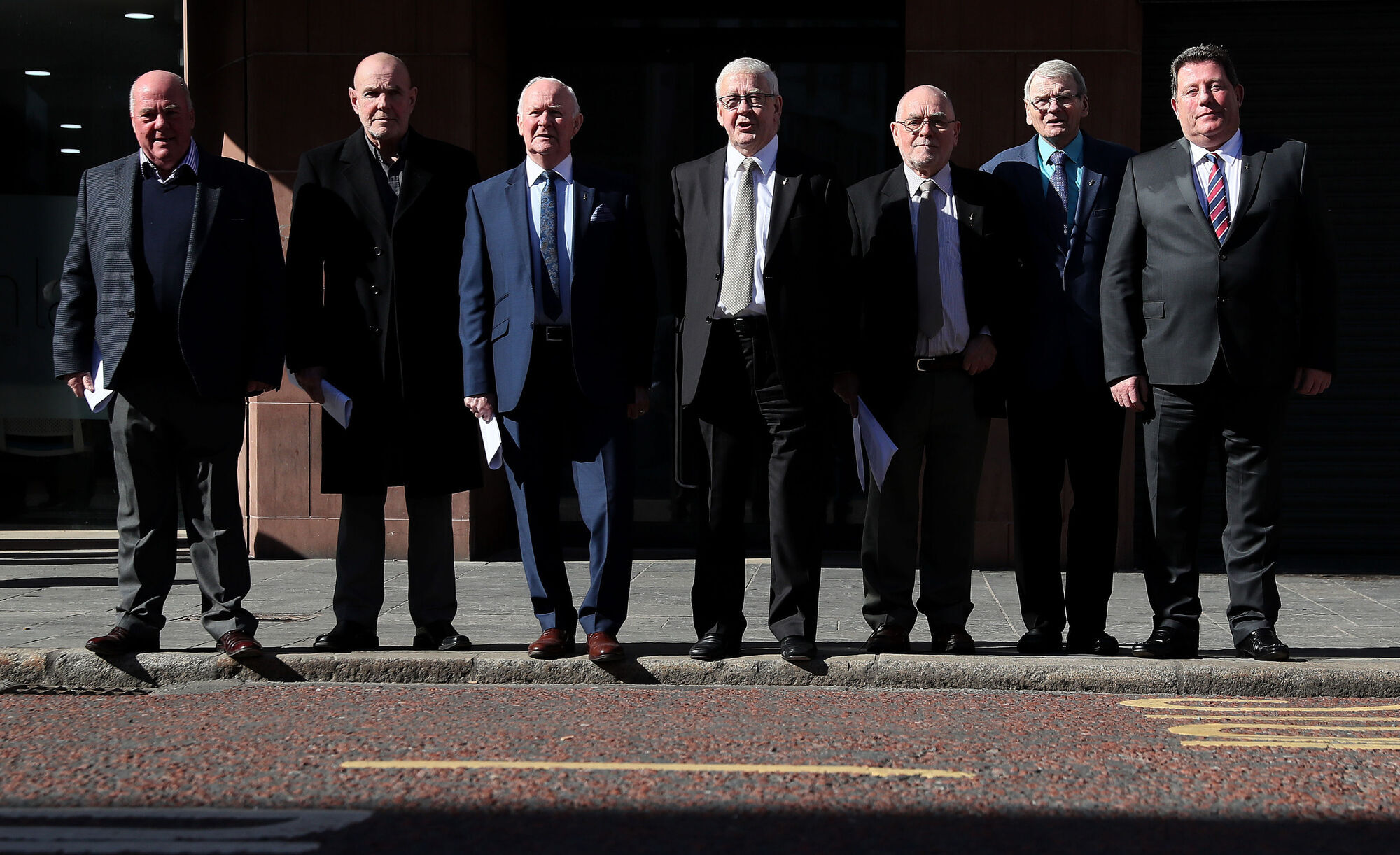
Seven of the 14 'Hooded Men', who were interned in Northern Ireland in 1971: From left. Jim Auld, Patrick McNally, Liam Shannon, Francie McGuigan, Davy Rodgers, Brian Turley and Joe Clarke.

Sean McKenna was taken into custody at 4am on August 9, 1971. That was the morning that internment was introduced to the North by the local administration. The British government supported the move in response to an upsurge in violence, including shootings and indiscriminate bombings, principally carried out by the IRA.
In one of the major blunders that typified the armed forces actions in the North through the Troubles, the lists of suspects to be lifted was out-of-date, inaccurate and put together in a cack-handed manner.
Sean McKenna’s name was on the list. He was a school caretaker in Newry, Co Down, and had been involved in the civil rights movement. His 17-year-old son Sean was also lifted. The name Sean McKenna was on the list, but it was unclear whether father or son was the target so they just took both of them.
Baha Mousa was arrested on September 17, 2003, at the hotel where he worked in Basra, Iraq. He, like the McKennas 30 years earlier, was considered an enemy of the British state. The war in Iraq was in full flow and Mousa was taken to a detention centre in the city.
Once there, the 26-year-old was subjected to the “five techniques” of torture that have been used by state and other agencies. These are prolonged wall-standing, hooding, subjection to noise, deprivation of sleep, and deprivation of food and drink.
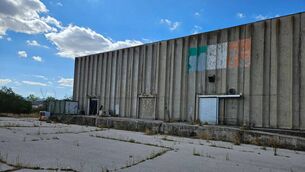
Thirty years earlier, Sean McKenna Snr and 13 other men were subjected to the same techniques in a little-used centre in Ballykelly, Co Derry. The 14 came to be known as the Hooded Men.
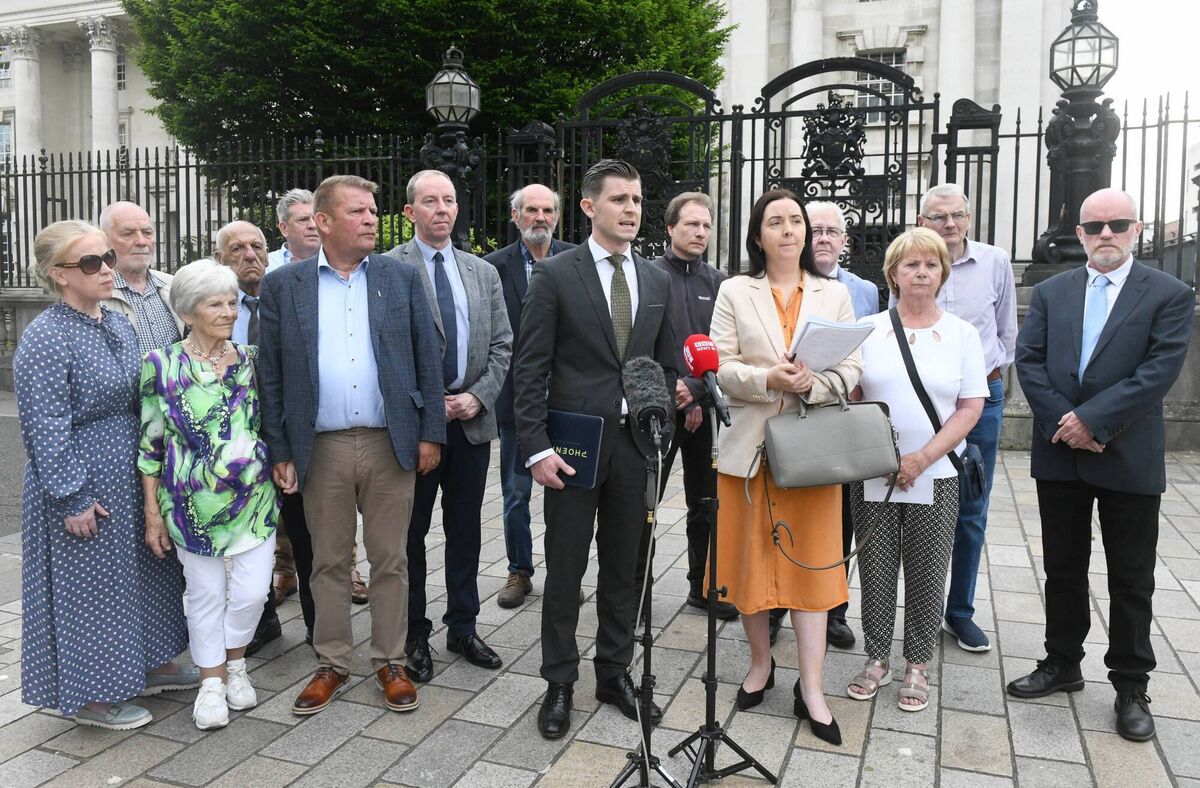
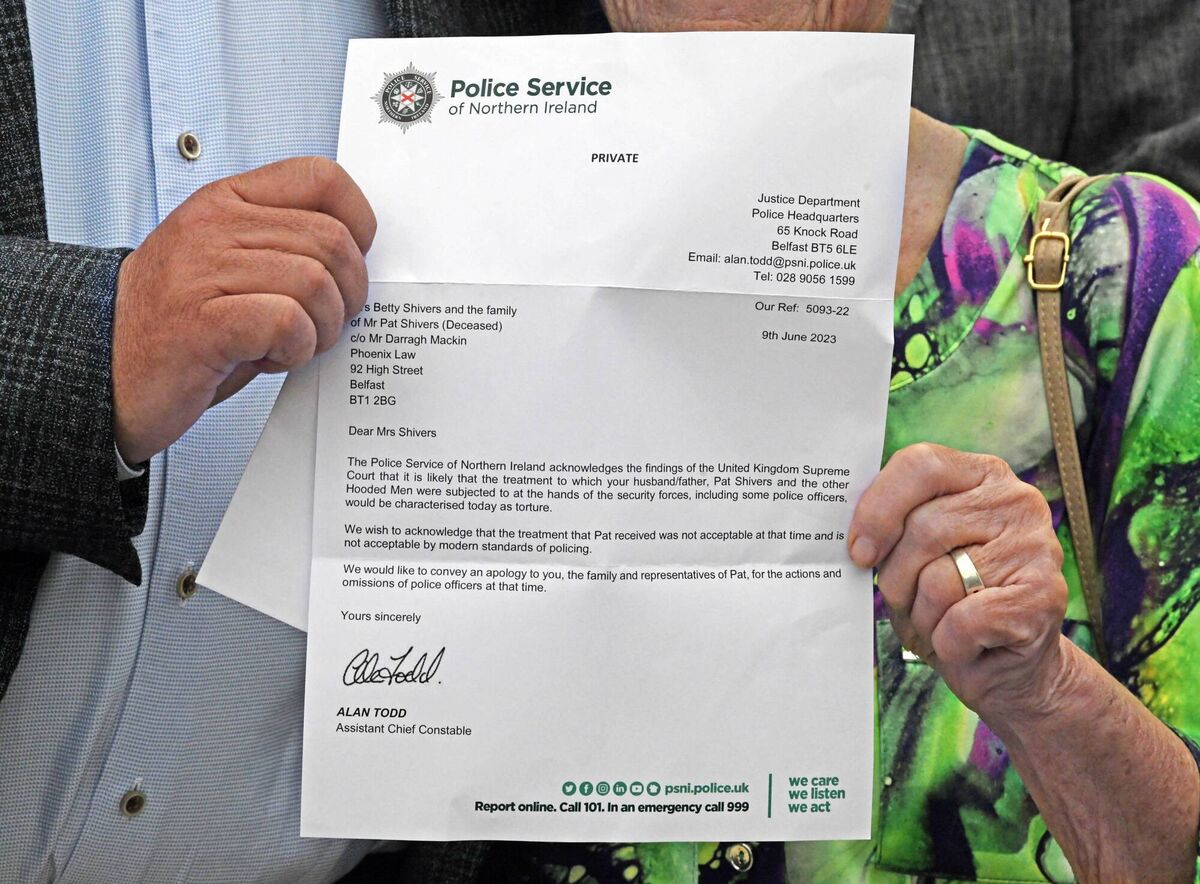
This week, the Hooded Men received an apology from the Police Service of Northern Ireland (PSNI), days after
one of their number, Joe Clarke, died at the age of 71. The previous week, by arrangement, Clarke had received an apology literally on his death bed.
“We would like to convey an apology to you for the actions and omissions of police officers at that time,” legal representatives for the men were told by PSNI senior officers. The police force also acknowledged a Supreme Court finding that by today’s standards, the men’s treatment at that time would likely be characterised as torture.
There is not, as of yet, any apology from the British government despite the emergence of documents years later that demonstrated that the use of torture in the North had been sanctioned at a political level.
It is not known why these 14 specifically were conveyed to the secret army base in Ballykelly, but everything about how internment was handled demonstrated that once normal checks and balances were suspended, the power of the state can do untold damage.
Over seven days, the Hooded Men were repeatedly subjected to the five techniques, which left lasting physical and psychological damage. Another technique that was used was to put them in a helicopter, still hooded, and tell them they were about to be thrown to their deaths. They were thrown out, but the helicopter was only a few feet above the ground.
It would be some time before the full extent of what the men were subjected to came to public attention. In 1974, two priests who were prominent in pursuing civil and human rights, Denis Faul and Raymond Murray, published an account of what the men had been put through.
In his version, Sean McKenna related how he was physically attacked, tortured and interrogated.
His daughter Mary told journalist Susan McKay in 2015 that his father was no longer able to do his job, so the family was evicted from the caretaker’s home where they lived.
“He had to go into a mental hospital and then he had to go and live on his own in a cottage in Co Louth. He could not stick noise. Mum had to hold it together for the family."
After a series of heart attacks, he died in June 1975.
Three years later, the European Court of Justice determined that the methods used by in Ballykelly did not constitute torture. That, in effect, gave cover to the British government — and other Western powers — to use such techniques whenever they saw fit to do so. Fast forward to Basra, circa 2003.
Baha Mousa died as result, in part at least, of the torture to which he was subjected. A post-mortem found there were 93 injuries on his body. Seven soldiers were put on trial for war crimes as a result of Mr Mousa’s death. During the trial, the prosecuting counsel noted the case was not about soldiers in the heat of the moment engaging in questionable conduct in a hostile environment.
“We are dealing with systematic abuse against prisoners involving unacceptable violence against persons who were detained in custody hooded and cuffed and wholly unable to protect themselves over a very long period of time,” the counsel, Julian Bevan, said.
One soldier, Corporal Donald Payne, was jailed for a year and thrown out of the army after admitting his role. Passing sentence, the judge in the case noted the lack of supervision that Payne had received and expressed significant concern that the techniques used — including forcing prisoners to maintain painful physical positions while hooded and handcuffed — “were standard operating procedures” for the soldiers. The judge said there had been a “serious failing in the chain of command all the way up to brigade and beyond”.
No soldier or policeman was ever prosecuted over the treatment of the hooded men in Ballykelly. Instead, a European court had given the thumbs-up to the five techniques, ensuring history would be repeated, and so it turned out in Basra in 2003.
In 2021, after prolonged legal battles by and on behalf of the Hooded Men, the British Supreme Court ruled that the same methods carried out today “would be characterised as torture”. It took half a century to get to that point.
As has been seen in other jurisdictions, including the Republic of Ireland, the state can at times fall well below standards it is obliged to uphold, within a legal framework which it must comply with as a basic tenet of democracy.
What compounds any such outrage is the reluctance, obvious in the grinding slow place of resolution, of governments and their agencies to admit they were wrong, apologise and resolve to do better.
Uphold the law, maintaining proper standards, is what is supposed to separate democratic states from forces which seek to violently impose their will, whether that be the Provisional IRA or Islamic terrorists groups.
On the occasions above, the British state lost the moral authority that derives from democratic institutions.
Following Joe Clarke’s death, just eight of the 14 Hooded Men are still alive.

CONNECT WITH US TODAY



Be the first to know the latest news and updates