Free accommodation and sunshine but UAE keeps Irish teachers on their toes
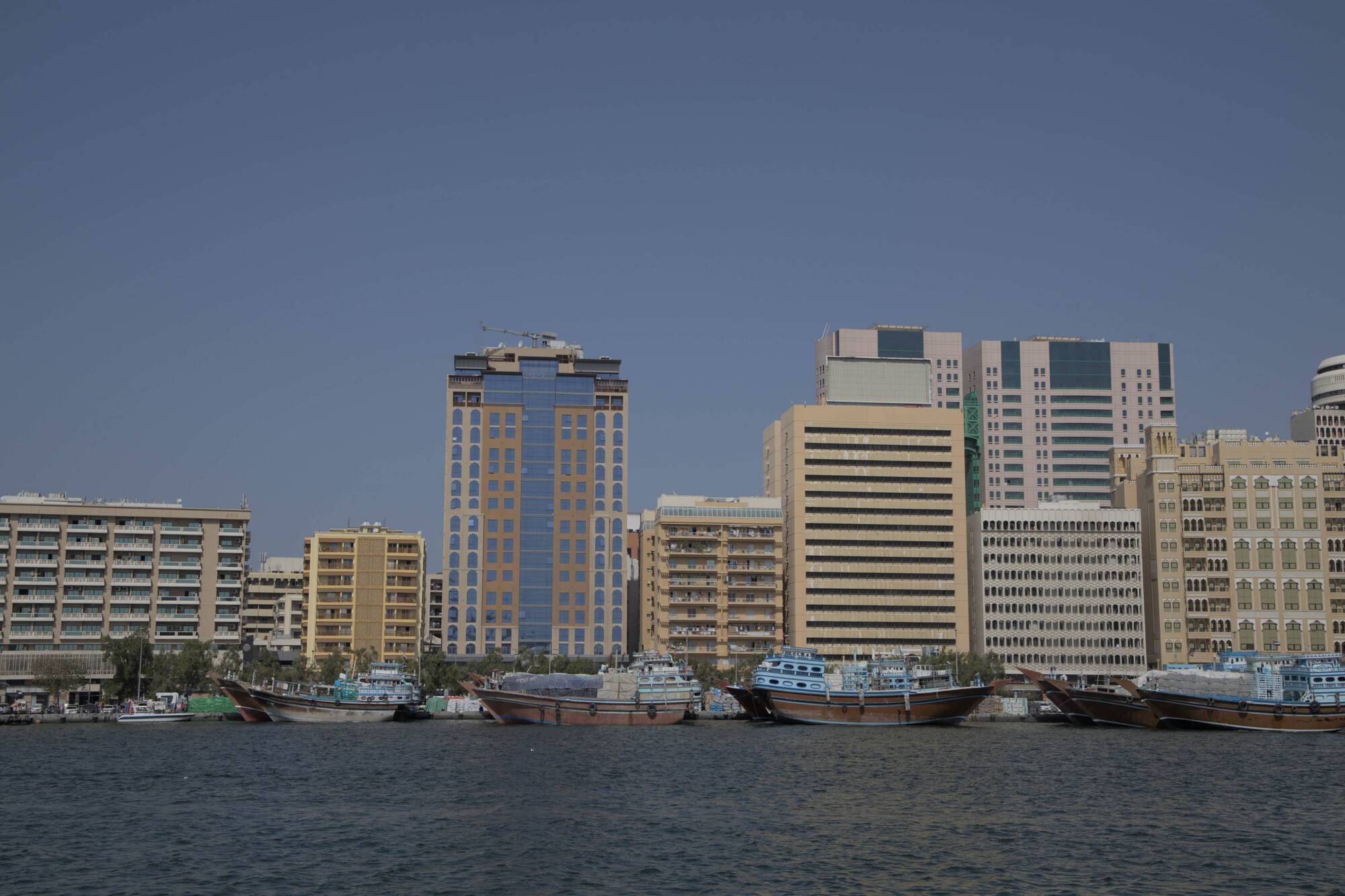
There are around 10,000 Irish citizens working across the United Arab Emirates. Almost a third are teachers enticed by tax-free salaries, free accommodation, and the promise of an Instagram-friendly lifestyle, writes Hannah McCarthy
Free accommodation and sunshine but UAE keeps Irish teachers on their toes

Fees for schools in the UAE can cost up to €16,500 per year and parents often have high expectations of the schools.

“You're on your toes.” Jarlath Madine speaks to the Irish Examiner in Dubai at the Irish Village, a sprawling complex with bars and sports grounds built almost 30 years ago when Irish people began moving in high numbers to the Gulf for work.

There’s a signpost near the entranceway signalling the way to Kerry, Dublin, New York, and Jumeirah. “There’s always a big crowd here during match days,” says Jarlath who often spends part of the weekend coaching at his local GAA club.

Today, there are an estimated 10,000 Irish citizens working across the United Arab Emirates. Almost a third of them are teachers enticed by tax-free salaries, free accommodation, and the promise of an Instagram-friendly lifestyle, while many schools in Ireland, particularly in Dublin, are now struggling to fill positions and are relying on unqualified staff.

Jarlath is currently a principal at St. Mary Private High School in Ras al Khaimah but began teaching overseas in Bangkok in the 1980s. “I’ve always liked to travel, and I wanted to be a teacher and then suddenly the two came together.” 

After qualifying as a teacher in Dublin, Aoife Yeates was encouraged to move to the UAE in 2021 by a friend living in Dubai. “I thought I’d go abroad and just try something different, especially with the money situation back home,” she says. “Everything in Dublin was so expensive.”

With no jobs on offer in Ireland or the UK during the financial crisis, Ciara Daly moved to the UAE 12 years ago. Ciara, who has been working as a primary school teacher in a government school in Abu Dhabi, is now returning to her native Cavan later this year.

A demanding school environment 

Fees for schools in the UAE can cost up to €16,500 per year and parents often have high expectations of the schools they send their children to. “You definitely work hard here,” says Ciara.

While teaching in Ireland, Aoife prepared fortnightly plans for her classes, whereas in the UAE she is required to write daily lesson plans for each subject. There is also a more intensive inspection system in place in the UAE, in contrast to Ireland where teachers are typically inspected twice in their first year.

“You're on your toes a bit,” says Aoife, who currently works for a for-profit primary school, “because you're expecting someone to just walk into your classroom, sit down at the back and grade you.” 

“There are lots of reports, parent meetings, workshops, coffee mornings, and events, just to say to the parents that you are actually getting a lot for your money here,” says Jarlath. “Keeping really good communication open is a big thing.” 

Jarlath’s school was opened by the Catholic Church in 2019 and caters for ex-pat families on lower incomes in the UAE, many coming from Asian regions with Catholic populations such as South India and the Philippines.

He has worked in schools with higher fees but doesn’t see much difference between those schools and his current one. “Kids are kids,” says Jarlath, “and the low fees are big money for parents on low salaries, so they still take it very seriously.” 

Jarlath Madine: “I’ve always liked to travel, and I wanted to be a teacher and then suddenly the two came together.”

Assessments are held frequently, and parent-teacher meetings are often once every term. “Parents have far more access and can demand a lot more,” says Aoife.

Jarlath thinks schools in Ireland and the UK could do more of the type of parental engagement seen in the UAE. “It actually makes a huge difference to the education and the lives of parents and kids.” 

Teachers also report a higher rate of staff turnover in schools in the UAE and a more variable curriculum. “There are new teachers every single year so there's no cemented practice so that’s quite hard,” says Aoife. 

“In Ireland, there's normally a bank of teachers who have been working in that school for a really long time, and there’s a bank of resources for the Irish curriculum.” 

Irish teachers also have to be mindful of the UAE’s ban on same-sex relationships and a new code of conduct introduced last year directed that teachers should “refrain . . . from discussing gender identity, homosexuality or any other behaviour deemed unacceptable to UAE society.” 

Schools are described as typically operating a “don’t ask don’t tell” policy towards LGBTQ teachers and pupils – “but you never know what pupils tell their parents,” says one teacher.

Teachers lured to the UAE by attractive benefits 

“Here you work harder but you get a package with an apartment, flights home and a bonus at the end of your contract,” says Aoife.

Salaries for Western teachers in the UAE typically range from €3,000 to €3,800 per month and are tax-free. There are additional increases available for teachers who take on management roles within the school, as well as medical insurance.

Unlike in Ireland where there is a fixed pay scale, teachers negotiate their salaries in the UAE and schools typically offer different salaries depending on which country the teachers come from. For example, teachers qualified in India would typically be paid less than teachers qualified in Ireland.

A signpost at the entrance to The Irish Village in Dubai.

“Nobody likes it,” says one teacher, “but there’s typically a clause in your contract that if you discuss your salary, it's grounds for immediate dismissal.” 

Most schools in the UAE offer teachers free accommodation or an accommodation allowance. “In Dublin, I would have probably been in a shared house with a couple of people in Drumcondra that I didn’t know and with no hope of saving,” Aoife says.

Teachers in the UAE earn a higher net salary primarily due to not paying tax and as a result, don’t receive a pension. “You have to take responsibility and think about these things,” says Jarlath who says he encourages younger teachers to think about setting up investment accounts while they’re overseas.

Ciara says that the lack of a pension is part of the reasons she’s moving back to Ireland. “I’ll be 35 this year and I need to think about the future,” she says. “It’s tax-free here but it’s also expensive.” 

“In practice, this is a difficult country to save money in,” says Jarlath. “It’s €12 for a beer and a lot of the teachers will go out Friday, Saturday, and Sunday night — so the money. goes and they like to travel while they’re here.” 

RAK Ropairí GAA Club in Abu Dhabi which has a thriving GAA scene.

Some teachers get into debt by taking out loans or using credit cards while they’re working in the UAE. “They'll go out and buy clothes or buy airline tickets or go to hotels and brunches,” says Jarlath. 

“In the past, certain schools have been blacklisted by banks in the UAE because of the number of foreign teachers who took out loans and left the country without paying them back. If you’ve been blacklisted, you’re never going to get back into the country,” says Ciara.

The economic fallout from the covid pandemic also forced many schools to freeze or reduce fees and teaching jobs have reportedly become harder to find over the last three years. “I get emails from teachers every day looking for jobs,” says Ciara.

The Dubai lifestyle 

The lifestyle on offer in the UAE is a key attraction for many Irish teachers. Aoife enjoys being able to jet ski at weekends, travel around the Emirates and do brunches at the weekend while Jarlath says he’s able to go paddleboarding every day.

“The image of Dubai on Instagram is very different to what it’s actually like,” says Aoife. “A lot of people think it's pool parties and stuff like that but after school I can go for a hike or a cycle by the beach.” 

There is also a thriving GAA scene in the UAE. “GAA is a big draw for teachers because they know what they're going to get when they come here,” says Jarlath who coaches at RAK Ropairí GAA Club.

Resolving Ireland's teacher shortage 

In the Dáil, Minister for Education Norma Foley has said: “We have a severe crisis in teacher supply at present in both primary and post-primary schools, primarily caused by the cost and availability of housing throughout the country, especially in Dublin and other urban centres. It is greatly exacerbated by the current cost-of-living crisis.” 

As part of an effort to explore ways to boost teacher numbers, the Department of Education examined an end to career breaks for teachers, who are currently allowed to take an unpaid career break for up to five years at any one time and up to a maximum of 10 years during their career.

Polling conducted by the Department of Foreign Affairs in 2019 estimated that a fifth of Irish teachers in the UAE were on a career break. In contrast, UK teachers are required to resign from their jobs. “There are plenty of teaching jobs in the UK so there’s never really a shortage,” says Jarlath.

The Irish system of career breaks gives teachers more security when they leave for the UAE. “They know they’ve got a job and can come back to it,” says Jarlath.

Michael Gillespie, the General Secretary of the Teachers Union of Ireland has said that suspending career breaks would not boost the numbers of teachers in Ireland and instead would reduce the attractiveness of teaching jobs.

“I think there's always going to be people who are going to go away regardless,” says Jarlath, “but there are certainly people who if they could actually afford to live in Dublin and get a deposit for a house they would stay — that needs to be the big sea change.” 

“I love Ireland and I definitely would have lived there,” says Aoife, “but I actually can't afford it at the moment, but I would return if the wages were higher or if house prices were lower. I have a lot of friends who qualified in Dublin, and they moved out to Clare, Galway and Tipperary but can't get permanent jobs. 

I have a friend who is qualified for three years now and she's still doing substitute work in Clare because she can't get a contract. Whereas in Dublin she will be absolutely snapped up, but she can't afford to live there. 

Aoife thinks a salary uplift for teachers working in Dublin similar to what exists in the UK for teachers in London would be fair. In the UK, new teachers in central London earn £6,500 more than in the rest of the country.

“There are a lot of teachers who would go and work in Dublin, but they can't afford to rent there, so if the pay was higher, it would definitely encourage them to work there.” 

New Irish teachers earn €41,000 and Minister Foley has said that the salary available for teachers across Ireland is “on a par, if not greater in some instances” with what is provided to teachers in London.

Teachers returning to Ireland have also reported poor communication and delays with having their qualifications and overseas work experience recognised by the Teaching Council.

A match at RAK Ropairí GAA Club in Abu Dhabi. “GAA is a big draw for teachers because they know what they're going to get when they come here,” says Jarlath who coaches at RAK Ropairí GAA Club.

“There’s a lot of paperwork involved,” says Ciara who is planning to work as a secondary school teacher in Ireland rather than a primary school teacher, as she qualified in Wales and doesn’t have a qualification in the Irish language. “I just don’t know if I could go back to learning Irish at this age,” she says.

“I’ve also applied for postgraduate courses but had my applications rejected because I’m not resident in Ireland yet,” says Ciara. “So, I have to go back and wait around until the following year to start those courses.” 

After spending time working in a school in Ireland last Christmas, Ciara is also worried about how old-fashioned Irish schools are compared with the UAE – “there are still schools in Ireland that don’t have email addresses.”

More in this section

Lunchtime News

Newsletter

Keep up with stories of the day with our lunchtime news wrap and important breaking news alerts.

Cookie Policy Privacy Policy Brand Safety FAQ Help Contact Us Terms and Conditions

© Examiner Echo Group Limited