Capacity one of the main issues for schools accommodating Ukrainian students
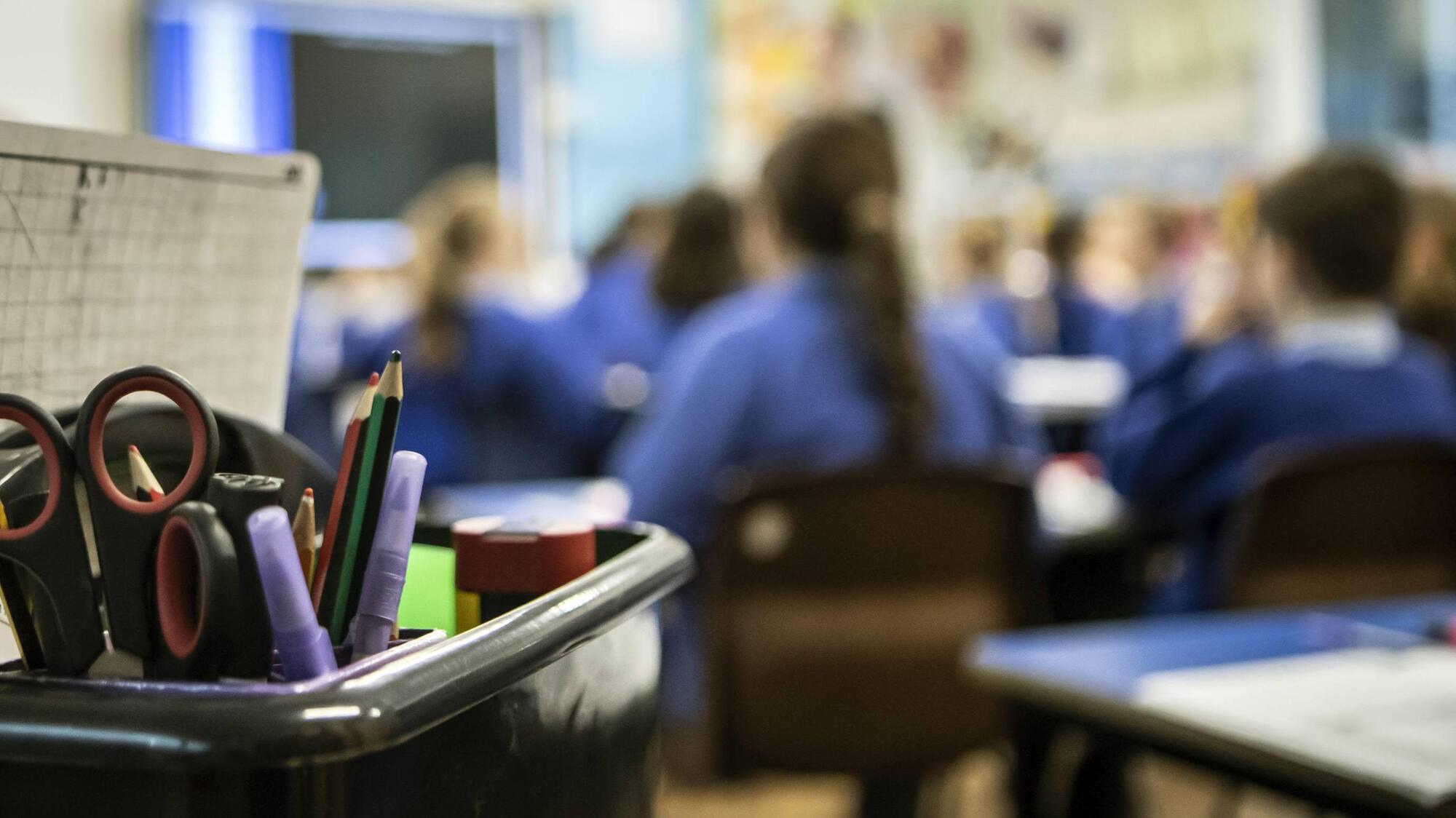
Some 15,000 Ukrainian students have enrolled here since the start of the war.
Capacity issues, emerging trauma, and upheaval as accommodation changes at the last minute; new documents reveal just some of the challenges faced by schools at the front of Ireland’s educational response to the Ukrainian refugee crisis.
A little over a year into the war, almost 15,000 Ukrainian students have now enrolled here. It’s thanks to a heroic effort and one that comes off the back of the exhausting emergency response to the covid-19 pandemic.
While the integration of thousands of students into the education system here has run better than what might have been initially anticipated, it hasn’t been without its hitches.
The Department of Education’s response to supporting the needs of Ukrainian students has been led locally by Regional Education and Language Teams (REALTs), which are hosted by the 16 Education and Training Boards (ETBs).
The REALTs act as a point of contact with the Department of Education, assisting families to secure school places while also supporting schools in their area as different needs emerge on the ground.
Documents released to the under Freedom of Information offer a snapshot of the hands-on issues experienced by schools and reported to the teams in Cork, Kerry, Limerick, Clare, and Dublin from September to the end of February.
A spokesman for the Department of Education said the documents “represent a snapshot in time”.
Issues raised by school principals have been addressed and procedures put in place where possible to ensure that situations were not repeated, he added.
School place capacity issues across each of the five counties are evident from the documents.
In Kerry, by mid-February, schools reported no post-primary capacity in Killarney, Tralee, and Caherciveen, and no primary school spaces in Ballyferriter, Ventry, Derryquay, Killorglin town, Ballybunion, Kenmare, Dingle, Killarney or Caherciveen, “going out further and further”.
It notes that it is now “harder to get children into schools as most are at full capacity” and that there will be “big issues” if a new bus route is requested as this has to be sanctioned and can take a few weeks.
In February, a REALT in Dublin noted that the opening of new IPAS accommodation centres in various parts of the city is “further increasing the demand for school places”.
Earlier this year, it was also noted that parents, project workers and outside agencies in Dublin were “reporting frustration in terms of being turned away from schools” in particular post-primary schools, and “being told the school is full without further explanation or communication”.
In Cork, it was noted that capacity in post-primary schools, as well as school transport, are “big issues”.
The REALT for Limerick and Clare noted that sourcing school places was “becoming difficult, particularly in pinch-point areas".
Post-primary places for first-year students from this September are “a concern” while there is also a shortage of places in special schools, the documents add.
A number of REALTs report to the Department of Education about the psychological trauma experienced by Ukrainian students.
"School principals are starting to contact more now about issues which are arising in schools, in post-primary around behaviour, issues of communication with parents, online schooling," one note reads.
"In primary, issues arising include possible undiagnosed additional needs, some behaviour issues, staffing recruitment issues, parents of children disengaged and in need of support themselves."
The documents also reveal the upset and upheaval caused by moving families from different accommodation centres at the last minute.
One principal wrote directly to the Department of Education when they learned that six of their families were to be moved.
“We are very concerned about the effect on these seven students if the change in their accommodation arrangements necessitates a change of school.
"Such a move could very well be another source of trauma for these teenagers and we feel that it should be a priority that these families are able to stay within reach of our school."
Another REALT asked if representations could be made to the Department of Children to try and ensure families re-accommodated “as close to their original accommodation as possible to avoid having to commence everything over again and further disruption and trauma".
It noted it had “ongoing contact with some of the families who have deep concerns that the children are being traumatised again when it could be avoided.”
A spokesman for the Department of Education said its officials and officials from the Department of Children, Equality, Disability, Integration continue to liaise closely “to ensure as much as possible the alignment of accommodation placement of families with known school capacity.”
A number of supports and resources are available to schools including a helpline for school principals, a collation of resources, and the circulation to all schools of NEPS resources to support all children during a time of conflict, he added.
More than 960 English as an additional language (EAL) posts, 187 additional special education teachers and more than 233 additional special needs assistants have also been provided to date, he added.
Schools continue to be supported through the REALTs to work collaboratively to use each school’s existing capacity in the most flexible way possible.
“While pressures still remain, this department, the REALT teams along with other stakeholders are endeavouring to provide support to the school communities and children, young people and their families arriving from Ukraine into our schools," the department said.


CONNECT WITH US TODAY



Be the first to know the latest news and updates