Three years after covid closed the country, do we really need an inquiry?
Sunday, March 12, marks the third anniversary of when Ireland went into lockdown, as the covid pandemic swept the globe. Now, an inquiry into how the State handled the pandemic is promised but what, if anything, is it likely to achieve?
Three years after covid closed the country, do we really need an inquiry?

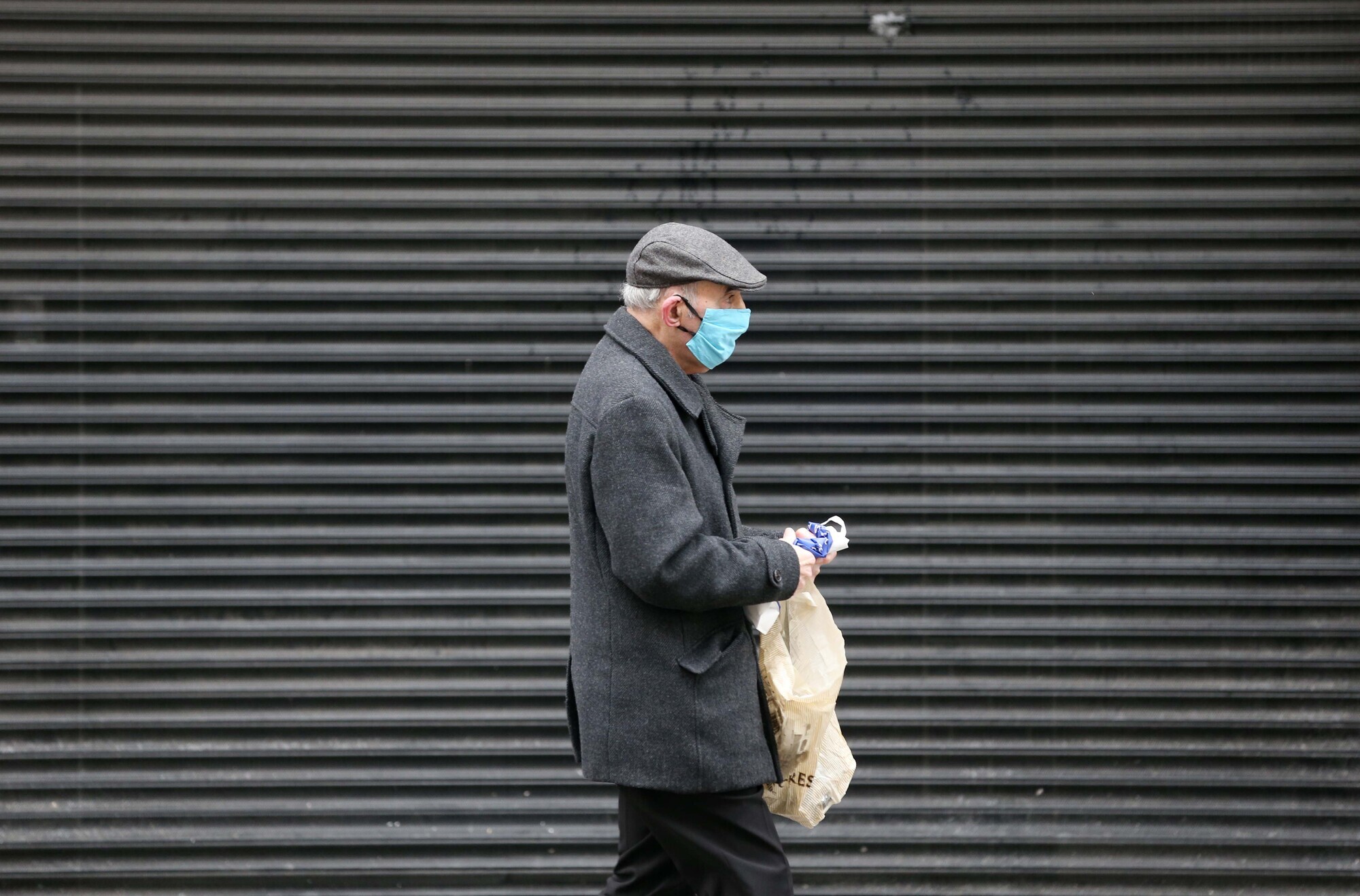
Some older people are still reluctant to engage socially. File photo: Sasko Lazarov / RollingNews.ie

On March 12, 2020, Taoiseach Leo Varadkar uttered those now infamous words to the nation: 'I need to speak to you about coronavirus'. 

The country then went into full lockdown mode, with schools, colleges, cultural institutions closed, people asked to work remotely, and sporting and social gatherings cancelled. 

Since then, more than 8,700 people lost their lives because of the virus, older people and the most vulnerable endured lengthy periods of social isolation, and frontline workers were pushed to breaking point.

Dr Mary Favier: “It’s about a disproportionate impact the Covid pandemic had on disadvantaged communities, it’s been a much slower recovery in disadvantaged communities.” Picture: Larry Cummins

Last week, Leo Varadkar announced that an inquiry into the State’s handling of the covid pandemic will be up and running by June, saying “it is important that we find out what we got right and what we got wrong.” The Irish Examiner asked some of those affected by the pandemic what they hope this inquiry will achieve.

GPs

Many people in disadvantaged communities are still coming through the pandemic’s effects, said Dr Mary Favier who worked in a Cork city GP practice throughout and was also a member of the National Public Health Emergency Team.

“It’s about a disproportionate impact the Covid pandemic had on disadvantaged communities, it’s been a much slower recovery in disadvantaged communities,” she said.

“So many of those patients stayed away, and really were trying to do the right thing and be helpful, and not go to the doctor.” She added: “We are seeing an increasing number of late diagnoses of cancer, we are seeing poorly-managed conditions, we are seeing patients where we continue to have to cajole them back in.” 

Some older people are still reluctant to engage socially.

Dr Mary Favier: “We are seeing more frailty, more loss of muscle strength and we are really needing to cajole them to go out and take exercise, to go shopping, to even go back to going to Mass.” Picture: Larry Cummins

“We are seeing more frailty, more loss of muscle strength and we are really needing to cajole them to go out and take exercise, to go shopping, to even go back to going to Mass,” she said.

Fellow NPHET member Professor Martin Cormican has called for a review rather than an inquiry and Dr Favier’s thoughts are similar. “I think there should be a review, an evaluation, an audit, not an inquiry, of the country's response to Covid-19,” she said.

“There are always things which can be done differently or better. Although sometimes you conclude actually we couldn’t have done it much differently or better; it was what it was and the mistakes or the bad outcomes would still have happened.” 

However, she feels it is critical we learn and not just move on.

“The powers that be need to accept that it is best practice to do an after-event review and thus drive it, in terms of how they describe it and frame it and not be afraid of the process or the results,” she urged.

“We will learn most if we trust that the vast majority did the best they could in challenging circumstances, including the politicians. I think it is easy to forget how stressful it was.” 

Nursing homes

Among the 8,708 deaths in Ireland up to last week some 31% or almost one in three are linked to nursing homes. While some care homes saw low case numbers, others were overwhelmed.

In early 2020, this reporter spoke to a Limerick nursing home owner who was making hand sanitiser, while a Tipperary manager fundraised for PPE from Taiwan.

Nursing Homes Ireland CEO, Tadhg Daly, said the Government's priority should be implementing recommendations by the Nursing Homes Expert Panel (2021) much faster than is currently happening.

Among the 8,708 deaths in Ireland up to last week some 31% or almost one in three are linked to nursing homes. File photo: RollingNews.ie

All nursing homes should be more closely integrated with HSE services, he said, pointing out older people's care is divided between hospitals, community, public, private and voluntary.

“What residents want is that they can they get timely access and is it of a high standard - irrespective of who owns the building. That would be the key learning for me,” he said.

“We did a lot well as a country, but there were other elements that absolutely could have been done better. My view is we need to look at Covid in the round, an inquiry has to look at it in its totality.”

Advocacy group Care Champions support residents in the face of devastating isolation, and Majella Beatty said any inquiry must be human-rights based.

“It needs to have the residents and the families at the centre of it, they have to have a voice,” she said, adding staff must also be heard.

She said: “There needs to be some level of accountability. I know everyone is saying we can’t have an inquiry that apportions blame, but people have to be accountable.” 

Advocacy group Care Champions would like to know why there was so much resistance to a nominated care partner system to allow for visiting at nursing homes. File photo: Julien Behal

She would like to know why there was so much resistance to a nominated care partner system to allow for visiting, and why some homes had such tragic outcomes.

“The inquiry needs to lead to reform,” she said.

Young People

Isolation also badly affected young people, says Union of Students in Ireland president Beth O’ Reilly. 

“It is clear to us that students are struggling”, they said. “Coming back after covid, we are seeing there is a need for specialised services, for on-campus psychiatrists and a need for mental health nurses. We have seen there is more demand for those supports.” 

Uncertainty around the Leaving Cert and college exam dates, on top of years of isolated online-only learning is making the transition to in-person education “stressful”, they said.

Union of Students in Ireland, president Beth O’ Reilly, said: “It is clear to us that students are struggling.” File photo: Domnick Walsh

“We need to recognise that these knock-on effects of covid on secondary school students are going to be felt in our college experience for a considerable amount of time,” they said.

USI would like to be part of any inquiry.

“We watched those press conferences (Nphet) every day and every cohort was being discussed except university students. There was a very long time where it just felt we were a pretty forgotten cohort,” they said.

Among their own unusual memories is being driven to a covid-19 test by soldiers from Collins Barracks in Cork when the Defence Forces assisted the HSE.

Schools for disabled children also closed with the long-term effects not yet understood, another issue Prof. Cormican wants discussed.

Farmers

For farmers the Teagasc National Farm Survey in 2021 found only 52% of sheep farmers had contact with an outside person every day - down from 73% pre-pandemic - and 50% of dairy and cattle farmers.

Dr Emma Dillon said: “We’ve seen stress levels increase for farmers, some of that is linked to labour and the lack of labour so the hours worked by farmers has gone up.” 

 One unusual memory for a contributor is being driven to a covid-19 test by soldiers when the Defence Forces assisted the HSE. File photo: Sasko Lazarov/RollingNews.ie
One unusual memory for a contributor is being driven to a covid-19 test by soldiers when the Defence Forces assisted the HSE. File photo: Sasko Lazarov/RollingNews.ie

However, she said it is hard to generalise about isolation with some farmers seeing adult children returning while others farmed alone.

“I don’t know if farmers as a group would be included in an inquiry. They were an essential service and had to continue producing food, the milk had to go do the creamery,” she said. “I’m not sure things could have been done hugely different.” 

The Experts

At University College Cork, Professor of Chemistry John Wenger watched with frustration the global debate around how covid-19 is transmitted.

“What we’ve learned is that the World Health Organisation and other health agencies, the ECDC in Europe, had it wrong when they said covid was not an airborne virus,” the chair of the government’s Expert Group on Ventilation said.

“What (nursing home) residents want is that they can they get timely access and is it of a high standard - irrespective of who owns the building.” File photo: Sasko Lazarov / RollingNews.ie

“This meant we were using the wrong measures to protect ourselves against the virus initially.” The WHO recognised it as airborne in 2021 which, while frustrating for many, was significantly faster than general acceptance of TB as airborne last century.

Prof. Wenger argues measures like masks or ventilation could have been more central early on, saying: “If that had been the case, many lives would have been saved.” 

He is hopeful an inquiry can look at all of this, and changed attitudes towards clean air will follow.

“The whole point for me is that cleaning the air, filtering the air, has a wide range of health benefits,” he said.

“Before the next pandemic, we need a clean air revolution – providing clean air to all indoor places will help us combat airborne pathogens like covid, as well as the usual respiratory infections.” 

Long covid sufferers

An inquiry is also welcomed by long covid patients. However, some feel it is too soon, said lead representative in Ireland for Long Covid Kids Charity and co-founder of Long Covid Advocacy Ireland, Sarah O’ Connell.

“From the beginning, we felt there was a delay in recognising long covid, and it seemed to be that the Government and the HSE were not reacting as quickly as might have been needed based on the data coming through internationally,” she said.

“We need to recognise that these knock-on effects of covid on secondary school students are going to be felt in our college experience for a considerable amount of time.” File photo: Domnick Walsh

She is hopeful patients’ voices will be heard in any inquiry process.

“There was a running narrative for quite some time, that children can’t transmit covid, that covid was not a risk for children. By not mentioning long covid in children there was this continuing messaging that Covid was no big thing for children,” she said.

x

More in this section

Lunchtime News

Newsletter

Keep up with stories of the day with our lunchtime news wrap and important breaking news alerts.

Cookie Policy Privacy Policy Brand Safety FAQ Help Contact Us Terms and Conditions

© Examiner Echo Group Limited