Parole Board CEO: 'What keeps me from my sleep is not being able to contact a victim'
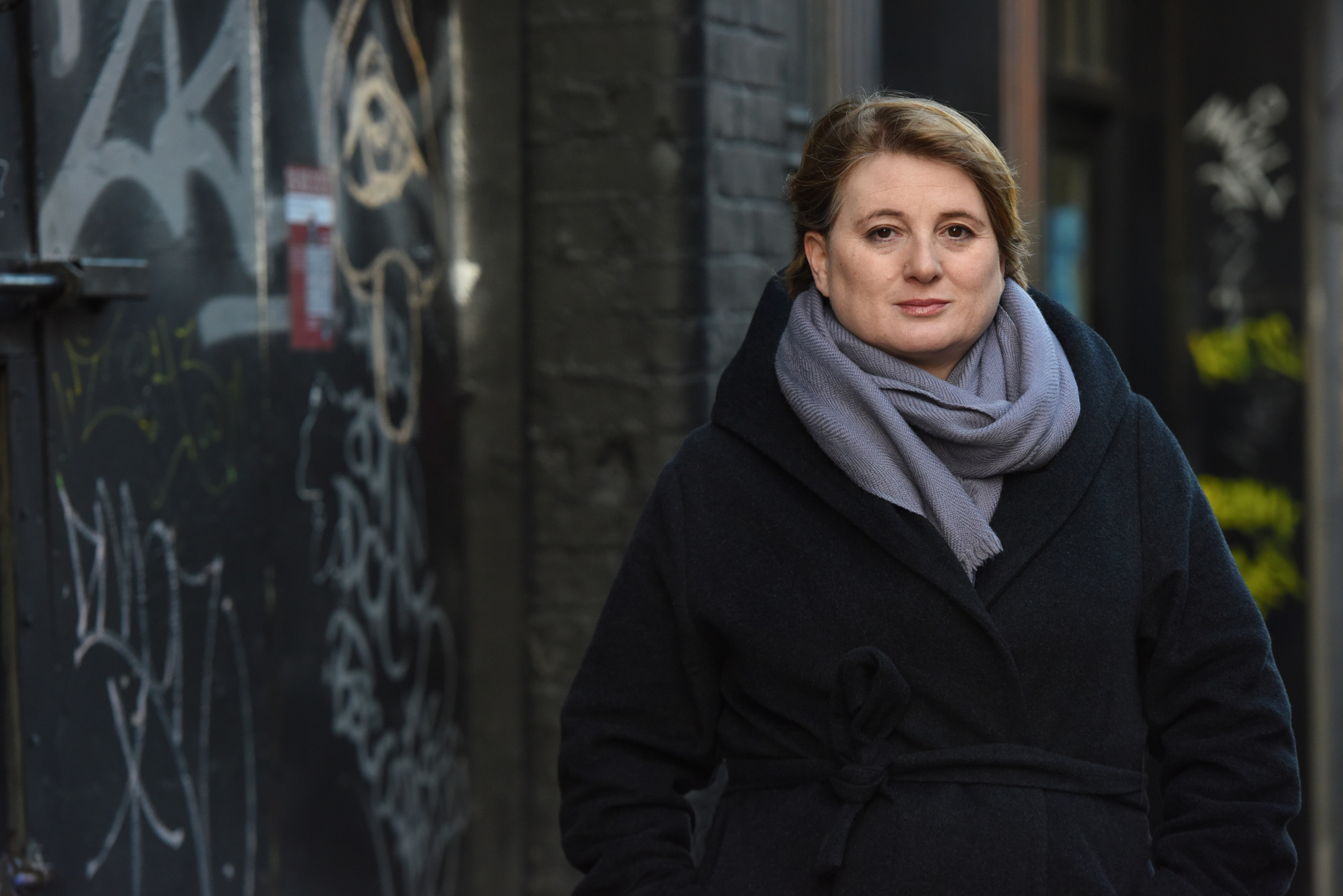
'I want to see a parole system that protects communities, is fair to applicants and protects victims,' says Ciairín de Buis, CEO of the Parole Board. Picture: Moya Nolan
The CEO of the new Parole Board has appealed for victims of serious crime to get in touch if they wish to influence a life-sentence prisoner’s likelihood of being granted parole.
It is the first time in Irish history that the Parole Board has reached out and invited victims and their families to directly influence its decisions and to have a voice in the parole process.
Kerry woman and University College Cork graduate Ciairín de Buis, the inaugural Chief Executive Officer of the new Parole Board, said that not being able to contact victims is one of her biggest concerns.
“We’re asking victims to engage with us, if they would like to,” Ms de Búis said.
“For the first time victims have a right to make a submission [to the Parole Board]. Previously they didn’t.
“Victims occasionally did make submissions but by and large most parole recommendations from the previous interim board would not have had the benefit of a victim’s submission.” The Parole Board was provided for in the Parole Act 2019 and has been in operation for about one year of a two year transition period.
Approximately 300 victims had engaged with the service by the end of last year, representing some 100 serious cases.
Ms de Búis said that her team has interpreted the legislation as posing an obligation on the Board to try to contact victims, but that process has been challenging.
“We don’t have a register of victims of serious crime in Ireland so we don’t always have the contact details for victims.
“People applying for parole have been in jail for at least 12 years, most applicants have been in a lot longer. Most people have moved house over that time and mobile phones and email addresses were not as common 20 years ago.
“What does keep me from my sleep is not being able to contact a victim.” She said that the new Parole Board, first officially established in 2021 although not fully staffed until late last year, will work to support victims. Submissions to the Parole Board can be sent in writing or two board members will meet the victim at a location convenient to them, if they prefer to make a submission in person.
Guidance documents are also available for anyone who wants to make a written submission.
Victims are entitled to free legal aid to help them through the process, as are applicants, Ms de Búis said.
Victim Liaison Officers are also available through the Parole Board to support victims.
“We don’t want to retraumatise anyone, so we will work with them. If there’s an area they don’t want to talk about that’s absolutely fine. We want to hear what the victims want to say.” The Parole Board considers the eligibility for parole of prisoners serving life sentences once they have served at least 12 years of their sentence. The Parole Board can grant, deny or revoke parole.
The Parole Act 2019, which came into force in 2021, established the new independent Parole Board on a statutory basis with a Chairperson and 12 board members.
It extended the minimum term a life-sentence prisoner must spend in jail before being eligible for parole from seven to 12 years.
New board members are to have experience of working with both victims and prisoners.
The new Parole Board is politically independent. Previously, the Justice Minister of the day would grant or deny parole, based on recommendations submitted to them.
The Act sets out clear criteria for how the Board will reach its decisions.
The average sentence served in the last ten years before a life sentenced prisoner is released on parole is 18 years, and in 2019 it was 20 years, according to Department of Justice.
The current Chairperson, Michael White, is a retired High Court Judge. The current board members have backgrounds in law, psychiatry, psychology, probation services, gardaí, prison, social work and victim support.
Ms de Búis said that the legislation guides their decision And her role is to implement the new legislation.
Establishing a victim engagement process, recruiting a new team, establishing a new agency, all while dealing with Covid, has been time consuming, Ms de Búis said.
“We thought we would be making decisions sooner. The Board has significantly increased the amount of meetings we have so that by the end of the two year transition period there should not be any significant delays.
“When we get to the end of year, the aim is that we will have caught up.
“I want to see a parole system that protects communities, is fair to applicants and protects victims.
“And that we’re issuing impartial, reasoned parole decisions in a timely manner.” Approximately 250 prisoners are now eligible to apply for parole and some 220 have applied.
At the end of last year, just over 10 final decisions had been made.
Eight of the current Board members will finish in July, leaving room for eight new members. And approximately four new staff positions are being recruited for.
“It is a critical part of the justice process – though not a particularly popular one – that people found guilty of crimes are given the chance to reform,” she said.
“There are parole applicants who we have seen make enormous progress and they have turned their lives around, they have changed their offending behaviour, they have engaged with the services as much as possible.” Engaging with services is a key predictor of a positive parole decision.
But services can be limited in prison, the sector has not escaped the recruitment crisis plaguing much of the public service. Recruitment and retention of psychologists – often critically important to rehabilitation - has been particularly difficult.
But prisoners are expected to engage “as much as they can” to have a chance at parole.
Ms de Búis said that the decisions that rest with the Parole Board are serious and must be considered carefully.
“They are huge, life-altering decisions - whether to grant or refuse - for the applicant, for the victim for the wider community.
“I’m confident in the decision making process – and while they’re not easy decisions, the decision making process is quite robust.
“There are always things that can be improved, but after being up and running for one year, I think there has been huge progress made to ensure that victims do have a voice within the parole process.” Ms de Búis is originally from Waterville in Kerry. She studied a degree in law and a Masters in Political Science in University College Cork and a Masters in Criminology in the UK.
She has worked in leadership roles in social justice organisations including the Children’s Rights Alliance and Women for Election.
She has seen the criminal justice system become more victim-centred since she first studied law in UCC in the 1990s.
“That’s one of the huge changes. When I was studying, victims had a minimal if any role in the justice system, they were seen very much as a witness to an offence.
“That has changed enormously, from victim impact statements to being able to register with the Victim Liaison Officer in the Irish Prison Service, to organisations like AdVIC, and victims now being able to have a role within the parole process.
“I think there have been considerable changes within the parole process for applicants as well. That they are now entitled to legal representation, which they wouldn’t have necessarily had previously, and they’re entitled to free legal aid.” Ms de Búis’ appointment is for five years, that term can be renewed for a further five years but it can last no longer than 10.
During her tenure, she would like to see the processes they are setting up embedded and working well.
She would also like to see research taking place to record the views of both victims and applicants engaging with the system.
“And I would like to see in five years that there is more understanding of the parole process amongst the wider community. Because for people to have confidence in the process they need to understand it.
“And more directly within the work of the board, I would like to see that victims and applicants feel that they were listened to and that a decision was reached fairly. They won’t always agree with it.
“But I would like to see that we have a system that the victim and applicant feel that the decision was arrived at fairly.” Victims of serious crime as a result of which someone is serving a life sentence, are encouraged to register with the Parole Board.
Email vlo@paroleboard.gov.ie or go to www.gov.ie/en/organisation/parole-board/ Or call the Parole Board on 01 474 8770 or 01 474 8767.
Sinead O’Leary, who was stabbed more than 20 times by a man who killed her best friend Nichola Sweeney in the same attack, broadly welcomed changes to the parole process but believes more should still be done to protect victims.
Extending the minimum jail term a life sentence prisoner must serve from seven to 12 years was the most immediately impactful change the Parole Act brought for Ms O’Leary.
The man found guilty of Ms Sweeney’s murder and of Ms O’Leary’s attempted murder, Peter Whelan, had been due a parole hearing around the time that the new system was introduced.
“It gave us a much needed break at the time mentally,” Ms O’Leary said.
She believes that Whelan will be eligible again for parole in 2025.
“I’m aware that the time is starting to tick again. 2025 is not far away. I contacted the Parole Board to ask about free legal aid, I hope that will help me secure an exclusion zone to prevent Whelan going back to Cork whenever he is released.
“But I was told that I can only access free legal aid when the prisoner applies for parole.” She was disappointed that under the new system, the prisoner can still see the victim’s submission to the Parole Board, something which Ms O’Leary believes is unsafe, unfair to victims and unnecessary.
“It really affects what you’re writing and it makes me feel very unsafe.
“The last time, I had to acknowledge that my files could be viewed by the prisoner and if I did not agree to that, my word would mean nothing. That is dangerous for victims that their words can only be heard in that forum if the prisoner has access to it. It doesn’t encourage people to come forward and speak their truth. Especially when you’re dealing with psychopaths. They can become fixated on the victim then, it’s dangerous, it’s a big issue and it’s very unfair. I don’t have access to any of his information, why should he have access to mine?” She welcomed the fact that the new board is politically independent and that the decision will be taken by a board consisting of people with relevant and complimentary skills and experience.
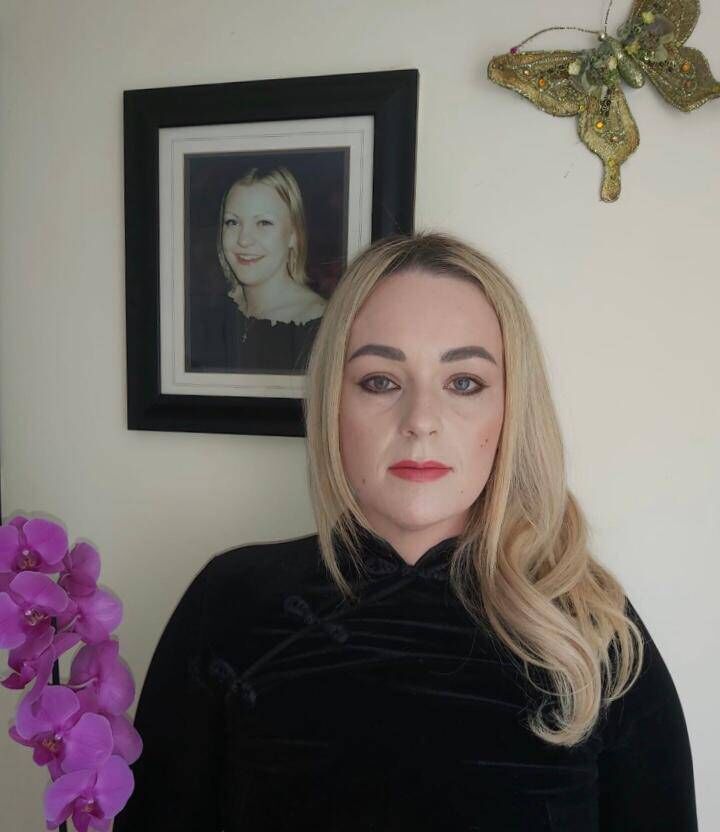
“I’m hopeful that the new system will be better. But it remains to be seen. On paper, it looks like a better and fairer set-up.
“In the past, it was very prisoner-focused, it was much more biased towards the prisoner than the victim.
“I’m just asking for balance and fairness, no more.
“Having a representative for victims on the board is crucial."
Ms O’Leary was 19 when she suffered the life-changing attack.
She was getting ready for a night out with her best friend, Ms Sweeney, 20, at her family home in Rochestown, Co Cork, when Whelan, a neighbour who they did not know, broke into the house on a motiveless, murderous rampage.
Whelan stabbed Ms O'Leary more than 20 times, breaking a knife in her arm as she tried to shield her vital organs from the blows. Ms Sweeney was killed by a fatal stab wound to the heart in her bedroom on April 27, 2002.
Whelan was sentenced to life in prison for Ms Sweeney’s murder, and 15 years for Ms O’Leary’s attempted murder. The sentences were to run consecutively.
CONNECT WITH US TODAY



Be the first to know the latest news and updates