'A very high-risk drug' - Warning over ketamine as its popularity rockets among young people
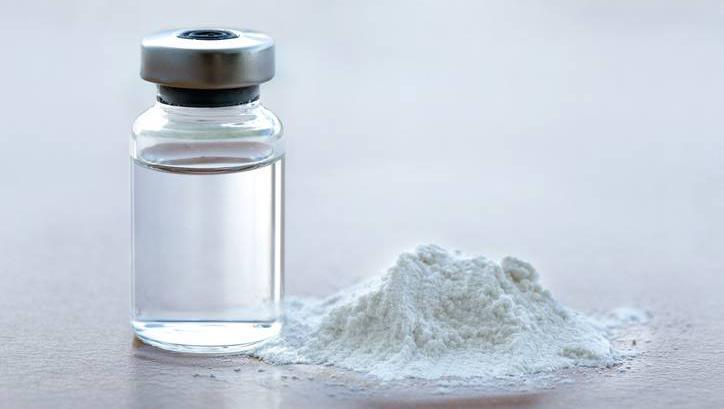
While 24% of respondents in Ireland reported using ketamine in the last year, just 13% of respondents across other European countries reported using it over the same period. File Picture: iStock
Drawn by the lights of a distant toll booth, a young man walked along the white lines of the M50 motorway, locked in a ketamine trance.
He was high on a drug which more than one third of 18–24-year-old males in Ireland have admitted to using last year in an EU-wide survey on drug use. The young man escaped death or devastating injury when he was rescued by gardaí.
Ketamine is becoming one of Ireland's most-used drugs with almost one quarter of Irish drug users reporting that they have taken it, according to the new European Web Survey on Drugs (EWSD).
It is the first time Ireland took part in the research across 30 countries which aims to better understand drug use in the last year, particularly among occasional users and those who use drugs in nightlife settings.
While 24% of respondents in Ireland reported using ketamine in the last year, just 13% of respondents across other European countries reported using it over the same period.
Ketamine is a powerful anaesthetic, commonly thought of as a horse tranquilliser, which has hallucinogenic properties.
First synthesized in the early 1960s for use as an anesthetic and analgesic, it was adopted for recreational use in clubs, festivals and parties.
Also known as ‘K’, ‘Special K’ and ‘Vitamin K’ it has become such a common party drug that it recently sparked a new fashion trend dubbed ‘Ketamine Chic’.
The new research suggests that its use is highest among younger age cohorts.
One-third (34%) of 18–24-year-olds in Ireland reported ketamine use last year, compared to 20% of 25–34-year-olds, 9% of 35–44-year-olds, and 5% of those aged 45 years and over.
For 18-24 year-olds, ketamine was the fourth most used drug (34%), while for all other age groups (25-34; 35-44; 45+), magic mushrooms were the fourth most common.
While those aged 24-34 reported ketamine as their fifth most used drug at 20%, ketamine was not in the top five most used drugs for older age groups.
Commenting on the findings, Dr Eamon Keenan, National Clinical Lead for Addiction Services at the HSE said: “The survey has been a useful tool to capture emerging drug trends such as the current popularity of ketamine.
“These findings support what we are witnessing across festivals this summer, with ketamine appearing as the substance of choice, often used as part of a polysubstance pattern with stimulant drugs MDMA and cocaine.”

Senior Addiction Therapist at Cuan Mhuire addiction treatment centre, Michael Guerin, said ketamine is a very dangerous drug which can make users feel invincible.
One young man narrowly escaped death or serious injury when he walked along the white line in the middle of the M50 motorway, drawn by the lights of the toll booth while on the substance, he said.
“He was very luckily rescued by gardaí. He was lucky to survive. When people are under the influence of these substances they see no danger. So they can engage in acts that put their life at risk.
“So it’s a very high risk drug.”
In the past year, Mr Guerin has begun to hear from service users of the prevalence and easy availability of ketamine and the date rape drug GHB in the Irish drug and party scene.
“You tend to see more recreational use of ketamine than habitual use,” he said.
“But in the past year, we are seeing some people with primary addictions to ketamine for the first time. From information clients are giving us, it is increasing in popularity in terms of recreational, party, sporadic use more so than dependents.
“People have reported to us doing the craziest things while under the influence of ketamine.”
While anecdotal evidence suggests increased ketamine use in Ireland, general population surveys to date have not captured its prevalence and there is very limited data on its use or harms, the EWSD noted.
A dedicated ketamine module was called for if the EWSD was repeated in Ireland.
The online survey was undertaken across 30 European countries between March and May 2021. It collected data among people who use drugs, from those who are experimenting or occasional users, to those who use drugs in a more intensive way.
The Health Service Executive (HSE) managed the recruitment of the survey sample and 5,762 people in Ireland responded to the survey.
The survey was undertaken when Covid-19 restrictions were in place in Ireland, including the closure of nightlife settings, which may have impacted findings.
The survey is not a general population study and so cannot be taken as representative of the broader public as a whole; rather the aim is to investigate the behaviour of a particular sub-group of the population who identify themselves as drug users.
Nicki Killeen is Project Manager for Emerging Drug Trends at the HSE National Social Inclusion Office, which was responsible for the survey recruitment. She said that anecdotal evidence suggests ketamine use has been increasing and that increase appears to be linked to nightlife trends.
“Ketamine use has re-emerged as a common drug used among nightlife and festival attendees," she said.
"Previously this would have been more of a niche drug trend and increases may be linked with the overall proliferation of nightlife in Europe.
"We know from anecdotal evidence and discussions with young people across third-level and nightlife settings that ketamine use has been increasing over the past few years.
“In 2019, the HSE in Partnership with Trinity College Dublin conducted an online survey among festival attendees and found that ketamine was among the most commonly used substances (63.3% reported use in Ireland at a festival and 71.7% reported use at a festival aboard).
From this study, we became aware of ketamine being used as part of a polydrug partner with cocaine (known as CK) and MDMA.”
Traditionally, ketamine would have been assumed to have been diverted from legitimate products but there is now evidence of ketamine labs, she said.
The most recent EMCDDA EU Drug Report references the identification of labs in Belgium and the Netherlands.
“Ketamine has dissociative effects meaning that it can make a person feel disconnected,” Ms Killeen said.
“The effects of ketamine can depend on how much is taken and can range from stimulation to psychedelic effects. Different people can have different effects based on person factors and how much is taken as well as the contents and purity of what they purchase.
“People may also experience what is known as a ‘k hole’ which is a feeling of complete disconnection from your surroundings. This can be risky in a busy environment like a festival setting. Ketamine is also an anaesthetic so it reduced sensation in the body, people may be at greater risk of accidents and being unaware that they have hurt themselves.
“Ketamine mixed with other drugs can be unpredictable and mixing drugs (using more than one at a time) can increase the risk of a drug emergency. One concern we have is the use of ketamine alongside alcohol which can increase a person’s risk of becoming unwell and vomiting, this then means there is an increased risk of choking.
“Another concern is the emerging evidence on long term health harms associated with frequent use such as urinary/bladder concerns. If people who frequently use ketamine notice urinary tract issues, we encourage them to seek medical help.
“We also ask people to seek medical help in cases of immediate drug emergencies at events and to remember that in these situations their health is the main priority.”