Survivors of sexual assault in West Cork are cut off from services
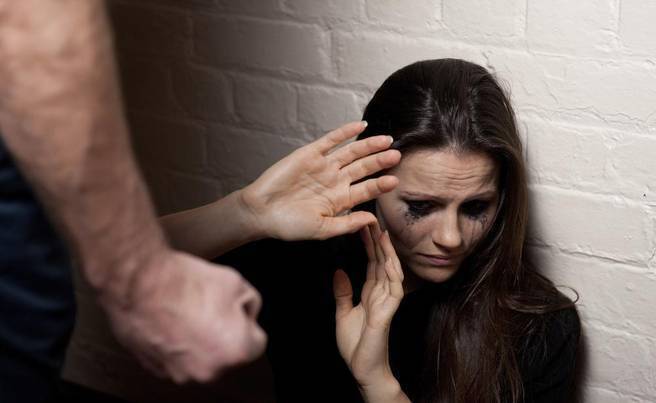
Survivors of sexual violence in West Cork face particular challenges — and any solutions are likely to be closely monitored in other rural areas around the country, writes Noel Baker
Survivors of sexual assault in West Cork are cut off from services

More than half of the respondents who had experienced sexual abuse as children went on to experience sexual violence as an adult too. The majority had those experiences in West Cork.

"They had to do a counselling session with the client on how to drive in Cork City," Caroline Crowley recalls. 

"The actual driving there, finding parking — this was a fear."

For some people who are survivors of sexual assault across West Cork, driving to the city to access services and supports is also a drive into the unknown — another layer of worry and anxiety at a time of deep trauma. It comes through loud and clear in new research, commissioned by West Cork Women Against Violence, which shows that the problems - some apparently everyday, like finding cash for bus fare, or securing adequate childcare so you can attend appointments — exacerbate the worry, amplify the pain.

'Listening to Survivors of Sexual Violence and their Supporters in West Cork' takes in the views of 23 survivors, 18 of whom were full participants, as well as people working in the sector. Recruited after a promotional campaign across the area, often through posters in filling stations and flyers in shops as well as through social media, they shared experiences of sexual abuse, sexual assault, and other types of sexual violence, and of seeking and trying to access supports. 

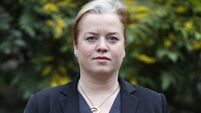
Caroline Crowley: 'We all need to be taken much more seriously down here and in these vast rural parts of Ireland.' Picture: Eddie O'Hare

What they have to say outlines the range of experiences: delays in accessing essential help, including forensic examinations, having to leave home, school or work, trust issues, sometimes poverty and deprivation, poor emotional health and sexual health problems, and the lifelong physical health impacts of sexual abuse of children.

“... it took me several days until I realised, I needed medical attention and I found the SATU myself over Google," one interviewee said. "If I had known sooner that support was available, I would have a very different story today.” 

Another said: "It was late in life when I looked for help ... I think that the sooner one gets help, the recovery is faster. I left it go too long.” 

"I just stood there, let him molest me, afraid to shrug him off in case [others in my personal network] would think I was weird if he was only having a laugh, and I went taking it serious," one interviewee recalled. 

I cannot identify to this day what my emotions were at that moment. I can’t go back there. I can tell exactly every detail of what happened down to the clothes I was wearing, which I never wore again, but I cannot think back to my emotions. I know I silently cried myself to sleep every night for years

And according to another interviewee: "[A relative] told me, ‘he does that to everyone, forget about it’. [The relative] did nothing else.” 

And another said: “My [parent] said it was my fault because I fancied him, and I was a flirt. ... and both [parents] were angry with me.” 

Others speak of suppressing feelings, of "the scar still being there", of worries that linger into adulthood, as a parent of children of their own. 

"I think the thing that people who have been abused are looking for is meaning," one survivor said. 

"They want the experience ... to have some fucking meaning in this world... I went in search of answers." 

And a supporter said: "Distance! Distance! Distance! To most specialist supports involving transport and large amounts of time for both the clients and our service in accompanying them.” 

Childhood trauma

The respondents were aged 18 to 54. All bar two were women, and a third had lived in West Cork all their lives. Most reported that their first experience of sexual violence was during childhood. More than half of the respondents who had experienced sexual abuse as children went on to experience sexual violence as an adult too. The majority had those experiences in West Cork. The perpetrator was known to them, and was most likely to be a relative. On telling another person what had happened, most said that person had been supportive - but in just over a third of cases, they were not.

The report was written by researcher Dr Caroline Crowley. 

“We all need to be taken much more seriously down here and in these vast rural parts of Ireland," she says. 

"The longer I’ve spent here, the more I’ve realised the impact of being so far away from the lead sources of administration in the country. There are people all across the country in towns and villages with needs, with problems, with issues that do need support.” 

Dr Crowley mentions the psychological and financial costs of all this. 

"You need the service in the short term, we need more people supporting people on the ground," she says.

 The numbers in West Cork, we know the numbers are really large and only the tiniest tip of the ice berg are only coming forward right now

Based on the prevalence of sexual violence outlined in the 2002 SAVI report and the population make-up of West Cork as per the last Census, the research extrapolates that as many as 12,000 residents of the area have experienced sexual crime. 

 Dr Margo Noonan, Head of the Cork Sexual Assault Treatment Unit at the South Infirmary Victoria University Hospital, Cork. 	Picture: Dan Linehan
Dr Margo Noonan, Head of the Cork Sexual Assault Treatment Unit at the South Infirmary Victoria University Hospital, Cork. Picture: Dan Linehan

For Margo Noonan, head of the Sexual Assault Treatment Unit (SATU) in Cork City, one of the most striking elements of the study is the missed opportunities experienced by some people due to those earlier experiences. She refers to people presenting with "a variety of different illnesses which may have been treated" and how "when you see the impact early intervention could have had, [and] how much it could have saved the health service.

"I know of one story, a woman, where if she had been listened to and got the services that are there now today, the referral pathways, she would have saved herself nearly 40 years of medical intervention," she says.

In a major development, a SATU outreach service in Bantry opened last year, running on the first Thursday of each month and based in the Marino Medical Centre. It has had 18 appointments in eight clinics since last August. Many are younger people, who have attended the Cork SATU for forensic or initial care and who can then attend the outreach centre for follow-up treatment. Margo Noonan says this can incorporate an STI screening after one month, a Hepatitis B vaccine, a repeat of HIV blood tests, and more. 

"It's the first visit and the first traumatic visit," she says. "Each appointment can take up to hour or an hour and a half, the clinical appointment may be only 10 minutes but we don't have huge psychological support for sexual assault in rural areas, so this is a safe space and they just need to talk it through."

The first year of the SATU outreach has been "fantastic" for networking, she says, learning what other services are available and where. The research does show that many of the interviewees did ultimately receive some therapeutic and psychological support. The SATU outreach in Bantry has also opened up greater debate about the issues of sexual violence, so much so that it has led to a deluge of schools contacting Margo to give talks to various classes. Much of what she hears tallies with the experiences of the interviewees in the latest West Cork Women Against Violence Report.

"There are questions flying left, right, and centre. Someone will say that 'it's €20 to travel to Cork and then I explain to my mam why I want to go to Cork' and there is all the rigmarole that goes with it. It makes you very aware of the lack of services that are there. GPs are willing to do that but 'if I go to the GP I have to get €60 off my mom' — it was bringing it right down to the basics of why the services need to come to them."

'Listening to Survivors of Sexual Violence and their Supporters in West Cork' comes to the same conclusion. Dr Crowley's research highlights the services that are in the area, and sees the Family Resource Centres (FRCs) as key referral and support points. 

However, like much else in this sprawling area, more is needed. Dr Crowley notes that two of west Cork's main towns, Clonakilty and Bantry, don't have FRCs. The key recommendation is the development of a local, familiar and accessible West Cork Sexual Violence Support Service, and it also backs the roll-out of age-appropriate programmes from at least First Year in second-level schools — something Margo Noonan is in complete agreement with. She recalls a boy coming up to her after a recent discussion and saying "please make sure everyone in the school hears what you have to say."

As Marie Mulholland, the CEO of WCWAV, writes in the report: "In 2012 ... I was leaving a local supermarket on a winter evening, when a woman approached me asking if I was from WCWAV. When I confirmed that I was, she commenced to tell me of the struggles and obstacles she had faced in trying to get support for her teenage daughter who had been raped. She asked if I could do anything to help. Shamefully, all I could do was give her some contacts in Cork City and Tralee."

That, she says, was the start point for the project. She has since met that woman again. 

"Certainly the last time I spoke to her two years ago, no, she still felt there had not been justice for her daughter," Marie says.

Meeting the needs of clients

She admits that in the early years of her work in West Cork she was "flying by the seat of her pants" in responding to the needs of clients — something that extended to taking at least one person to the SATU in Cork herself. The research project has highlighted not just the gaps that need to be filled, but also the services that already exist, and how they can cooperate better. There is clearly a desire by many to make it work.

Just last April WCWAV brought in an organisation called ASSC, which provides an accompaniment service for those affected by child sexual abuse based in Galway and Dublin, to provide training to 20 people in West Cork — GPs, chaplains, therapists — about how best to deal with disclosures made to them. The next step is bringing rape crisis expertise to the area, through recruiting up to 14 counsellors to undertake specialised training over a six-month period — "a massive commitment", according to Mary, but one that will make a huge difference.

"What we can do is the follow-up support service," Marie says, referring to the people who attend the SATU. "We are also providing a service to people who never reported before or never went for any medical examination - they are probably the greater number."

But it is something as basic as the lack of a bus service connecting, for example, Clonakilty and Skibbereen with Bantry, that can act as a very real obstacle for people. "We have always been inadequate in this country in terms of our basic infrastructure," she says.

One welcome development has been the opening, in January 2020, of the Cork West Divisional Services Bureau in Dunmanway Garda station. Det Insp. Joanne O'Brien has Operational Control of the DPSU and has Divisional responsibility for Domestic Violence and have responsibility for the oversight and implementation of Operation Faoíseamh for Cork West.

"The West Cork Garda Victims Office team work tirelessly for this operation in contacting victims of Domestic Violence in a strategic retrospective manner to offer a layer of support and to identify potential interventions to help and support vulnerable victims," she says. "The DPSU provides expertise in this area in cases identified as high risk and liaise with victims."

Sexual assault cases rising

The numbers have been increasing. Statistics provided by An Garda Siochana show that there were 48 reported case of sexual assault or rape in the West Cork area in 2019, rising to 70 in 2020 and 105 last year. In the past five years 386 reports have been received by Gardai in total, though Det Insp O'Brien says: "In practice, I would expect under-reporting to remain an issue given the nature of the crime."

She says the unit has been building relationships with WCWAV and others and provides specialist investigative capacity for Adult and Child Victims of Sexual Violence and Abuse and the associated crimes involving these and vulnerable victims, with officers having also received specific training in the investigation of serious sexual crime including Child pornography, On-line Child Exploitation and Human Trafficking to name a few.

"Whilst the Unit is relatively new considering Covid-19, etc, there have been a number of high profile prosecutions from this unit that garnered widespread media attention in terms of the professionalism of the team which I hope has enhanced the reputation of the Unit and potentially will encourage victims to come forward and report their crimes," she says.

Dr Margo Noonan believes the Bantry SATU outreach is "ripe for expansion", believing that while the forensic element will have to remain in Cork City  —when forensic samples can be taken within the first seven days and then stored — all other medical and follow-up treatments could be provided in Bantry, once more resources are in place. Similarly, a separate SATU outreach opened just before the end of the academic year in University College Cork and another outreach is planned for Killarney.

This, and an increasing openness about the issue of sexual violence in society, makes Dr Crowley believe that improvements can be made, noting also that what happens in West Cork — in terms of shortcomings, and how they can be addressed — will be monitored closely by other large rural areas around the country.

For some people in West Cork, the city will always be a place hours and hours away, an alien environment. But maybe it doesn't have to be the end of the line. A service provider interviewed for the research said: "We know the impact sexual violence has in somebody’s life. They’re completely devastated. Their lives are completely changed by it. And it’s so sad if there isn’t a service for them. Why should it be a lottery system, because you live in a city or a town that you can get that service?”

More in this section

Lunchtime News

Newsletter

Keep up with stories of the day with our lunchtime news wrap and important breaking news alerts.

Cookie Policy Privacy Policy Brand Safety FAQ Help Contact Us Terms and Conditions

© Examiner Echo Group Limited