The long and winding road to solving Cork's dereliction blight
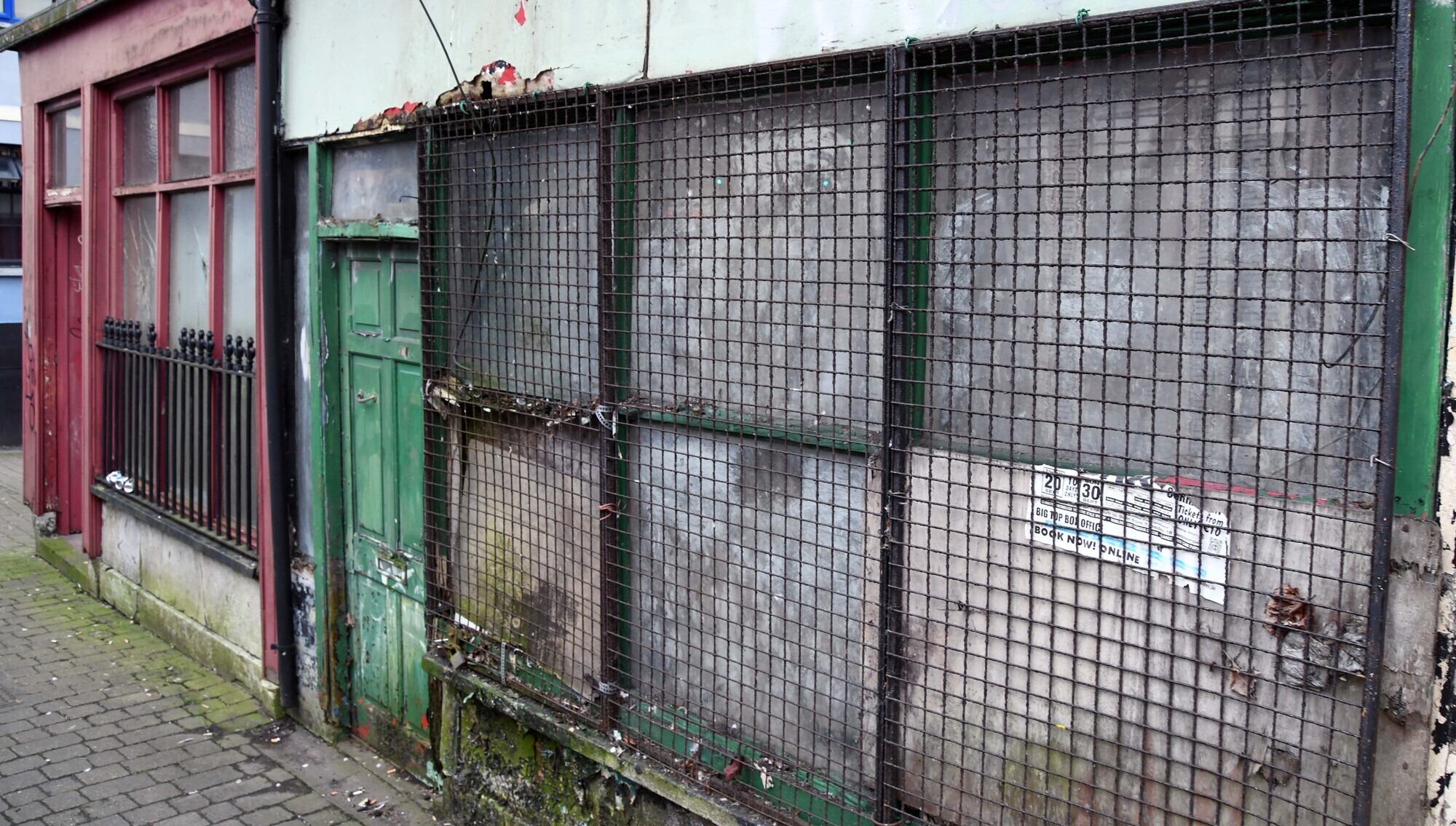
60 and 61 Shandon St, Cork.
Properties suspected of being derelict are either identified for inspection by the council itself, or they are subject to complaints and are referred on to the council for inspection.
The council is then obliged to open a record and inspect the property to establish if it meets the legal definition of dereliction as defined by the Derelict Sites Act 1990.
If the property is deemed to meet that definition, the council must then set about establishing ownership of the property before it can be placed on the derelict sites register (DSR).
This can often be the most difficult and lengthy part of the process, with many properties which have been subject to inspection often tied up in complex legal situations involving probate.
Many are at the centre of difficult and sensitive family situations or disputes, and others can be tied up in a complex web of company ownership structures, or in receivership or liquidation scenarios.
In our immersive read Dereliction of duty, Eoin English lifts the lid on Cork city’s most infamous derelict sites.
The council has a number of ways of establishing legal ownership of a property but there are times when, despite its best efforts, legal ownership cannot be clearly or definitively established.
It is at this point that the council will explore other avenues including affixing signs on the trouble sites urging anyone with an interest in the properties to come forward, by talking to neighbours in the area, by liaising with solicitors and auctioneers who may have been professionally engaged in some aspect in relation to the property.
The council will then issue notices to any parties that it believes may have an interest in the site. It is only at this stage that the council can move to formally issue specific legal notices requiring the owner to carry out works to make the property safe or to remove dereliction before it can move to place the property or the site on the DSR.
The council can also decide to defer placing the site on the DSR if there is a sense that engagement with the property owner can lead to the removal of dereliction.
The council says its role is not just to add properties to the DSR for the sake of it — it is also its role to actively offer advice, support and guidance to property owners on the range of grants and initiatives to which they may be entitled in order to remove dereliction and address vacancy, in the hope of bringing the property back into meaningful use.
Council staff are available to offer advice on the repair/buy and renew homes schemes, on the Living in the City schemes, on certain grants that are available for specific built heritage structures, or to advise on schemes which may be available to the owners of properties in architectural conservation zones.
Teasing out the various options takes time, and owners who engage with the council are given that time to explore their options.
However, if it is clear that owners are not willing to engage, or that there is no hope that dereliction can be removed, the site is added to the DSR, a site valuation is arranged to determine the amount of the derelict sites levy — 7% of the market value of the site annually — which is then attached to the property.
There has been a lot of criticism about the time it takes from the identification of a potentially derelict property to the issue being resolved, with various calls for local authorities to just swoop in, declare all such vacant or problem properties derelict, acquire them all and turn them all into homes, apartments, craft centres, or shops.
But those on the frontline charged with tackling dereliction say such suggestions completely disregard the legislation which governs this complex area, they ignore property rights that must be respected, they take no account of the need for consultation and the right of appeal, and also ignores this is a private property owner problem, and primary responsibility rests with the private property owner to resolve.
And then there’s the matter of funding.
Inspections, tracking down owners, and preparing reports all take time and resources. The decision to acquire properties also takes money — a lot — and councils have finite resources.
Those highlighting the problem of dereliction say if councils pursued derelict sites levies properly, they could raise enough money to acquire other sites.
But those tackling dereliction say they are dealing with people who in many cases aren’t big property developers. They are individuals who have found themselves in difficult circumstances in relation to a specific property that, for one reason or another, has fallen into disrepair and dereliction.
And if there’s no money there to address the dereliction, there’s little chance of them being able to pay the derelict sites levy. The charge however can always be recouped by the council if and when the property is sold.
Last September, for example, it emerged that the city had raked in just over €476,000 in derelict site levies in just three months following the recent sale of some sites on the DSR.
It was more than nine times the amount which was collected for the levy in the second quarter of the year but still less than a third of the €1,748,390 in levies which were owed to the city last year.
The collection rate has been traditionally low, for some of the reasons explained already. But that quarterly boost last year shows that the debt, which is attached to the property, must be discharged upon the sale of the property.
Those charged with tackling dereliction are also keen to point out that there are specific circumstances or unique stories behind each derelict property that go some way to explain why the property has become derelict.
Some are incredibly tragic and sad, involving the death or long-term ill-health of a property owner, some involve bitter and protracted disputes over the property ownership, some cases involve mental health issues or financial distress, and others are the result of speculation and developers going bust.
Others are examples of where a property owner just doesn’t care about the condition of their property and won’t engage with the authorities once the first approach is made.
But the issues linked to each of the properties must be worked through by the council before the property can even be declared derelict and considered for compulsory acquisition.
5 and 6 Shandon Street
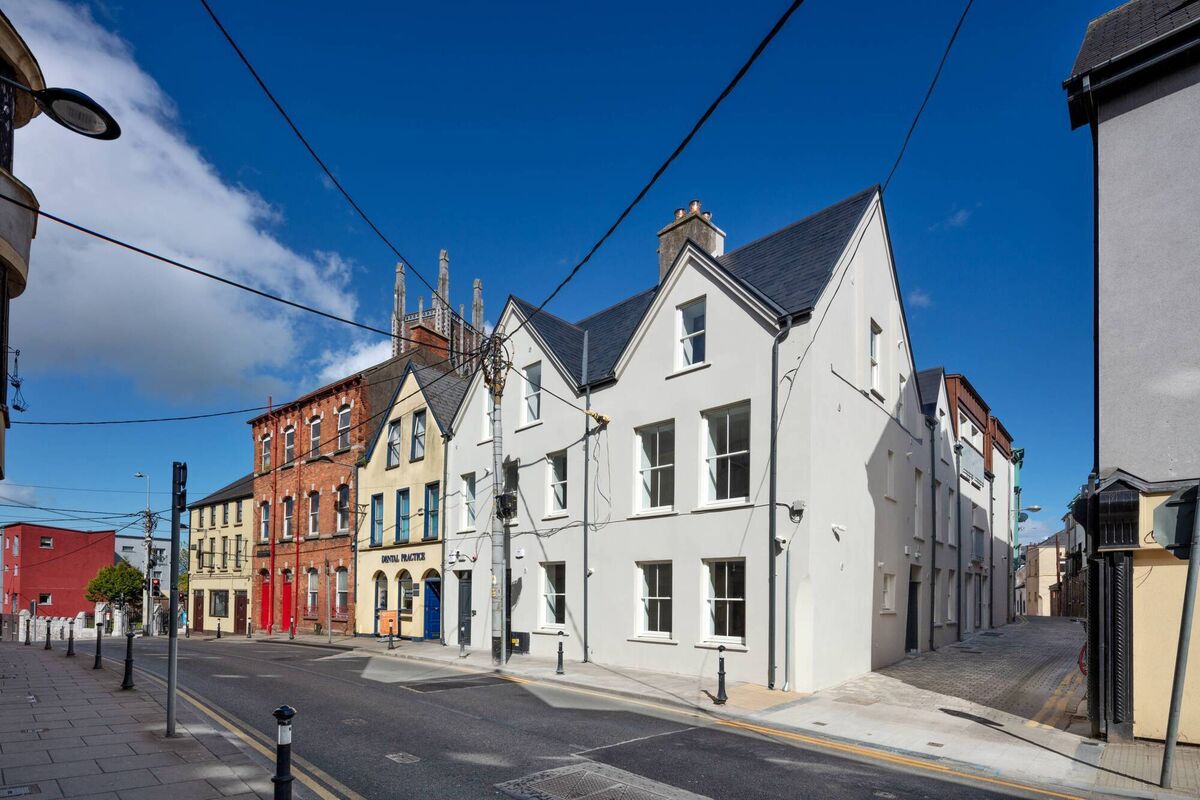
Among the high-profile projects which have been delivered using this four-stage process was the complete regeneration of two derelict and historic properties on Shandon St and an adjacent vacant corner site around the corner on John Philpott Curran St which has delivered nine new homes.
Led by the city council and funded by the Department of Local Government, the €2.9m sensitive and imaginative restoration and inclusion of two historic and protected 18th century Dutch-influenced townhouses into the project has been widely praised — hailed by An Taisce last year as “a boost for the heritage, well-being and economic attractiveness of the city”.
The protected properties, in the shadow of the city’s landmark Shandon steeple, have been adapted to provide two one-bed units, and four two-bed apartments, while the infilled site around the corner has been developed to include three one-bed apartments.
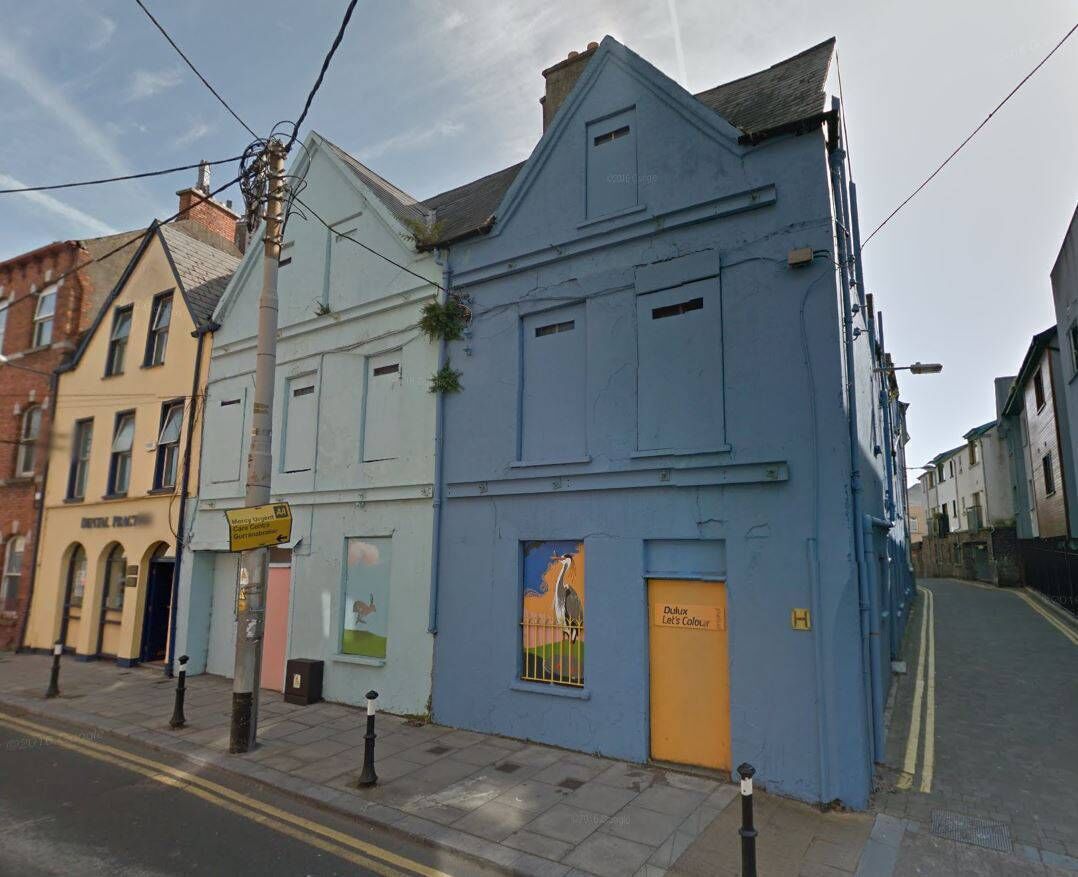
It is expected that the development will cater for older people, and will offer some an opportunity to downsize, which in turn helps free up other accommodation for families.
The two near 300-year-old properties at numbers five and six Shandon St are among the few remaining Dutch gabled buildings in the city. Both are protected structures. The property at number 4, also a gable-fronted townhouse, was in separate ownership.
The housing scheme involved the restoration of numbers five and six, both of which had fallen into dereliction over a decade, with two adjoining similar but smaller houses to the rear, facing John Philpott Curran St, which are not protected, as well as the infill development of a site on the corner of John Philpott Curran Street and Cathedral Avenue.
But it was the inclusion and restoration of the pair of striking Dutch-influenced gable-fronted house types which set this housing scheme apart.
The properties at five and six are described in the National Inventory of Architectural Heritage as “a fascinating reminder of an architectural design that was fashionable in the 18th century”.
“Once common in Irish towns and cities, the house type is now very rare but Cork has the largest surviving numbers of them in Ireland."
The type was once common in Irish towns and cities, and can be seen in 18th century views of Cork city, including in John Butt’s painting ‘View of Cork’ which hangs in the Crawford Gallery, or Nathaniel Grogan’s 1797 ‘View of the Northgate’.
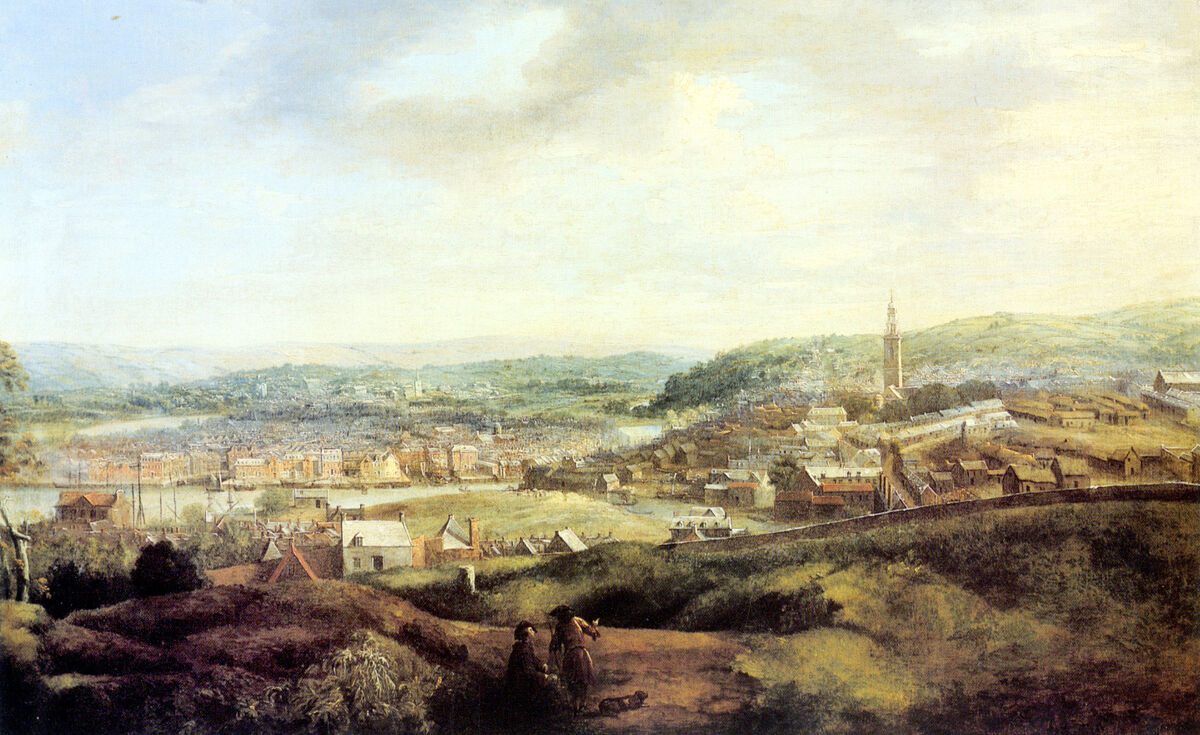
But the type is now very rare. It’s found mainly along the historic older access roads into the city such as Barrack St, Gerald Griffin St, Shandon St, Francis St, Douglas St, and in older more central areas such as North Main St, with individual examples also found on Pope’s Quay, Margaret St and Sheare’s St.
Local butcher, James Nolan, whose family has run a butcher shop in the area for three generations and who runs his business just down the street at number 23 Shandon St, from another Dutch-influenced gable-fronted townhouse, said great credit is due to all who were involved in the housing scheme, giving the complexities, effort, time and money involved.
He should know. He spent considerable time and money restoring his shop about a decade ago.
“When we were preparing for that work, we found that parts of the building date from the early 1700s, which make it older than Shandon church itself,” he said.
Mr Nolan, who has been involved in the Shandon Area Renewal Association, the local tidy towns group, and the local business association for several years, said the protected structures had been vacant or derelict for as long as he can remember.
“The easiest thing in the world would have been to level them and build apartments,” he said.
“I can understand that for some people who own historic buildings like this, who might be at different stages of life, maybe in their 60s or 70s, might not want to draw a project like that on themselves.
“They might want to pass the responsibility on to the next generation.
“I know from the work I did on our building about 10 years ago that it takes a lot of time, effort, and money.
“So everybody involved in this housing project deserves credit. It really is a super job.”
It took a number of years to come to fruition, from the council acquiring the two protected buildings, to design and pre-planning, to securing state funding through the various stages of the process to ensure cost oversight, then on through the Part 8 planning process, tendering for contractors and actual construction.
Qualified and experienced historic building specialists were brought in to prepare a record, to include detailed survey drawings and photographs of all existing structures and architectural features, before the building was adapted for social housing.
That survey informed the city architect’s department’s design of a housing scheme which had to retain and incorporate the principal structural elements, including walls, chimney breasts, principal floor and roof structures of the protected buildings, while delivering entrances, stairs, and a lift, to serve the needs of tenants of today.
Cork City Council’s Alison O’Rourke, a senior executive officer in the council’s housing capital delivery section, said despite the challenges, cost and complexities of dealing with protected structures in a scheme like this, the council always seeks to preserve such buildings but that it takes time, and funding.
She told this newspaper last year that it may cost more than other solutions, but the council needs to take a lead.
“These buildings were never in such a precarious situation that they couldn’t be rescued. It was never felt that they were beyond rescue,” she said.
“They just needed a bit of imagination, and once funding became available, we were able to proceed.
“But it does take time. And that can be the frustrating part.
“It can sometimes look like there’s nothing happening, but there is often a lot going on in the background on sites like this that people don’t see.
“There is a need for more to be done to tackle dereliction elsewhere in the city, and we see and acknowledge that. The department (of local government) is working on funding to support that kind of work."
“A simple straightforward compulsory purchase order (of a derelict building or site) can take six to nine months — and that’s where you don’t have an objection.
“So for us, it’s about prioritising sites. We can’t do everything but we can achieve a lot more through agreement.”
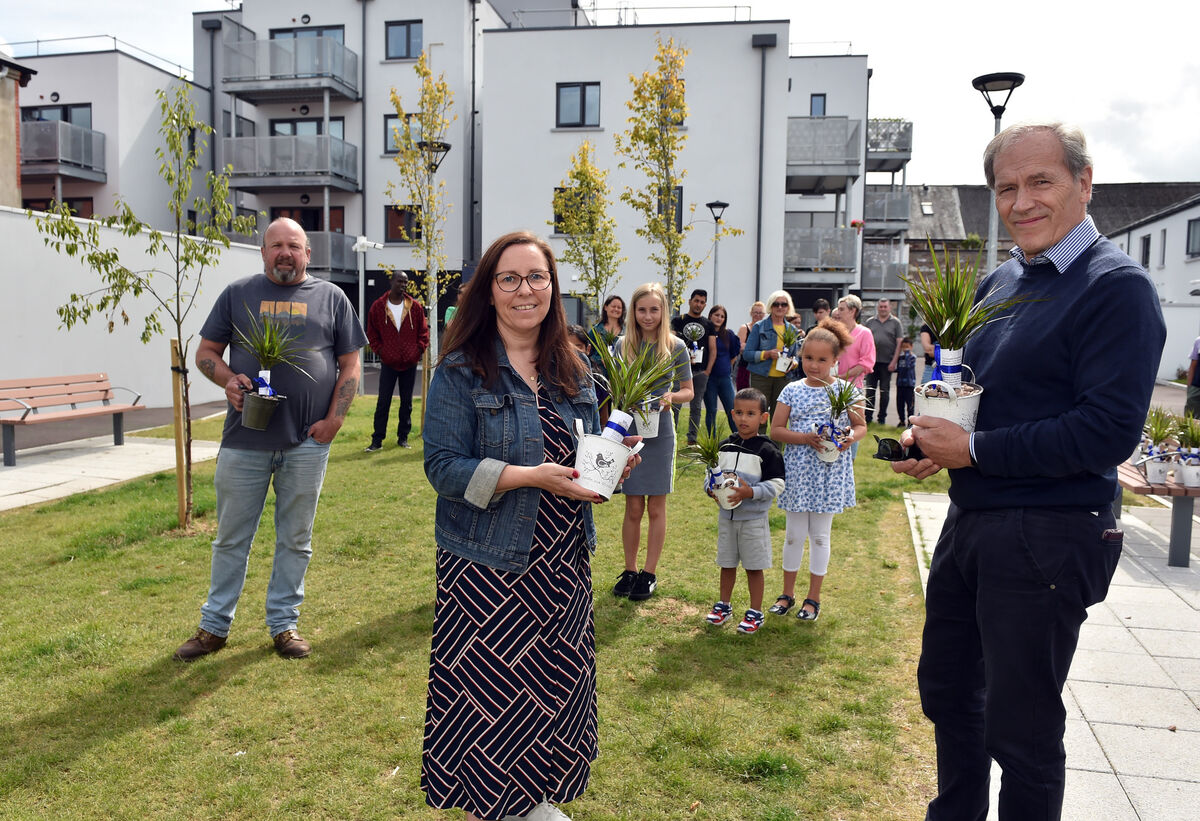
She points to the Rutland Square scheme on White St, where nine homes have been built on a former derelict site, the regeneration of the former Nancy Spain’s site on Barrack’s St, where land title and probate issues took some time to resolve but where 32 houses are now under construction, and another development at Coach St, near the Mercy University Hospital, where apartments are being built on another former vacant and derelict site.
Two other long-time vacant and derelict sites — both in Blackpool — have also been lined up by the city council for housing projects, including a 112-unit Cluid housing association scheme and a 35-unit Respond! Housing association scheme.
: St Anthony’s, Ballyhooley Road
It looked like a derelict property, it was dealt with as a derelict property but when the council reached stage five in the Derelict Site Register process and decided to acquire it compulsorily, the planning appeals board decided on balance that it wasn’t a derelict property.
And so the property was left to lie idle, vacant and boarded up in a desirable suburban area just a few minutes drive from Cork city centre, and the city council was left counting the cost of the process.
The story of St Anthony’s, a two-storey, semi-detached house on the Ballyhooley Road on the northside of Cork city, illustrates again the complexities of Ireland’s derelict sites process, and the hurdles faced by local authorities charged with tackling the problem.
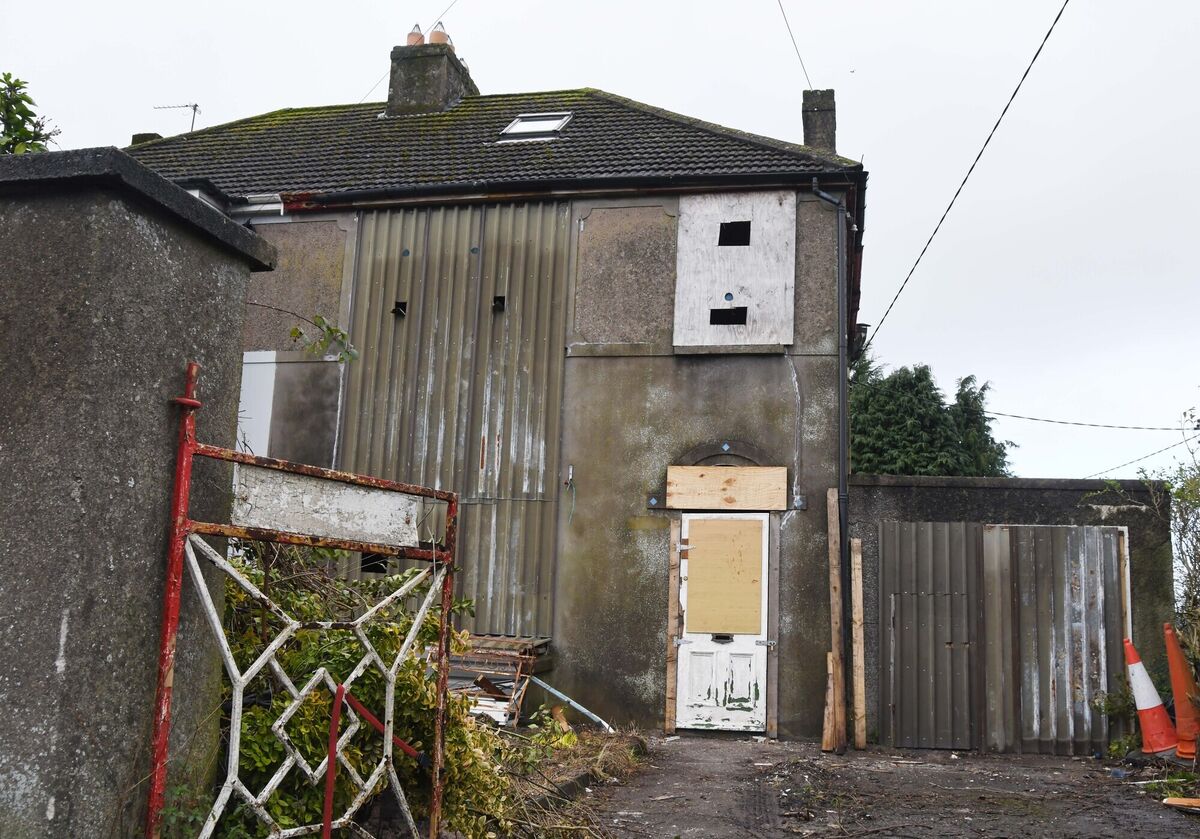
For a variety of reasons, this property fell into a state of disrepair and came to the attention of the city council. Following an initial site inspection, a Derelict Sites Report was prepared in July 2015.
It said the property at that time “detracted to a material degree from the amenity, character and appearance of property in the neighbourhood by reason of its neglected, unsightly and objectionable condition” and, therefore, constituted a derelict site’ in accordance with Section 3 of the Derelict Sites Act.
It was noted that the front bay window was collapsing and it had been shored up. Recommendations included securing the property from public access, clearing rubbish and debris, and arranging for the removal of vermin and waste.
It was recommended that the property be placed on the DSR and a process of engagement with the owner began in an effort to encourage the removal of dereliction.
That engagement process proved difficult given the owner’s own personal and health circumstances, and it soon became clear that resolving the matter through this process would be near impossible.
The council decided to take a number of legal and engineering steps itself to address a range of matters, including undertaking structural works to the property to make it structurally safe, before it gave notice of its intention to enter the property on the DSR in January 2017.
Confirmation of entry of the site on the DSR was issued the following month.
A notification of valuation, together with an explanation of the process of appeal to the Valuation Tribunal, was sent in April, and in the absence of the council being notified of any progress in appointing legal representation for the owner, and given ongoing complaints and the continuing deterioration of the property, the council applied in October 2019 for the consent of An Bord Pleanála for the compulsory acquisition of the property.
An objection to the acquisition was received by the local authority in November.
A notice in relation to a dangerous structure issued to the property owner on November 5, 2019, requested the demolition of the bay window to the front of the house, the clearance of debris, securing of the site against unauthorised entry, and any other works considered necessary.
The council’s application for consent to acquire it by CPO was then considered by a board inspector, who inspected the property.
The council argued that the property was not habitable in its current condition and that the actions required to address the dereliction at the site had been outlined in 2015 but the works did not proceed and no works appeared to have been carried out by the owner on the property.
The council said it had received complaints from local elected representatives and neighbours concerned about the safety of the property.
The council said it was made aware that the owner may have lacked the legal capacity to deal with the issue and that it took steps to advise her next of kin of the situation.
It said it had used its powers under the Local Government (Sanitary Services) Act, 1964 to enter onto the property and carry out necessary works it said were in the interest of safety of persons using or in the vicinity of the property.
In the objection to the compulsory acquisition, the owner, who had to live elsewhere temporarily for health or medical reasons, said the property was their only dwelling and if their health recovered, they would be left with nowhere to live and would be dependent on the state.
The owners said it was not clear what needed to be done to remove the derelict site notice, and said that while they were being held responsible for anti-social behaviour, that was a matter for gardaí to police and prevent.
The objector also claimed that there had been “unfair interference in the process from elected representatives” and they said the council should treat all property owners equally and not act because of “unfair lobbying”.
The objector said little account had been taken of her “medical condition and limited ability to engage with the council”, placing her at a serious disadvantage and not able to protect her property rights.
The council insists that it went above and beyond in dealing with the sensitivities of this case.
In his report dated April 2020, the inspector noted the council’s view that property was not habitable in its current condition, was in a poor and deteriorating condition, was unsightly, and had become a concern for neighbours.
But he said it appears that the primary focus of the local authority had been on the structural condition of the bay window to the front of the house, on restricting public access to the property, and on the adverse visual appearance of the property in this residential area.
He noted that the bay window had been removed from the front of the existing house, all openings in the structure have been blocked, and access to the property has also been blocked from the public road.
He said the building itself appeared from an external view to be structurally sound, with no structural cracking evident, all windows and doors blocked up, the roof appeared to be intact, and there was no evidence that the chimney was suffering from cracking or any other deterioration, with all guttering and downpipes appearing intact.
“Measures appear to be in place to protect the structure from the elements,” he said.
“It is my submission to the Board that it is evident that the house on this site has been made structurally safe, has been secured from unauthorised entry and has been cleared of waste and other debris."
"Further to this, I submit that it is not reasonable to determine: (a) the existence on the land in question of structures which are in a ruinous, derelict or dangerous condition, or (b) the neglected, unsightly or objectionable condition of the land or any structures on the land in question, or (c) the presence, deposit or collection on the land in question of any litter, rubbish, debris or waste, except where the presence, deposit or collection of such litter, rubbish, debris or waste results from the exercise of a right conferred by statute or by common law.
“In its current form, the property does not present as a dangerous structure that is distinctly unsightly in this area, an area where there are many examples of residential and other structures in differing structural conditions, inclusive of buildings in poor structural and visual presentation.”
The inspector also acknowledged the position of the property owner, and said reasons were provided as to why the house fell into a state of disrepair, as there was a desire to have a place of residence when circumstances improve.
“Finally, I accept that the existing building on this site was in a poor condition that posed a danger, presented as an unsightly property, and was a concern due to unrestricted access,” he said.
“I acknowledge, however, that circumstances have significantly changed in recent times. The potential remains for this property to be retained and refurbished for residential use. It does not constitute a ‘derelict site’.”
And so after all that work, and expense, funded by the taxpayer, the process ended.

CONNECT WITH US TODAY



Be the first to know the latest news and updates