Where we get our energy: Eli Lilly's Kinsale solar farm does the work of 5,000 acres of trees to offset emissions
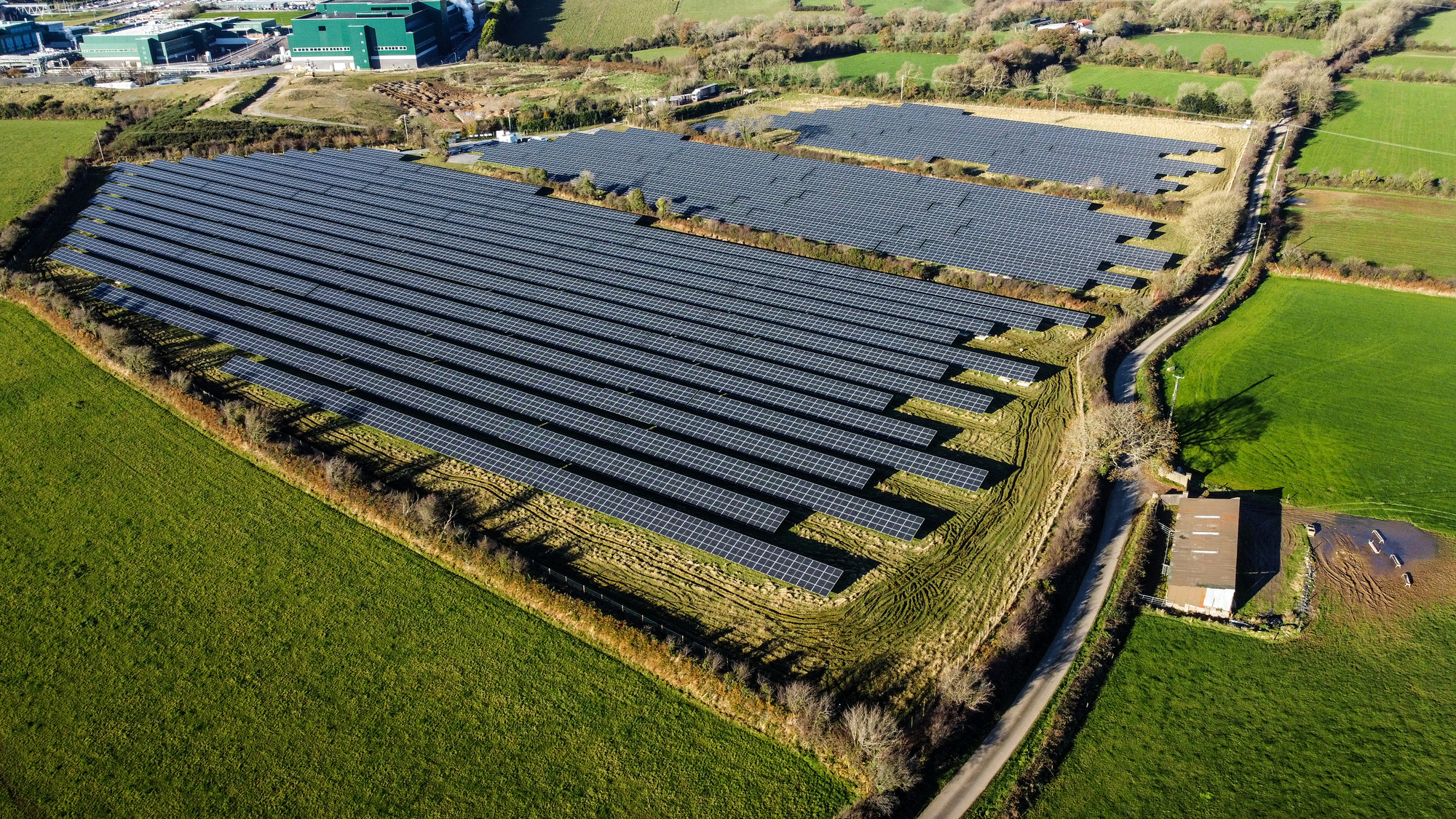
The solar farm of 12,600 panels spread over 16 acres is almost invisible from the surrounding area. Photo: Neil Michael
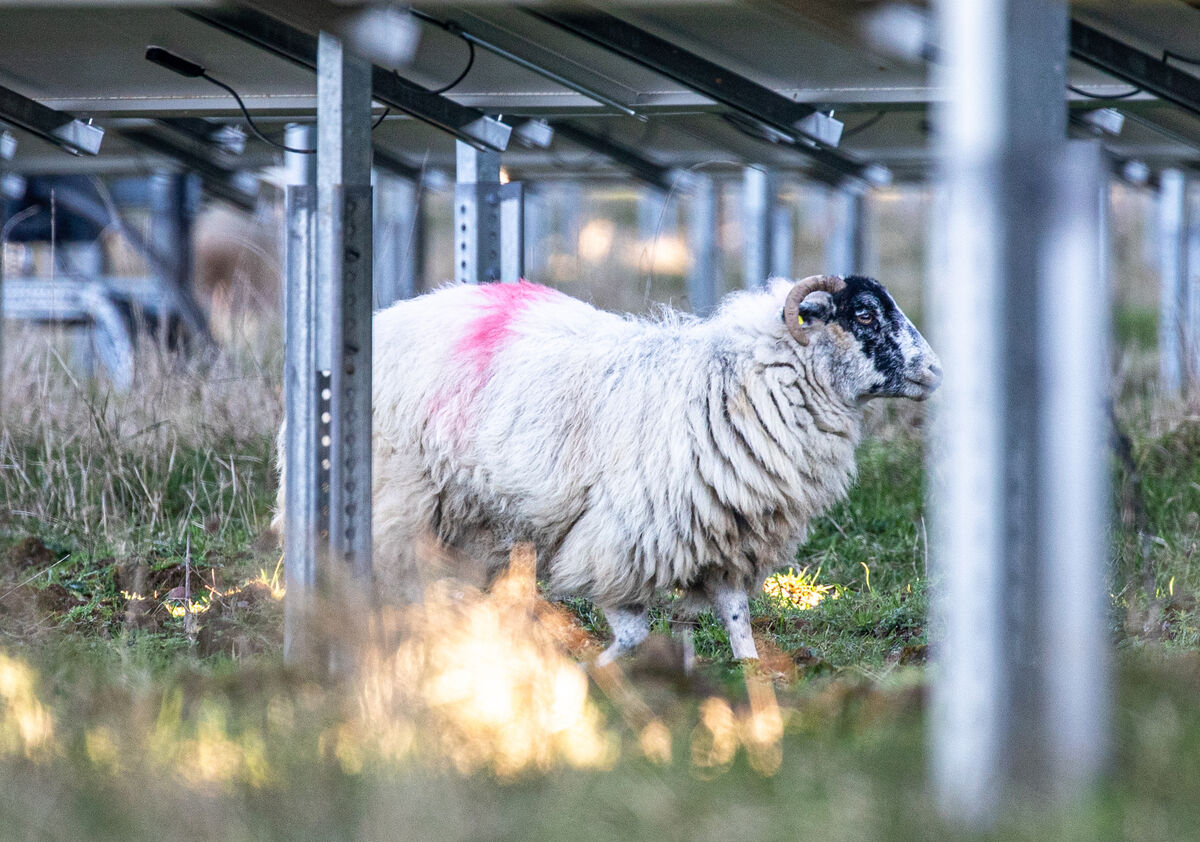
A grazing ground for sheep is the last thing you would expect to see in a huge field packed with solar panels.
But, at Eli Lilly’s Kinsale solar farm, that is one of the first things you notice under row upon row of its tilted tiles: neatly hewn grass, and ... sheep.
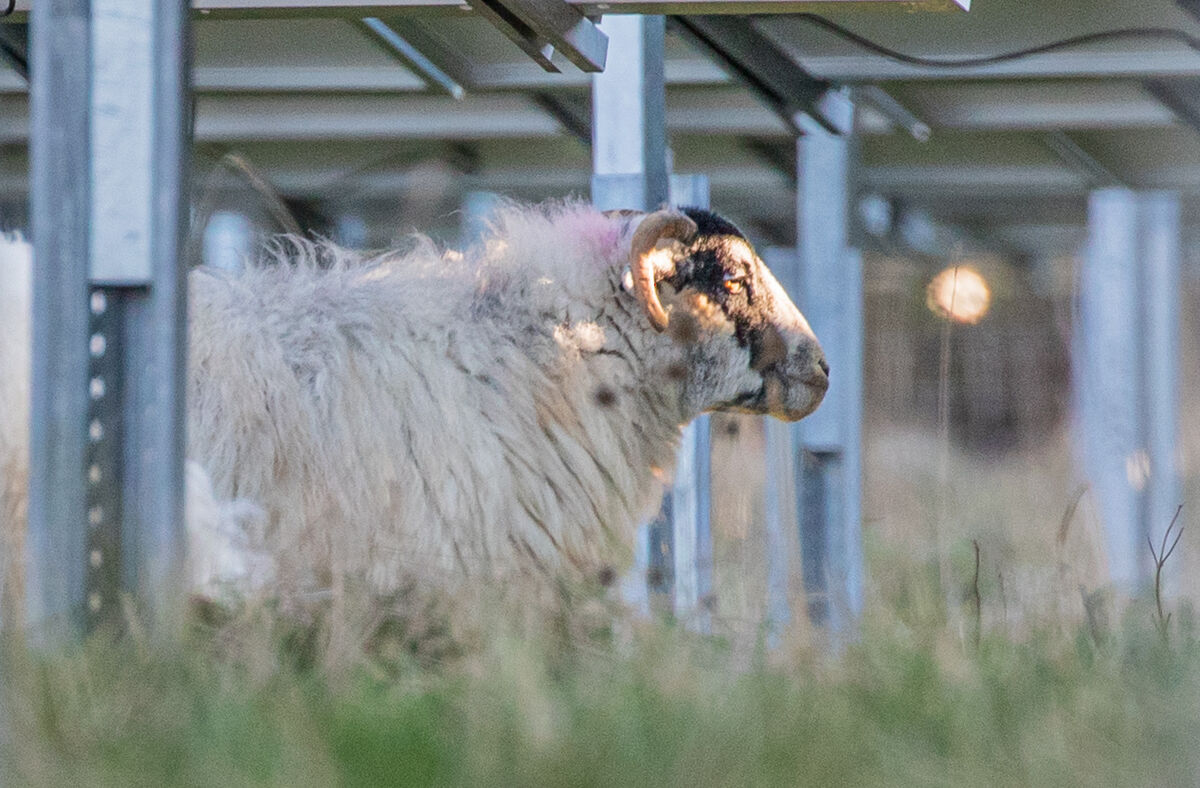
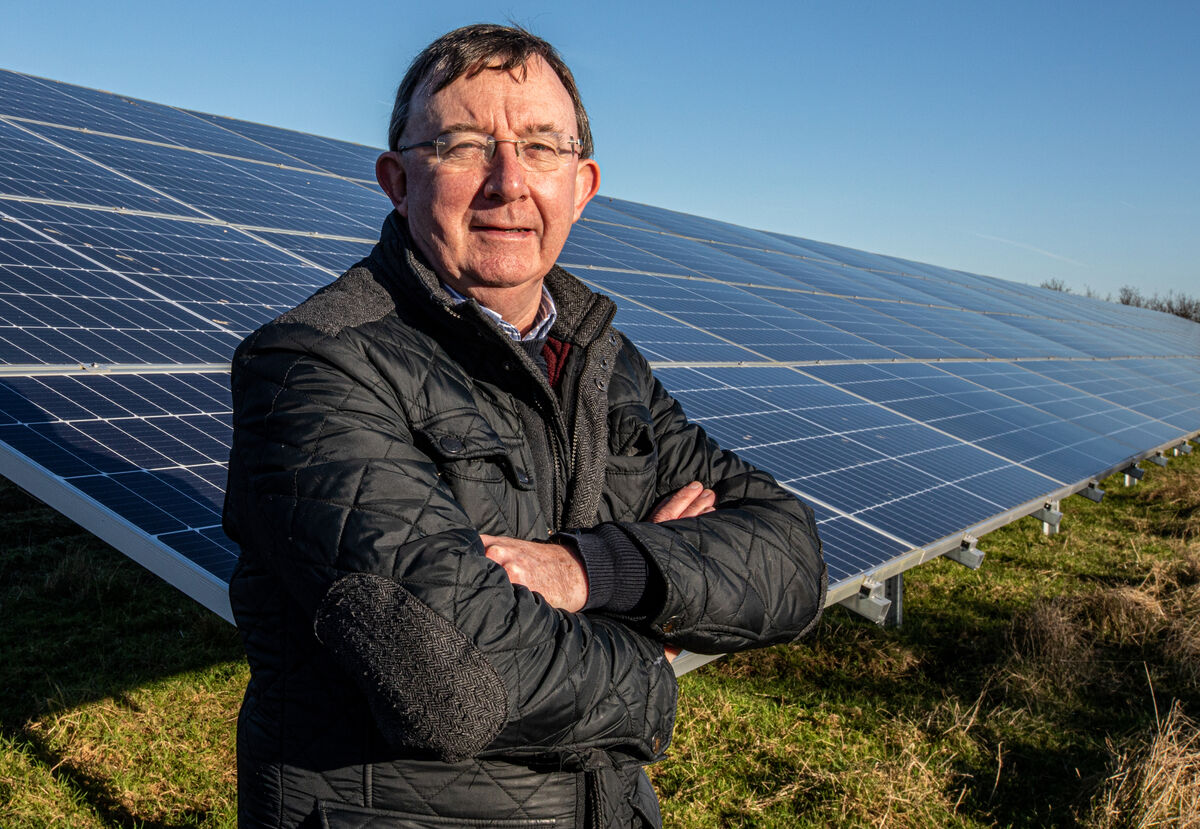
“We obviously needed to maintain the grass under the panels and the sheep do a great job,” says Eamon Judge, Eli Lilly’s Global Engineering Advisor, and the driving force behind the solar farm project.
This is the first of five parts in a week-long series of photo essays by Neil Michael on the issue of energy. Day 2 is online here, or click the Where we get our energy tag to see all the articles as they go online this week.
Officially opened in July 2021 by Taoiseach Micheál Martin, the 16-acre facility is almost invisible from the surrounding area.
Mr Judge, keen to help steer Eli Lilly into the area of renewables, had decided a solar farm was the most efficient solution in not just an area of considerable scenic beauty but also historical value.
It is, after all, only three miles from the site of the 1601 Battle and Siege of Kinsale, which ultimately led to the end of the Nine Year War, the defeat of Ireland’s Gaelic Lords and England’s complete conquest of Ireland.
Although nothing of archaeological interest related to the battle, such as shields or musket balls, were found during construction of the solar farm, archaeological investigations for previous campus developments have uncovered some archaeological remains in areas adjacent to it.
These include an old wooden horizontal grain mill and cooking areas which date to around 500 BC.
Of the origins of the farm itself, Mr Judge says: “In mid-2019, Eli Lilly realised that reductions in solar panel costs and increases in panel efficiencies meant that a large solar development in Kinsale would be viable.
“We had some land nearby that was suitable for supplying power directly to the Eli Lilly Kinsale site.
“With support from our US Corporate leadership, we proceeded with an assessment and in mid-2020 decided to proceed with a development with our partner Enerpower, a specialist indigenous renewables company from Waterford.”
The resulting solar farm cost about €5m, and is made up of 12,600 panels spread over 16 acres.
The company says it offsets the Kinsale site’s carbon footprint by about 2,350 tons of carbon - something 5,000 acres of trees would be needed to reduce.
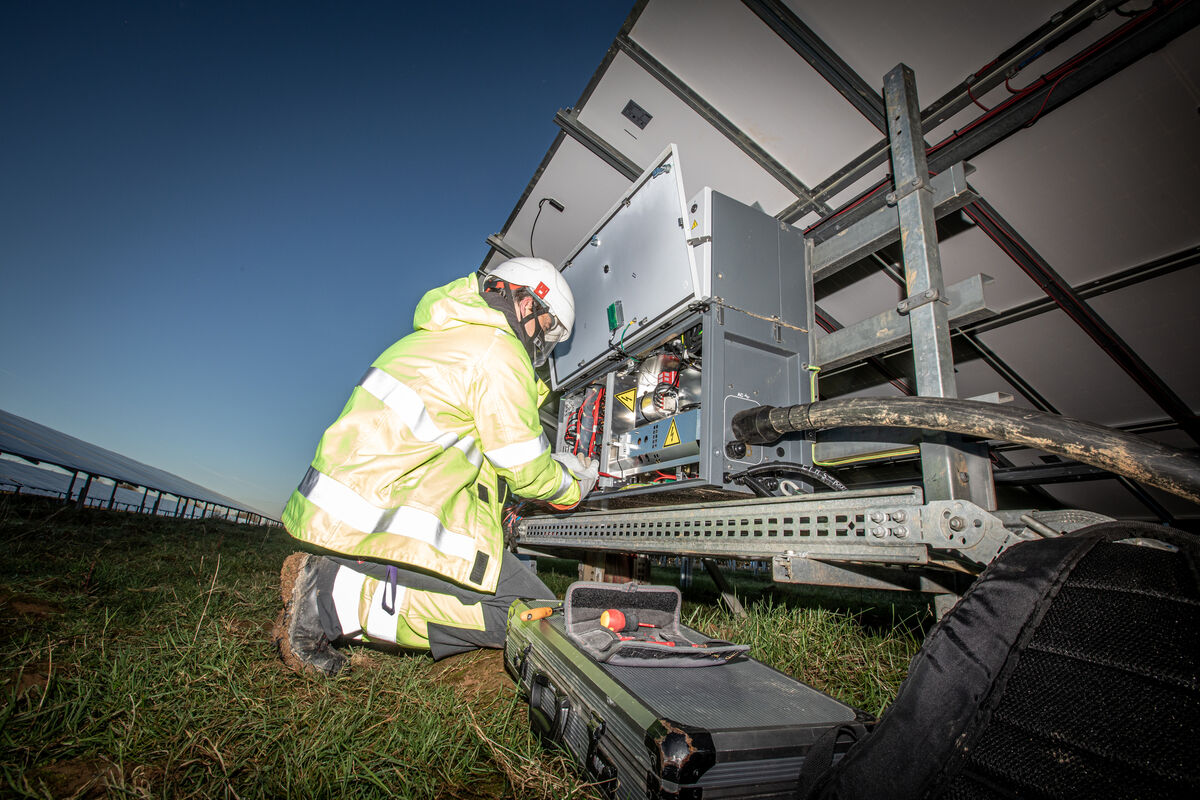
As to why the company chose solar power over other alternatives, he said: “On-ground solar panels provide the most cost-effective solution for large-scale solar generation.
“The solar panels were selected by Enerpower based on their ability to most efficiently convert solar power and guarantee supply over their 20-year life with only a very small degradation in output.
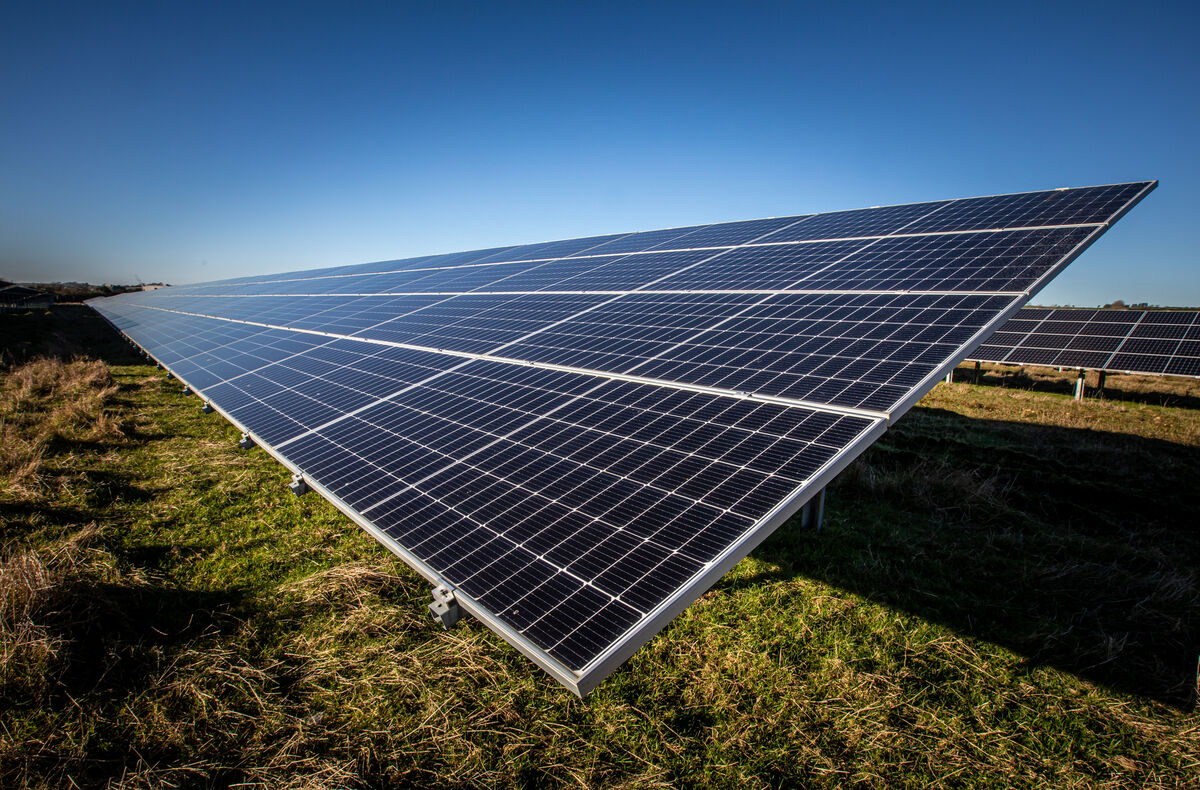
“For a site located in a scenic rural area, we felt that a solar generation system would be much more unobtrusive than wind turbine alternatives.
“For the past four decades, Eli Lilly has endeavoured to operate in a manner that respects the interests of our community stakeholders.

“The location for the solar farm is remote from local residences and almost invisible to our community.”
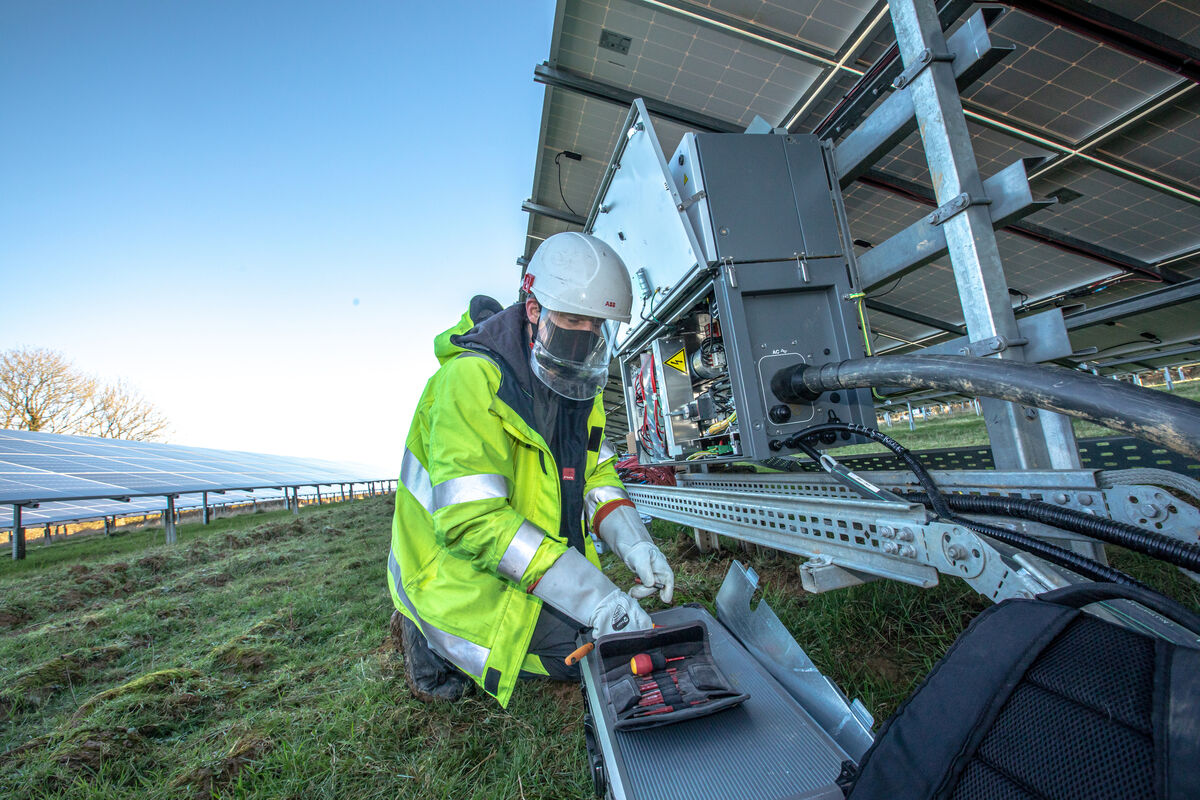
The company is in the process of building an extension of the existing solar farm which will add almost 10 acres of panels in another field adjacent to the current site and increase the annual solar power generation by approximately 40%.
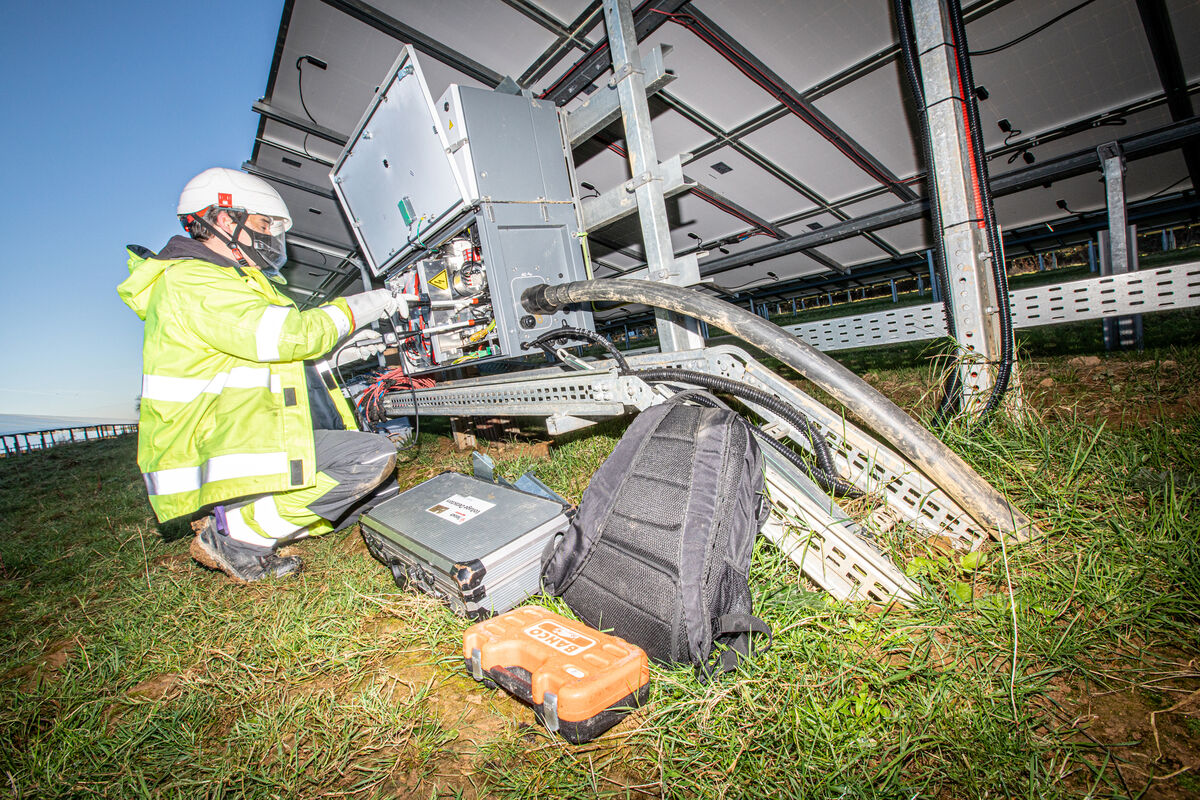
Little wonder they want to expand. Indeed, they estimate that by the time the next phase of the solar farm is completed towards the end of 2022, the entire farm will reduce the annual use of electricity imported from the grid by Eli Lilly in Kinsale by an average of 20%.
CONNECT WITH US TODAY



Be the first to know the latest news and updates