Yvonne Redmond: We need a way to talk to loved ones taken in by conspiracy theories

The growing divide between the vaccinated and unvaccinated, and the belief systems that underpin both choices, is increasingly obvious, increasingly uncomfortable, and increasingly all anyone can talk about. File picture: Pexels
"A pandemic of the unvaccinated” who are “causing a lot of the trouble” was how the Tánaiste recently described Ireland’s current Covid battle.
“It is a difficult situation; things were going so well,” Leo Varadkar told CNN’s programme in Abu Dhabi. “I think, as a nation, we’re a little bit heartbroken.”
5% of the nation's unvaccinated population "are causing the trouble" @LeoVaradkar tells @BeckyCNN -- but Christmas might not be canceled yet. He hopes no new restrictions will be put in place before then and boosters will aid waning immunity. #Ireland #covid #restrictions #pubs pic.twitter.com/z9jyVIdByL
— Connect the World (@CNNConnect) November 18, 2021
Yes, there is a growing heartbreak in Ireland, and not because there may be fewer chances for pints and parties in the pub this Christmas. Ireland’s growing heartbreak is about a different set of Ps — polarisation. And the fear that it may be permanent.
The growing divide between the vaccinated and unvaccinated, and the belief systems that underpin both choices, is increasingly obvious, increasingly uncomfortable, and increasingly all anyone can talk about.
By now, everyone likely knows someone, or many someones, who have chosen to avoid vaccination. While some wear the fact proudly, and loudly, like an anti-establishment badge of honour, others simply keep schtum about their status and the views that inform it, and let their silence speak for itself.
Perhaps the latter group are just as tired as everyone else of having the same conversation, over and over again, on a seemingly endless Covid-19 carousel. It’s draining, it’s difficult, and at this point, it’s a deadlock. But it’s a conversation that the vaccinated are afraid to stop having.
They’re afraid to stop pushing, persuading, and cajoling. They’re afraid to stop hoping, for some en-masse turnaround from the vaccine-free. A Covid Christmas miracle. Because when the carousel stops, people are facing a very different set of difficult conversations. Conversations about values, ideologies, and grief.
There’s a quote about grief that does the rounds on Pinterest and other social media platforms, attributed to American author Jeanette Walls: “One of the hardest things you will ever have to do is grieve the loss of a person who is still alive.”
It seems apt to describe the distress of the particular, peculiar, Covid-triggered grief that comes with losing a loved one down the anti-vaccine rabbit hole, and the fear that goes with it. And anti-vaxxers have their own fears — in that at least, both sides are united.
“At the end of the day, every single human being on the planet is, deep down inside, afraid of this pandemic,” says Dorry Segev, professor of epidemiology at Johns Hopkins Bloomberg School of Public Health, who is blunt in his views on the public health risks posed by anti-vaxxers (he recently described them as the pandemic’s drunk-drivers).
But, much like every ill-fated get-rich-quick scheme the world has ever known, efforts to feel-safe-quick inevitably backfire — and badly. And in this instance, families and friendships are paying the price, as people struggle to identify with and support the vaccine-hesitant in their lives.
Take “Jane”, whose husband has refused the vaccine, but with shots for children aged 5-11 just around the corner, there is more than his own inoculation at stake. They have three young children, and with no looming consensus on whether to vaccinate them, a turbulent, toxic Christmas seems inevitable.
“His ‘news’ comes from YouTube, or else from his father, who’s been a diehard Gemma O’Doherty fan for years,” Jane explains, as if that fact alone sums up her entire predicament.
“I try to steer him toward proper news sources, I try to explain about misinformation, but it always ends in a row, so we just don’t talk about it.”
Jane feels she and her husband are fast approaching the point of no return, and she’s not alone.
"John" is trying to convince his sister not to put their elderly, immunocompromised mother at risk by visiting over Christmas. His sister is unvaccinated and has been using a doctored Covid cert to gain entry to busy pubs.
“My mother won’t hear of asking her not to come, so I’m going to have to say something privately, and there’s going to be war,” John says. He’s perplexed by his sister’s refusal of the vaccine, as the rest of the family are fully immunised, and two of his other siblings are nurses.
Finally, there’s "Mary", struggling to deal with the friend who keeps sending her anti-vax social media content:
Mary says she’s started avoiding her friend, because she “doesn’t know what to say to someone who really believes this” — “this” being the conspiracy theory that the global elite, the super-rich and powerful, are conspiring to control the rest of the population through 5G, nanobots, or other vaccine-related stealth methods.
This is, of course, an extreme; there are many other reasons some people don’t want the vaccine. But it’s this one, on the furthest fringe, that is the most frightening for people who believe in mainstream science.
Jane, John, and Mary are not their real names, changed to protect their anonymity and that of the loved ones they’re referring to. But by now, every Tom, Dick, and Harry either knows or is a Jane, John, or Mary. And they all have the same fears, concerns, and questions: how do I relate to this person in my life who now feels like a stranger? Why do they have the views they do? Can I help them/change their minds?
Unsurprisingly, the answers to all three questions, where they exist at all, are complicated. But on one thing, experts are clear: don’t argue, don’t stigmatise, and don’t isolate.
“It pushes them into a corner and makes them much more determined to stick to their guns,” says Til Wykes, professor and vice dean of psychiatry, psychology, and neuroscience at King’s College London, and an outspoken voice on the trauma of the pandemic.
“They then get to a point where they cannot accept any information to the contrary, despite the fact that the information contradicting their views comes from authorities that everybody else accepts.”
The danger here, according to Prof Wykes, is that people who are already vulnerable can slip into an “alternate reality, a parallel universe”, where the thought of vaccination is so scary that people are “more petrified of that than they are of catching Covid”.
“So arguing never helps. Sure, it makes you feel better. I feel better on the bus arguing with somebody because they’re not wearing a mask, but actually, that doesn’t change their mind. And in order to get people to change their minds, you have to take a different stance. And you have to do it incredibly gently.”
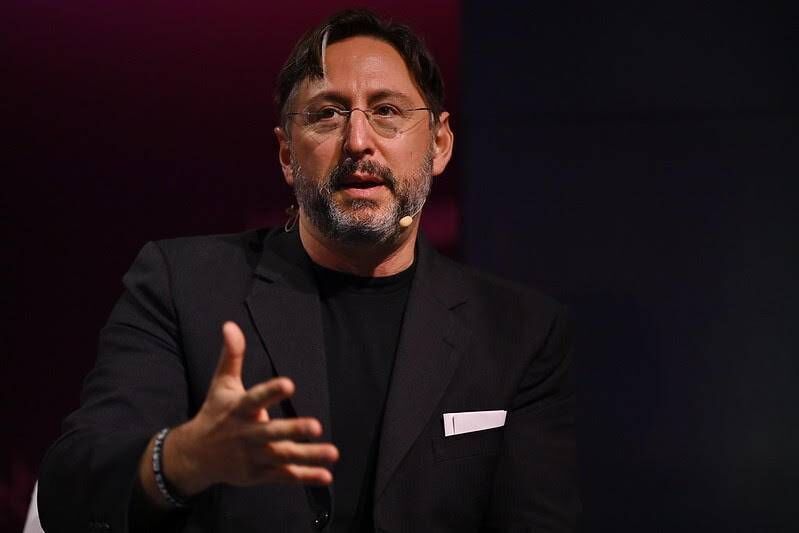
Prof Segev also endorses a softly-softly approach for anyone intent on changing the mind of an anti-vax loved one. He uses the word compassion eight times in a 30-minute interview, for which he has interrupted a family gathering, such is his determination to promote the vaccine cause. It’s a word and a sentiment all the more striking from a man receiving international hate mail by the thousands from the very demographic for whom he advocates understanding.
“It’s been two very challenging, very demoralising years,” he says.
“For myself, personally, I have just focused on the miracles that we’ve seen in this pandemic; the ultra-fast development of incredibly effective vaccines, the new mRNA technology, and all of the good things that have come during this terrible time, and I’ve tried to sort of reflect that back as compassion to the people who are hateful and hurtful and sceptical and uninformed.
“But I think anything anyone has done in the last two years can be compassionately ascribed to fear and anxiety. It is possible that, a year from now, some people will say: ‘God, I was such a fool for thinking like that, I don’t know what came over me, but they [conspiracy theories] were all over the internet. So I thought well, you know, maybe the government is hiding something, but I know now I was wrong.’ ”
Segev’s sincere and simple resolve that things will work out, for even the most belligerent, paints a hopeful picture. But is the glass half full, or is it half empty, and leaking? David Gilbert thinks the prospect of a U-turn from vaccine sceptics is improbable at best. A Clonakilty-based journalist, he researches and reports on conspiracy theories for US news outlet Vice, specialising in tracking the spread of QAnon in particular, and the misinformation that feeds it. He’s concerned that the lines separating one branch of anti-establishment thinking from another are becoming increasingly blurred, ie it’s not a rabbit hole, it’s a warren.
“In a lot of cases, what people are getting from these conspiracies is that they feel they’re in on a secret,” he says. “They think that they know something that you don’t know, they’re one of the chosen ones who are ‘awake’. And that’s a hugely powerful thing for someone to believe.
“So the people who have been radicalised in Ireland into the anti-vax community over the last two years, many of them are at the point now where they are so convinced of their own beliefs that nothing is going to change that. What typically happens then, is rather than coming back out of it, most of them will go deeper into it and move on to another conspiracy.”
While Til Wykes agrees that the allure of being “in on a secret”, awake and chosen, is powerful, she says it can help to look at why and to whom that would appeal, to begin with. All the better to understand how we got here, who’s at risk, and why it’s so upsetting.
“Somehow, being part of the anti-vaxxer movement provides something for them, meets a need that is not being met elsewhere,” she says.
“Some people may already be fearful and lonely, with few social supports. Some people may feel that the country has left them behind, that nobody cares. And then there’s a different group of people, for whom it’s been politicised, people who already had anti-establishment views, who were more easily accepting of anti-vax rhetoric from the beginning. And their views tend to hoover up the first group who are already more vulnerable. So it’s a Venn diagram with a lot of overlap.
“And if you don’t have the social support and the other information to prevent you from joining that group early, well … you know, once you’re in, it’s very difficult to get out.”
Which brings the carousel right back around to the stark understanding that there is no changing a mind that doesn’t want to be changed. Arguing is futile and cajoling, redundant. So what next, for the pro-science? And for those grieving the friends that are suddenly strangers? The message is clear from those in the mental health field — as they say on planes, put your own mask on first. Protect your own mental health around these relationships, and in this scenario, that means talking it out.
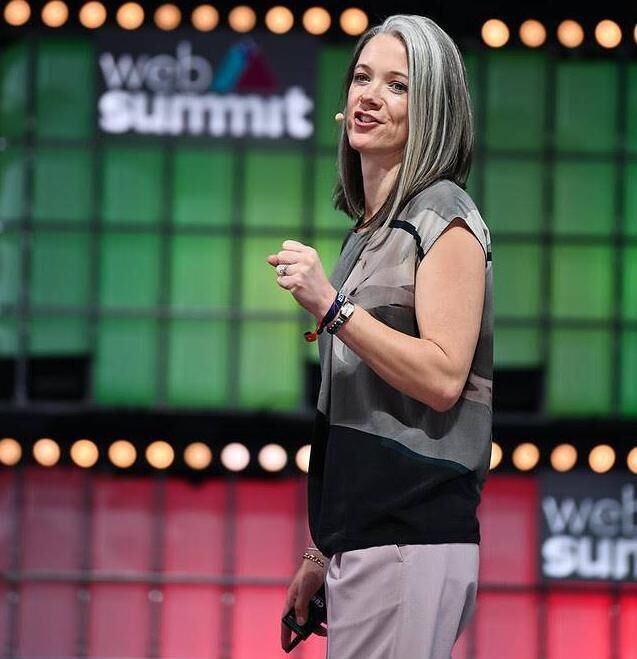
“What we are seeing is a big culture shift in people acknowledging some very real and present mental health problems, including anxiety, depression, and Covid fears, too,” says Alison Darcy, a clinical research psychologist trained in UCD and Stanford, and founder of Irish mental health startup Woebot Health, whose app provides therapy, via chatbot.
“With any kind of grief, it’s all about processing, and processing, and processing some more,” she says.
“So the fact it’s all anyone can talk about is actually a good thing, because even just externalising what you’re feeling can be very helpful," she says.
"But there is a trick to understanding — is this regular grief, or is it what we call complicated grief, which has a lot more maladaptive symptoms associated with it. When the feelings are not going away, when you are not moving past it, when it’s interfering with your life and making you distressed in and of itself, that’s when we would say reach out to family, friends, or a professional if possible.”
Alison says that’s especially important, for help dealing with issues like self-blame — the heavy burden of wondering if you could have done something differently.
“That’s a big issue,” Prof Wykes agrees, “where people feel they failed in some way, that they need to ‘save’ the other person. There’s a point at which you have to say: ‘Well, there’s nothing I can do, their belief is a part of them’, and either you accept that or you walk away, because if you can’t accept it, it’s going to produce major issues for your mental health. It is not your responsibility to change their mind.”
It is, of course, not as simple as radical acceptance, or severing ties. Not for Jane, with three children, nor John with an at-risk mother, nor Mary, after decades in a friendship with someone she now feels she doesn’t recognise.
Nor can Dorry Segev just walk away from patients. Along with his role as a leading epidemiologist, he’s also a transplant surgeon, now dealing with patients in need of vital organs, who are suddenly refusing vaccinations. He says:
"And that’s because of the politicisation around all this," he says. "I’ve never before in my career seen anything like this. We’ve gone off the rails in the US, polarising a public health issue.”
And Ireland has much less experience than the US with polarisation generally. If countries were families, ours is far from the most dysfunctional, and relatively speaking, has a more unified mindset than most.
To experience radicalisation from afar is one thing. To hear it at home, even from such a small but vocal minority, is quite another.
David Gilbert experienced this recently in his own circle:
It was amazing to me how one friend, the words he was using around refusing the vaccine were almost quoting verbatim things I’ve been hearing in my reporting on QAnon and other conspiracy theories and extremist groups in the US for years.
“But now it’s coming from your friends and family here at home. That’s probably more disturbing than anything else, and unfortunately that’s probably going to leave a permanent mark on our society.”
And maybe that, more than anything, is the biggest fear, for the vaccinated. Despite new variants; new boosters; new Nphet advice; new Niac announcements; new concerns about schools, the entertainment industry, the economy, and everything else besides, there is an understanding and a faith that eventually there will be a return to something more normal, even if that’s a normal that includes Covid, long-term. Of that, those who trust in science are sure.
Life will go on — but will these relationships?
Alice returned from Wonderland after her trip down the rabbit hole — will or can anti-vax loved ones do the same? That’s a question neither Nphet nor Niac can answer.

CONNECT WITH US TODAY



Be the first to know the latest news and updates