Herd mentality: What is the national herd and why does it matter?
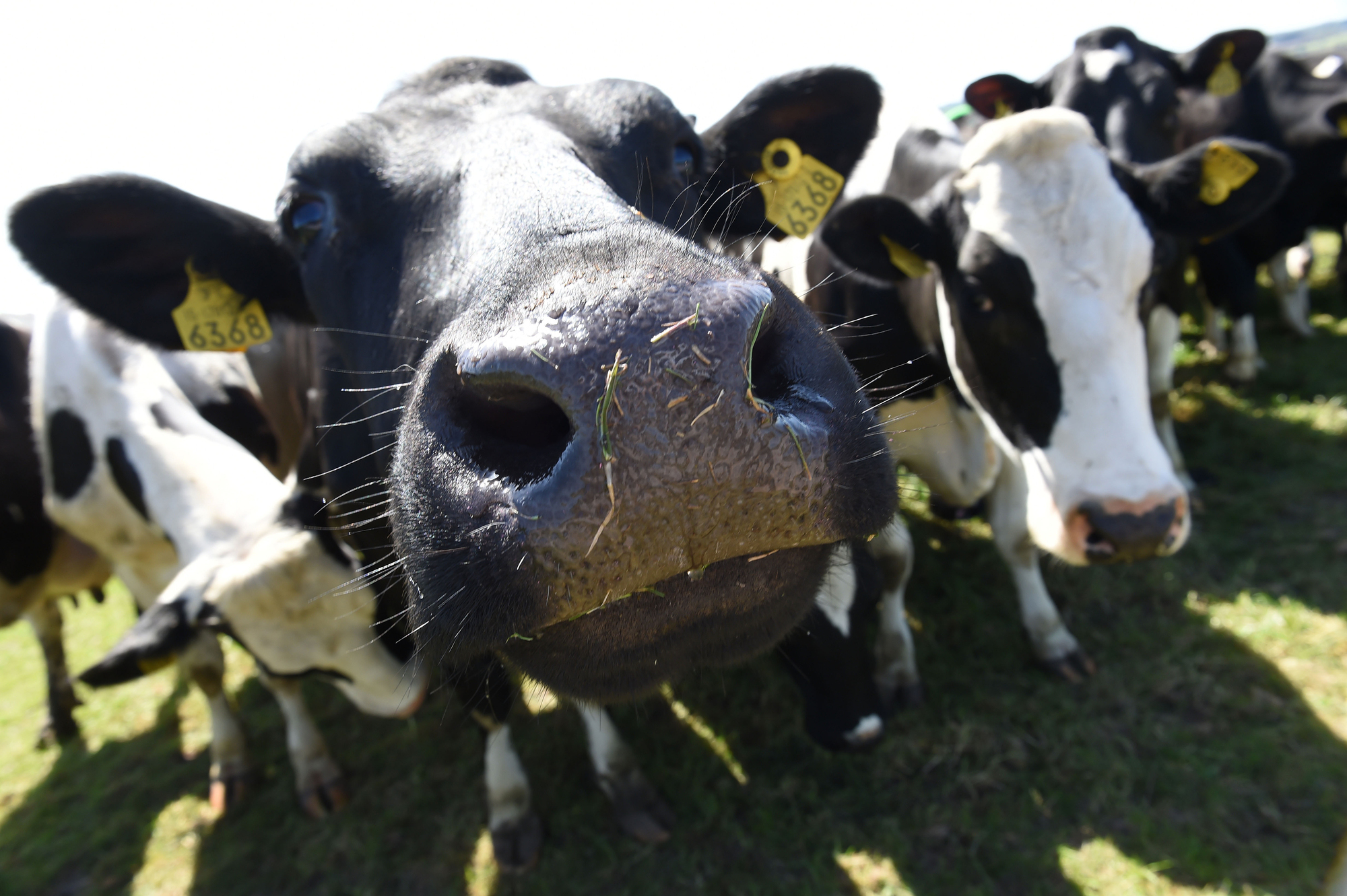
What exactly is the ‘national herd’, and why does it matter? Irish Examiner Farming Editor Rachel Martin explores the term, its history, and why cows and their burps are a hot topic in the context of the climate crisis.
Herd mentality: What is the national herd and why does it matter?

To cut or not to cut — that’s the question that has obsessed politicians and farmers alike in recent months as our carbon emissions come under the spotlight.

In the climate change numbers game, the focus on farming — one of the largest contributors to greenhouse gas emissions in Ireland — has been on the size of the national herd, or the overall numbers of cows in the country.

The maths are simple and crude — cut the numbers, and you cut the emissions. Fewer cows and sheep mean less methane gas — one of the most potent greenhouse gases.

But it’s not that simple. While methane is around 28 times as damaging as CO2, it is a short-lived gas that dissipates after around 12 years, a fraction of the 1,000 years CO2 takes to break down.

The challenge in reducing methane is that it is a natural byproduct of how cattle digest forage, making it is difficult to reduce its production without also reducing agricultural productivity.

Rumen fermentation, the process by which cattle digest their food, accounts for up to 57.5% of Ireland’s methane emissions, according to the Environmental Protection Agency, with 95% this expelled through the mouth in the form of burps — you can guess where the other 5% is emitted from.

Because of its reliance on pasture-based livestock farms, some models have suggested that Irish agriculture would need to cull as many as 1.3m cattle to reach net-zero.

However, it’s also an issue farmers would like to overcome, as methane production is thought to sap up as much as 12% of the nutrient energy a cow eats — energy that would otherwise be used to produce meat and milk.

That means that finding a way to reduce this volume of methane produced by livestock would lower input costs, and therefore, improve the bottom line — if you’ll excuse the pun.

Cop26

The scale of the problem was hammered home at this week’s Cop26 conference, with the Global Methane Pledge calling for a 30% reduction in international methane levels by 2030 compared to 2020 levels.

Methane has a 25 times greater heating impact in our atmosphere than carbon, and concentration levels have increased more than 150% in the last decade. But it is also a “short-lived” gas, meaning any meaningful reduction of methane in the atmosphere will have direct impacts on global warming.

Much like the term “national population”, the term “national herd” simply refers to the total number of cattle in the State (sheep would be considered part of the “national flock”). However, the phrase has not always been used in this way, which may explain some of the confusion.

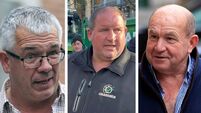
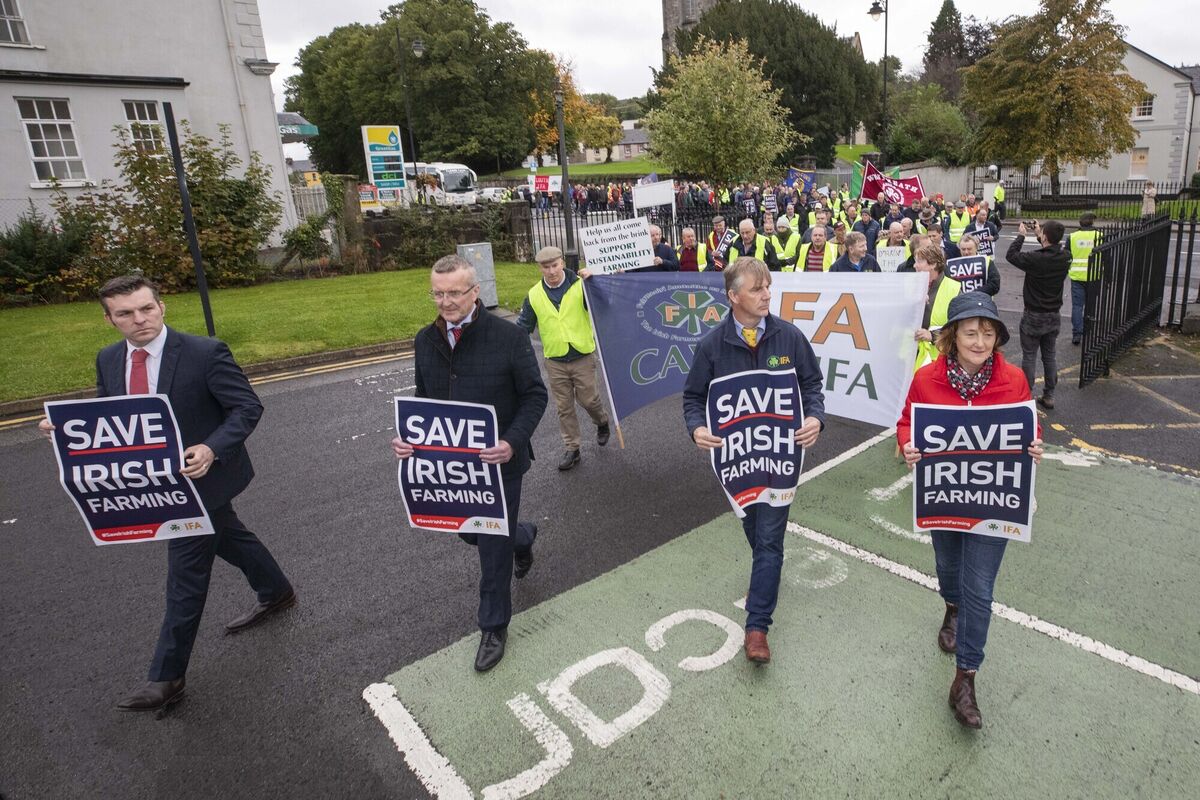
IFA president Tim Cullinan, and IFA representatives including at a farmers’ protest in Cavan Town. 	Picture: Finbarr O’Rourke
IFA president Tim Cullinan, and IFA representatives including at a farmers’ protest in Cavan Town. Picture: Finbarr O’Rourke

The term first appears in Dáil Éireann records in 1939, when the then-minister for agriculture responded to a question on the use of unlicenced bulls in privately owned herds. In this context, the term is used to mean all the cattle in Ireland.
“Since the putting into operation of the Live Stock Breeding Act, proceedings were instituted by the department in 336 cases,” said James Ryan. “In 306 cases convictions were obtained, and in nine other cases the defendants were dealt with under the Probation of Offenders Act.

“I am satisfied that bulls that would bring about deterioration in the national herds are no longer used; but as the standard can be raised only gradually, some time must necessarily elapse before all the bulls licensed are such as will result in a marked improvement in livestock generally. A definite improvement in this matter has, however, been already secured as a result of the administration of the act.”

In Britain, the term can be traced back in official records as far as 1882, when, in a parliamentary paper, HM Jenkins, one of the assistant commissioners the secretary of the Royal Commission of Agriculture, reports on a mission to France and refers to the “national herd of shorthorns” bred at Haras du Pins in Normandy, a state-owned stud farm.

Racing fans will know the site today is synonymous with thoroughbred horses. However, it is also home to the National Institute for Agricultural Research and its herd of 1,000 cattle.

It appears that, in this context, the “national herd” refers to state-owned cattle.

However, in later references in the 20th century, the term repeatedly acts as a collective for all the cattle in a country, both privately owned and state-owned, and is referred to repeatedly in official documents in England, Scotland, and Ireland.

Discussions surrounding cuts to the number of cows in Ireland have become extremely emotive, as farmers warn that fewer cows will mean less meat or milk. As this is what farmers are paid for, they warn that reducing current sizes will make farms unviable.

However, it’s important to note that farmers are already essentially limited in the number of stock they can keep based on nitrates loading requirements, which means they must have access to enough land to spread their livestock’s slurry on without overloading the soil.

Ireland’s 6.9m cattle are mainly owned by individual family farms — with 111,300 livestock farms in the country, putting the average herd at 62 cattle. You can break that down further by sector, which puts the average beef herd at just 14 animals, while dairy herds tend to be larger, with an average of 80.

The State does own some cattle, mainly those at the State-owned Teagasc sites, which are used for research and education purposes. However, the vast majority of cattle in Ireland are privately owned.

There has been a lot of discussion about changes to cow numbers — the number of dairy cows in Ireland has increased, however, the overall number of cattle has stayed relatively stable.

The national dairy herd grew by 118,500 cattle in the last year, while beef cattle numbers fell by 40,473 over the same period.

Shift from beef to dairy

Many farmers have shifted from beef to dairy in recent years, as it is seen as the most profitable of the livestock sectors, especially during the beef crisis of 2019-2020 when prices crashed below the cost of production.

Cork has the most dairy cows; it’s home to around a quarter of the total herd, or 388,831.

The figure is over 200,000 more than the number of dairy cows in Tipperary, which ranks second highest, and is even higher than the number of dairy cows in the whole of Northern Ireland, where the Department of Agriculture (DAERA) states that 247,000 dairy cows are registered.

Generally, the term “national herd” is used by governments
to compare international agricultural statistics. However, some farmers believe it distances talk of cutting livestock numbers in the country from the effects that would have on the family farms.

Irish Farmers’ Association deputy president Brian Rushe, who runs a dairy farm in North Co Kildare, is among those who object to the term.

Rushe said he feels the term “national herd” has been “weaponised” within the last year.

“When you hear the term ‘national herd’ in the media, it has always got negative connotations,” he said.

There’s this notion of this mythical herd of an even million cattle sweeping across the country like locusts, that’s the connotation that it gives.

“It has become a negative term. To me, there is no such thing as a ‘national herd’. I’m a herd owner.

"I rely on my herd of cows to provide me a living and to cover my costs
of production.

“Each herd of cows belongs to an individual family, and that could be a farmer with 10 cattle or a farmer with 500 cattle on the other end of the extreme.

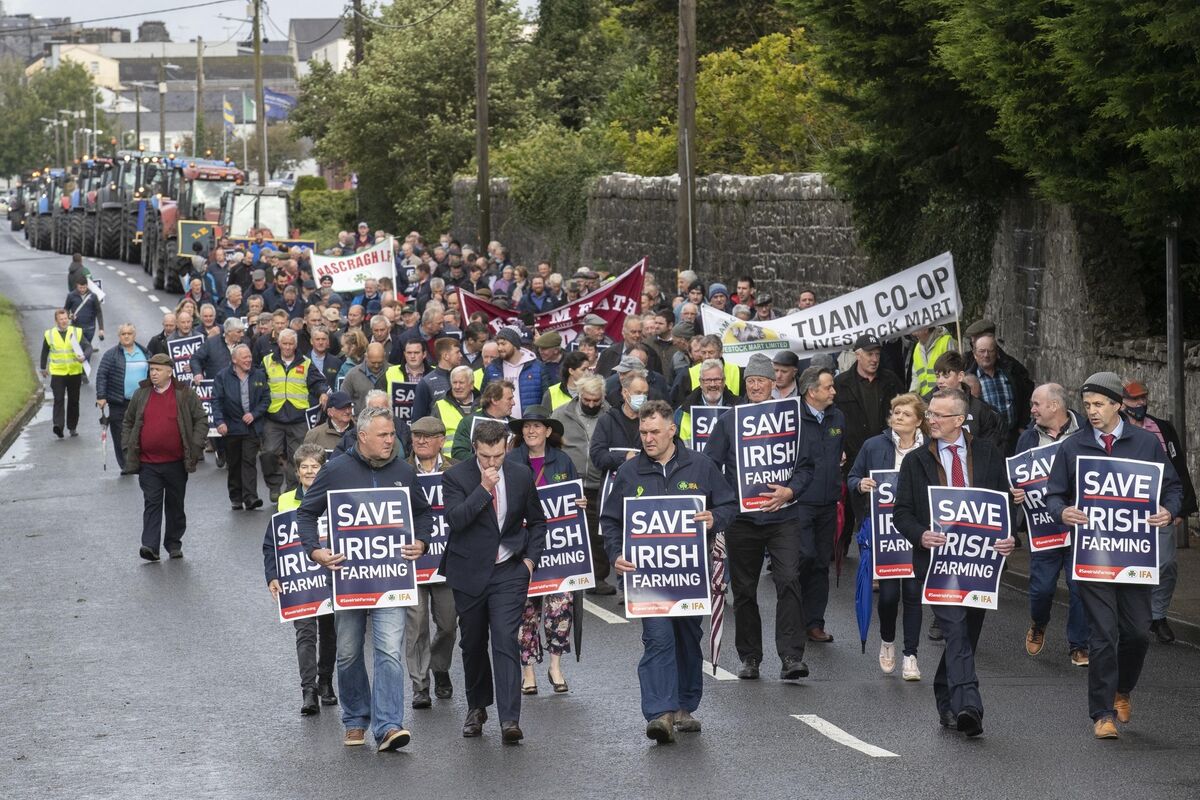
Farmers march in protest in Roscommon town last month. Picture: Finbarr O’Rourke

“The size of the cattle population in Ireland ebbs and flows, depending on what policy decisions are made and what commodity prices are like.

“When people talk about cutting the national herd, it’s an easy way of sanitising what is a very serious and worrying issue for Irish farmers.

“What they are really saying is taking away a farming family’s ability to make a living from what they are doing.

“There’s a reason there are cattle there — they are not there are pets or as a hobby. We care about our animals, they are our ultimate responsibility; but that’s what it’s used to sanitise — the culling of those animals.”

The Government insists there are other ways of reducing the impact of cows and farms without having to cut herd numbers.

It says that the early calving and early slaughter of livestock will go a long way to reducing carbon emissions by between 22% and 30% in the sector.

To some, the sector has gotten off lightly, with other sectors hit with far more ‘ambitious’ targets. However, farming lobbies claim the sector is being unfairly victimised.

However, with hot air on both sides, it’s a waiting game to see if the numbers eventually stack up.

CLIMATE & SUSTAINABILITY HUB

More in this section

Lunchtime News

Newsletter

Keep up with stories of the day with our lunchtime news wrap and important breaking news alerts.

Cookie Policy Privacy Policy Brand Safety FAQ Help Contact Us Terms and Conditions

© Examiner Echo Group Limited