Kieran McCarthy: What lies beneath - Digging up Cork’s past
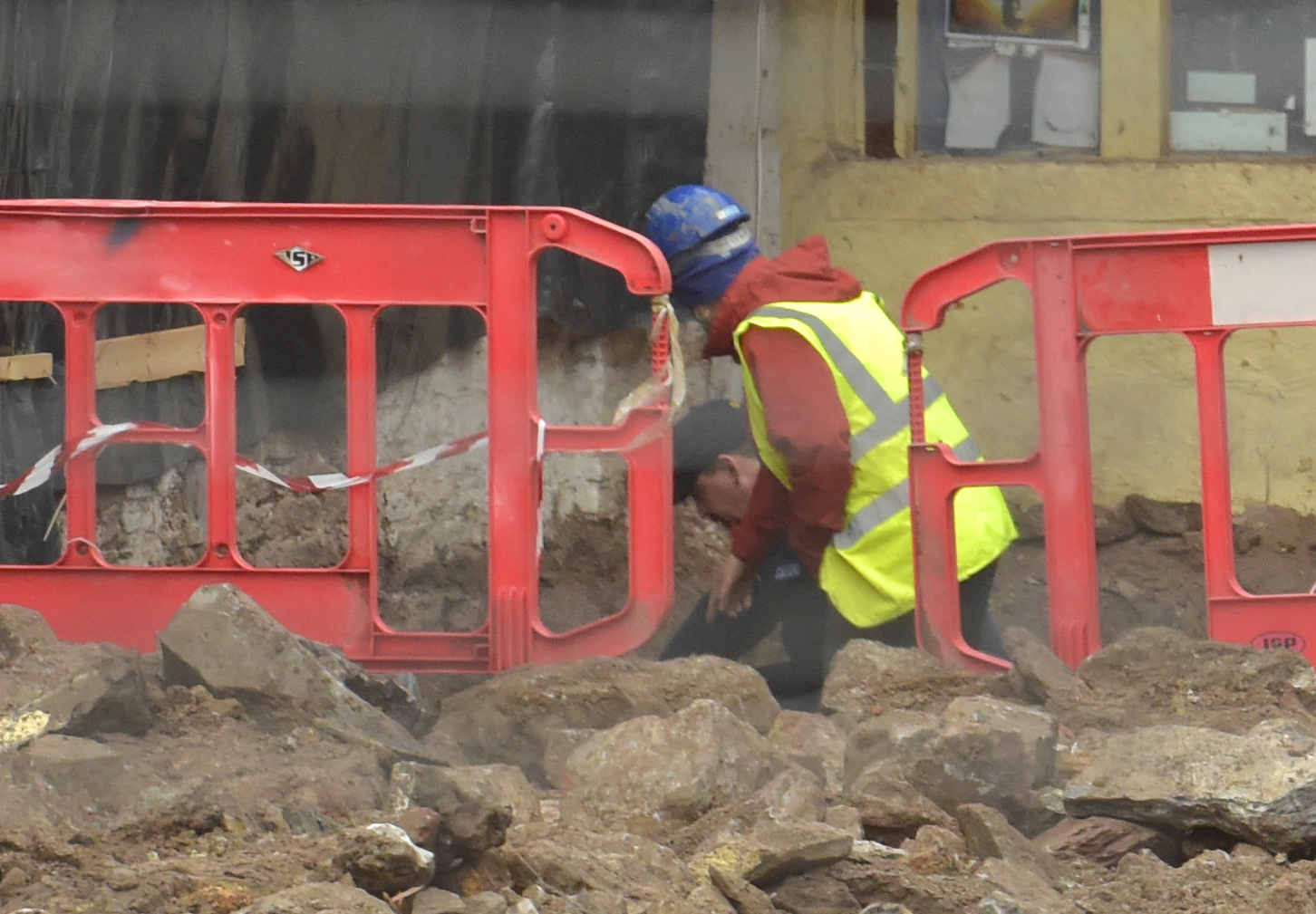
Will the discovery on the site of the former Nancy Spain’s pub on Barrack Street give us an insight into Cork’s murky past? Or is it something less sinister? Kieran McCarthy reports
Kieran McCarthy: What lies beneath - Digging up Cork’s past

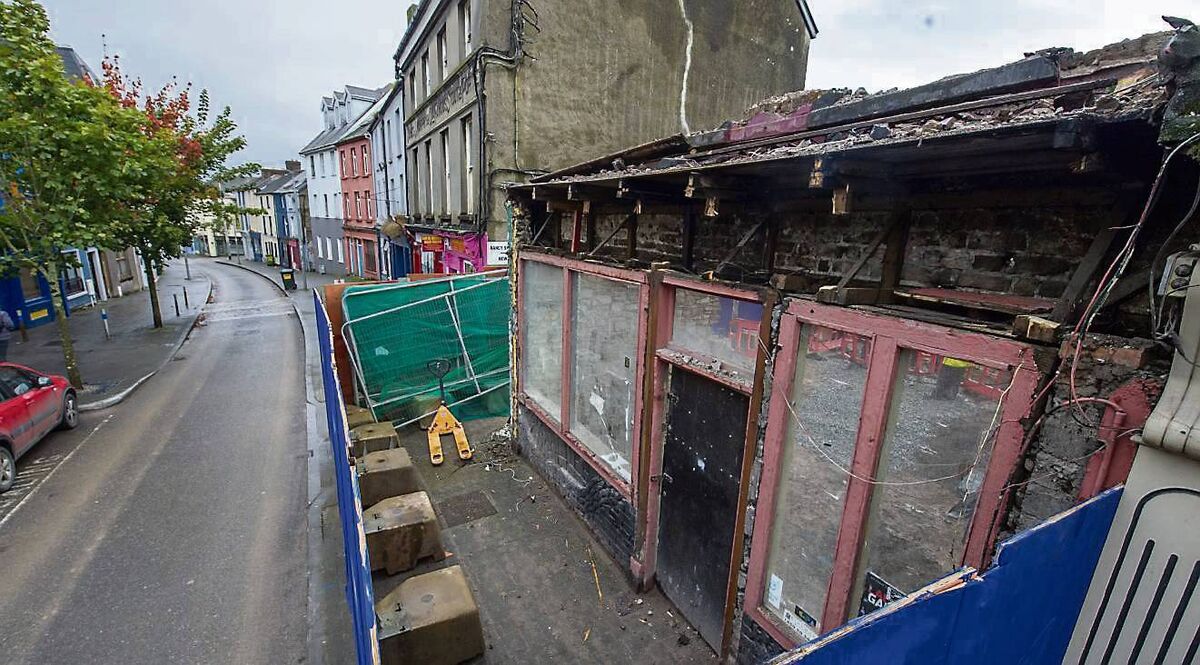
Could the ‘Barrack Street Six’, found on the site of the former Nancy Spain's pub recently, have been some of the many who were killed and buried quickly after the Siege of Cork in 1690? Photo: Dan Linehan

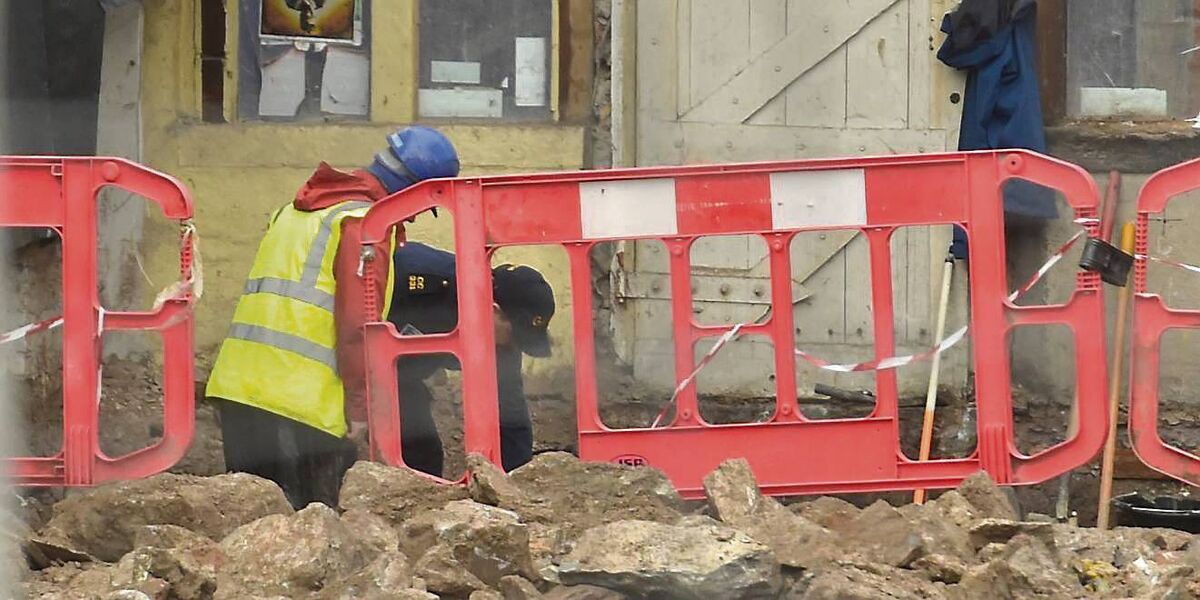
It has all the makings of a medieval mystery — the grisly discovery of skeletal remains of six in one of the oldest parts of Cork city.

To add to the intrigue, there were initial rumours that they were found with their hands tied behind their backs.

But how did they get there? What secrets do they hold? How did they meet their end? Will the discovery on the site of the former Nancy Spain’s pub on Barrack Street give us an insight into Cork’s murky past? Or is it something less sinister?

Early suggestions from Cork City Council’s chief archaeologist and author, Ciara Brett, proposes the bodies are at least 300 years old. That insight pushes the skeleton story back into the last days of the walled town of Cork and its post-medieval world.

The finds have also put a focus on how important streets such as Barrack Street are to this ancient port city’s lengthy history and savage and resilient past. The Barrack Street area is all about layers. 

Circa 600AD, St FinBarre reputedly established an early Christian monastery, now marked by the site of present day St FinBarre’s Cathedral.
Between c.820AD and c.1180AD, people of Norwegian and Danish descent intermarried with the Irish population and settled the area in wooden houses and traded with local Gaelic families such as the McCarthys and other ports in Ireland, England and France. Their houses aligned several laneways — Keyser’s Hill being one that has survived the test of time.

It is known that a Danish area of settlement was located east of the site of the ancient monastery site on the southern hillside extending from what is now the present-day Frenches Quay-Barrack Street area to the area of Georges Quay.

It is recorded that the settlement possessed a little harbour of timber quays, which is reflected in the present name Cove Street — and onto which other laneways were built. Such laneways provided the early linear and narrower forms of the streets we see in the Barrack Street and Douglas Street area today.

Walking through such laneways and streets 800 years ago, one would also stumble upon a Christianised landscape with timber and stone quasi-structures, complete with burial grounds.

A study of Cork City’s burial places, published by Cork City Council, researched by Hillary Kelleher and Fintan McCarthy, and edited by Ciara Brett, highlights at least six churches with burial grounds built in the late 12th-century onwards in the southern suburbs around what is now Barrack Street and its surrounds.

These included St Mary del Nard Church (now marked by Elizabeth Fort), St Brigid’s Church (now St James Square), St John’s the Evangelist, Benedictine Church (formerly the White Street carpark area), St John the Baptist Church (now the Parkowen site), St Michael’s Church (adjacent to the present-day Elizabeth Fort) and St Stephen’s Church (formerly adjacent to Stephen Street).

Were the ‘Barrack Street Six’ part of the congregation of one of the six churches built in the late 12th-century onwards in the southern suburbs? Photo: Dan Linehan

Some of the latter graveyards of these latter churches would have still served the late 17th-century and early 18th-century population, of which the ‘Barrack Street Six’ may have been a part, if they were residents of the town.

Some of the older medieval churches are marked in Munster Plantation President’s George Carew’s commissioned Map of Cork.

The iconic map or sketch of the walled town of Cork appears within his book Pacata Hibernia. It is dated to the late 16th century — sometime in the 1590s perhaps. Here three additional larger churches are depicted – the Franciscan abbey (formerly on what is now the North Mall), Red Abbey or the Augustinian Abbey (the tower still survives off Douglas Street), and St Mary’s of the Isle Dominican Abbey (now the site of Crosses Green Apartments).

All three churches also had burial grounds plus there were several medieval churches across the northern suburbs of the medieval town. The Dominican Abbey was located on a marshy island to the south-west of the walled town. 

It had a church with a large steeple with an adjacent water mill built next to the river. The name of the island was Sancta Maria de Insula or St Marie’s of the Isle — the area of present day Crosses Green.

Archaeological excavations of the site occurred in 1993 during the laying of the foundations for the Crosses Green Apartment Complex. The lower portions of the church, cloister and other domestic buildings were discovered under the watchful eye of archaeologists, Maurice Hurley and Cathy Sheehan, and their team. 

A total of 200 medieval graves were found. The majority of the graves were discovered within the boundaries of buildings especially within the church and cloister area. In her report, archaeologist Catryn Power gives us a glimpse of their lives. 

Three-quarters of the individuals were found to be adults, mostly aged in their 20s. Just less than half were found to have degenerative joint diseases or some form of arthritis, and in several nutritional deficiencies, tumours and dental diseases were noted.

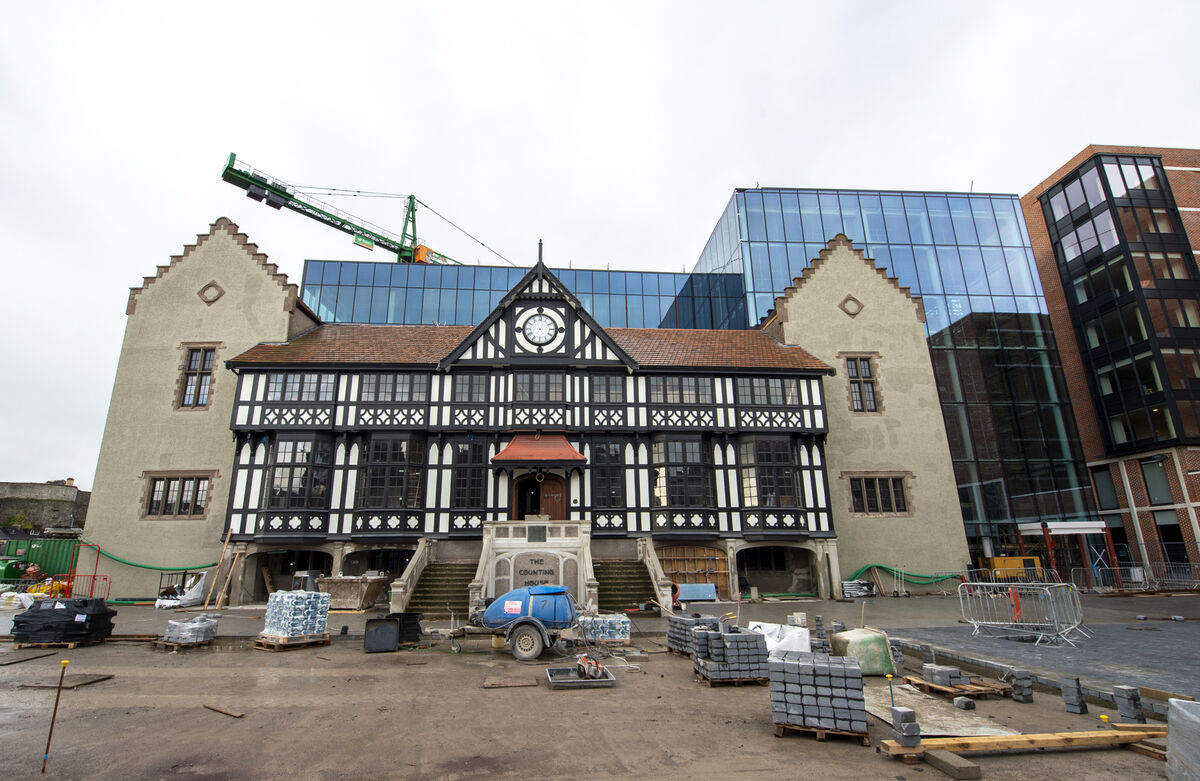
 The Tudor-fronted Counting House at the old Beamish & Crawford brewery where one of the stone blocks from the city's ancient gates is thought to be at the top of the steps. Photo: Dan Linehan
The Tudor-fronted Counting House at the old Beamish & Crawford brewery where one of the stone blocks from the city's ancient gates is thought to be at the top of the steps. Photo: Dan Linehan

In essence, George Carew’s map is an English-made one that depicts control of territory — a militarised maritime zone of sorts. Numerous structures such as town walls, gun ships, and watch towers show a town prepared for any potential attack.

There are interesting nuances of savagery on Carew’s map such as dismembered heads of executed criminals on spikes shown at South Gate and North Gate drawbridges. Legend has it that one of the stone blocks still exists and today can be seen at the top of the steps of the Counting House in the former Beamish and Crawford Brewery site on South Main Street.

The more malicious criminals such as murderers and anti-crown supporters were hanged at Gallows Green off Bandon Road, one of the city’s large southern approach roads. One of the earliest recorded executions took place in 1644 at the gallows when Lady Roche Viscountess Fermoy, refused to renounce her religion. She was deemed one of the first high-profile Catholics to be hanged.

In 1798, it is well recorded that the Cork men involved in the United Irishmen were hanged en masse at Gallows Green. By the opening of the new gaols in the city in the 1820s – Cork City and County Gaols – the activity of public hanging was moved to those sites.

Gallows Green was still a focal point of public gathering especially in 1843 for Fr Mathew’s temperance campaign and his public orations. The site though was subsumed into new housing developments in the later 19th century, with just the memory of the gallows surviving.

However, the physical memory of Gallows Green and where all the bodies were placed came to surface 30 years ago.

In July 1990, human remains were uncovered in the back garden of a private residence in Greenmount, Cork City. The original ground level of the garden was almost two metres higher than the ground level of the house. It was while reducing the level of the garden that bones were discovered.

The former Nancy Spain's pub on Barrack Street, Cork, where the ‘Barrack Street Six’ were discovered. They could have been some of the unfortunates who died by public hanging at Gallows Green hundreds of years ago. Picture: Dan Linehan

At least 15 bodies were recovered from the area. None of the skeletons was complete and many of the bones were broken.

In one area all the long bones were stacked neatly together with the skulls lying close by. Were the ‘Barrack Street Six’ part of further bodies from Gallows Green deposited randomly underneath the city’s southern suburbs?

It is also worth nodding to George Carew's second map of the Walled Town of Cork, which was created shortly after the creation of the first.

This colourful Plan of Cork c.1602 is based in the Hardiman Collection at Trinity College, Dublin, of all places. In this plan, the emphasis is less on the height of the walls and more on the roads leading into the settlement.

It showcases one of George Carew’s greatest defence creations – that of Elizabeth Fort and one, which the ‘Barrack Street Six’ may also been connected to.

The distinctive star-shaped fortification of Elizabeth Fort, named after Queen Elizabeth I, protected the English garrison in Cork. Early representations of the fort show that it was an irregular fortification in design with stone walls on three sides and an earthen bank facing the walled town.

To enter into the interior, one had to cross a drawbridge through a portcullis gate and past a gatehouse. None of the original fort can be seen today.

In 1603, as a result of Cork Corporation’s refusal to honour the crowning of the Catholic King James I, the fort was attacked by supporters of the King, who considerably damaged the main structure. The attackers stole the guns of the fort and brought them into the walled town to cause civil unrest.

Nevertheless, due to the presence of the Lord Deputy of Cork, Lord Mountjoy and his forces, they seized the city and made the supporters of James I unwillingly rebuild the fort.

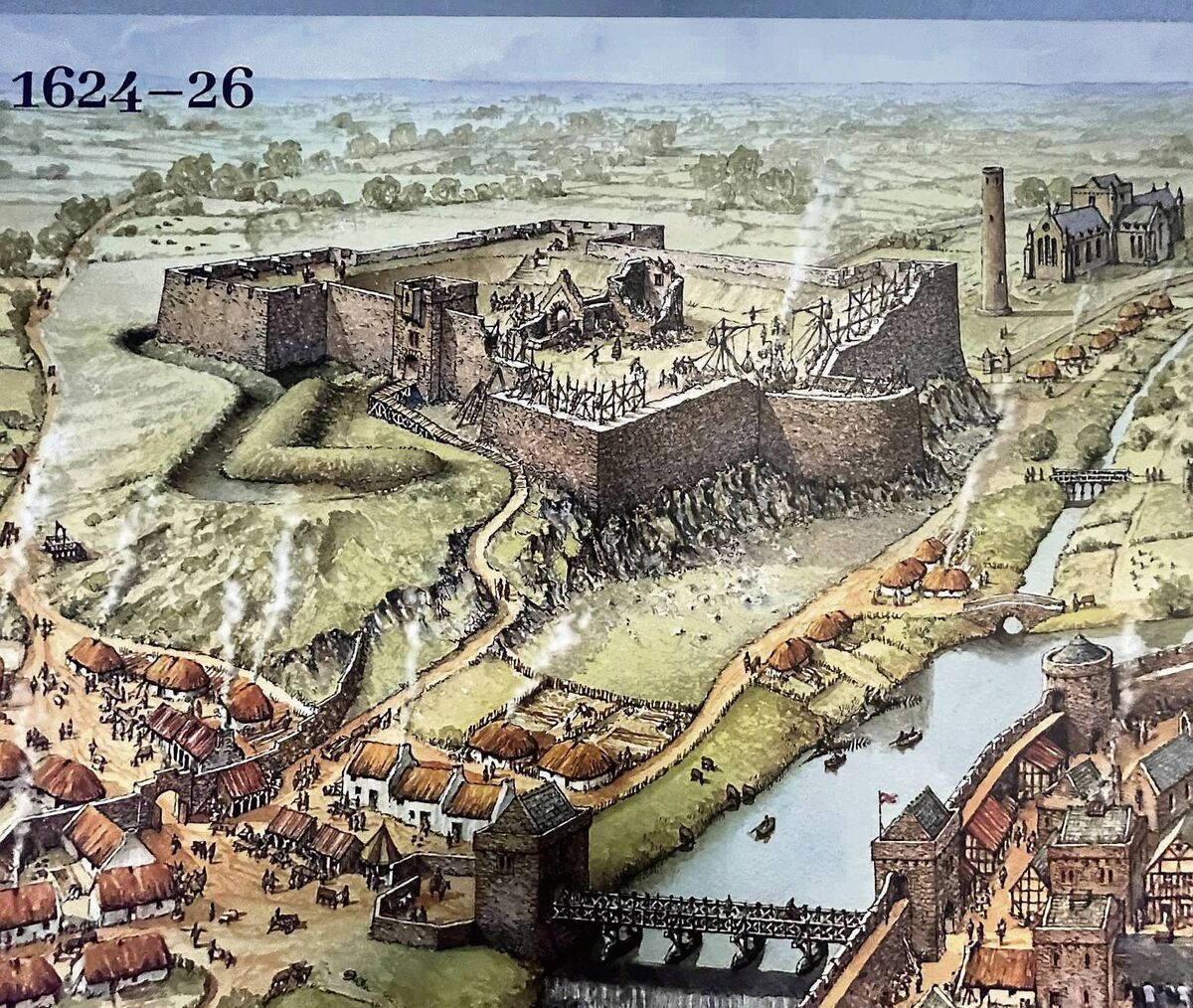
A reconstruction of life at Elizabeth Fort and its surrounds, c.1624, after it was rebuilt when it was attacked by supporters of the Catholic King James I. Image: Philip Armstrong, commissioned by Cork City Council

The new structure received the name New Fort, which is the one one can walk the ramparts of today (check out their information room as well). Maybe the ‘Barrack Street Six’ were part of those who rebelled, were executed, and ended up in a ditch.

Perhaps the six skeletons were connected to one of Cork’s greatest historical episodes — that of the Siege of Cork. In September 1690, the Earl of Marlborough as well as a large contingent of men were despatched from England to take back the walled town of Cork from the Catholic or Jacobite supporters of James II for King William.

On Monday, September 22, 1690, Marlborough arrived in Cork Harbour with over 80 ships with approximately 5,000 men.

The following day, Marlborough's troops disembarked at Passage West. At an early stage, it was decided by Marlborough that the main defensive disadvantage of the walled town area and its low-lying nature overlooked by steep hills should be exploited.

To Marlborough, control of the hills as well as the bombardment of cannon meant the rebels within the walled town would have to surrender. The northern liberties of the town were secured with the assistance of a cavalry comprising of enlisted Dutch and Danish soldiers amounting to 1,200 men.

After advancing to the southern liberties of the town, the English regiment set their sights on Cat Barracks, a small assist barracks near to Elizabeth Fort. The defenders retreated into the town but first set fire to the southern suburbs, the area now occupied by Douglas Street, Cove Street and Barrack Street.

Finding Cat Barracks deserted, Williamite forces immediately took possession of it. At this point in time, the focus of attack was moved towards attacking Elizabeth Fort, a prominent stronghold of the Jacobite side.

During the ensuing night, the attackers moved closer to the fort and hid themselves in ditches and hidden laneways. It was only a matter of time before Elizabeth Fort was surrendered and following that the Jacobite supporters within the walled town lay down their arms.

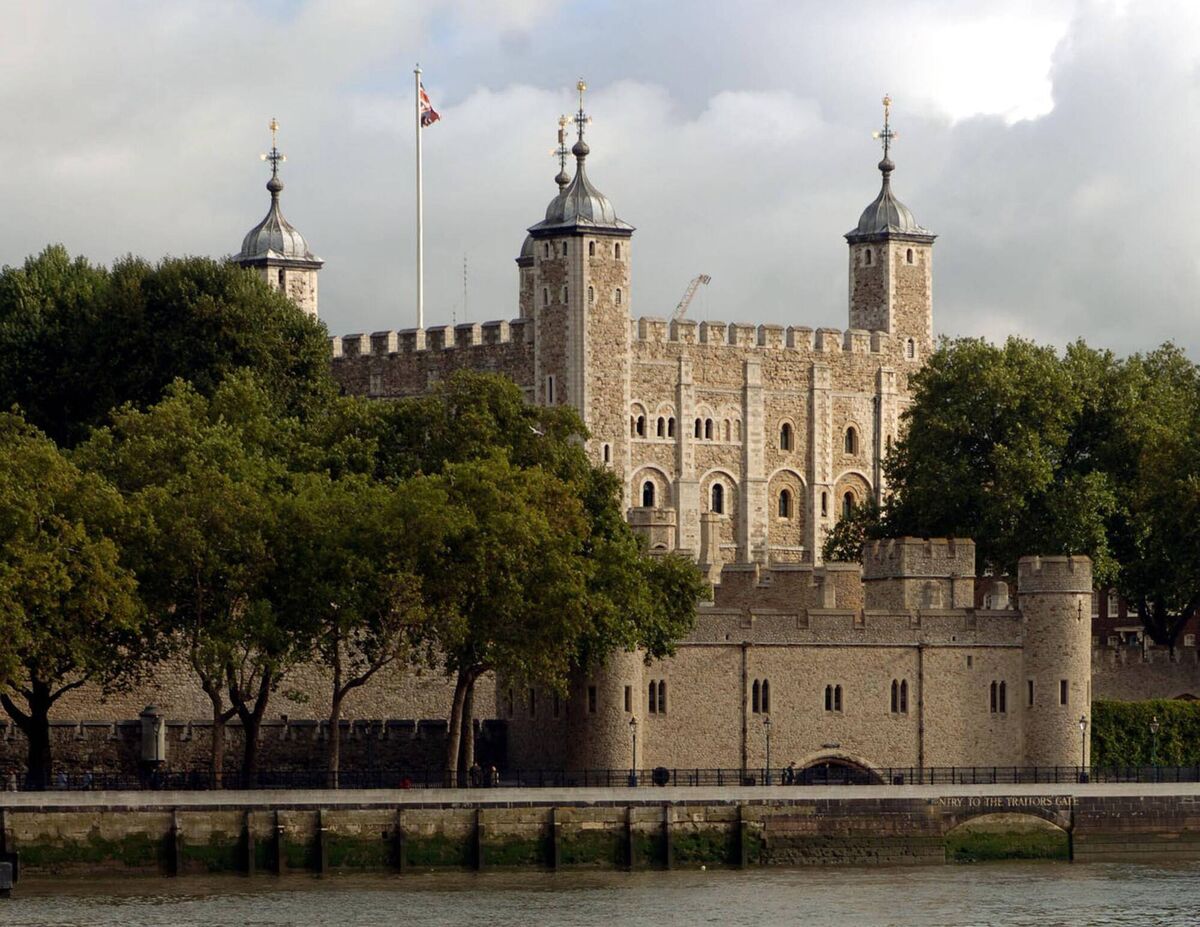
Many defeated Jacobites from the Siege of Cork in 1690 were beheaded at the Tower of London.

Large portions of the town walls, North and South Main Streets, laneways and houses were destroyed. The principal officers on the Jacobite side of the Siege of Cork in 1690 were taken away to the Tower of London in England to be beheaded.

Some of the 4,000-5,000 Jacobite soldiers were taken to be imprisoned in Clonmel while large numbers were transported to London to be imprisoned.

It is not recorded where all the casualties from the siege were buried on both sides of which there must have been many. One could be bold and speculate that six of the casualties from the Siege of Cork found themselves in the heat of battle next to Elizabeth Fort where they were killed and buried quickly.

Whatever their end, the discovery has again ignited debate about what lies beneath the city and what it can tell us about how Cork’s rebellious and resilient sense of place came into being.

Dr Kieran McCarthy is an Independent City Councillor, Cork local historian and author. View his website, www.corkheritage.ie for more on his walking tours, history trails and writings.

Learn more of the work of the archaeological unit in Cork City Council under Archaeology and Council Services at www.corkcity.ie

x

More in this section

Lunchtime News

Newsletter

Keep up with stories of the day with our lunchtime news wrap and important breaking news alerts.

Cookie Policy Privacy Policy Brand Safety FAQ Help Contact Us Terms and Conditions

© Examiner Echo Group Limited