Who killed Fr Niall Molloy? The 36-year search for answers

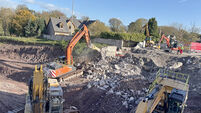
Fr Niall Molloy was found dead in the bedroom of his close friends, Richard and Teresa Flynn, at the end of a wedding weekend in 1985.
Time has not dimmed their quest for justice. Thirty-six years after their loved one Fr Niall Molloy met a violent death, his family continues to seek answers.
The RTÉ television documentary, the second part of which is to air on Monday, has reawoken interest in the case and introduced it to a whole new generation.
How could the violent death of a much-loved priest, for which there was a confession and huge circumstantial evidence, not have resulted in a conviction?
Had it anything to do with the social standing of the perpetrator, who, in the immediate aftermath of the incident, told a garda he had assaulted the deceased priest? What role did a judge play in ensuring a jury never got to decide on guilt or innocence?
Fr Molloy’s family is still pursuing answers with the same vigour they applied in the immediate aftermath of the violent death.
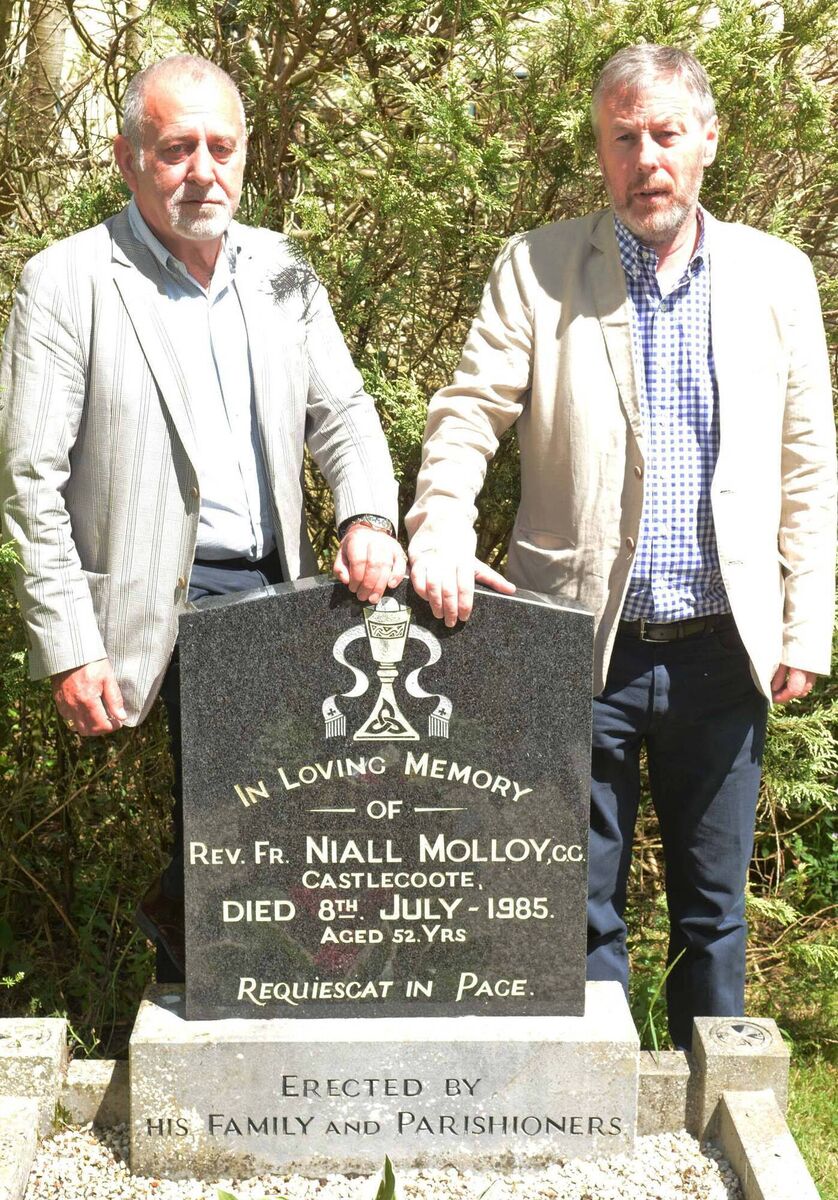
“We want what we hoped for all along, which is a commission of investigation into the case,” Fr Molloy’s nephew, Henry McCourt, told the .
“I know it’s a cliché, but we are doing this in the hope that it won’t happen to anybody else. And it did happen. These events did actually take place as seen on the documentary.
"Sometimes maybe you might regret that we were too dignified and not more assertive but that is the way it has been.”
The bare facts are well-versed by this stage. Sergeant Kevin Forde was awoken at 3.15am on July 6, 1985. The local parish priest was knocking on his door next to Clara Garda station in Co Offaly.
“There’s a priest dead in the Flynns’ bedroom at Kilcoursey House,” Fr James Deignan told the guard.
It was, the parish priest said, an awful scandal and he wondered could it be kept quiet. Not possible, the sergeant told him.
Fr Niall Molloy had been dead for some hours when Sgt Forde was alerted. Over two hours earlier, at about 1am, Fr Deignan had arrived at Kilcoursey House, an old country pile outside the Co Offaly town and home to Richard and Teresa Flynn, a wealthy couple who had various business and equine interests.
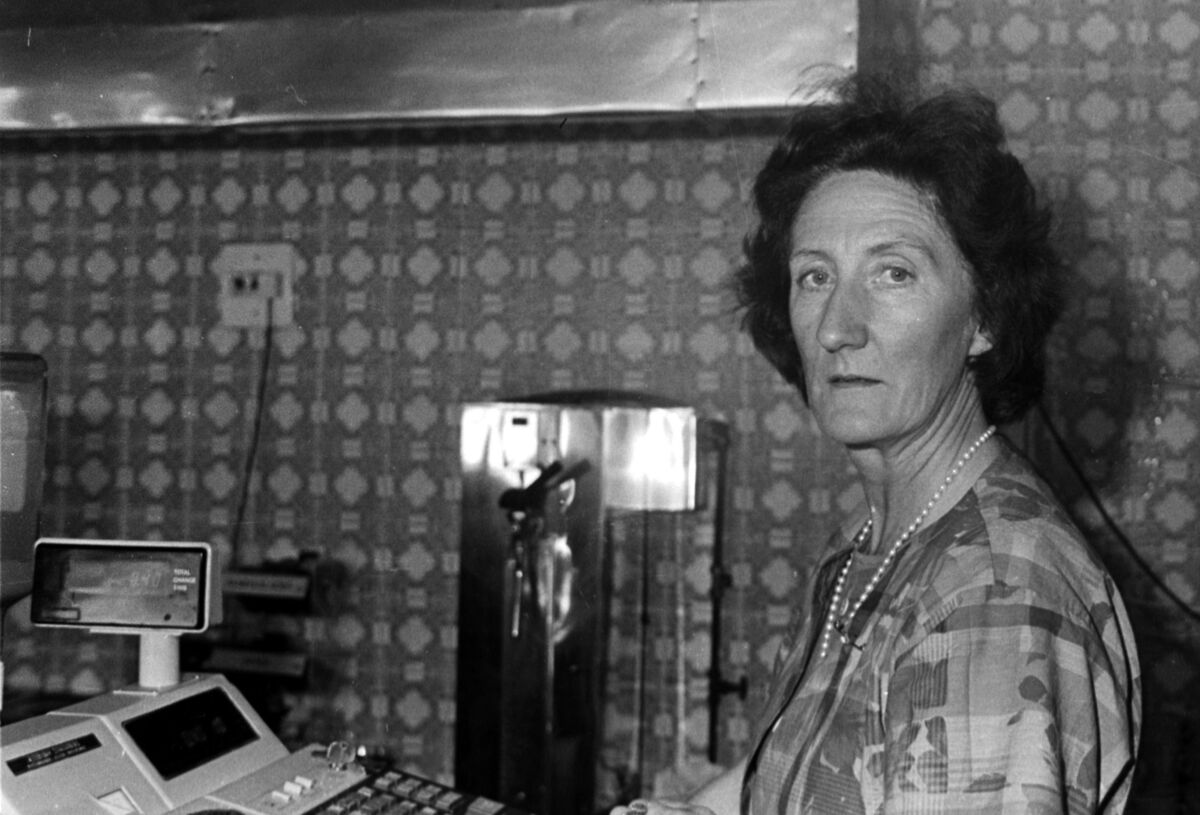
Fr Deignan had been contacted by Richard Flynn, asked to come to the house to deliver the last rites to a person. Fr Molloy was on the floor in a bedroom, his face bruised. There was a long trail of blood across the floor, the result of an attempt to drag Fr Molloy towards the bedroom door.
A pathologist would eventually determine that Fr Molloy must have been hit in the face five or six times, possibly by a fist. The medical evidence would be that he was alive for some time after receiving the blows, but not necessarily conscious.
At 1.40am, Richard Flynn’s son David and his wife Ann arrived, having driven from their own home in Tober, Co Offaly. A local doctor arrived at 2am. He confirmed the priest was dead. While he was conducting his examination, Theresa Flynn was on the floor of the bedroom in hysterics. At some point over the following hour, she was brought to hospital.
Then, eventually, somebody decided it was time to call the cops. The delay in informing gardaí that somebody had died violently is an aspect of the Fr Molloy case that has haunted the deceased priest’s family over the past 36 years.
Another disturbing aspect for the family was the subsequent Garda investigation of Fr Molloy’s death. This led to his nephew Henry McCourt eventually lodging a complaint with the Garda ombudsman, GSoc. The result of that investigation was published in 2018.
GSoc pointed out it was precluded by law from investigating the actions of the members of An Garda Síochána who were now retired. However, the ombudsman commission did find the retention of files on the matter was wholly inadequate.
“It is accepted that this is an old case, now in excess of some 30-plus years.
"However the case involves death and has been an open investigation since 1985 and thus, regardless of the public profile of this case, the commission would expect that keeping all information and evidence safe and accountable would be a requirement until the case is formally closed.”
Richard Flynn was charged with the assault and manslaughter of Fr Molloy and stood trial at Dublin Circuit Criminal Court on June 12, 1986. Richard Flynn was represented by Paddy McEntee SC, the leading defence counsel of his day.
McEntee didn’t cross-examine the prosecution witnesses. The result was that the evidence was kept to a minimum, as there was little opportunity for witnesses to expand on the statements they made.
Then came the state pathologist, John Harbison. From him, McEntee extracted the nugget that Fr Molloy’s heart was not in the best shape possible. He asked Harbison whether this could have contributed to the priest’s death. Harbison couldn’t categorically deny such an outcome. Despite that detail, it was Harbison’s firm opinion that death had been due to the head injuries.
As a result of that exchange, McEntee applied to Judge Roe to direct the jury to acquit on the basis that there was a possibility that the cause of death was a heart attack. He also submitted that the evidence suggested self-defence on his client’s part.
After considering the matter, Judge Frank Roe duly called back the jury and directed them to acquit on both charges. While there may have been a legal basis to do so on the manslaughter charge, it is unclear the exact basis for throwing out the assault charge. In any event, that was it. The legal process was complete.
Richard Flynn walked free.
This matter has never been fully resolved. The prosecution lawyer, Raymond Groarke, wrote a report for the DPP on the matter after the trial. In it, he conceded that in relation to the manslaughter case, the application from McEntee was valid.
“If I had been defending the case, I would have been most surprised and disappointed not to have obtained a direction [to acquit] having regard to the evidence on cross-examination”.
However, Groarke had a different opinion on the fate of the assault charge. He reported that “the count of assault should not have been withdrawn from the jury. There was ample evidence for the jury to consider whether or not the defence of self-defence was valid. This is the case if there was no other evidence at all than that of the accused’s statement.”
Had Richard Flynn been convicted on the assault charge, it is highly likely that under the circumstances anything but a considerable prison term would have led to public outrage.
A jury decision, one way or the other, would have also provided some degree of closure to the case, ensuring it proceeded through the criminal justice system all the way to the 12 peers who are randomly selected to decide on the matter on behalf of society at large.
Instead, the priest’s family were left with the lingering sense that their 52-year-old uncle’s violent death has gone unanswered, constituting a miscarriage of justice.
In the years to follow, it would emerge that Judge Roe, who died in 2003, moved in the same horsey circles as the Flynns.
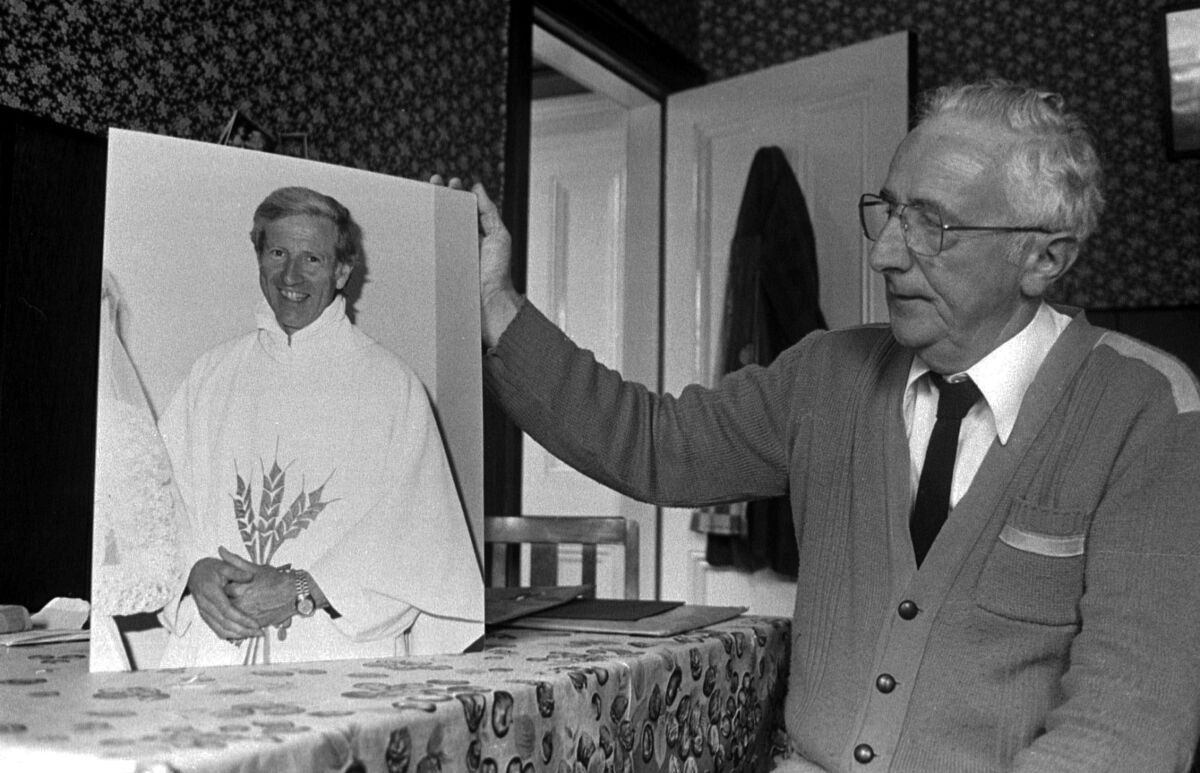
Six weeks later at the inquest in Tullamore, a jury returned a verdict that Fr Molloy had died from head injuries. Such an outcome was entirely incompatible with the result of the court case. If the man had died of head injuries, how exactly did he sustain such injuries?
In the years to follow, a number of incidents and developments added further to the mystery of the case. Sometime in 1986, Niall Molloy’s brother Billy received an anonymous letter. This purported to come from somebody who had witnessed a row between Niall and Richard Flynn at the Flynns’ daughter wedding hours before the incident in the bedroom.
The letter stated that “Fr Niall and Mr Flynn were fighting downstairs, Mrs Flynn got between them to stop them.”
The letter went on to claim the fight continued upstairs afterwards and bottles had been broken in the course of it. Two possible witnesses were interviewed by gardaí but nothing came of it.
There were disputes between the Flynns and Fr Molloy’s estate over property, including a horse and some paintings. In some minds, what emerged might have been probative evidence in the criminal trial as to motive.
It also emerged there had been a burglary at Fr Molloy’s home about six months before his death. The inference was that documents relating to his business interests may have been stolen. A cold case review came to the conclusion that while there had been a burglary, the only evidence available suggested a small amount of money was stolen.
Then, on the night of August 29, 1987, there was a burglary at the offices of the DPP in Dublin’s St Stephen’s Green. About 60 files, including that on Fr Molloy’s death, were taken, most of which were ultimately recovered in October 1991. The Molloy file didn’t show up until a house was searched in January 1993.
One of the main suspects for the burglary was Martin Cahill, the criminal known as The General. He would have plenty of interest in some files in the DPP’s office, but, ordinarily, that on Fr Molloy would hardly be among them.
However, with the case unresolved and dogged by suspicion, significance was attached in some quarters to the theft of the file in question.
In 2010, a series of articles on the case in the led to a decision to give the case a thorough going over. The cold case review team of An Garda Síochána, including 10 detectives, reviewed the whole file, made additional inquiries and conducted further interviews. Senior counsel Dominic McGinn was then asked to compile a report based on the cold case review.
Read More
He produced a comprehensive report in 2014. The report was critical of various aspects of the original investigation. The taking of statements in 1985 was less than rigorous or timely. The background to the relationship between the Flynns and the deceased man was not properly examined. There was no medical evidence about Theresa Flynn’s treatment at Tullamore Hospital on the night in question. The analysis of blood splatters, crucial to a murder investigation, was cursory.
McGill was particularly critical of the failure to properly analyse the blood spatters.
“This aspect of the investigation is particularly frustrating, because subsequently there was considerable conjecture about what may or may not have occurred at Kilcoursey House and a full and careful analysis of the pattern of blood splatters might have assisted in confirming or dismissing some of the suggested theories,” the lawyer reported.
Ultimately, the lawyer came to the conclusion that the case did not merit being the subject of a commission of investigation.
"Unfortunately, it appears to me that the precise truth of the events of the 7th and 8th of July 1985 cannot now be ascertained,” he reported.
Through it all, the family has maintained they want and deserve the truth. Along the way they provided their own research, which continues to raise questions. In 2015, they sought a commission of investigation from then justice minister Frances Fitzgerald.
“She came back to us after 14 months to say she wasn’t going to accede to our request,” Henry McCourt told the .
“GSoc was looking at the case at the time. But now their investigation is at the end of the road and they can’t take it any further because they are constrained by law in relation to retired members of the force.
“I would like to see somebody with the power to bring retired members of An Garda Síochána before them and to get their evidence and that of other witnesses on oath. A commission of investigation is the only thing that can make that happen. We’ve gone through all the other avenues.”
The Flynns, for their part, have not commented on the case. The only occasion on which any family member did so was in the immediate aftermath of the inquest in Tullamore in 1986 when David Flynn addressed the media. Theresa Flynn died in the 1990s. Richard Flynn died in 2017.

CONNECT WITH US TODAY



Be the first to know the latest news and updates